
Diabetes is a condition that affects millions of people worldwide, and managing it involves more than just monitoring blood sugar levels. A healthy diet is essential for controlling diabetes and preventing complications. Among the nutrients that play a crucial role in diabetes management, vitamins stand out as particularly important.
In this article, we’ll explore which vitamins are good for diabetics, how they can help manage the condition, and where to find them. Whether you are newly diagnosed with diabetes or looking to optimize your health, understanding the role of vitamins in diabetes can empower you to make better nutritional choices.
Why Are Vitamins Important for Diabetics?
Vitamins are organic compounds that our bodies need in small amounts to function properly. For people with diabetes, certain vitamins can help regulate blood sugar, improve insulin sensitivity, and support overall health. They can also play a vital role in preventing complications associated with diabetes, such as nerve damage, heart disease, and vision problems.
Some vitamins can help reduce inflammation, strengthen the immune system, and support healthy metabolism. Since people with diabetes are at higher risk of certain nutrient deficiencies, adding the right vitamins to your diet can have a profound impact on your health and quality of life.
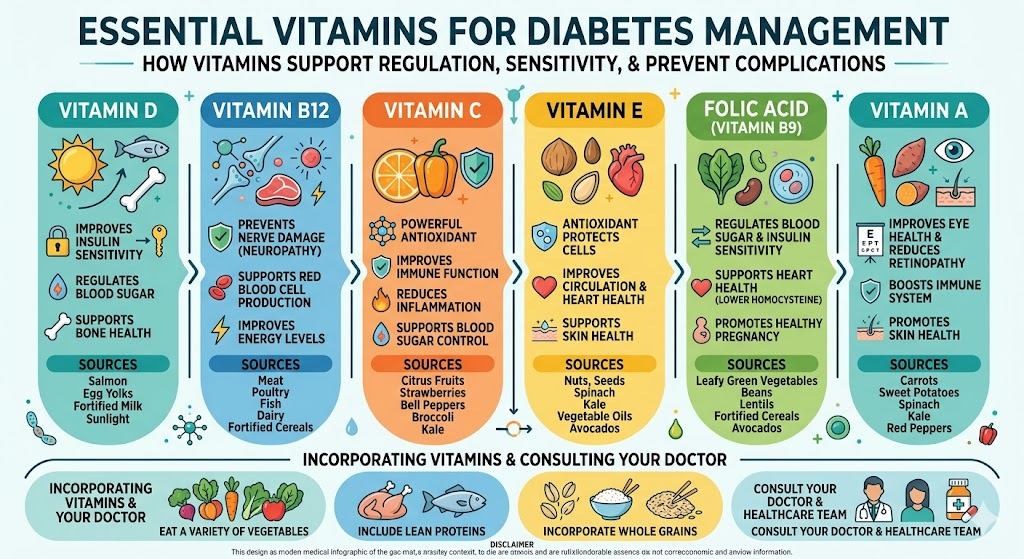
Essential Vitamins for Diabetics
Let’s dive into the vitamins that are particularly beneficial for people with diabetes.
1. Vitamin D
Vitamin D is essential for overall health, but it’s especially important for diabetics. Research has shown that vitamin D deficiency is common among people with diabetes, and it can negatively affect blood sugar levels and insulin sensitivity.
How Vitamin D Helps:
- Improves Insulin Sensitivity: Studies suggest that vitamin D helps improve the body’s ability to use insulin, which is crucial for people with diabetes.
- Regulates Blood Sugar: Vitamin D may play a role in regulating blood sugar and reducing the risk of developing Type 2 diabetes.
- Supports Bone Health: People with diabetes are at higher risk for bone problems, and vitamin D is vital for maintaining strong, healthy bones.
Sources of Vitamin D:
- Fatty fish (salmon, mackerel)
- Egg yolks
- Fortified foods (milk, orange juice)
- Sunlight exposure
2. Vitamin B12
Vitamin B12 is critical for nerve function, which is especially important for people with diabetes who may experience diabetic neuropathy (nerve damage). A deficiency in vitamin B12 can worsen nerve pain and other complications.
How Vitamin B12 Helps:
- Prevents Nerve Damage: B12 helps maintain healthy nerve cells and may reduce the risk of diabetic neuropathy.
- Supports Red Blood Cell Production: B12 helps in the production of red blood cells, which are important for transporting oxygen throughout the body.
- Improves Energy Levels: This vitamin helps with energy production, which can combat the fatigue often experienced by people with diabetes.
Sources of Vitamin B12:
- Meat, poultry, and fish
- Dairy products (milk, cheese, yogurt)
- Eggs
- Fortified cereals
3. Vitamin C
Vitamin C is a powerful antioxidant that helps protect the body from damage caused by free radicals. For people with diabetes, vitamin C can help improve blood sugar levels and reduce the risk of complications like heart disease and kidney problems.
How Vitamin C Helps:
- Improves Immune Function: Vitamin C strengthens the immune system, helping the body fight infections.
- Reduces Inflammation: This vitamin helps reduce inflammation in the body, which is a common issue for people with diabetes.
- Supports Blood Sugar Control: Studies suggest that vitamin C can help reduce blood sugar levels, particularly in people with Type 2 diabetes.
Sources of Vitamin C:
- Citrus fruits (oranges, lemons)
- Strawberries
- Bell peppers
- Broccoli
- Kale
4. Vitamin E
Vitamin E is another powerful antioxidant that helps protect cells from oxidative stress. It can also support heart health, which is vital for diabetics who are at an increased risk of cardiovascular problems.
How Vitamin E Helps:
- Protects Cells from Damage: Vitamin E helps protect cells from damage caused by free radicals, which can accelerate aging and disease processes.
- Improves Circulation: Vitamin E may help improve blood flow and reduce the risk of cardiovascular disease, which is common in people with diabetes.
- Supports Skin Health: Diabetics are prone to skin problems, and vitamin E can help maintain healthy skin.
Sources of Vitamin E:
- Nuts and seeds (almonds, sunflower seeds)
- Spinach and kale
- Vegetable oils (sunflower oil, wheat germ oil)
- Avocados
5. Folic Acid (Vitamin B9)
Folic acid, also known as vitamin B9, is essential for the production of red blood cells and the formation of DNA. For diabetics, folic acid can help improve blood sugar control and reduce the risk of birth defects for pregnant women with diabetes.
How Folic Acid Helps:
- Regulates Blood Sugar: Some studies suggest that folic acid may help lower blood sugar levels and improve insulin sensitivity.
- Supports Heart Health: Folic acid plays a role in lowering homocysteine levels, an amino acid that can increase the risk of cardiovascular disease.
- Promotes Healthy Pregnancy: Pregnant women with diabetes benefit from folic acid as it helps prevent birth defects.
Sources of Folic Acid:
- Leafy green vegetables (spinach, kale)
- Beans and lentils
- Fortified cereals
- Avocados
6. Vitamin A
Vitamin A is crucial for maintaining healthy vision, which is particularly important for people with diabetes who are at risk of diabetic retinopathy (a condition that affects the eyes). It also supports the immune system and skin health.
How Vitamin A Helps:
- Improves Eye Health: Vitamin A helps maintain good vision and reduces the risk of diabetic retinopathy.
- Boosts Immune System: It strengthens the immune system and helps the body fight off infections.
- Promotes Skin Health: Vitamin A helps maintain healthy skin, which is especially important for diabetics who may experience skin problems.
Sources of Vitamin A:
- Carrots
- Sweet potatoes
- Spinach
- Kale
- Red peppers
How to Incorporate These Vitamins Into Your Diet
Getting enough vitamins through diet is the best way to ensure optimal health. Here’s how you can incorporate these vitamins into your daily meals:
1. Eat a Variety of Vegetables
Leafy greens and colorful vegetables are great sources of vitamins A, C, and folic acid. Include a variety of vegetables in your diet to ensure you’re getting all the essential nutrients.
2. Include Lean Proteins
Lean proteins like chicken, turkey, and fish are excellent sources of vitamin B12, which is important for nerve health.
3. Incorporate Whole Grains
Whole grains like oats, brown rice, and quinoa are rich in fiber and help regulate blood sugar levels. They also provide small amounts of several B vitamins.
4. Consider Supplements
If you’re not able to get enough of these vitamins through food alone, consider taking a supplement. However, it’s always a good idea to consult with a healthcare provider before starting any new supplements.
FAQs About Vitamins for Diabetics
1. What Are the Best Vitamins for Type 2 Diabetes?
For people with Type 2 diabetes, vitamin D, B12, C, and E are particularly beneficial. These vitamins help regulate blood sugar, improve insulin sensitivity, and protect against complications.
2. Can Vitamin D Help Lower Blood Sugar?
Yes, vitamin D has been shown to improve insulin sensitivity, which can help lower blood sugar levels. Many people with diabetes are vitamin D deficient, so supplementing this vitamin may be helpful.
3. Is Vitamin C Good for Diabetes?
Yes, vitamin C can be beneficial for people with diabetes. It has antioxidant properties, helps reduce inflammation, and may aid in better blood sugar control.
4. Can Diabetics Take Vitamin B12 Supplements?
Yes, vitamin B12 supplements can be helpful for diabetics, especially those who are at risk of deficiency due to long-term use of certain diabetes medications (like metformin).
5. How Can I Get More Vitamin A in My Diet?
Vitamin A can be found in foods like carrots, sweet potatoes, spinach, and kale. Including these foods in your diet can help ensure adequate intake of this important vitamin.
Conclusion
Vitamins play a crucial role in managing diabetes and improving overall health. By including the right vitamins in your diet, you can improve blood sugar control, boost your immune system, and reduce the risk of complications. Vitamins such as D, B12, C, E, and A can be particularly beneficial for people with diabetes.
Remember, it’s always a good idea to consult with a healthcare provider before making any significant changes to your diet or starting supplements. With the right approach, you can manage your diabetes and enjoy a healthier, more balanced life.