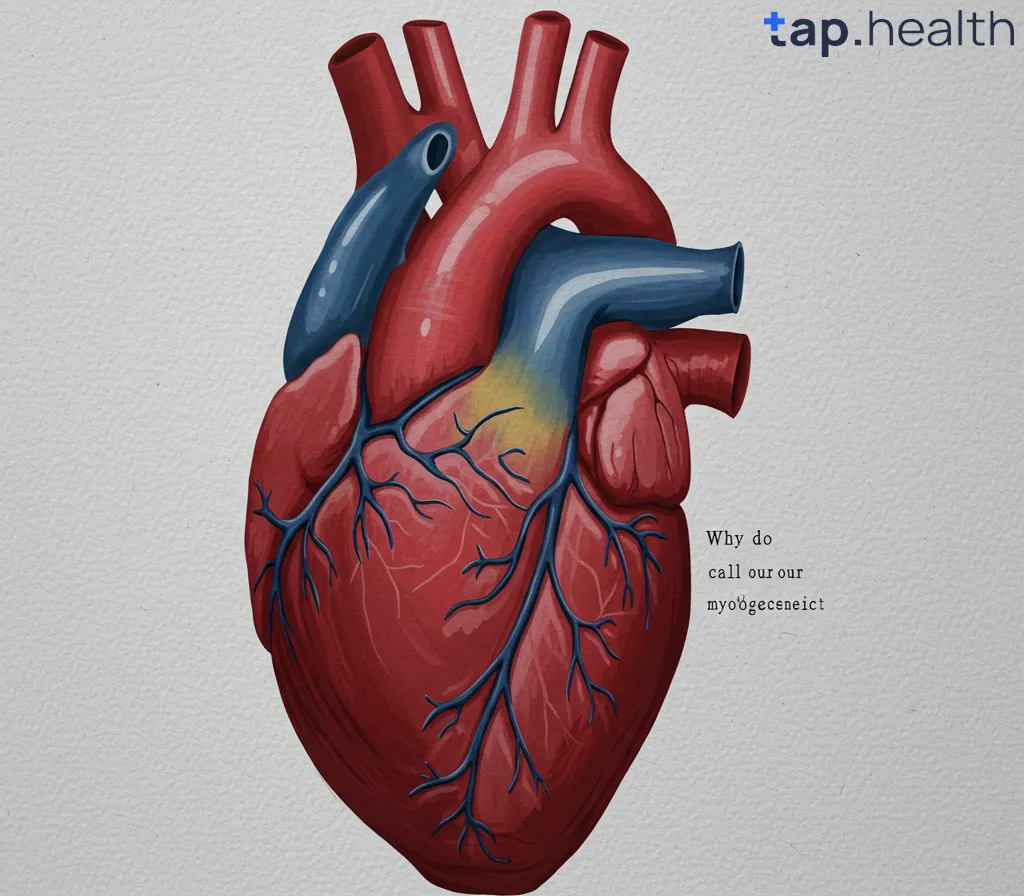
Have you ever wondered how your heart keeps beating—without you telling it to? You don’t have to think, “Beat now, heart!” every second of the day. It just… does. It pumps blood, day and night, while you sleep, run, eat, or even read this article. But why?
The answer lies in a fascinating word: myogenic. You might have heard this term in science class or read it in a biology book. But what does it really mean? And why do we say the heart is myogenic?
In this article, we’ll break down everything about the term “myogenic” and explain exactly why your heart is called that. We’ll use simple language, real-life examples, and clear explanations so that even an 8th grader can understand. No confusing jargon. No robotic tone. Just real, easy-to-digest facts.
Let’s dive in.
What Does “Myogenic” Mean?
Before we talk about the heart, let’s first understand the word myogenic.
The Word Breakdown: “Myo” + “Genic”
- “Myo” comes from the Greek word mys, which means muscle.
- “Genic” means produced by or originating from.
So, when we say something is myogenic, we mean it’s produced by the muscle itself.
In simple terms:
A myogenic organ or tissue can start its own contractions without needing a signal from the brain or nerves.
That’s a big deal! Most muscles in your body need your brain to tell them what to do. For example, when you decide to lift your arm, your brain sends a message through nerves to your arm muscles. But the heart? It doesn’t wait for orders.
How Is the Heart Different from Other Muscles?
Most muscles in your body are neurogenic, not myogenic.
Let’s compare:
| Control | Voluntary (you control them) | Involuntary (you don’t control them) |
| Signal Source | Brain via nerves | Muscle tissue itself |
| Type | Neurogenic | Myogenic |
| Example | Lifting a book, kicking a ball | Pumping blood 24/7 |
What Is a Neurogenic Muscle?
A neurogenic muscle is one that needs a signal from the nervous system to contract. That means your brain has to send an electrical message through nerves to make the muscle move.
For example:
- You want to wave hello → Your brain sends a signal → Nerves carry it to your arm muscles → Your arm moves.
No brain signal? No movement.
But the heart doesn’t work like that.
Why Is the Heart Called Myogenic?
Now, here’s the key point:
The heart can beat on its own because it generates its own electrical impulses.
It doesn’t rely on the brain to tell it when to beat. Instead, a special group of cells inside the heart creates its own rhythm.
These cells are called pacemaker cells, and they’re located in a small area of the heart called the sinoatrial (SA) node.
The SA Node: The Heart’s Natural Pacemaker
- Found in the right atrium (top right chamber of the heart).
- Made up of special heart muscle cells that can create electrical signals automatically.
- These signals spread through the heart and cause it to contract.
So, even if you could somehow disconnect the heart from the brain (which we obviously can’t and shouldn’t!), it would still beat—at least for a while.
This self-starting ability is exactly why we say the heart is myogenic.
Can the Heart Really Beat Without the Brain?
Yes—under certain conditions.
There’s a famous experiment that proves this: the frog heart experiment by physiologist Wilhelm His Jr. and later expanded by Martin Flack and Arthur Keith.
The Frog Heart Experiment (Simple Version)
Scientists removed a frog’s heart and placed it in a dish with a special salt solution (to keep it alive). Even though the heart was no longer inside the frog and had no connection to the brain, it kept beating!
Why?
Because the heart’s own pacemaker cells were still working. They kept sending electrical signals, making the heart contract.
This proved that the heart doesn’t need the brain to beat—it generates its own rhythm.
Fun Fact: This is also why heart transplants work. A donor heart can be kept alive outside the body and still beats when placed in the new body.
How Does the Myogenic Heart Work Step by Step?
Let’s walk through the heartbeat process like a story.
Step 1: The SA Node Fires
- The SA node (pacemaker) creates an electrical impulse.
- This impulse starts in the right atrium.
- It’s automatic—no brain signal needed.
Step 2: Atria Contract
- The electrical signal spreads across the atria (the two upper chambers).
- This makes the atria squeeze, pushing blood into the ventricles.
Step 3: Signal Reaches the AV Node
- The signal reaches the AV node (atrioventricular node), a kind of “gatekeeper.”
- The AV node delays the signal slightly—just long enough for the ventricles to fill with blood.
Step 4: Signal Travels to Ventricles
- After the delay, the signal moves down special pathways called the Bundle of His and Purkinje fibers.
- These carry the signal to the ventricles (the two lower chambers).
Step 5: Ventricles Contract
- The ventricles squeeze hard, pumping blood out:
- Left ventricle → to the body
- Right ventricle → to the lungs
Then, the cycle starts all over again.
This entire process takes less than a second. And it happens 60 to 100 times per minute, every single day of your life.
All of this starts inside the heart muscle itself—not from the brain. That’s the definition of myogenic.
What Controls the Heart Rate If It’s Myogenic?
Wait—if the heart beats on its own, why does it beat faster when you run or slower when you sleep?
Good question!
Even though the heart is myogenic, it’s still influenced by the brain and hormones.
Think of it like a car with its own engine (the SA node), but the driver (the brain) can press the gas or brake.
The Autonomic Nervous System: The Heart’s Remote Control
Two parts of the nervous system help control heart rate:
- Sympathetic Nervous System – The “gas pedal”
- Activated during exercise, stress, or fear.
- Releases adrenaline.
- Tells the SA node to fire faster → heart beats quicker.
- Parasympathetic Nervous System – The “brake”
- Active when you’re resting or sleeping.
- Sends signals via the vagus nerve.
- Slows down the SA node → heart beats slower.
So, while the heart starts the beat on its own, the brain can adjust the speed based on what your body needs.
But again—the brain doesn’t start the beat. The heart does that itself.
Why Is It Important for the Heart to Be Myogenic?
Imagine if your heart needed your brain to tell it to beat every single time.
What would happen if:
- You fell asleep?
- You passed out?
- You got a head injury?
Your heart might stop.
But because it’s myogenic, it keeps going—automatically.
This is crucial for survival.
Key Benefits of a Myogenic Heart:
- Reliability: It beats non-stop, 24/7, for your entire life.
- Survival: Keeps working even if brain signals are delayed or interrupted.
- Efficiency: No need to “think” about breathing or moving blood—your body just does it.
- Adaptability: Can speed up or slow down based on your needs.
Without this self-starting ability, life as we know it wouldn’t be possible.
Are There Other Myogenic Muscles in the Body?
The heart is the most famous myogenic muscle, but it’s not the only one.
Other involuntary muscles that show myogenic activity include:
1. Smooth Muscles in the Digestive Tract
- Found in the walls of your stomach and intestines.
- They contract in waves (called peristalsis) to push food along.
- These contractions start in the muscle itself, not from the brain.
- Example: Your stomach keeps digesting food even if you’re unconscious.
2. Uterine Muscle (During Labor)
- The uterus has myogenic properties.
- During childbirth, the muscle fibers generate their own contractions.
- Hormones like oxytocin boost the process, but the muscle starts it.
However, the heart is the best example of a myogenic muscle because:
- It beats rhythmically and continuously.
- It has a built-in pacemaker (SA node).
- Its contractions are strong and coordinated.
So while other muscles have some myogenic traits, the heart is the king of self-starting muscles.
What Happens If the Myogenic System Fails?
Sometimes, the heart’s natural pacemaker doesn’t work properly. This can lead to heart rhythm problems called arrhythmias.
Common Myogenic-Related Heart Issues:
1. Bradycardia – Heart Beats Too Slowly
- SA node isn’t firing enough signals.
- Can cause dizziness, fatigue, or fainting.
- Treated with a pacemaker device (a small machine that takes over the SA node’s job).
2. Tachycardia – Heart Beats Too Fast
- SA node fires too quickly.
- Can happen due to stress, fever, or heart disease.
- May require medication or procedures.
3. Atrial Fibrillation (AFib)
- The atria quiver instead of beating properly.
- Caused by chaotic electrical signals in the atria.
- Increases risk of stroke.
In severe cases, doctors may implant an artificial pacemaker—a tiny device that sends electrical pulses to keep the heart beating at the right pace.
This shows how vital the myogenic system is. When it fails, we need machines to do what the heart normally does on its own.
Can You Feel the Heart’s Myogenic Activity?
Not directly—but you can see its effects.
When you take your pulse, you’re feeling the result of the heart’s myogenic contractions.
Each beat you feel at your wrist or neck is the outcome of that automatic electrical signal starting in the SA node.
You don’t have to “tell” your heart to beat. It just does.
And that’s thanks to its myogenic nature.
Myogenic vs. Neurogenic: A Clear Comparison
Let’s make sure we fully understand the difference.
| Signal Origin | From the muscle itself | From the nervous system (brain/spinal cord) |
| Example | Heart | Biceps, leg muscles |
| Control | Involuntary | Voluntary (mostly) |
| Needs Brain Input? | No (but can be influenced) | Yes |
| Rhythm | Automatic, rhythmic | Only when signaled |
| Found In | Heart, some smooth muscles | Skeletal muscles |
Bottom Line:
- Myogenic = Self-starting muscle (like the heart).
- Neurogenic = Needs a signal from nerves (like your arm muscles).
Fun Facts About the Myogenic Heart
Let’s lighten things up with some cool, easy-to-remember facts:
- Your heart beats about 100,000 times a day.
- The brain doesn’t control the heartbeat—but it can change the rate.
- Frog hearts were key in discovering the myogenic nature of the heart.
- The SA node fires about 60–100 times per minute—that’s your resting heart rate.
- The heart’s electrical system is like a built-in battery.
- Artificial pacemakers mimic the SA node’s job when it fails.
- Even if you’re upside down, your heart keeps beating the same way—thanks to its automatic system.
Common Misconceptions About the Myogenic Heart
Let’s clear up some myths people often believe.
Myth 1: “The brain tells the heart to beat.”
Truth: The brain can influence the heart rate, but it doesn’t start each beat. The SA node does that.
Myth 2: “If the brain stops, the heart stops instantly.”
Truth: Not necessarily. The heart may keep beating for a short time after brain death because of its myogenic nature. But long-term survival isn’t possible without brain function regulating other systems.
Myth 3: “Only the heart is myogenic.”
Truth: Other muscles, like those in the gut, also have myogenic properties—but not as precisely controlled or rhythmic as the heart.
Myth 4: “Myogenic means the heart never needs help.”
Truth: While the heart starts its own beats, it still needs oxygen, nutrients, and healthy tissue to function. Heart disease can damage the SA node or electrical pathways.
How Do Scientists Study the Myogenic Heart?
Researchers use several methods to understand how the heart generates its own beats.
1. Electrocardiogram (ECG or EKG)
- A test that records the heart’s electrical activity.
- Shows when the SA node fires and how the signal moves through the heart.
- Helps diagnose rhythm problems.
2. Animal Studies
- Scientists study hearts from frogs, rabbits, and mice.
- They observe how hearts beat outside the body.
- This helps prove the myogenic theory.
3. Microscopic Examination
- Doctors look at heart tissue under a microscope.
- They identify pacemaker cells in the SA node.
- These cells look different from regular heart muscle cells.
4. Pacemaker Experiments
- Artificial pacemakers are tested on animals and humans.
- Shows how replacing the SA node’s function keeps the heart beating.
All of this research confirms: the heart’s ability to beat on its own is real, powerful, and essential.
Why Is This Important for Students and Future Doctors?
Understanding that the heart is myogenic is a core concept in biology and medicine.
For Students:
- It helps you understand how the body works automatically.
- It’s a common exam question in biology (especially in grades 9–12).
- It builds a foundation for learning about the circulatory system.
For Future Doctors and Nurses:
- Knowing how the heart’s electrical system works is key to diagnosing heart disease.
- It explains why ECGs are important.
- It helps in treating patients with pacemakers or arrhythmias.
So whether you’re a student or just curious, knowing why the heart is myogenic is both fascinating and useful.
Can Lifestyle Affect the Myogenic System?
Yes—your daily habits can influence how well your heart’s natural pacemaker works.
Healthy Habits That Support a Myogenic Heart:
- Regular Exercise: Strengthens the heart and improves rhythm.
- Balanced Diet: Rich in potassium, magnesium, and calcium—minerals needed for electrical signals.
- Enough Sleep: Helps the parasympathetic system slow the heart at night.
- Stress Management: Reduces adrenaline spikes that strain the heart.
- No Smoking: Protects heart tissue and blood vessels.
Bad Habits That Can Harm It:
- Smoking: Damages heart muscle and blood vessels.
- Excess Caffeine: Can cause rapid or irregular beats.
- Heavy Alcohol Use: May lead to arrhythmias.
- Poor Diet: High in salt and fat can lead to high blood pressure and heart disease.
Your heart may be self-starting, but it still needs your care to stay healthy.
What’s the Big Picture? Why Should You Care?
At first glance, “myogenic” might sound like just another science word you have to memorize.
But it represents something amazing: your heart’s ability to keep you alive without you even trying.
It’s a self-powered engine that runs your entire life.
Every time you take a breath, run a race, or fall asleep—your heart is working, automatically, thanks to its myogenic nature.
Understanding this:
- Makes you appreciate your body more.
- Helps you make better health choices.
- Gives you a deeper understanding of life itself.
So next time someone asks, “Why do we call our heart myogenic?”—you’ll know the answer.
Because it starts the beat all by itself.
Frequently Asked Questions (FAQ) on Why Do We Call Our Heart Myogenic?
Q1: What does “myogenic” mean in simple words?
Answer: “Myogenic” means something that starts in the muscle itself. For the heart, it means the heartbeat begins inside the heart muscle, not from the brain.
Q2: Why is the heart called myogenic and not neurogenic?
Answer: Because the heart generates its own electrical signals through the SA node. Neurogenic muscles (like your arm muscles) need signals from nerves. The heart doesn’t—it starts the beat on its own.
Q3: Does the brain control the heart?
Answer: Not directly. The brain influences the heart rate (speeding it up or slowing it down), but it doesn’t start each heartbeat. That job belongs to the SA node in the heart.
Q4: Can the heart beat without the body?
Answer: Yes, for a short time. In lab experiments, a heart (like a frog’s) can keep beating when placed in a nutrient-rich solution, even outside the body. This proves its myogenic nature.
Q5: What is the SA node?
Answer: The sinoatrial (SA) node is a small group of cells in the right atrium of the heart. It acts as the heart’s natural pacemaker by sending out electrical signals that cause the heart to beat.
Q6: Are all muscles in the body myogenic?
Answer: No. Only certain muscles like the heart and some smooth muscles (in the gut, blood vessels) are myogenic. Most muscles, like those in your arms and legs, are neurogenic—they need nerve signals to move.
Q7: What happens if the SA node stops working?
Answer: The heart may beat too slowly or irregularly. This can cause fatigue, dizziness, or fainting. Doctors may treat it with medications or by implanting an artificial pacemaker.
Q8: Can emotions affect a myogenic heart?
Answer: Yes. Strong emotions like fear or excitement trigger the release of adrenaline, which tells the heart to beat faster. But the heart still starts the beat itself—the emotion just changes the rate.
Q9: Is the myogenic property unique to humans?
Answer: No. Many animals, including frogs, dogs, and birds, have myogenic hearts. In fact, studying animal hearts helped scientists discover this property in humans.
Q10: How can I keep my heart’s myogenic system healthy?
Answer:
- Exercise regularly
- Eat heart-healthy foods (fruits, vegetables, whole grains)
- Avoid smoking and excessive alcohol
- Manage stress
- Get regular check-ups
A healthy lifestyle supports your heart’s natural ability to beat on its own.
Final Thoughts
So, why do we call our heart myogenic?
Because it’s built to start its own beats—without waiting for the brain.
From the moment you’re born to your last breath, your heart runs on its own internal rhythm, powered by special cells in the SA node.
It’s a perfect example of how amazing the human body is.
You don’t have to think about your heartbeat. You don’t have to remind your heart to keep going. It just does—automatically, reliably, and tirelessly.
And that, my friend, is the magic of being myogenic.