A blood clot in the brain is a medical emergency. It can lead to a stroke, brain damage, or even death if not treated quickly.
But here’s the good news: you don’t always need surgery to remove a blood clot in the brain.
Thanks to modern medicine, doctors can often treat these clots without cutting into the skull. These are called non-surgical or minimally invasive treatments, and they can be just as effective—sometimes even better—than traditional surgery.
So, how do doctors remove a blood clot in the brain without surgery?
The main ways are:
- Clot-busting drugs (like tPA)
- Mechanical thrombectomy (a catheter procedure)
- Anticoagulants and antiplatelets (to prevent new clots)
These treatments work fast, reduce damage, and help people recover better.
In this article, we’ll explain everything in simple, easy-to-understand language. No confusing medical terms. No robotic tone. Just clear, honest facts based on trusted health sources like the American Stroke Association, Mayo Clinic, CDC, and National Institutes of Health.
We’ll cover:
- What a brain blood clot is
- How non-surgical treatments work
- Who can get them—and who can’t
- How fast treatment must happen
- Recovery after treatment
- And answers to common questions like “Can a blood clot dissolve on its own?” or “Is tPA safe?”
Let’s dive in.
What Is a Blood Clot in the Brain?
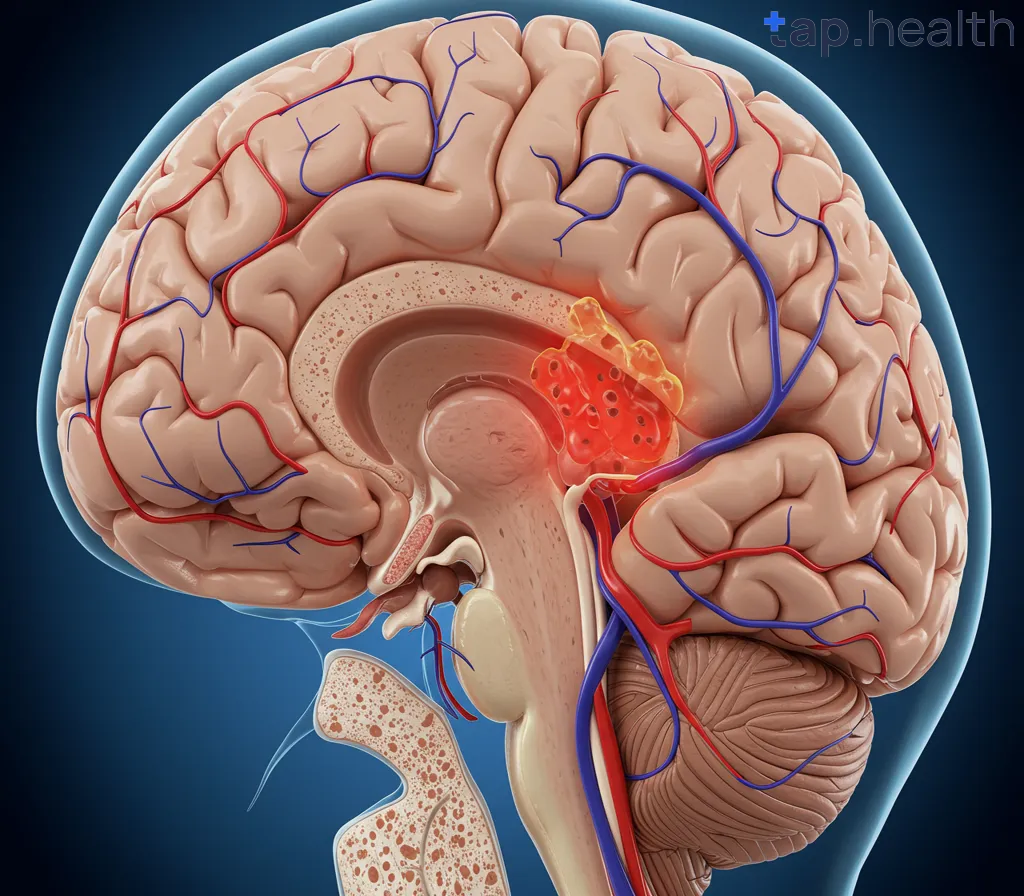
A blood clot in the brain is a gel-like mass of blood that forms inside a blood vessel and blocks blood flow.
When this happens, part of the brain doesn’t get oxygen and nutrients. Brain cells start to die within minutes.
This is called an ischemic stroke—the most common type of stroke, making up about 87% of all strokes.
What Causes a Blood Clot in the Brain?
Clots can form in two main ways:
- In the brain itself – Due to fatty buildup (plaque) in brain arteries.
- Elsewhere in the body – Like the heart or neck, then travel to the brain (called an embolic stroke).
Common causes include:
- High blood pressure
- High cholesterol
- Atrial fibrillation (AFib) – an irregular heartbeat
- Smoking
- Diabetes
- Obesity
- Lack of physical activity
Some people have clots without symptoms at first, but once the clot blocks blood flow, symptoms come on suddenly.
What Are the Symptoms of a Brain Blood Clot?
Knowing the signs can save a life. Use the FAST test:
- F – Face drooping (one side of the face sags)
- A – Arm weakness (can’t raise one arm)
- S – Speech difficulty (slurred or strange speech)
- T – Time to call 911 (act fast!)
Other symptoms include:
- Sudden numbness or weakness (face, arm, leg)
- Sudden confusion or trouble understanding
- Sudden trouble seeing in one or both eyes
- Sudden dizziness, loss of balance, or coordination
- Sudden severe headache with no known cause
If you or someone has these symptoms, call 911 immediately. Do not wait. Do not drive. Every minute counts.
Can You Remove a Blood Clot in the Brain Without Surgery?
Yes—in many cases, doctors can remove or dissolve a brain blood clot without surgery.
“Without surgery” means no open brain operation (like cutting into the skull). Instead, doctors use medications or minimally invasive procedures that go through blood vessels.
These treatments are:
- Faster
- Safer
- Have shorter recovery times
- Often more effective than surgery
But they must be done within a few hours of the first symptoms.
Let’s look at the main non-surgical options.
1. Clot-Busting Drugs (Thrombolytics) – tPA
The most common non-surgical treatment is a drug called tPA (tissue plasminogen activator).
It’s also known as Alteplase.
How Does tPA Work?
tPA is a powerful medicine that dissolves blood clots.
It works like a chemical key that unlocks the clot, breaking it apart so blood can flow again.
It’s given through an IV (a needle in the arm) in the emergency room.
How Fast Must tPA Be Given?
tPA must be given within 3 to 4.5 hours after symptoms start.
The sooner, the better:
- Given within 90 minutes: Best results
- After 4.5 hours: Not safe or effective
This is why calling 911 fast is so important. Even a 30-minute delay can mean the difference between walking out of the hospital and needing a wheelchair.
Who Can Get tPA?
Not everyone can get tPA. Doctors must check:
- When symptoms started
- CT scan results (to rule out bleeding)
- Blood pressure levels
- Medical history (like recent surgery or bleeding disorders)
Who Cannot Get tPA?
tPA is not safe for:
- People with a brain hemorrhage (bleeding stroke)
- Those who had a recent head injury or surgery
- People on blood thinners with high bleeding risk
- Those with very high blood pressure
- Anyone who had a stroke more than 4.5 hours ago
Is tPA Safe?
tPA is effective but has risks.
The biggest risk is brain bleeding (hemorrhage). That’s why doctors must be sure it’s an ischemic stroke (clot) and not a bleeding stroke before giving tPA.
When used correctly, the benefits far outweigh the risks.
Studies show that about 1 in 3 people who get tPA recover with little or no disability.
2. Mechanical Thrombectomy – Removing the Clot With a Wire
This is a newer, highly effective treatment that removes the clot without surgery.
It’s called mechanical thrombectomy.
How Does Mechanical Thrombectomy Work?
Instead of dissolving the clot, doctors pull it out using a tiny device.
Here’s how:
- A doctor inserts a thin tube (catheter) into an artery—usually in the groin.
- The tube is guided up through the body to the brain.
- A small stent-like device grabs the clot.
- The doctor pulls the clot out through the tube.
It’s like using a tiny vacuum or net to catch and remove the blockage.
How Fast Must Thrombectomy Be Done?
For years, it had to be done within 6 hours. But now, thanks to advanced brain scans, it can be done up to 24 hours after symptoms—if the brain tissue is still alive.
This is a huge breakthrough. Many people who used to miss the window can now be treated.
Who Can Get Mechanical Thrombectomy?
It’s best for people with:
- A large clot in a major brain artery
- A moderate to severe stroke
- Brain scans showing salvageable tissue (penumbra)
It’s often used with tPA—first the drug, then the procedure.
Who Cannot Get It?
Not suitable for:
- Small clots or mild strokes
- Clots in very small or hard-to-reach arteries
- Patients too sick for the procedure
- No access to a hospital with stroke specialists
Is Mechanical Thrombectomy Safe?
Yes—when done by trained specialists.
Risks include:
- Bleeding in the brain
- Damage to blood vessels
- Infection (rare)
But success rates are high. Studies show that about 1 in 2 people who get thrombectomy recover well—able to walk, talk, and live independently.
3. Blood Thinners (Anticoagulants and Antiplatelets)
These don’t remove the clot directly but help prevent new clots and stop the existing one from growing.
They’re used after tPA or thrombectomy—or if those treatments aren’t possible.
Types of Blood Thinners
Antiplatelets
- Aspirin, Clopidogrel (Plavix)
- Stop platelets (blood cells) from sticking together
- Often given right after a stroke
Anticoagulants
- Warfarin, Apixaban, Rivaroxaban
- Work on proteins in the blood to prevent clotting
- Used for people with atrial fibrillation (AFib)
Can Blood Thinners Dissolve a Clot?
No. They don’t break up existing clots. But they help the body’s natural systems gradually dissolve the clot over time.
Think of it like turning off the faucet while the sink slowly drains.
Can a Blood Clot in the Brain Dissolve on Its Own?
Sometimes—but not fast enough to prevent damage.
Your body has natural clot-busting systems. Small clots may dissolve over days or weeks.
But during a stroke, every minute matters.
- 1.9 million brain cells die every minute without blood flow.
- Waiting for a clot to dissolve on its own can lead to permanent brain damage or death.
That’s why medical treatment is always needed—even if symptoms seem mild or go away (like in a TIA or “mini-stroke”).
What Is a TIA? Is Treatment Still Needed?
A TIA (Transient Ischemic Attack) is a “mini-stroke” caused by a temporary clot.
Symptoms last less than an hour and go away. But it’s a major warning sign.
- About 1 in 3 people with a TIA will have a full stroke within a year.
- Half happen within 48 hours.
Even though the clot dissolved, treatment is critical to prevent a future stroke.
Doctors may:
- Prescribe blood thinners
- Order tests to find the cause
- Recommend lifestyle changes
So yes—a TIA is a medical emergency, even if symptoms vanish.
How Long Does Non-Surgical Treatment Take?
Time varies by treatment:
| tPA (IV) | 30–60 minutes to infuse |
| Mechanical thrombectomy | 1–2 hours |
| Recovery in hospital | 2–7 days |
Most people start feeling better within hours if treated early.
What Happens After Treatment?
After the clot is removed or dissolved, the focus shifts to:
- Preventing another stroke
- Rehabilitating lost skills
- Managing risk factors
1. Hospital Stay
- You’ll stay for monitoring.
- Doctors check for bleeding, swelling, or new clots.
2. Medications
- Blood thinners
- Cholesterol-lowering drugs (statins)
- Blood pressure meds
3. Rehabilitation (Rehab)
Many people need rehab to regain:
- Movement (physical therapy)
- Speech (speech therapy)
- Daily skills (occupational therapy)
Recovery can take weeks to months—but many people regain most or all function.
Can You Fully Recover From a Brain Blood Clot?
Yes—many people recover fully, especially if treated quickly.
Factors that help:
- Getting treatment within 90 minutes
- Being younger and healthier
- Having mild to moderate symptoms
- Following rehab and lifestyle changes
Even people with severe strokes can improve with time and support.
Are There Natural Ways to Dissolve a Blood Clot in the Brain?
No—there are no proven natural remedies to dissolve a brain blood clot.
Some people ask about:
- Garlic
- Ginger
- Turmeric
- Ginkgo biloba
- Lemon water
While these may have mild blood-thinning effects, they cannot replace medical treatment.
Relying on natural remedies during a stroke can be deadly.
Only tPA and mechanical thrombectomy can quickly remove or dissolve brain clots.
Natural methods may help prevent clots when combined with a healthy lifestyle—but not treat an active stroke.
What Lifestyle Changes Help Prevent Future Clots?
After surviving a brain clot, prevention is key.
1. Control Blood Pressure
High BP is the #1 risk factor. Aim for below 120/80.
2. Manage Cholesterol
Lower LDL (“bad”) cholesterol with diet and statins.
3. Quit Smoking
Smoking damages blood vessels and raises clot risk.
4. Exercise Regularly
Aim for 150 minutes of moderate exercise per week.
5. Eat a Heart-Healthy Diet
Focus on:
- Fruits and vegetables
- Whole grains
- Lean proteins
- Healthy fats (olive oil, nuts, fish)
- Less salt, sugar, and processed foods
6. Limit Alcohol
Too much raises blood pressure and stroke risk.
7. Treat Atrial Fibrillation (AFib)
If you have AFib, you may need blood thinners to prevent clots.
8. Manage Diabetes
High blood sugar damages blood vessels over time.
What If You Miss the Treatment Window?
If more than 4.5 hours have passed since symptoms started:
- tPA cannot be given
- But mechanical thrombectomy may still be an option up to 24 hours in some cases
After that, treatment focuses on:
- Preventing another clot
- Rehab
- Managing complications
That’s why time is brain—the faster you act, the better your chances.
How Do Doctors Decide Which Treatment to Use?
Doctors look at:
- Type of stroke (clot vs. bleed)
- Size and location of the clot
- Time since symptoms started
- Patient’s age and health
- Brain scan results
They often use a mix:
- tPA first, then thrombectomy
- Or thrombectomy alone if tPA isn’t safe
Decisions are made fast by a stroke team.
Can Kids or Young Adults Have Brain Blood Clots?
Yes—though less common.
Causes in younger people include:
- Blood clotting disorders
- Head or neck injuries
- Migraines with aura
- Birth control pills (in women)
- Drug use (like cocaine)
- Heart defects
Symptoms are the same. Treatment is similar—but doctors are extra careful with tPA in young patients.
What Are the Long-Term Effects of a Brain Blood Clot?
Depends on:
- How big the clot was
- How long it blocked blood flow
- How fast treatment was given
Possible effects:
- Weakness or paralysis
- Trouble speaking or understanding
- Memory problems
- Vision issues
- Emotional changes (depression, anxiety)
But with rehab, many improve over time.
Final Answer: How to Remove Blood Clot in Brain Without Surgery
To sum it all up:
Yes—you can remove a blood clot in the brain without surgery.
The main non-surgical treatments are:
- tPA (clot-busting drug) – Given through IV within 3–4.5 hours.
- Mechanical thrombectomy – A catheter pulls the clot out, up to 24 hours in some cases.
- Blood thinners – Prevent new clots and help the body dissolve the old one.
These treatments are fast, effective, and life-saving—but only if you act fast.
Remember:
- Call 911 at the first sign of stroke
- Don’t wait, don’t drive, don’t ignore symptoms
- Time is brain—every minute counts
With quick treatment, many people recover well and go on to live full lives.
Frequently Asked Questions (FAQ) on How to Remove Blood Clot in Brain Without Surgery?
Q: Can a blood clot in the brain be treated without surgery?
Yes. tPA and mechanical thrombectomy are non-surgical treatments that can remove or dissolve clots.
Q: What is the fastest way to dissolve a brain blood clot?
tPA is the fastest—works within minutes of infusion.
Q: Is tPA safe for everyone?
No. It’s not safe for people with bleeding strokes, recent surgery, or uncontrolled high blood pressure.
Q: How long after a stroke can you get tPA?
Within 3 to 4.5 hours of symptom onset.
Q: Can mechanical thrombectomy be done without tPA?
Yes. Some patients get thrombectomy alone if tPA isn’t safe.
Q: Does aspirin dissolve a brain blood clot?
No. Aspirin prevents new clots but doesn’t dissolve existing ones.
Q: Can a small brain clot go away on its own?
Sometimes, but waiting is dangerous. Medical treatment is always needed.
Q: What happens if a brain clot is not treated?
Brain damage, disability, or death can occur within hours.
Q: How do doctors know if a clot can be removed?
Using CT scans, MRI, and perfusion imaging to see the clot and brain tissue health.
Q: Can you feel a blood clot in your brain?
Not directly. But you’ll feel symptoms like weakness, confusion, or headache.
Q: Is mechanical thrombectomy brain surgery?
No. It’s minimally invasive—done through a blood vessel, not an open skull surgery.
Q: Can you walk after a brain blood clot?
Many people can, especially if treated early and do rehab.
Q: Does drinking water help dissolve blood clots?
Staying hydrated helps circulation, but water alone cannot dissolve a brain clot.
Q: Can stress cause a blood clot in the brain?
Stress doesn’t directly cause clots, but chronic stress raises blood pressure and stroke risk.
Q: What foods should be avoided after a brain clot?
Avoid high-salt, high-fat, and processed foods. Focus on heart-healthy eating.
Q: Can you live a normal life after a brain blood clot?
Yes—many people return to work, driving, and daily activities with proper treatment and rehab.
Q: How long does it take to recover from a non-surgical clot removal?
Hospital stay: 2–7 days. Full recovery: weeks to months.
Q: Are there warning signs before a brain blood clot?
Sometimes—like sudden dizziness, vision changes, or TIAs. Never ignore them.
Final Thoughts
A blood clot in the brain is serious—but not hopeless.
Thanks to modern medicine, you don’t need surgery to remove it. Treatments like tPA and mechanical thrombectomy can save your brain and your life—without a single cut.
But it all depends on one thing: time.
The faster you act, the better your chances of walking, talking, and living normally again.
So if you or someone shows stroke signs—call 911 now.
Don’t wait. Don’t Google. Don’t drive.
Because when it comes to a brain blood clot, every second saves brain cells.
And your brain is worth saving.