
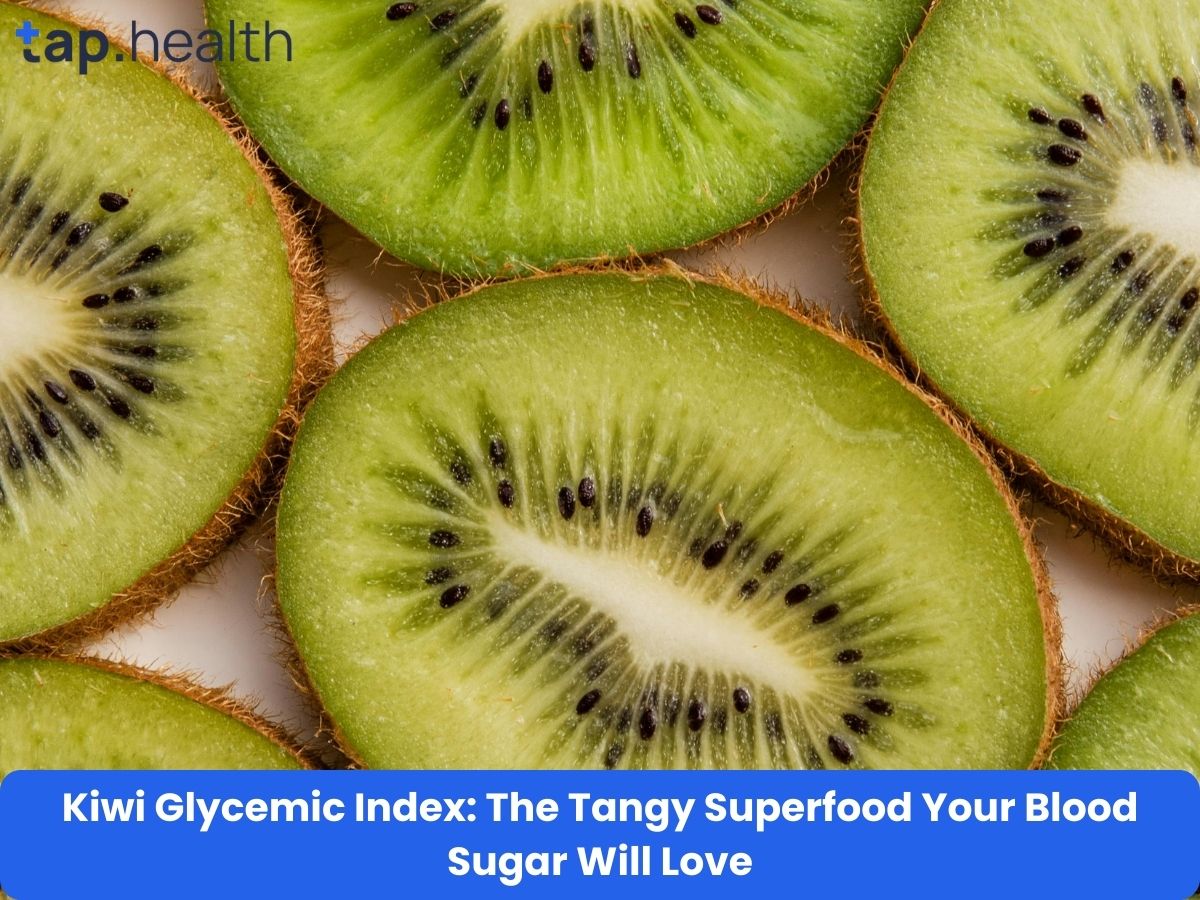
We have all been there. You are at the fruit market, surrounded by apples, bananas, and mangoes. Then you spot that small, fuzzy, brown fruit—the Kiwi. It looks a bit strange on the outside, but cut it open, and it is a brilliant emerald green (or sometimes gold!) with tiny black seeds.
It tastes exotic—sweet, tangy, and refreshing. But if you are living with diabetes, pre-diabetes, or just watching your weight, that sweetness can trigger a moment of hesitation. You might pause and ask: “Is this safe? Will this spike my sugar?”
In India, where we love our sweets but fear the sugar spike, knowing which fruits are safe is crucial. We often stick to papayas and guavas, ignoring “fancy” fruits because we don’t know enough about them. But what if I told you that this small fuzzy fruit is actually a powerhouse for blood sugar control?
If you have been searching for the kiwi glycemic index or wondering “can diabetics eat kiwi skin,” you have landed on the right page. In this detailed guide, we are going to look beyond the price tag and the fuzzy skin. We will explore the science, compare the Green vs. Gold varieties, and give you clear, actionable advice in plain Indian English.
What Is the Glycemic Index (GI)?
Before we judge the kiwi, we need to understand the yardstick we are using. The Glycemic Index (GI) is essentially a ranking system for carbohydrates. It measures how fast a food raises your blood glucose (sugar) levels on a scale of 0 to 100.
Think of it like Indian traffic:
- High GI (70–100): These are the super-fast sports bikes on an empty highway. They zoom into your bloodstream instantly, causing a massive sugar spike followed by a crash. (Example: White bread, glucose, watermelon, maida biscuits).
- Medium GI (56–69): These are the sedans driving at a moderate speed. They raise blood sugar at a steady pace.
- Low GI (0–55): These are the heavy trucks or buses moving slowly in the left lane. They digest gradually, releasing energy drop by drop. This keeps your insulin levels stable.
For optimal health, especially for diabetics, we want to fill our plates with “slow trucks.”
What Is the Kiwi Glycemic Index?
Here is the good news: Kiwis are excellent “slow trucks.”
The kiwi glycemic index typically falls between 47 and 52.
This puts fresh kiwi fruit firmly in the Low GI category (0–55). Even though they taste incredibly sweet and tart, they do not cause a sudden explosion of sugar in your bloodstream. They are metabolically safer than pineapples, mangoes, and watermelons.
Why is the GI so low?
- High Water Content: Kiwis are juicy! This water volume adds bulk without adding calories, making you feel full faster.
- Complex Fibre: A medium kiwi contains about 2-3 grams of fibre. This isn’t just any fibre; it is a mix of soluble and insoluble fibre that retains water and swells up like a gel in your stomach. This “gel” traps sugar and slows down its absorption.
- Fructose: The primary sugar in kiwi is fructose. Unlike glucose which goes straight to the blood, fructose is processed by the liver first, which naturally slows down the glycemic response.
Green Kiwi vs. Gold Kiwi: Which Is Better?
In Indian supermarkets like Reliance Fresh or Nature’s Basket, you will often see two types of Zespri kiwis: the classic Green and the smooth-skinned SunGold.
Does the gold kiwi glycemic index vs green kiwi score differ?
1. Green Kiwi (Hayward Variety)
- Appearance: Fuzzy brown skin, bright green flesh.
- Taste: Tangy-sweet.
- GI Score: ~51.
- Verdict: Low GI.
- Best For: Those who like a bit of sourness to cut through rich meals. Excellent for digestion due to higher fibre content.
2. Gold Kiwi (SunGold)
- Appearance: Smooth (hairless) bronze skin, yellow/golden flesh.
- Taste: Tropical, sweet like a mango-strawberry mix.
- GI Score: ~48.
- Verdict: Low GI (Surprisingly Lower!).
- The Surprise: Even though Gold kiwis taste sweeter than Green ones, they often have a slightly lower GI. This is because the type of fibre and cell structure in the Gold variety holds onto the sugar tighter during digestion.
The Takeaway: Whether you choose Green or Gold, both are safe. If you have a sweet tooth, Gold is a fantastic natural dessert replacement.
Glycemic Load: The Quantity Factor
We cannot talk about the kiwi glycemic index without discussing the Glycemic Load (GL). While GI tells you the speed, GL tells you the impact of a serving size.
Formula: (GI x Carbs in a serving) / 100
For one medium kiwi (approx 70g):
- GI: ~50
- Carbs: Approx 10g (minus fibre, net carbs are even lower)
- Calculation: (50 x 10) / 100 = 5
Result: The Glycemic Load is roughly 5.
- Low GL: 0–10
- Medium GL: 11–19
- High GL: 20+
A score of 5 is incredibly low. This means you could technically eat two kiwis and still be at a Glycemic Load of 10, which is very safe for your pancreas.
Read this : 20 Best Foods for People with Diabetes
Comparison: Kiwi vs. Other Indian Fruits
To help you make the best choices at the fruit stall, let’s compare the kiwi glycemic index with other common fruits found in India.
| Fruit | Glycemic Index (GI) | Glycemic Load (GL) | Verdict |
| Kiwi | 47–52 | 5 | Excellent |
| Guava | 12–24 | 2 | The Champion |
| Apple | 36 | 6 | Excellent |
| Banana (Ripe) | 51–60 | 11 | Moderate |
| Mango | 51–56 | 8 | Moderate |
| Watermelon | 72–76 | 4 | High GI (Limit portion) |
| Chickoo (Sapota) | 57–64 | 14 | Medium (Avoid excess) |
Key Takeaway:
Kiwis are in the same safety league as apples. They are much safer than tropical fruits like chickoo or over-ripe bananas when it comes to blood sugar management.
Can Diabetics Eat Kiwi Skin?
This is the most asked (and debated) question: “Can diabetics eat kiwi skin?”
The answer might shock you: YES, and you should!
I know, I know. It’s fuzzy. It feels like eating a peach with a beard. But here is why you should consider it:
- Triple the Fibre: The skin contains a massive concentration of antioxidants and fibre. Eating the skin increases the fibre content by 50% compared to eating just the flesh.
- Blood Sugar Buffer: That extra fibre acts as an even stronger barrier to sugar absorption. A kiwi eaten with the skin will likely have a lower glycemic impact than a peeled kiwi.
- Antioxidants: The skin is where the fruit protects itself from the sun, so it is packed with phenolic compounds that fight inflammation.
How to eat it:
- Green Kiwi: Scrub the fuzz off with a rough towel or vegetable brush under running water. It becomes much smoother. Slice it thin.
- Gold Kiwi: The skin is almost hairless anyway. Just wash and eat like an apple!
Health Benefits: Why Kiwi is a “Diabetes Superfood”
Beyond the low kiwi glycemic index, this fruit is a medicinal powerhouse.
1. Vitamin C Bomb
One kiwi provides more than 100% of your daily Vitamin C requirement. Diabetics often have slower wound healing and lower immunity. Vitamin C is vital for collagen production (skin repair) and fighting infections.
2. The “Second Meal Effect”
This is fascinating science. Research suggests that adding kiwi to your breakfast (e.g., with oats) can lower the blood sugar spike of that meal because of its water-holding capacity. It essentially dilutes the sugar of the other foods you eat!
3. Digestion Helper (Actinidin)
Kiwis contain a natural enzyme called Actinidin. This enzyme helps break down proteins. If you have a heavy meal with paneer or chicken, eating a kiwi afterwards can help reduce bloating and heaviness. Better digestion leads to better metabolic health.
4. Heart Health
Potassium in kiwi helps relax blood vessels, lowering blood pressure. Since diabetics are at higher risk for heart issues, this is a double benefit.
Real-Life Scenario: The Breakfast Upgrade
Let’s look at a typical scenario in an Indian household.
The Situation:
Mrs. Mehta, a 55-year-old home-maker with Type 2 Diabetes, eats Cornflakes with milk for breakfast because it is “quick.”
- The Problem: Cornflakes have a High GI (80+). Her sugar spikes rapidly by 10 AM, and she gets hungry and irritable (hypoglycemia) by 11 AM.
The Swap:
Her nutritionist advises her to stop the cornflakes. Instead, she switches to a Kiwi Yogurt Bowl.
- Ingredients: 1 bowl unsweetened dahi (curd), 1 chopped Green Kiwi (with skin washed well), and a sprinkle of flaxseeds.
The Result:
- Taste: The tangy kiwi cuts through the creamy dahi perfectly.
- Blood Sugar: Because the kiwi glycemic index is ~50 and dahi is low GI, her sugar remains stable.
- Satiety: The protein in dahi + fibre in kiwi keeps her full until 1 PM. No mid-morning biscuits needed.
The Lesson: “Healthy” cereals are often sugar traps. Real fruit is the real hero.
Expert Contribution
We consulted with certified nutritionists to get their professional take on this exotic fruit.
Dr. R. Kapoor, Clinical Dietician:
“I call Kiwi the ‘Nutritional Time Capsule.’ It is dense with nutrients but light on sugar. Many of my diabetic patients are afraid of fruit. I start them on Kiwi because it is impossible to overeat—the tartness limits you naturally to 1 or 2 pieces. Plus, the Inositol found in kiwi may help improve insulin sensitivity. It is a functional food, not just a treat.”
Recommendations Grounded in Proven Research and Facts
Based on guidelines from nutritional research, here is how to safely include kiwi in your diet:
- Don’t Juice It: I repeat, do not put kiwi in a juicer. You destroy the fibre network that makes it Low GI. Eat it solid.
- Pair with Nuts: To make the glycemic impact virtually zero, pair kiwi with walnuts or almonds. The healthy fats slow down stomach emptying.
- Gold for Sweet Cravings: If you are craving a mithai or chocolate, eat a SunGold kiwi. It is sweet enough to trick your brain but safe enough for your blood.
- Check for Allergies: Kiwi is a common allergen (oral allergy syndrome). If you feel an itchy tongue or throat after eating it, stop immediately. It might be reacting with pollen allergies.
Myths vs. Facts
Myth: “Kiwi is too sweet to be safe.”
Fact: False. Sweetness is flavor, not glucose. The kiwi glycemic index is Low (~50). The sweetness comes from fructose, which is safer in fruit form.
Myth: “You must peel kiwi because the skin is toxic.”
Fact: False. The skin is perfectly edible and highly nutritious. Just wash it to remove dust or pesticides.
Myth: “Imported fruits like Kiwi have less nutrition than local fruits.”
Fact: While local is great (eat your Guava!), Kiwis retain Vitamin C exceptionally well during transport due to their acidic nature. They are nutrient-dense regardless of origin.
Conclusion
So, is the kiwi a friend or a foe?
It is definitely a friend.
With a kiwi glycemic index of roughly 47–52 and a Glycemic Load of just 5, kiwis are a tier-1 fruit choice for anyone managing blood sugar. They offer a unique combination of Vitamin C, fibre, and enzymes that you simply cannot get from an apple or banana.
Whether you choose the tangy Green variety for your salads or the tropical Gold variety for your dessert, you are making a smart, heart-healthy choice.
Key Takeaways:
- The Number: Fresh kiwi has a Low GI (47–52).
- The Load: The Glycemic Load is very low (~5).
- The Skin: Eat it! It doubles the fibre and benefits.
- The Variety: Gold is sweeter but still Low GI; Green is higher in fibre.
- The Tip: Pair with dahi or nuts for the ultimate low-spike breakfast.
So, next time you are shopping, don’t walk past that crate of fuzzy brown eggs. Grab a few. Your immune system and your glucometer will thank you.
Frequently Asked Questions (FAQ) on Kiwi Glycemic Index
What is the kiwi glycemic index?
The kiwi glycemic index typically ranges from 47 to 52. This places it in the Low GI category (0–55), making it a safe fruit that releases energy slowly into the bloodstream.
Can diabetics eat kiwi skin?
Yes, absolutely. The skin is rich in insoluble fibre and antioxidants. Eating the skin lowers the overall glycemic impact of the fruit. Just scrub the green variety well to remove the fuzz, or choose the smooth Gold variety.
Is Gold kiwi better than Green kiwi for diabetics?
Both are excellent. Surprisingly, the gold kiwi glycemic index vs green kiwi shows that Gold kiwi often has a slightly lower GI (around 48) compared to Green (around 51), despite tasting sweeter. Both are safe choices.
How many kiwis can a diabetic eat in a day?
A safe serving size is typically one to two medium kiwis. This provides a massive dose of Vitamin C and fibre without exceeding carb limits (approx 10-20g carbs).
Does kiwi lower blood sugar?
While no food acts like insulin to “lower” sugar, kiwi does not raise it rapidly. Furthermore, its high fibre content can slow down the absorption of sugars from other foods eaten in the same meal, effectively lowering the meal’s overall glycemic spike.
Is kiwi good for weight loss?
Yes. It is low in calories (approx 60 calories per fruit), high in water, and high in fibre. This combination promotes satiety (fullness), preventing overeating of other high-calorie foods.
Can I put kiwi in a smoothie?
Yes, but be careful. Blending breaks down some fibre. To keep it diabetic-friendly, blend it with fats/proteins like Greek yogurt, spinach, and flaxseeds, rather than just blending it with other sweet fruits like bananas.
What are the side effects of eating too much kiwi?
Due to the high Vitamin C and acid content, eating too many (e.g., 5-6) can cause acidity, tongue irritation, or loose motions (diarrhea) in some people. Stick to 1-2 a day.
References
- Harvard Health Publishing: Glycemic index for 60+ foods
- American Diabetes Association: Fruit and Diabetes
- The University of Sydney: GI Search Database
- Zespri Kiwifruit: Nutritional Information & GI Studies
- National Institutes of Health (NIH): Nutritional benefits of kiwifruit


