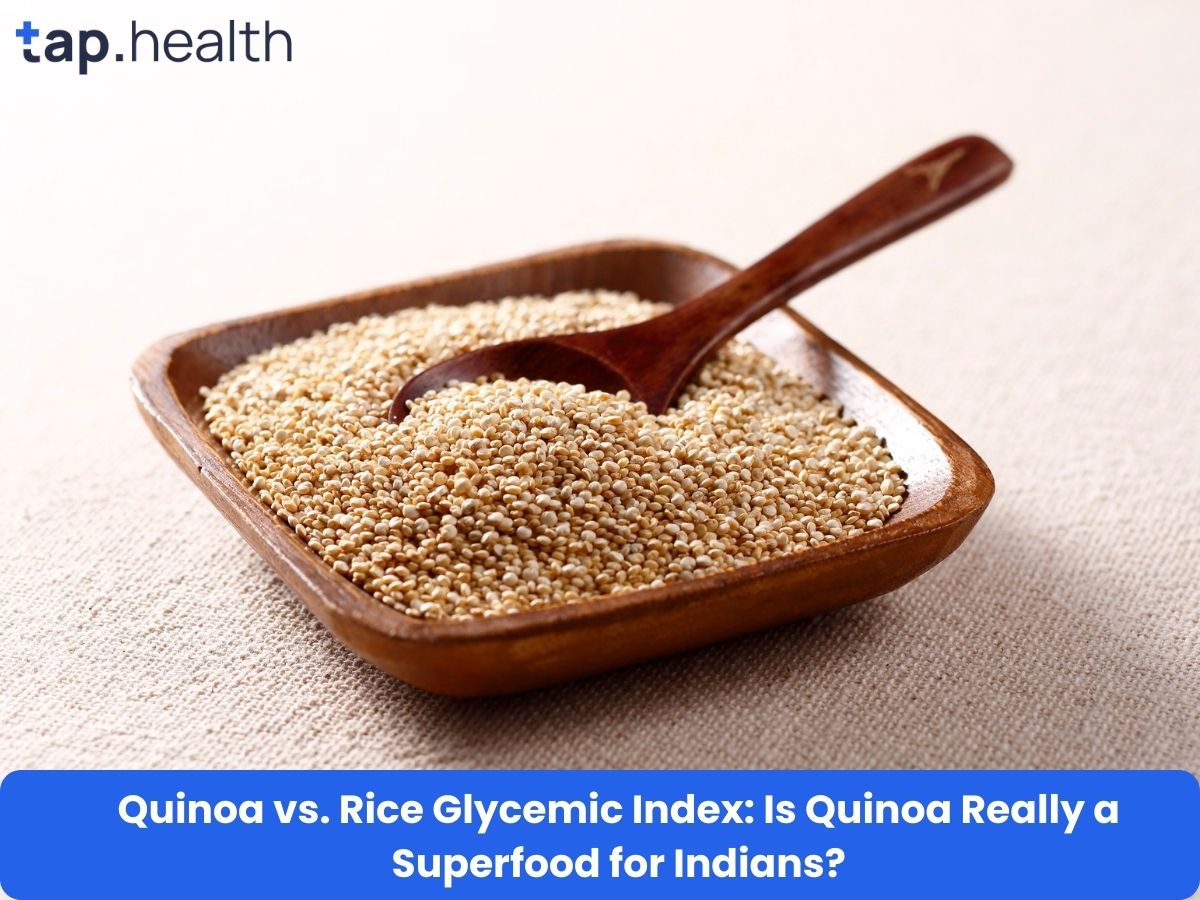
Walk into any modern Indian supermarket, and you will see a strange new guest sitting on the shelf next to our beloved Basmati rice. It consists of tiny, bead-like grains, comes in fancy packaging, and carries a price tag that might make your eyebrows jump.
Its name is Quinoa (pronounced Keen-wah).
Fitness influencers swear by it. Dietitians recommend it. Bollywood celebrities post photos of their “Quinoa Salad.” But for the average Indian household, the question remains: Is it actually worth it?
We Indians love our rice. It is comfort food. It is tradition. Is this imported “superfood” really better than our humble Chawal, or is it just another marketing hype?
To find the answer, we need to look beyond the trendiness and look at the science. We need to compare the Quinoa vs. Rice Glycemic Index.
In this detailed guide, we will break down the nutritional battle between these two grains. We will analyze the sugar spikes, the protein content, and the cost-benefit ratio to help you decide if you should make space for Quinoa in your kitchen.
What is Quinoa? (The “Pseudo-Grain”)
First, let’s clear up a misconception. Quinoa is technically not a grain.
It is a seed. It belongs to the same family as spinach and beetroot. However, because we cook and eat it like a grain (just like rice or dalia), it is called a “pseudo-cereal.”
- Origin: It comes from the Andes mountains in South America (places like Peru and Bolivia).
- The “Super” Factor: Unlike wheat or rice, Quinoa is a Complete Protein. This means it contains all nine essential amino acids that our body cannot make on its own. This is extremely rare for a plant food, making it a goldmine for vegetarians.
Understanding Glycemic Index (GI)
To judge if Quinoa is better for your blood sugar than rice, we use the Glycemic Index (GI).
Think of GI as a speedometer for your glucose levels. It measures how fast a food converts into sugar and hits your bloodstream on a scale of 0 to 100.
- Low GI (0-55): Digests slowly. Releases energy steadily. (Best for Diabetics).
- Medium GI (56-69): Moderate rise. Safe in moderation.
- High GI (70+): Digests instantly. Causes a rapid “sugar spike” like rocket fuel.
For a diabetic or anyone trying to lose belly fat, the goal is to eat Low GI foods.
Quinoa vs. Rice Glycemic Index: The Numbers
Let’s get straight to the comparison. How does this exotic seed stack up against our staple grain?
1. White Rice Glycemic Index
The GI of White Rice is High, typically around 73.
White rice is stripped of its bran and fiber. It is almost pure starch. When you eat it, it turns to sugar very quickly, leading to an insulin spike. This is why doctors ask diabetics to reduce rice intake.
2. Brown Rice Glycemic Index
The GI of Brown Rice is Medium, typically around 68.
It is better than white rice because of the fiber, but it is still relatively high in carbohydrates.
3. Quinoa Glycemic Index
The Glycemic Index of Quinoa is Low, typically around 53.
The Winner: Quinoa.
With a GI of 53, Quinoa sits comfortably in the “Low” zone. It digests much slower than rice. This means you don’t get that sudden sleepy feeling (post-meal slump) after eating it, and your blood sugar remains stable.
Nutritional Showdown: Protein & Fiber
The GI is important, but Quinoa’s real power lies in its nutrient density. Let’s compare 1 cup of cooked Quinoa vs 1 cup of cooked White Rice.
| Nutrient (1 Cup Cooked) | White Rice | Quinoa | The Winner |
| Glycemic Index | 73 (High) | 53 (Low) | Quinoa |
| Protein | ~4 g | ~8 g | Quinoa (Double!) |
| Fiber | ~0.6 g | ~5 g | Quinoa (8x more!) |
| Carbohydrates | ~45 g | ~39 g | Quinoa (Lower carb) |
| Iron & Magnesium | Low | High | Quinoa |
Why This Matters:
- The Protein Edge: For an Indian vegetarian diet, which is often low in protein, Quinoa is a game-changer. It provides the building blocks for muscle repair that rice simply cannot.
- The Fiber Factor: Fiber acts as a speed-breaker for digestion. The high fiber in Quinoa is the main reason its Glycemic Index is so low.
Is Quinoa Better for Diabetics?
The short answer is Yes.
The query “Is Quinoa really a superfood for Indians with diabetes?” gets a positive vote from the medical community.
- Insulin Sensitivity: Quinoa is rich in Magnesium. Magnesium helps your cells use insulin more effectively. White rice is devoid of this mineral.
- Satiety: Because of the protein and fiber, a small bowl of Quinoa keeps you full for 3-4 hours. Rice digests in 1 hour, making you hungry (and likely to snack) sooner.
- No Sugar Crash: Stable blood sugar means stable energy levels throughout the day.
Quinoa vs. Indian Alternatives (The Cost Factor)
Here is the catch. Quinoa is expensive.
In India, a kg of good Basmati rice might cost ₹80-100. A kg of Quinoa can cost ₹300-500. This leads to a valid question: Are there cheaper Indian alternatives?
Yes! We have our own ancient grains that rival Quinoa.
- Dalia (Broken Wheat): GI ~55.
- Bajra (Pearl Millet): GI ~54.
- Rajgira (Amaranth): This is the closest Indian relative to Quinoa. It is also a seed and high in protein.
The Verdict on Cost:
If you are on a budget, Bajra and Dalia offer almost the same Low GI benefits as Quinoa for a fraction of the price. However, Quinoa still wins on Protein Quality (Complete Amino Acids) and cooking time (it cooks faster than Dalia).
How to Cook Quinoa Indian Style
One reason people quit Quinoa is the taste. Plain boiled Quinoa can taste bland and earthy. But we Indians know how to fix blandness—Masala!
Don’t eat it like a salad. Eat it like a meal.
- Quinoa Pulao: Replace rice with Quinoa. Add peas, carrots, beans, cumin (jeera), and turmeric. It tastes almost like a nutty Veg Pulao.
- Quinoa Upma: Temper mustard seeds, curry leaves, and onions, then add cooked Quinoa. Squeeze a lemon on top.
- Quinoa Kheer: Yes, you can make a healthier kheer with Quinoa, milk, and jaggery (in moderation).
Important Tip: Always wash Quinoa thoroughly before cooking. The seeds have a natural coating called saponin which tastes bitter and soapy. Washing removes it.
Real-Life Scenario
Let’s meet Anjali, a 29-year-old software engineer from Bangalore.
The Problem:
Anjali works long hours and is a pure vegetarian. She relied heavily on Dal-Chawal for dinner. She felt lethargic, gained weight around her waist, and her blood reports showed borderline sugar levels. She tried cutting rice but felt hungry and weak.
The Switch:
She decided to try Quinoa.
- The Dinner: Instead of 2 bowls of Rice, she ate 1 bowl of Lemon Quinoa with peanuts.
- The Side: She paired it with a thick Dal or Paneer curry.
The Result:
- Fullness: She realized she couldn’t even finish one bowl because the Quinoa was so filling.
- Energy: The “food coma” she used to feel after rice dinners disappeared. She felt lighter.
- Stats: Over 2 months, she lost 3 kgs without “dieting,” simply because her protein intake doubled and her carbs reduced.
Expert Contribution
We consulted nutritional experts to get the professional stance.
Dr. R. Mehta, Diabetologist:
“I recommend Quinoa to my vegetarian patients specifically for the protein. When you replace rice with Quinoa, you are not just lowering sugar; you are adding nutrition. However, I tell them: It is still a carbohydrate. Don’t eat unlimited amounts. Portion control is still key.”
Nutritionist Perspective:
“The texture of Quinoa is distinct—it has a slight ‘pop’ when you bite it. Some elders dislike it. For them, I suggest mixing Quinoa with Rice (50:50) initially. This lowers the overall GI of the meal while keeping the familiar taste of rice.”
Recommendations Grounded in Proven Research and Facts
Based on data from Harvard Health and general nutritional guidelines, here are actionable tips:
- The “Rinse” Rule: Never skip washing. Rinse it under running water in a fine mesh strainer for at least 30 seconds to remove bitterness.
- The Fluff Factor: Use a 1:2 ratio (1 cup Quinoa, 2 cups water). Once cooked, let it sit covered for 5 minutes, then fluff with a fork. This prevents it from becoming mushy.
- Vegetable Loading: To make it even healthier, follow the 1:1 rule. For every cup of Quinoa, add a cup of chopped vegetables. This lowers the Glycemic Load further.
- Don’t Abandon Indian Millets: If Quinoa is too expensive, rotate it. Eat Quinoa on weekends and Bajra/Jowar rotis on weekdays. Variety is the spice of health.
Key Takeaways
- Quinoa has a Low GI (53) compared to White Rice (73), making it superior for blood sugar control.
- It is a Complete Protein, containing all essential amino acids, which is a massive benefit for vegetarians.
- It has 8x more fiber than white rice, keeping you full longer.
- It is more expensive than local grains like Dalia or Bajra, which offer similar GI benefits but less protein.
- It can easily replace rice in Indian dishes like Pulao, Upma, or Khichdi.
Conclusion
So, Quinoa vs. Rice Glycemic Index: Is Quinoa Really a Superfood?
Yes, it is.
In the battle against diabetes and obesity, Quinoa is a powerful weapon. It allows rice-loving Indians to enjoy a grain-like meal without the massive sugar spike of white rice. It nourishes your body with protein and fiber rather than just filling it with starch.
While it is pricier than our local grains, the health investment is often worth it. You don’t have to eat it every day. But swapping your white rice for Quinoa even three times a week can make a significant difference to your waistline and your blood sugar levels.
Frequently Asked Questions (FAQ)
Is Quinoa better than Brown Rice?
Yes. While both are whole grains, Quinoa has a lower Glycemic Index (53 vs 68) and significantly higher protein content than brown rice. It is a more nutrient-dense option, especially for vegetarians.
Can diabetics eat Quinoa daily?
Yes. Quinoa is safe for daily consumption by diabetics due to its low Glycemic Index and high fiber content. However, like any carbohydrate, portion control is important. A standard serving is about 1/2 to 1 cup cooked.
Does Quinoa taste like rice?
Not exactly. Quinoa has a nuttier, earthier flavour and a slightly chewy texture with a distinct “pop” when bitten. However, it absorbs flavours well, so when cooked as a Pulao or Biryani with spices, it serves as an excellent rice substitute.
Is Quinoa good for weight loss?
Yes, highly effective. The high protein and fiber content in Quinoa increase satiety (the feeling of fullness). This prevents overeating and snacking between meals, naturally reducing your daily calorie intake.
Is Quinoa gluten-free?
Yes. Quinoa is naturally 100% gluten-free. It is a safe and healthy grain alternative for people with Celiac disease or gluten intolerance who cannot eat wheat (Dalia) or barley.
What are cheap Indian alternatives to Quinoa?
If Quinoa is too expensive, Rajgira (Amaranth) is the closest nutritional match as it is also a protein-rich seed. Dalia (Broken Wheat) and Bajra (Pearl Millet) are also excellent low-GI alternatives that are very affordable.
Do I need to soak Quinoa?
Soaking is not strictly necessary, but rinsing is mandatory. Rinsing removes the bitter saponin coating. Soaking for 15 minutes can help it cook slightly faster and be easier to digest, but a thorough wash is the most important step.
References:
- Harvard T.H. Chan School of Public Health: The Nutrition Source – Quinoa. Link
- WebMD: Health Benefits of Quinoa. Link
- Healthline: Quinoa vs Rice – Which is Healthier? Link
- Medical News Today: Is Quinoa good for diabetes? Link
- University of Sydney: GI Search Database. Link
(Disclaimer: This content is for educational purposes only. Always consult your doctor or a certified dietitian before making significant changes to your diet, especially if you have diabetes or kidney issues.)