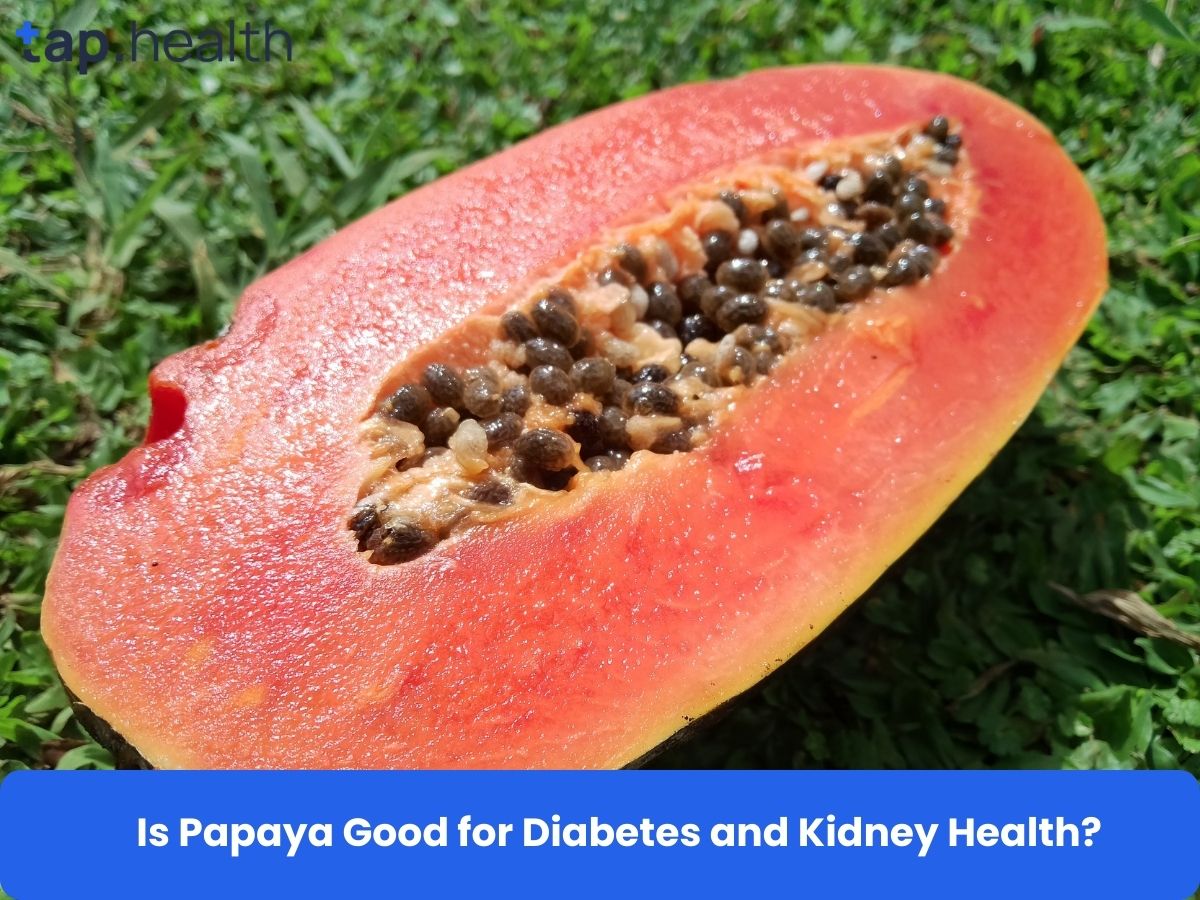
If you live in India, you know that papaya is more than just a fruit—it is practically a household remedy. From curing constipation to glowing skin, our grandmothers have sworn by it for generations. But when you are diagnosed with diabetes or early-stage kidney disease, the rules change.
Suddenly, every bite matters. You look at that bowl of sweet, orange papaya and wonder: “Is it safe? Will it spike my sugar? Will the potassium hurt my kidneys?”
This is a critical question because diabetes and kidney health are deeply connected. High blood sugar often damages the kidneys over time, leading to a condition called Diabetic Nephropathy. So, when choosing a fruit, it has to be safe for both organs.
So, is papaya good for diabetes and kidney health?
The answer is yes, but with a major caution regarding your kidney stage. While papaya is excellent for managing blood sugar due to its fibre and antioxidants, its safety for kidney patients depends entirely on your potassium levels.
In this detailed guide, written in simple Indian English, we will break down the science. We will explore how papaya affects your blood glucose, when it is safe for your kidneys, and the specific signs that mean you should avoid it.
The Double Challenge: Understanding Diabetes and Kidney Health
Before we talk about the fruit, let’s understand the relationship between these two conditions.
The Diabetes-Kidney Connection
High blood sugar is like slow poison for your blood vessels. Over time, it damages the tiny filtering units in your kidneys (nephrons).
- The Result: Your kidneys lose the ability to filter waste properly.
- The Diet Shift: When this happens, you don’t just have to watch your sugar; you also have to watch your potassium and phosphorus intake.
This is where papaya gets tricky. It is low in sugar (good for diabetes) but moderate in potassium (potentially bad for advanced kidney disease).
Nutritional Breakdown: What Is Inside Papaya?
To decide if it is good for you, let’s look at the numbers.
Here is what one cup (approx. 150 grams) of ripe papaya contains:
- Calories: ~60 kcal (Low)
- Carbohydrates: ~15 grams
- Sugar: ~11 grams (Natural Fructose)
- Fibre: ~3 grams
- Potassium: ~260 mg (Moderate)
- Vitamin C: ~140% of Daily Requirement
- Glycemic Index (GI): 60 (Medium)
For a diabetic, the low calories and high fibre are perfect. For a kidney patient, that 260 mg of potassium is the number to watch.
Is Papaya Good for Diabetes? (The Sugar Impact)
If we look strictly at diabetes, papaya is a “green light” fruit for most people.
1. The Glycemic Index (GI) Factor
Papaya has a Medium GI of 60. This means it raises blood sugar moderately.
- Why it’s safe: While the GI is medium, the Glycemic Load (GL) is low because papaya is mostly water. You would have to eat a huge amount to get a dangerous sugar spike.
- The Fibre Effect: The fibre in papaya acts like a speed breaker. It slows down the digestion of sugar, preventing sudden spikes after meals.
2. Insulin Sensitivity
Papaya is rich in antioxidants like flavonoids. Research suggests that these compounds help protect the pancreas cells that produce insulin, potentially helping your body use insulin better over time.
3. Weight Management
Obesity is the biggest enemy of Type 2 diabetes. Papaya is filling but low in calories. Eating a bowl of papaya as a mid-morning snack stops you from reaching for unhealthy biscuits or namkeen.
Is Papaya Good for Kidney Patients? (The Potassium Factor)
This is the most critical section of this article. Is it safe for your kidneys? That depends on your CKD Stage (Chronic Kidney Disease Stage).
For Early-Stage Kidney Disease (Stages 1-3)
Verdict: YES, IT IS GOOD. In the early stages, your kidneys can still filter potassium effectively.
- Benefit: The antioxidants and Vitamin C in papaya reduce inflammation in the kidneys.
- Benefit: The fibre helps prevent constipation, which reduces the strain on the kidneys.
- Benefit: Keeping blood sugar controlled (using papaya instead of sweets) prevents further kidney damage.
For Advanced Kidney Disease (Stages 4-5) or Dialysis
Verdict: CAUTION / AVOID. In advanced stages, your kidneys cannot remove excess potassium from the blood.
- The Risk: High potassium levels (Hyperkalemia) can cause irregular heartbeats or sudden heart attacks.
- The Rule: Since papaya has a moderate amount of potassium (260mg), it might be too much if you are on a “Low Potassium Diet” (usually restricted to 2000mg per day). You must count it carefully within your daily limit.
Raw Papaya vs. Ripe Papaya: Which Is Better?
In India, we eat papaya in two forms: the sweet orange fruit (ripe) and the green vegetable (raw).
Raw Green Papaya
- Sugar: Very low.
- Potassium: Similar to ripe papaya.
- Best for: Patients with high blood sugar who want a savoury vegetable option. It is great in salads or cooked as a sabzi. The enzymes in raw papaya are excellent for digestion.
Ripe Orange Papaya
- Sugar: Moderate.
- Potassium: Moderate.
- Best for: A sweet snack to curb cravings. It is richer in antioxidants like Lycopene which protects the heart.
Verdict: Both are healthy, but Raw Papaya has a slight edge for strict blood sugar control.
5 Health Benefits for Diabetes and Kidney Patients
If your doctor gives the go-ahead, here is why you should eat it:
- Digestion Support: Diabetes often causes digestive issues (gastroparesis). The enzyme Papain in papaya helps digest proteins and keeps your stomach clear.
- Heart Protection: Kidney patients are at high risk for heart disease. Papaya contains Lycopene and Vitamin C, which prevent cholesterol from clogging arteries.
- Boosts Immunity: Diabetics are prone to infections like UTIs. The massive Vitamin C content boosts your immune system to fight off bacteria.
- Reduces Inflammation: Chronic inflammation drives both diabetes and kidney damage. The antioxidants in papaya cool down this inflammation.
- Constipation Relief: Severe constipation puts pressure on the kidneys and spikes blood pressure. Papaya is a natural laxative.
How Much Papaya Should a Diabetic Eat Per Day?
Portion control is the difference between medicine and poison.
- For Diabetics: Limit yourself to 1 cup (150 grams) per day.
- For Kidney Patients: Limit yourself to half a cup (75 grams) per day, and do not eat other high-potassium foods (like tomatoes or spinach) on the same day.
Best Time to Eat:
- Mid-morning snack (11 AM): Keeps metabolism active.
- Evening snack (4 PM): Prevents hunger pangs.
- Avoid: Late at night (metabolism is slow) or right after a heavy meal.
Real-Life Scenario
Let’s look at a typical case.
Meet Mr. Singh (58, Type 2 Diabetes & Early CKD): Mr. Singh loves fruit. He was diagnosed with early kidney issues (Stage 2) alongside his diabetes. He stopped eating all fruit because he was scared of potassium. The Problem: Without fruit fibre, he got constipated, and his blood sugar spiked because he ate toast instead. The Expert Advice: His dietitian corrected him. “Mr. Singh, your potassium is normal right now. You need fruit.” The Solution: He started eating one small bowl of papaya every alternate day. The Result: His constipation vanished, his sugar cravings reduced, and his kidney function remained stable because the portion was controlled.
Read this: Can Papaya Be Eaten by Diabetics?
Expert Contribution
We consulted Dr. V. Rao, a Senior Nephrologist, to get clarity.
“There is a myth that kidney patients must stop all fruits. This is dangerous. We only restrict fruit if the potassium blood test is high (above 5.0). For a diabetic with early kidney disease, papaya is actually beneficial because it replaces high-sugar desserts. The danger only comes in Stage 4 or 5. If you are on dialysis, ask your doctor before eating it. Otherwise, enjoy it in moderation.”
Recommendations Grounded in Proven Research and Facts
According to the National Kidney Foundation and American Diabetes Association:
- Potassium Leaching: If you want to reduce potassium in raw papaya (cooking vegetable), chop it into small pieces and soak it in warm water for 2 hours before cooking. This removes some of the potassium.
- Pair It Up: Never eat papaya alone if your sugar fluctuates. Pair it with a few almonds or walnuts. The healthy fats slow down sugar absorption even further.
- No Juice: Do not drink papaya juice. It removes the fibre and concentrates the sugar and potassium, which is bad for both diabetes and kidneys.
Key Takeaways
- The Verdict: Papaya is excellent for diabetes and generally safe for early-stage kidney disease.
- The Potassium Risk: It contains moderate potassium. Patients in Stage 4, 5, or on dialysis must limit or avoid it based on their doctor’s advice.
- Portion Control: Stick to 1 cup (150g) for diabetes and 1/2 cup for kidney issues.
- Raw vs. Ripe: Both are good; raw has less sugar.
- Benefits: Helps digestion, immunity, and heart health.
FAQ: Frequently Asked Questions
Can a kidney patient eat papaya?
Yes, kidney patients in early stages (1-3) can usually eat papaya in moderation as long as their blood potassium levels are normal. However, patients in advanced stages (4-5) or on dialysis must be very careful and should limit it to small portions or avoid it if their potassium is high.
Does papaya increase sugar level?
Papaya has a medium Glycemic Index, so it raises blood sugar moderately. However, because it is high in fibre, it doesn’t cause a sharp spike like fruit juice or sweets. Eating it in controlled portions (1 cup) is safe for most diabetics.
Is raw papaya good for diabetes?
Yes, raw (green) papaya is excellent for diabetes. It has very little sugar compared to ripe papaya and is rich in enzymes and fibre. Cooking raw papaya as a vegetable (sabzi) is a healthy, low-carb addition to a diabetic meal.
Is papaya good for diabetes and cholesterol?
Yes. Papaya is rich in fibre and antioxidants like Lycopene and Vitamin C. These nutrients help prevent cholesterol from oxidizing and sticking to artery walls, reducing the risk of heart blockages, which is a common complication for diabetics.
Can diabetics eat papaya daily?
Yes, most diabetics can eat a small bowl (150g) of papaya daily. It is a healthy way to get daily vitamins and fibre. Just ensure you count it as part of your total carbohydrate intake for the day.
Is papaya good for diabetes type 1?
Yes. People with Type 1 diabetes can also benefit from the fibre and vitamins in papaya. Since they take insulin, they just need to count the carbohydrates in the papaya (approx 15g per cup) and adjust their insulin dose accordingly.
Which fruit is best for diabetes?
While papaya is good, fruits with a lower Glycemic Index are even better. These include Jamun (Black Plum), Guava, Berries, and Apples. Papaya is a great variety fruit to mix into your diet.
How much papaya should a diabetic eat per day?
The recommended limit is one medium cup (approx. 100-150 grams) per day. Eating more than this in one sitting can lead to a higher blood sugar spike.
References
- National Kidney Foundation: Potassium and Your CKD Diet
- American Diabetes Association: Fruit and Diabetes
- WebMD: Papaya Health Benefits
Disclaimer: This article is for educational purposes only. Potassium restrictions vary for every kidney patient. Always consult your nephrologist or dietitian before adding new fruits to your diet.