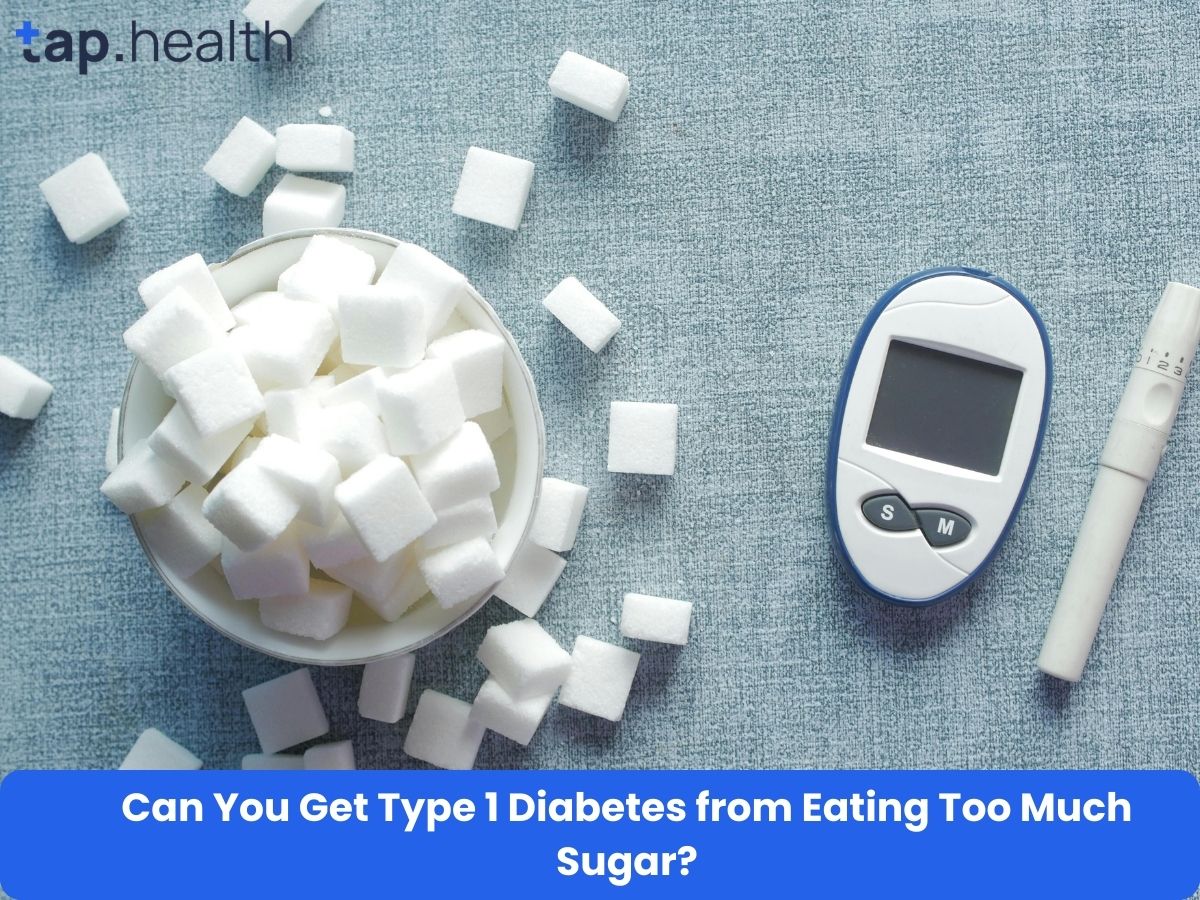
Imagine this scenario: A concerned parent watches their child finish a second bowl of ice cream at a birthday party. A relative leans in and whispers, “Careful, all that sweet will give him sugar disease.”
It is a common fear in Indian households. We associate “sugar disease” (diabetes) directly with eating sweets (mithai, chocolates, excessive sugar). And why not? The name itself suggests it.
But when it comes to Type 1 Diabetes, this common belief is actually a massive medical myth.
This confusion leads to unnecessary guilt. Parents blame themselves for their child’s diagnosis (“I shouldn’t have let her eat those chocolates”). Adults wonder if their sweet tooth in college caused their autoimmune condition.
So, let’s settle this once and for all: Can you get Type 1 diabetes from eating too much sugar?
The short answer is No.
In this detailed guide, written in simple Indian English, we will peel back the layers of this complex condition. We will explain exactly why Type 1 is different from Type 2, what actually causes it (spoiler: it’s not a laddoo), and what happens inside the body of a Type 1 diabetic when they do eat sugar.
The Short Answer: No, It’s Not the Sugar
Let’s be crystal clear right from the start.Eating too much sugar does not cause Type 1 diabetes.
You could eat zero sugar your entire life and still get Type 1 diabetes. Conversely, you could eat sweets every day and never get Type 1 diabetes (though you might get cavities or other issues).
Why? Because Type 1 diabetes is an Autoimmune Disease. It is not a nutritional or lifestyle disease.
- In simple terms: It is a case of mistaken identity inside your body. Your immune system, which is supposed to fight viruses and bacteria, gets confused. It attacks your own pancreas instead.
- The Target: Specifically, it destroys the “Beta Cells”—the tiny factories that make insulin.
- The Result: Your body stops producing insulin forever.
No amount of sugar consumption triggers this attack. Scientists believe it is caused by a combination of genetics and environmental triggers (like a virus), but certainly not by a chocolate bar.
Type 1 vs. Type 2: The “Sugar” Confusion
Why do people think sugar causes diabetes? Because for Type 2 Diabetes, there is a link.
It is crucial to understand the difference so you don’t mix them up.
Type 1 Diabetes (The Autoimmune Condition)
- Cause: Immune system attacks the pancreas.
- Risk Factors: Genetics, family history, viral infections.
- Role of Sugar: Zero. Sugar does not cause it.
- Age: Often diagnosed in children (Juvenile Diabetes), but can happen at any age.
- Prevention: Currently, there is no known way to prevent it.
Type 2 Diabetes (The Lifestyle Condition)
- Cause: The body becomes resistant to insulin (Insulin Resistance).
- Risk Factors: Obesity, inactivity, age, bad diet.
- Role of Sugar: High. Eating too much sugar leads to weight gain. Excess weight makes insulin stop working.
- Prevention: Healthy diet and exercise can prevent or delay it.
The Confusion: Because both diseases result in “High Blood Sugar,” people assume they have the same cause. They don’t. Type 1 is a broken engine; Type 2 is a flooded engine.
What Actually Causes Type 1 Diabetes?
If it wasn’t the extra gulab jamun, what was it? While doctors don’t have a 100% confirmed answer, decades of research point to two main culprits.
1. Genetics (The Loaded Gun)
You are likely born with a genetic predisposition to Type 1 diabetes. Certain genes (passed down from parents) make your immune system slightly more likely to make a mistake. However, genetics alone isn’t enough—many people with these genes never get the disease.
2. Environmental Triggers (The Trigger Pull)
Something in the environment “wakes up” the immune system and tells it to attack the pancreas.
- Viruses: Common viral infections (like enteroviruses) are top suspects.
- Climate: Type 1 is more common in cold climates.
- Early Diet Factors: Some studies look at early exposure to cow’s milk or gluten, but this is not fully proven.
Key Takeaway: None of these triggers involve eating too much sugar.
What Happens When a Type 1 Diabetic Eats Too Much Sugar?
Okay, so sugar didn’t cause the disease. But does that mean a Type 1 diabetic can eat whatever they want?“What happens when a type 1 diabetic eats too much sugar?”
This is where sugar becomes dangerous—not as a cause, but as a complication.
Since a Type 1 diabetic produces zero insulin, they have to inject insulin manually (via pen or pump) to handle the food they eat.
The “Maths” of Eating Sugar
If a Type 1 diabetic wants to eat a slice of cake:
- They must calculate how many carbohydrates (sugar) are in the cake.
- They must calculate the exact dose of insulin needed to cover that sugar.
- They inject the insulin.
- They eat the cake.
The Danger of “Too Much”
If they eat too much sugar (more than they calculated for):
- Hyperglycemia (High Blood Sugar): The blood turns acidic.
- Symptoms: Extreme thirst, frequent urination, fatigue, blurred vision.
- DKA (Diabetic Ketoacidosis): This is a life-threatening emergency. Without enough insulin, the body starts burning fat for fuel, releasing toxic acids called ketones. This requires immediate hospitalisation.
So, while sugar didn’t cause the condition, managing sugar intake is the daily job of a Type 1 diabetic to stay alive.
Can Type 1 Diabetes Convert to Type 2?
This is a frequently asked question: “Can Type 1 diabetes convert to Type 2?”
Technically, No. Your Type 1 will never “turn into” Type 2. The beta cells are destroyed; they won’t grow back to become insulin resistant.
However, a new phenomenon is emerging called “Double Diabetes.”
- Scenario: A person has Type 1 diabetes (no insulin production).
- Lifestyle: They eat too much sugar and gain a lot of weight.
- Result: The insulin they inject stops working well because their body becomes resistant to it (just like Type 2).
- Diagnosis: They now have Type 1 (autoimmune) AND Insulin Resistance (Type 2 feature).
So, while one doesn’t convert to the other, you can suffer from the problems of both if you abuse sugar.
Can You Get Diabetes from Eating Too Much Sugar Once?
We often panic after a heavy festival binge.“Can you get diabetes from eating too much sugar once?”
No.
- Type 1: As we learned, sugar is irrelevant to the cause.
- Type 2: It takes years of metabolic damage to develop. One day of bingeing will not break your metabolism.
However, for an undiagnosed Type 1 diabetic, a heavy sugar binge might be the moment they notice the symptoms.
- Example: A child has undiagnosed Type 1. Their pancreas is failing, but they feel okay. They drink a huge soda. Their blood sugar spikes massively because there is no insulin. They suddenly feel very sick.
- The Myth: The parents think, “The soda caused the diabetes.”
- The Reality: The diabetes was already there; the soda just revealed it.
Real-Life Scenario
Let’s look at a relatable story to break the stigma.
Meet Ananya (14, Student): Ananya was diagnosed with Type 1 Diabetes. Her aunties immediately started whispering, “She used to eat so many chocolates as a kid, that’s why.” The Impact: Ananya felt guilty. Her parents stopped buying sweets for the whole house.The Doctor’s Visit: The endocrinologist sat the family down. He explained, “Ananya’s immune system attacked her pancreas. It had nothing to do with chocolate. Even if she ate only boiled vegetables her whole life, this likely would have happened.” The Relief: The guilt lifted. Ananya learned that she can still eat chocolate occasionally, as long as she takes the right insulin dose for it.
Expert Contribution
We consulted Dr. R. Chawla, a Pediatric Endocrinologist, to clear the air.
“The biggest myth I fight every day is the ‘Sugar Blame Game.’ Parents cry in my office, thinking they poisoned their child with sweets. I have to tell them: You did nothing wrong. Type 1 Diabetes is biological bad luck. It is not a nutritional failure. Please stop blaming the diet. Instead, focus on how to manage the condition now that it is here.”
Read this: Is Thirst a Symptom of Diabetes?
Recommendations Grounded in Proven Research and Facts
According to the American Diabetes Association (ADA) and JDRF (Juvenile Diabetes Research Foundation):
- Stop the Blame: If you or your child has Type 1, let go of the guilt. Diet did not cause this.
- Carb Counting is Key: A Type 1 diabetic can eat sugar, but they must be experts at “Carb Counting.” Every gram of sugar must be matched with insulin.
- Watch out for DKA: If a Type 1 diabetic consumes excess sugar without insulin, they can enter Ketoacidosis within hours. Always keep ketone test strips at home.
Key Takeaways
- The Verdict: You cannot get Type 1 diabetes from eating too much sugar.
- The Cause: Type 1 is an autoimmune disease caused by genetics and environmental triggers (like viruses).
- The Confusion: Sugar causes weight gain, which is a risk for Type 2 diabetes, not Type 1.
- The Reality: A Type 1 diabetic can eat sugar, but they must inject insulin to balance it.
- The Warning: Eating excess sugar without insulin leads to DKA, a medical emergency.
FAQ: Frequently Asked Questions
Can excess intake of sugar cause diabetes?
It depends on the type. Excess sugar intake can lead to obesity and insulin resistance, which causes Type 2 Diabetes. However, excess sugar does not cause Type 1 Diabetes, which is autoimmune.
Does sugar cause type 1 diabetes?
No. Type 1 diabetes is caused by the immune system destroying the insulin-producing cells in the pancreas. This attack is triggered by genetics and viruses, not by eating sugar.
What happens when a type 1 diabetic eats too much sugar?
If they eat sugar without taking enough insulin, their blood sugar rises dangerously high (Hyperglycemia). This can lead to thirst, fatigue, and eventually Diabetic Ketoacidosis (DKA), which is life-threatening.
Can type 1 diabetes be cured by stopping sugar?
No. Once the beta cells are destroyed, they cannot regenerate. Stopping sugar will not bring the insulin back. A Type 1 diabetic needs insulin injections for life, regardless of their diet.
Can we get diabetes from eating too much sugar in one day?
No. You cannot get Type 1 or Type 2 diabetes from a single day of binge eating. It takes years for Type 2 to develop, and Type 1 is unrelated to diet.
Can type 1 diabetes convert to type 2?
No, the disease itself doesn’t change. However, a Type 1 diabetic can develop “Double Diabetes” if they gain too much weight. This means they have Type 1 (no insulin) plus Insulin Resistance (Type 2 feature), making their condition harder to manage.
Can you get diabetes from eating too much fruit?
You cannot get Type 1 diabetes from fruit. For Type 2 diabetes, whole fruit is generally safe and protective. However, drinking excessive fruit juice (sugar without fibre) can contribute to the weight gain that leads to Type 2.
Does eating too much sweet cause diabetes in kids?
Eating too much sweet does not cause Type 1 diabetes in kids. However, it can cause childhood obesity, which is leading to a rise in Type 2 Diabetes in children—something that used to be rare.
References
- JDRF (Juvenile Diabetes Research Foundation): Causes of Type 1 Diabetes
- American Diabetes Association: Diabetes Myths
- Mayo Clinic: Type 1 Diabetes Symptoms and Causes
- Centers for Disease Control and Prevention (CDC): What is Type 1 Diabetes?
- National Health Service (NHS UK): Causes of Type 1 Diabetes
Disclaimer: This article is for educational purposes only. If you notice symptoms like excessive thirst, weight loss, or frequent urination in your child, please consult a pediatrician immediately.