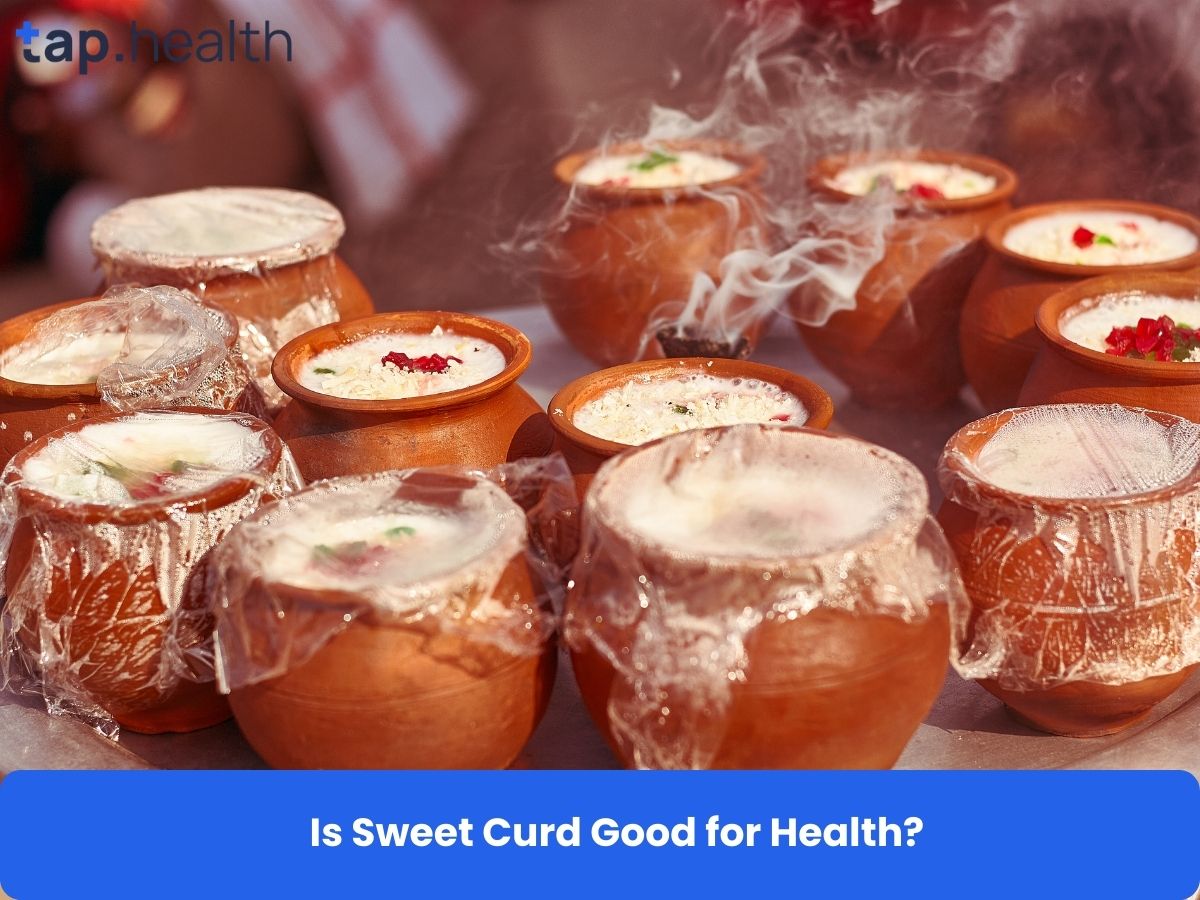
Imagine this: You have just finished a spicy meal of Biryani or Curry. Your stomach feels a bit heavy, and your tongue is burning. Then, someone places a clay pot of chilled, creamy Mishti Doi (Sweet Curd) or a bowl of fresh homemade Dahi-Cheeni in front of you. It feels like heaven, doesn’t it?
In India, sweet curd isn’t just food; it is an emotion. From the famous Mishti Doi of Bengal to the Lassi of Punjab and the auspicious Dahi-Cheeni given before exams, we have grown up believing that sweet curd is good for us.
But in today’s world of calorie counting and sugar scares, a doubt creeps in: Is sweet curd actually good for health? Or is it just a sugar bomb disguised as a healthy probiotic?
The answer is not a simple Yes or No. It depends on how it is sweetened, how much you eat, and who is eating it.
In this comprehensive, deep-dive guide written in simple Indian English, we will spoon out the truth. We will explore whether sweet curd helps with weight loss or causes weight gain, if it kills the good bacteria, and whether you should switch to plain curd immediately.
What Is Sweet Curd? (More Than Just Sugar)
Before we judge it, let’s define it. Sweet curd is simply yogurt (curd) that has been sweetened. However, the source of sweetness matters immensely.
In India, we typically see three types:
- Homemade Dahi-Cheeni: Fresh plain curd mixed with white sugar. This is the most common form.
- Mishti Doi (Fermented Sweet Curd): This is different. Here, milk is thickened and sweetened with Jaggery (Gud) or caramelized sugar before fermentation. The bacteria ferment the sweetened milk, creating a unique, custard-like texture.
- Packaged Sweet Curd (Flavored Yogurt): Brands like Amul, Mother Dairy, or Hatsun sell cups of sweet curd. These often contain added flavors (Vanilla, Mango) and preservatives.
Nutritional Snapshot (Per 100g Bowl):
- Plain Curd: ~60 Calories, 3g Sugar (Natural Lactose).
- Sweet Curd (Homemade): ~100-120 Calories, 10-15g Sugar.
- Packaged Flavored Yogurt: ~120-150 Calories, 15-20g Sugar.
As you can see, adding sugar doubles the calories. But does that make it “bad”? Not necessarily.
Health Benefits of Sweet Curd (Why We Love It)
Despite the sugar, sweet curd has significant health benefits, especially when eaten in moderation.
1. Instant Energy Booster
This is why your mother gave you Dahi-Cheeni before an exam!
- The Science: The glucose in sugar enters your bloodstream instantly, providing fuel for your brain and muscles.
- The Buffer: The protein in the curd slows down the absorption slightly, preventing a nasty “sugar crash” later. It wakes you up and keeps you alert.
2. Cooling the Body (Pitta Pacifier)
In Ayurveda, curd is considered moist and heavy. When mixed with sugar (especially Rock Sugar or Mishri), its cooling properties increase.
- Summer Relief: It is excellent for reducing body heat, preventing nosebleeds in summer, and soothing a burning stomach after a spicy meal.
3. Digestion and Gut Health
Does adding sugar kill the bacteria? No.
- The Myth: Many people think sugar destroys probiotics.
- The Fact: Bacteria actually feed on sugar (that is what fermentation is!). Unless the sugar concentration is extremely high (like jam), the probiotics in sweet curd are still alive and helpful.
- Benefit: It helps settle acidity and indigestion.
4. Healthy Weight Gain
For toddlers, growing children, or people recovering from illness who need to gain weight, sweet curd is a superfood. It provides calorie-dense nutrition without being “junk food” like chips or soda.
Sweet Curd vs. Sour Curd: Which Is Better?
This is the ultimate showdown: Sweet curd or sour curd, which is better?
| Feature | Sweet Curd (Mishti Doi) | Sour Curd (Plain/Old) | Winner |
| Taste | Sweet, creamy, dessert-like. | Tangy, acidic. | Sweet (for taste) |
| Probiotics | Good. | Excellent. | Sour |
| Calories | High (due to sugar). | Low. | Sour |
| Digestion | Good for acidity. | Best for metabolism. | Sour |
| Nutrients | Calcium + Energy. | Calcium + Vitamin B12. | Sour |
The Verdict:
- For Health & Weight Loss: Sour/Plain Curd is the clear winner.
- For Taste & Energy: Sweet Curd wins.
Why is Sour Curd better for health?
As curd sours, the bacteria (Lactobacilli) multiply and consume more of the lactose (milk sugar). This means sour curd has more probiotics and less sugar than sweet fresh curd.
Is Sweet Curd Good for Weight Loss?
This is a tricky question. Many people search for “is sweet curd good for weight loss” hoping for a “Yes.”
The Honest Truth: No, Sweet Curd is generally NOT good for weight loss.
Here is why:
- Empty Calories: The sugar you add provides zero nutrition, only calories. If you eat a bowl of sweet curd (150 calories) after lunch every day, you are adding over 1,000 extra calories a week. That equals 1/2 kg of potential weight gain per month.
- Insulin Spike: Sugar spikes your insulin. When insulin is high, your body switches to “Fat Storage Mode” rather than “Fat Burning Mode.”
How to eat it if you are on a diet:
- Swap the Sugar: Use Stevia (natural sweetener) or a small amount of Honey.
- Portion Control: Treat it as a dessert, not a main course. Eat only half a cup.
Is Sweet Curd Good for Diabetes?
If you are a diabetic asking, “Is sweet curd good for diabetes?”, the answer is a strict NO.
- The Danger: Plain curd has a low Glycemic Index (GI ~28). But once you add sugar, the GI shoots up to 60 or 70. This causes rapid blood sugar spikes.
- Packaged Yogurts: These are even worse. A small cup of strawberry yogurt can have as much sugar as a soft drink.
- The Alternative: Diabetics should eat Plain Curd or Salted Buttermilk (Chaas) with roasted cumin (jeera). The jeera actually helps lower blood sugar!
Sweet Curd Benefits for Skin
Believe it or not, sweet curd can give you a glow—both when you eat it and apply it.
1. Eating It (Internal Glow)
Gut health reflects on your face. By improving digestion and cooling the body, sweet curd reduces the internal heat (“Pitta”) that often causes acne, boils, and rashes.
2. Applying It (Face Mask)
You can apply sweet curd (mixed with honey or turmeric) to your face.
- Lactic Acid: Exfoliates dead skin cells.
- Zinc: Reduces acne inflammation.
- Moisture: The fats in the curd moisturize dry skin.
- Tip: For oily skin, use sour curd. For dry skin, sweet curd/fresh curd is better.
Does Adding Sugar to Curd Kill Bacteria?
A common fear is: “Does adding sugar to curd kill bacteria?”
Rest assured, it does not.
In fact, in the initial stages, bacteria love sugar. It is their food source. However, there is a limit.
- Moderate Sugar: Bacteria survive and thrive. You still get the probiotic benefits.
- Excessive Sugar: If the curd is preserved in heavy sugar syrup (like canned sweets), the high osmotic pressure might reduce bacterial activity.
- Conclusion: Your homemade bowl of Dahi-Cheeni is still full of healthy bacteria.
Side Effects of Sweet Curd
While delicious, eating too much can cause issues. Here are the curd with sugar side effects:
- Weight Gain: As discussed, the extra calories lead to belly fat.
- Cavities: Sugar sticks to your teeth. The lactic acid in curd + sugar is a recipe for tooth decay if you don’t rinse your mouth.
- Mucus Buildup (Kapha):
- Is sweet curd good at night? Ayurveda says No. Sweet, cold, and heavy foods increase mucus. Eating sweet curd at night can worsen coughs, colds, sinus issues, and asthma.
- Acne Breakouts: For some people, the combination of Dairy + Sugar triggers hormonal acne.
Packaged Sweet Curd vs. Homemade
Is that cup of “Hatsun Sweet Curd” or “Amul Misti Doi” good for health?
Packaged Curd:
- Pros: Convenient, consistent taste.
- Cons: Often contains thickeners (corn starch), preservatives, and very high amounts of refined sugar. Some don’t even use real fermentation but just thicken milk artificially.
Homemade Curd:
- Pros: You control the sugar. No preservatives. Live bacteria are guaranteed.
- Cons: Taste varies day to day.
Recommendation: Always choose Homemade over packaged. If you must buy packaged, read the label. If “Sugar” is the second ingredient, avoid it.
Real-Life Scenario
Meet Rohan (24, Gym Goer):
Rohan wanted to bulk up (gain muscle). He was eating plain curd but found it boring. He started adding 2 tablespoons of sugar to his curd bowl daily.
The Problem: After 2 months, he gained weight, but it was mostly belly fat, not muscle. He also felt lethargic in the afternoons.
The Solution: His trainer told him to switch the sugar for Banana and Honey.
The Result: The banana provided potassium for his muscles, and honey provided sweetness with antioxidants. He got the taste he wanted without the refined sugar crash, and his belly fat started reducing.
Expert Contribution
We consulted Dr. S. Nair, a Senior Dietician, about the sweet curd habit.
“I see many patients who think ‘Sweet Lassi’ is a healthy drink. I have to remind them that a large glass of Lassi at a restaurant can have 300 calories and 6 spoons of sugar! That is a meal, not a drink. Sweet curd is fine as an occasional dessert—treat it like ice cream. But for daily health, your curd must be plain or salted. If you crave sweetness, add fruit chunks like mango or pomegranate. That adds fiber, which negates the sugar spike.”
Read this: Is Curd Good for Diabetes?
Recommendations Grounded in Proven Research and Facts
Based on guidelines from the National Institute of Nutrition (India) and Ayurvedic principles:
- The “One Spoon” Rule: If you must eat sweet curd daily, limit the added sugar to one teaspoon (approx. 4g). This keeps the calorie load manageable.
- Use Jaggery (Gud): Make authentic Bengali Mishti Doi using palm jaggery. Jaggery contains iron and minerals that white sugar lacks. It is also warmer in nature, making it better for digestion.
- Best Time to Eat: Eat sweet curd in the Morning or Afternoon. Avoid it after sunset to prevent phlegm/mucus.
- Pair it Right: Do not pair sweet curd with heavy, greasy parathas. It becomes too heavy to digest. Eat it with lighter meals like Khichdi or Rice.
Conclusion: Key Takeaways
So, is sweet curd good for health?
- Yes, for: Instant energy, cooling the body in summer, digestion relief, and healthy weight gain for kids.
- No, for: Diabetics, weight loss plans, and people prone to cold/cough at night.
- The Verdict: Sweet curd is a healthier dessert than cake or ice cream because it contains protein and probiotics. But it is still a dessert.
Key Actionable Advice:
- Enjoy Dahi-Cheeni occasionally for good luck and energy.
- For daily eating, stick to Plain Curd.
- If you have a sweet tooth, switch to Jaggery or Honey instead of refined sugar.
Go ahead and enjoy that spoon of sweetness—just keep it in moderation!
FAQ: Is Sweet Curd Good for Health?
Is sweet curd good for weight loss?
No. Sweet curd contains added sugar which increases calorie intake and spikes insulin, leading to fat storage. For weight loss, stick to plain low-fat curd or buttermilk.
Does adding sugar to curd kill bacteria?
No, adding sugar does not kill the good bacteria (probiotics) in curd. They survive well in moderate sugar. However, extremely high sugar levels (like in preserved jams) can reduce their activity.
Sweet curd or sour curd: which is better?
Sour curd (plain) is better for general health, weight loss, and diabetes because it has lower sugar and higher probiotic activity. Sweet curd is better for instant energy and taste.
Is sweet curd good for diabetes?
No. The added sugar causes rapid blood sugar spikes. Diabetics should avoid sweet curd and opt for plain curd or salted buttermilk to manage glucose levels safely.
Can I eat sweet curd every day?
If you are active, healthy, and not overweight, a small bowl daily is fine. However, for most adults with sedentary lifestyles, eating refined sugar daily is not recommended. Try to limit it to 2-3 times a week.
What are the benefits of sweet curd?
It provides instant energy (glucose), cools the stomach, reduces acidity, improves gut health with probiotics, and is an excellent source of calcium and protein.
Is sour curd good for health?
Yes, sour curd is excellent. The sourness comes from lactic acid, which helps in absorbing calcium and killing bad bacteria in the stomach. It is very good for digestion.
Is curd with sugar good for skin?
Yes. Eating it cools the body and reduces acne caused by heat. Applying it as a mask moisturizes the skin and the lactic acid helps remove dead skin cells and tan.
References
- Healthline: Yogurt 101: Nutrition Facts and Health Benefits
- WebMD: The Benefits of Probiotics
- National Institutes of Health (NIH): Sugar and the Gut Microbiome
Disclaimer: This article is for informational purposes only and does not constitute medical advice. If you have diabetes or severe lactose intolerance, please consult your doctor before adding sugar or dairy to your diet.