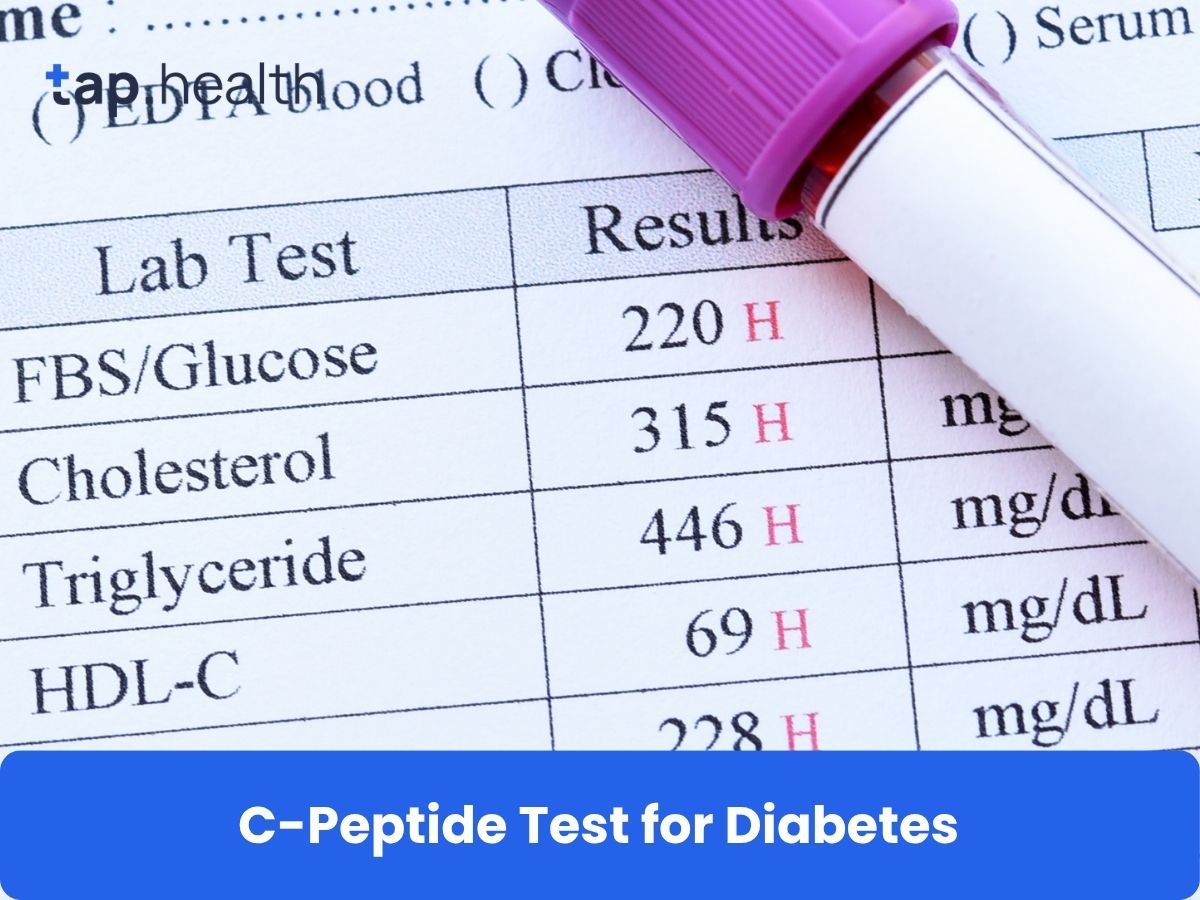
If your doctor has asked you to get a “c-peptide test,” you are probably wondering what it is, why it matters, and what your results really mean. You are not alone — millions of people with diabetes or suspected diabetes get this test every year, yet very few truly understand it.
The good news? It is not complicated at all once someone explains it in plain language.
This guide covers everything about the peptide test for diabetes — from what it is and how it is done, to normal c-peptide levels, cost, fasting rules, and what your results tell your doctor. Whether you have Type 1, Type 2, or are newly diagnosed, this article has the answers you need.
What Is a C-Peptide Test?
C-peptide stands for “connecting peptide.” It is a small protein fragment that your pancreas releases into the bloodstream at the same time as insulin. Think of insulin production like a chain reaction — when your pancreas makes insulin, it splits a larger molecule called proinsulin into two parts: insulin and c-peptide. Both get released in equal amounts.
This is important because it means measuring c-peptide gives doctors a reliable picture of how much insulin your pancreas is actually producing — even when injected insulin would cloud the measurement.
Unlike insulin itself (which gets used up quickly by the body), c-peptide stays in the bloodstream longer and is easier to measure accurately. That is why the c-peptide blood test for diabetes has become such a valuable diagnostic tool.
Why Does the C-Peptide Test Matter in Diabetes?
In diabetes, the core problem is either the pancreas is not making enough insulin (Type 1), or the body is not using insulin properly (Type 2). The c-peptide test helps doctors figure out exactly which situation they are dealing with — which then shapes the entire treatment plan.
Without this test, managing diabetes can feel like guesswork. With it, doctors can make targeted, evidence-based decisions.
C-Peptide Test for Type 1 Diabetes vs. Type 2 Diabetes
Normal C-Peptide Levels in Type 1 Diabetes
In Type 1 diabetes, the immune system attacks the insulin-producing beta cells in the pancreas. Over time, very few (or no) beta cells remain, and the pancreas stops producing insulin altogether.
As a result, c-peptide levels in Type 1 diabetes are typically very low or undetectable — usually below 0.2 nmol/L (or roughly below 0.6 ng/mL). This low reading confirms that the pancreas has lost its ability to produce insulin and that the patient will need lifelong insulin therapy.
A blood test for Type 1 diabetes using c-peptide is especially useful in newly diagnosed adults, where the distinction between Type 1 and Type 2 is not always obvious based on symptoms alone.
Normal C-Peptide Levels in Type 2 Diabetes
In Type 2 diabetes, the pancreas usually still produces insulin — sometimes even more than normal in the early stages, as the body tries to compensate for insulin resistance. Therefore, c-peptide levels in Type 2 diabetes are typically normal or elevated.
Normal c-peptide levels in Type 2 diabetes generally fall in the range of 0.5 to 2.0 nmol/L (or about 1.5 to 6.0 ng/mL), depending on the laboratory and testing conditions.
Over many years, if Type 2 diabetes is poorly managed, beta cell function can decline, and c-peptide levels may fall — a sign that insulin therapy may be needed.
C-Peptide Test Normal Range: What the Numbers Mean
Understanding the c-peptide test normal range is essential for reading your results correctly.
| C-Peptide Level | Interpretation |
|---|---|
| Below 0.2 nmol/L (< 0.6 ng/mL) | Very low — suggests Type 1 diabetes or severe beta cell failure |
| 0.2–0.5 nmol/L (0.6–1.5 ng/mL) | Low — possible early Type 1 or declining beta cell function |
| 0.5–2.0 nmol/L (1.5–6.0 ng/mL) | Normal — typical in healthy individuals and Type 2 diabetes |
| Above 2.0 nmol/L (> 6.0 ng/mL) | High — may suggest insulin resistance, Type 2 diabetes, or insulinoma |
These ranges can vary slightly between laboratories, so always interpret your results in consultation with your doctor, not in isolation.
What C-Peptide Level Is Considered Diabetic?
There is no single “diabetic” c-peptide level — the result must always be interpreted alongside blood glucose levels, HbA1c, symptoms, and clinical history. However, a very low fasting c-peptide (below 0.2 nmol/L) in a diabetic patient strongly suggests insulin-dependent diabetes (Type 1 or late-stage Type 2).
C-Peptide Test Procedure: What Happens During the Test?
The c-peptide test procedure is straightforward and nothing to worry about. Here is what to expect:
Step 1 — Blood Draw: A small sample of blood is drawn from a vein in your arm, usually at a clinic or diagnostic laboratory. The procedure takes just a few minutes.
Step 2 — Urine Option: In some cases, a 24-hour urine collection test may be used instead of, or alongside, the blood test. This is less common but provides useful information about how c-peptide is cleared from the body.
Step 3 — Stimulated Test (Optional): Some doctors order a “stimulated c-peptide test” where you are given a glucose drink or a glucagon injection before the blood draw. This stimulates the pancreas to release insulin (and c-peptide), giving a more accurate picture of how much reserve function the pancreas has.
Step 4 — Lab Analysis: The blood sample is sent to the laboratory, where c-peptide levels are measured using immunoassay techniques. Results are usually available within 24–48 hours.
C-Peptide Test Fasting or Not: Do You Need to Fast?
This is one of the most common questions people ask, and the answer depends on the type of test being done.
For a fasting c-peptide test, you will be asked not to eat or drink anything (except water) for at least 8–10 hours before the blood draw. This ensures that c-peptide levels are measured in a baseline state, without the influence of food.
For a stimulated c-peptide test, fasting is also required beforehand, as the test involves giving you a controlled stimulus (glucose or glucagon) after which your blood is drawn.
Always follow your doctor’s specific instructions. If you are unsure whether to fast, call the clinic before your appointment. Taking insulin or other diabetes medications before the test should also be discussed with your doctor, as this can affect results.
C-Peptide Test Results: How to Read and Understand Them
Getting your c-peptide test results back can feel confusing. Here is a simple breakdown:
Low c-peptide result: This means your pancreas is producing little to no insulin. It is commonly seen in Type 1 diabetes, late-stage Type 2 diabetes, and a rare condition called Mody (maturity-onset diabetes of the young). If your c-peptide is very low and your blood sugar is high, your doctor will likely prescribe or adjust insulin therapy.
Normal c-peptide result: This suggests your pancreas is still functioning well. If you have high blood sugar alongside normal c-peptide, the problem is likely insulin resistance rather than insulin deficiency — pointing more toward Type 2 diabetes. Management would typically focus on lifestyle changes, oral medications, and weight management.
High c-peptide result: Elevated c-peptide can indicate that your body is overproducing insulin to compensate for insulin resistance. It can also indicate a rare tumour of the pancreas called an insulinoma, which causes the pancreas to make too much insulin.
C-Peptide Test vs. Insulin Test: What Is the Difference?
Both the c-peptide test and the insulin test measure how much insulin your pancreas is producing — but they do it differently, and each has specific advantages.
The insulin test directly measures insulin levels in the blood. However, it cannot distinguish between the insulin your pancreas made and the insulin you may have injected. This makes it unreliable in people already on insulin therapy.
The c-peptide test solves this problem. Since c-peptide comes only from the pancreas (it is not present in manufactured insulin injections), it gives a clean, unbiased reading of how much insulin your own body is producing — regardless of what insulin you may be taking.
For this reason, the c-peptide test is generally preferred for people already on insulin. In people not on insulin, both tests may be used together for a more complete picture.
What Labs Test for Insulin Resistance?
Insulin resistance is a condition where your body’s cells do not respond properly to insulin — often a precursor to Type 2 diabetes. Alongside the c-peptide test, doctors commonly order a panel of tests to assess insulin resistance:
- Fasting blood glucose — measures blood sugar after an overnight fast
- HbA1c (glycated haemoglobin) — shows average blood sugar over the past 2–3 months
- Fasting insulin levels — elevated fasting insulin is a strong marker of resistance
- HOMA-IR score — calculated using fasting glucose and insulin to quantify insulin resistance
- Lipid panel — high triglycerides and low HDL cholesterol are associated with insulin resistance
- C-peptide test — helps assess beta cell function alongside the above
No single test confirms insulin resistance alone; your doctor looks at the full picture.
What Blood Tests Confirm Diabetes?
If you or your doctor suspect diabetes, several blood tests can confirm the diagnosis:
Fasting Plasma Glucose (FPG): A reading of 126 mg/dL (7.0 mmol/L) or higher on two separate occasions confirms diabetes.
HbA1c Test: An HbA1c of 6.5% or above is diagnostic for diabetes. This test does not require fasting, making it convenient.
Oral Glucose Tolerance Test (OGTT): A two-hour blood sugar level of 200 mg/dL or more after a glucose drink confirms diabetes.
Random Plasma Glucose: A blood sugar of 200 mg/dL or higher in someone with classic diabetes symptoms (frequent urination, excessive thirst, unexplained weight loss) also confirms the diagnosis.
The c-peptide test is not used to diagnose diabetes by itself, but it is used once diabetes is confirmed to classify the type and guide treatment.
What Is the C-Peptide Test for HbA1c? Are They the Same?
No — the c-peptide test and the HbA1c test are very different. They measure different things and serve different purposes.
The HbA1c test measures the average blood glucose level over the past two to three months by looking at how much glucose has attached to haemoglobin in red blood cells. It is used to diagnose diabetes and monitor long-term blood sugar control.
The c-peptide test measures how much insulin the pancreas is producing. It does not measure blood sugar at all.
While both are important in managing diabetes, they answer different questions. HbA1c tells you how well your blood sugar has been controlled. C-peptide tells you how well your pancreas is working.
What Peptide Is Good for Diabetes?
When people search “what peptide is good for diabetes,” they are often asking about therapeutic peptides used in diabetes treatment — which is slightly different from the diagnostic c-peptide test.
Several peptides play important roles in diabetes management:
GLP-1 (Glucagon-Like Peptide-1): This naturally occurring gut peptide stimulates insulin release and reduces appetite. It inspired an entire class of diabetes medications including semaglutide (Ozempic, Wegovy) and liraglutide (Victoza), which have transformed Type 2 diabetes and obesity treatment.
Insulin itself is a peptide hormone and remains the cornerstone of treatment for Type 1 diabetes and many cases of Type 2.
GIP (Glucose-dependent Insulinotropic Polypeptide): Another gut peptide that promotes insulin secretion. Newer dual GLP-1/GIP medications like tirzepatide (Mounjaro) leverage both peptides.
So while c-peptide is used diagnostically, these therapeutic peptides actively help manage blood sugar levels.
C-Peptide Test Cost: What Should You Expect to Pay?
The c-peptide test cost varies depending on where you get it done, whether it is part of a broader panel, and whether your insurance or health coverage is applicable.
In India, the c-peptide test price typically ranges from ₹500 to ₹1,500 at reputable diagnostic laboratories like SRL Diagnostics, Dr. Lal PathLabs, Metropolis, and Thyrocare. Urban cities like Mumbai, Delhi, Bengaluru, and Hyderabad tend to have competitive pricing due to the high number of labs.
In the UK and US, the test may cost anywhere from £25 to £100 (NHS-covered in relevant cases) or $50 to $200 without insurance in the United States.
It is worth noting that public healthcare systems like the NHS in the UK or government hospitals in India may offer this test free of charge or at subsidised rates for eligible patients. Always enquire at your nearest diagnostic centre or hospital lab for current pricing.
Real-Life Scenario
Meet Priya, 34, recently diagnosed with diabetes in Delhi.
Priya’s doctor noticed that her blood sugar was very high despite being young, slim, and otherwise healthy. This was unusual because most young, slim patients do not develop Type 2 diabetes. The doctor ordered a c-peptide test alongside her usual diabetes panel.
Her fasting c-peptide result came back at 0.1 nmol/L — extremely low. This told her doctor immediately that her pancreas was barely producing insulin. Despite being young and slim (features typically associated with Type 2), Priya was actually suffering from a delayed presentation of Type 1 diabetes, sometimes called LADA (Latent Autoimmune Diabetes in Adults).
Based on this one test, Priya’s entire treatment plan changed. Instead of oral tablets (which would have been ineffective), she was started on insulin therapy — the right treatment from the very beginning. The c-peptide test, in her case, was not just useful — it was transformative.
Expert Contribution
Dr. Rajesh Mehta, MD, Endocrinologist (Consultant, Endocrinology & Metabolism, Max Hospital, New Delhi) notes:
“The c-peptide test is one of the most underused yet critically important tools in diabetes care. Many patients spend years on the wrong treatment simply because no one checked their c-peptide levels. In clinical practice, I use it routinely when there is any uncertainty about diabetes type — especially in patients who do not fit the typical profile. It guides whether a patient needs insulin or can be managed with lifestyle changes and oral medication alone.”
The expert recommendation aligns with guidelines from the American Diabetes Association (ADA), which states that c-peptide testing should be considered in all cases where the type of diabetes is clinically uncertain.
Recommendations Grounded in Proven Research and Facts
Based on current clinical evidence and guidelines from the ADA, NHS, and Diabetes UK, here are key evidence-based recommendations:
- Get tested if you are newly diagnosed with diabetes and your doctor is uncertain about the type — especially if you are young, slim, or do not fit the classic Type 2 profile.
- Get tested if your diabetes is not responding to treatment as expected. Poor response to oral medication may indicate low c-peptide and a need for insulin.
- Combine c-peptide testing with HbA1c and fasting glucose for a comprehensive picture of your pancreatic function and blood sugar control.
- Repeat the test over time — c-peptide levels can change as diabetes progresses, and repeating the test every few years helps track beta cell function.
- Always interpret results with a qualified doctor — do not adjust your insulin or medication based on a lab result alone.
Key Takeaways: C-Peptide Test for Diabetes
The c-peptide test for diabetes is one of the most valuable, yet often overlooked, diagnostic tools available to both patients and clinicians. Here is what you should walk away knowing:
C-peptide is a marker of insulin production — low levels mean the pancreas is failing, high or normal levels mean the pancreas is still working. In Type 1 diabetes, c-peptide is typically very low or undetectable. In Type 2 diabetes, it is usually normal to elevated. The test helps differentiate between diabetes types, guiding the right treatment from the start. It is safe, simple, and affordable, costing as little as ₹500 in India. Fasting is generally required before the test, so always check with your doctor. The c-peptide test and HbA1c are not the same — they measure completely different things.
If you have been living with diabetes and have never had your c-peptide levels checked, it may be worth discussing with your doctor. One simple test can change everything about how your diabetes is managed.
Frequently Asked Questions (FAQs) on C-Peptide Test for Diabetes
What is a normal C-peptide level in diabetes?
Normal c-peptide levels typically range from 0.5 to 2.0 nmol/L (1.5 to 6.0 ng/mL). In Type 1 diabetes, levels are usually very low (below 0.2 nmol/L), while in Type 2 diabetes, they tend to be normal or elevated. Always interpret your result alongside your doctor’s clinical assessment.
What is the cost of a C-peptide test in India?
In India, the c-peptide test typically costs between ₹500 and ₹1,500 depending on the city and laboratory. Leading labs like Dr. Lal PathLabs, SRL Diagnostics, and Metropolis offer this test at affordable rates. Government hospitals may offer it at subsidised or no cost.
What peptide is good for diabetes treatment?
GLP-1 (Glucagon-Like Peptide-1) is the most clinically significant therapeutic peptide for diabetes. It stimulates insulin release and is the basis for popular medications like semaglutide (Ozempic) and liraglutide (Victoza). Insulin itself is also a peptide and remains the cornerstone of Type 1 diabetes treatment.
Is the C-peptide test the same as HbA1c?
No, they are completely different tests. HbA1c measures average blood sugar control over 2–3 months, while the c-peptide test measures how much insulin your pancreas is producing. Both are important but answer different clinical questions.
Do I need to fast before a C-peptide test?
Yes, fasting for 8–10 hours is generally required before a fasting c-peptide test. For a stimulated c-peptide test (which involves a glucose or glucagon stimulus), fasting beforehand is also necessary. Always confirm fasting requirements with your doctor or the laboratory.
What does a low c-peptide level mean?
A low c-peptide level (below 0.2 nmol/L) indicates that the pancreas is producing little or no insulin. This is typical in Type 1 diabetes or late-stage Type 2 diabetes where beta cell function has significantly declined. It strongly suggests that insulin therapy is needed.
What does a high c-peptide level mean?
High c-peptide levels (above 2.0 nmol/L) suggest that the pancreas is overproducing insulin, often in response to insulin resistance. It is commonly seen in early-stage Type 2 diabetes and obesity. In rare cases, it can indicate an insulinoma — a tumour of the pancreas that requires further investigation.
What is the C-peptide test for Type 1 diabetes specifically used for?
In Type 1 diabetes, the c-peptide test confirms that the pancreas has lost its ability to produce insulin. It is used to differentiate Type 1 from Type 2, confirm the need for lifelong insulin therapy, and monitor residual beta cell function over time. It is also used in clinical trials to assess whether treatments are preserving pancreatic function.
Can the c-peptide test be done in Hindi-speaking regions of India?
Yes. The c-peptide test (पेप्टाइड परीक्षण) is widely available across all major cities and towns in India, including Hindi-speaking states like Uttar Pradesh, Madhya Pradesh, Bihar, Rajasthan, and Delhi. Reports are available in English, though doctors can explain results in Hindi or any regional language.
How is C-peptide testing different from insulin testing?
The key difference is that injected insulin does not contain c-peptide, while naturally produced insulin always does. This means in patients taking insulin injections, an insulin test would give inaccurate results, whereas a c-peptide test still accurately reflects the pancreas’s own production. C-peptide testing is therefore preferred for people already on insulin therapy.
References
The following authoritative sources were used in the research and preparation of this article:
- American Diabetes Association (ADA) — Standards of Medical Care in Diabetes https://diabetesjournals.org/care
- NHS (National Health Service), UK — C-peptide test information https://www.nhs.uk
- Diabetes UK — C-peptide testing guidance https://www.diabetes.org.uk
- Mayo Clinic — C-peptide test overview https://www.mayoclinic.org
- MedlinePlus / National Library of Medicine (NLM) — C-peptide blood test https://medlineplus.gov/lab-tests/c-peptide-test
- Healthline — What Is the C-Peptide Test? https://www.healthline.com
- WebMD — C-Peptide Test: Purpose, Procedure, and Results https://www.webmd.com
- Harvard Health Publishing — Insulin resistance and diabetes https://www.health.harvard.edu
- World Health Organisation (WHO) — Diabetes Fact Sheet https://www.who.int/news-room/fact-sheets/detail/diabetes
- Endocrine Society — Clinical Practice Guidelines on Diabetes Management https://www.endocrine.org
This article is intended for educational and informational purposes only and does not constitute medical advice. Always consult a qualified healthcare professional for diagnosis and treatment decisions related to diabetes or any other medical condition.