Feeling extremely thirsty all the time. Running to the bathroom every hour. Losing weight without even trying. These symptoms can be alarming, and if you or a loved one is experiencing them, you are probably searching for answers. The big question on your mind is: how do doctors actually figure out if this is type 1 diabetes?
The process of diagnosing type 1 diabetes (T1D) is not just a single blood test. It is a careful investigation that combines checking your blood sugar levels with specialised tests that look for the root cause: an autoimmune attack on your own pancreas. Unlike type 2 diabetes, which is often linked to lifestyle and develops slowly, type 1 diabetes can come on quickly and requires a completely different approach to treatment from day one.
In this guide, we will walk you through every test a doctor might use. We will explain what each test measures in simple, easy-to-understand terms, and we will cover how these tests help distinguish type 1 from type 2 diabetes. Our goal is to give you the knowledge you need so you can understand the process and feel more in control.
First Steps: Blood Glucose Tests That Detect Diabetes
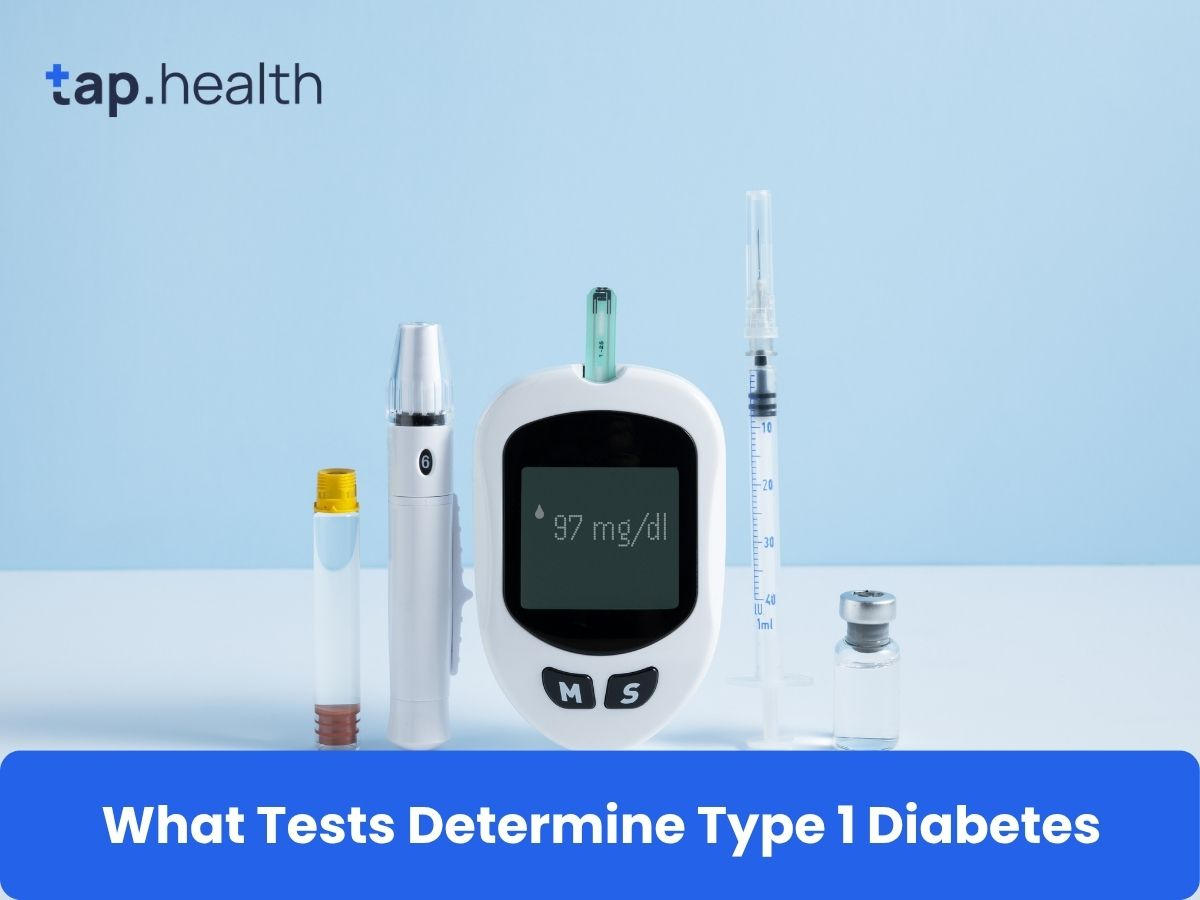
When you first visit a doctor with symptoms of high blood sugar, the initial goal is simply to confirm whether or not you have diabetes. The doctor will use one of three well-established blood tests. These tests diagnose diabetes itself, but they do not tell you which type it is.
Random Blood Sugar Test
This is often the very first test performed, especially if you have clear symptoms and the doctor wants an immediate answer. A blood sample is taken at any random time of day, regardless of when you last ate. If the result is 200 milligrams per deciliter (mg/dL) or higher and you are also experiencing classic symptoms like excessive thirst or frequent urination, this points strongly toward a diabetes diagnosis. The beauty of this test is its speed—you can get an answer in minutes.
Fasting Blood Sugar Test
This test is more controlled. You must not eat or drink anything except water for at least 8 hours before your blood is drawn. A fasting blood sugar level of 126 mg/dL (7.0 mmol/L) or higher on two separate occasions indicates diabetes. This test is a reliable, standard way to diagnose the condition.
Oral Glucose Tolerance Test (OGTT)
This test is less commonly used for routine type 1 diabetes diagnosis but is considered the gold standard for staging the disease and monitoring its early onset. You will fast overnight, have your blood drawn, then drink a sugary solution containing 75 grams of glucose. Your blood is tested again two hours later. A two-hour blood sugar level of 200 mg/dL (11.1 mmol/L) or higher confirms diabetes. The OGTT is particularly sensitive for detecting early-stage type 1 diabetes before symptoms even appear.
The HbA1c Test: Looking at the Big Picture
While the tests above are like snapshots of your blood sugar at a single moment, the HbA1c test is like a time-lapse video. It reveals your average blood sugar level over the past two to three months.
The test measures the percentage of sugar that has attached itself to haemoglobin, the oxygen-carrying protein in your red blood cells. An HbA1c level of 6.5% (48 mmol/mol) or higher on two separate tests is a diagnostic criterion for diabetes. This test is convenient because it does not require fasting.
However, there is a critical warning for type 1 diabetes. Because T1D can develop very rapidly in children and young adults, the HbA1c may not yet be elevated even when blood sugar levels are dangerously high. Medical guidelines from the NHS explicitly warn that relying on an HbA1c or a fasting lab glucose test can dangerously delay a diagnosis and increase the chance of a patient developing a life-threatening condition called diabetic ketoacidosis (DKA). For this reason, if a child has clear symptoms, an immediate random blood sugar test is the correct first step.
Confirming the Type: The Tests That Distinguish Type 1 from Type 2
Once diabetes is confirmed, the next and most crucial question is: which type is it? The treatment for type 1 and type 2 diabetes is fundamentally different. Misdiagnosis can lead to ineffective and even dangerous treatment plans. Doctors use two specific types of tests to make this distinction: autoantibody tests and the C-peptide test.
Autoantibody Tests: Finding the Immune System’s “Mistaken Identity”
Type 1 diabetes is an autoimmune disease. This means your body’s own immune system, which is designed to fight off infections like the flu, gets confused and mistakenly attacks the healthy, insulin-producing beta cells in your pancreas. When this attack happens, your immune system produces unique proteins called autoantibodies. These autoantibodies act like fingerprints at a crime scene—they are the clear, measurable evidence that an autoimmune attack is underway.
Testing for these autoantibodies is the definitive way to confirm a diagnosis of autoimmune type 1 diabetes. The best practice is to test for a panel of specific autoantibodies to achieve the highest possible detection rate.
The Primary Autoantibody Panel Includes:
- GAD65 (Glutamic Acid Decarboxylase) Antibodies: This is the most commonly tested autoantibody. It is present in about 68% of people with new-onset type 1 diabetes and is particularly useful for diagnosing the condition in adults.
- IA-2 (Islet Antigen-2) Antibodies: These are another key marker, found in approximately 72% of people with new-onset T1D.
- ZnT8 (Zinc Transporter 8) Antibodies: This is a newer addition to the panel and is present in about 63% of cases.
- Insulin Autoantibodies (IAA): These are most commonly found in very young children who develop T1D and are present in about 55% of new-onset cases.
The Power of a Combined Panel
When a doctor tests for all of these autoantibodies together—a panel often called the Diabetes Autoimmune Profile—the detection rate for autoimmune diabetes skyrockets. Studies have shown that measuring this combination of GAD-65, IA-2, insulin, and ZnT8 antibodies can identify up to 98% of individuals with new-onset type 1 diabetes. A result that is positive for two or more of these autoantibodies is considered strongly indicative of type 1 diabetes and is used to stage the progression of the disease, even before symptoms appear.
It is important to note that a small percentage of people (5-10%) with type 1 diabetes may test negative for all known autoantibodies, yet they still have the condition. In these cases, the diagnosis relies heavily on clinical presentation and other tests like C-peptide.
The C-Peptide Test: Measuring Your Pancreas’s Remaining Power
The second critical test for distinguishing diabetes type is the C-peptide test. This test is not looking for antibodies; it is measuring how much insulin your own pancreas is still capable of producing.
Here is how it works: When your pancreas makes insulin, it first creates a larger molecule called proinsulin. When insulin is released into your bloodstream, a small connecting piece called C-peptide is snipped off and released in equal amounts. Therefore, measuring the level of C-peptide in your blood gives doctors a direct and accurate snapshot of your body’s natural insulin production.
- Low C-Peptide (Type 1 Diabetes): In type 1 diabetes, the autoimmune attack destroys the beta cells, so the pancreas makes very little or no insulin. This results in a low or undetectable C-peptide level. A fasting C-peptide level less than 0.20 nmol/L is consistent with the severe insulin deficiency seen in type 1 diabetes.
- Normal or High C-Peptide (Type 2 Diabetes): In type 2 diabetes, the main problem is insulin resistance. The pancreas is usually still working and often producing a large amount of insulin to try and overcome this resistance. This results in a normal or high C-peptide level. A level ≥ 0.30 nmol/L favours a diagnosis of type 2 diabetes.
The C-peptide test is an essential tool. As one expert put it, if an individual has high blood sugar and a C-peptide level that is low or unmeasurable, they have type 1 diabetes, even if their antibody tests are negative.
Advanced Distinction: The Genetic Risk Score
For cases that remain unclear even after antibody and C-peptide testing, a newer, highly accurate tool is available. The Type 1 Diabetes Genetic Risk Score (T1DGRS) is a test that looks at specific genetic markers associated with the condition. It has been shown to distinguish type 1 from type 2 diabetes with 97% diagnostic accuracy. This can be a powerful tool for confirming a difficult diagnosis and ensuring a person gets the correct treatment from the start.
How Doctors Distinguish Type 1 from Type 2: The Full Picture
While the autoantibody and C-peptide tests are the definitive lab markers, doctors also weigh a number of clinical clues that appear at the time of diagnosis. The table below summarises the typical differences between a new case of type 1 and a new case of type 2 diabetes.
| Feature | Type 1 Diabetes | Type 2 Diabetes |
|---|---|---|
| Typical Age at Onset | Most commonly < 30 years, but can occur at any age | Most commonly > 30 years |
| Body Type | Often lean or normal BMI | Often overweight or obese (but not always) |
| Speed of Symptom Onset | Rapid (weeks) | Slow (months to years) |
| Unintentional Weight Loss | Common and often dramatic | Uncommon |
| Presence of Ketoacidosis | Common | Rare (but possible) |
| Blood Sugar at Diagnosis | Often very high (>360 mg/dL) | Usually less severe |
| Islet Autoantibodies | Positive (95% of cases) | Negative |
| C-Peptide Level | Low or undetectable | Normal or high |
A person who is young, lean, has lost a significant amount of weight quickly, and presents with very high blood sugar is highly likely to have type 1 diabetes, a suspicion that is then confirmed by a positive autoantibody test and a low C-peptide.
Urine Tests: A Supportive Tool, Especially for Ketones
Urine tests are not used as the primary method to diagnose diabetes. However, they play a crucial supporting role, especially in detecting a dangerous complication.
A simple urine glucose test can show if there is sugar spilling over from the blood into the urine. This is a sign that blood sugar is very high, but it is not a definitive diagnostic test on its own.
More importantly, a urine ketones test is critical when type 1 diabetes is suspected. When the body cannot use sugar for energy because of a lack of insulin, it starts breaking down fat for fuel, producing acidic chemicals called ketones. High levels of ketones in the urine signal that the body is in a state of severe insulin deficiency and is at high risk for developing diabetic ketoacidosis (DKA), a life-threatening emergency. Doctors will urgently test for ketones in anyone with suspected T1D and high blood sugar. Many people with type 1 diabetes are advised to keep ketone test strips at home as part of their sick-day management plan.
Early Warning Signs: When to Seek Testing
Knowing the symptoms that should prompt a visit to the doctor is just as important as understanding the tests themselves. The classic symptoms of type 1 diabetes are often remembered as the “4 P’s” :
- Polyuria: Frequent urination, often large amounts, and waking up multiple times at night to go to the bathroom.
- Polydipsia: An unquenchable, excessive thirst that is not relieved by drinking water.
- Polyphagia: Extreme hunger, even after eating a full meal.
- Unexplained Weight Loss: Losing a noticeable amount of weight rapidly without trying, despite eating normally or even more than usual.
Other important signs include blurred vision, fatigue, and a fruity or acetone-like smell on the breath (a sign of high ketones). If you or your child are experiencing a combination of these symptoms, it is essential to seek medical attention immediately and request a blood sugar test. Do not wait for a scheduled appointment, as the condition can worsen very quickly.
Type 1 Diabetes in Adults: The LADA Exception
While type 1 diabetes is often thought of as a childhood disease, it can and does develop in adults. In fact, up to 40% of people with type 1 diabetes are diagnosed after the age of 30.
When it develops slowly in adults, it is sometimes referred to as Latent Autoimmune Diabetes in Adults (LADA) , or informally as “type 1.5 diabetes”. People with LADA are often misdiagnosed with type 2 diabetes because they are adults and may initially respond to oral medications. However, the disease is still an autoimmune process, confirmed by the presence of autoantibodies (most commonly GAD65 antibodies). Over time, their insulin production will decline, and they will require insulin therapy. If you are an adult diagnosed with diabetes and you are lean or are not responding well to typical type 2 medications, it is worth asking your doctor about autoantibody testing.
Key Takeaways
- The diagnosis of type 1 diabetes is a two-step process: first, confirming the presence of diabetes with a blood glucose test (random, fasting, or HbA1c), and second, determining the type with autoantibody and C-peptide tests.
- Autoantibody tests are the definitive method for identifying the autoimmune attack that causes type 1 diabetes. A combined panel (GAD-65, IA-2, ZnT8, and insulin antibodies) can detect the condition in up to 98% of cases.
- The C-peptide test measures how much insulin your pancreas is still making. A low level is a hallmark of the severe insulin deficiency seen in type 1 diabetes.
- For a rapid diagnosis, especially in children with clear symptoms, a random blood sugar test is the correct first step. Relying on HbA1c or fasting tests can cause a dangerous delay.
- Recognising the early warning signs—extreme thirst, frequent urination, and unexplained weight loss—and seeking immediate testing is crucial for preventing serious complications like diabetic ketoacidosis.
Frequently Asked Questions (FAQs) on What Tests Determine Type 1 Diabetes
Q1: What tests are done to confirm type 1 diabetes?
A: Diagnosis is a two-step process. First, a random, fasting, or HbA1c blood glucose test confirms diabetes. Then, an autoantibody panel (testing for GAD, IA-2, ZnT8, and insulin antibodies) and a C-peptide test are used to confirm that it is the autoimmune type 1 form.
Q2: Can an HbA1c test alone diagnose type 1 diabetes?
A: An HbA1c of 6.5% or higher confirms the presence of diabetes, but it cannot distinguish type 1 from type 2. Furthermore, in rapidly progressing type 1 diabetes, an HbA1c test can be dangerously misleading and may delay a critical diagnosis.
Q3: How do doctors know if diabetes is type 1 or type 2?
A: Doctors distinguish the two types using a combination of clinical signs (like age, body weight, and speed of onset) and two key lab tests: an autoantibody panel (positive in T1D) and a C-peptide test (low in T1D, normal or high in T2D).
Q4: What are the first warning signs of type 1 diabetes?
A: The classic warning signs are the “4 P’s”: polyuria (frequent urination), polydipsia (extreme thirst), polyphagia (extreme hunger), and unexplained weight loss. Other signs include fatigue, blurred vision, and a fruity breath odour.
Q5: Can type 1 diabetes be diagnosed in adults?
A: Absolutely. Up to 40% of cases are diagnosed after age 30. This slowly progressive form in adults is sometimes called Latent Autoimmune Diabetes in Adults (LADA) and is confirmed by a positive GAD antibody test and a low C-peptide level.
Q6: What is the C-peptide test and what do the results mean?
A: C-peptide is a byproduct of your body’s own insulin production. A low level (< 0.20 nmol/L) indicates that your pancreas is making very little insulin, which is characteristic of type 1 diabetes. A normal or high level points toward type 2 diabetes.
Q7: Is there a genetic test for type 1 diabetes?
A: Yes, there is a Type 1 Diabetes Genetic Risk Score (T1DGRS) test. It uses genetic markers to help distinguish type 1 from type 2 diabetes with 97% accuracy, especially useful in borderline cases where other tests are inconclusive.
Q8: Can type 1 diabetes be treated without insulin?
A: No. Type 1 diabetes is a condition of absolute insulin deficiency. People with type 1 diabetes require lifelong insulin therapy from the time of diagnosis to survive. There is no other treatment that can replace this essential hormone.
References
- Holt, R. I. G., et al. (2021). The management of type 1 diabetes in adults. A consensus report by the American Diabetes Association (ADA) and the European Association for the Study of Diabetes (EASD). Diabetologia. https://pmc.ncbi.nlm.nih.gov/articles/PMC10725812/
- Mayo Clinic. (n.d.). *Type 1 diabetes in children – Diagnosis and treatment*. https://www.mayoclinic.org/diseases-conditions/type-1-diabetes-in-children/diagnosis-treatment/drc-20355312
- Mayo Clinic Press. (2025). Here’s what to know about type 1 diabetes screenings for your family. https://mcpress.mayoclinic.org/diabetes/heres-what-to-know-about-type-1-diabetes-screenings-for-your-family/
- NHS Highland. (2026). Investigating and managing diabetes in children (Type 1 & Type 2). https://www.rightdecisions.scot.nhs.uk/tam-treatments-and-medicines-nhs-highland/paediatric-therapeutic-guidelines/diabetes-paediatric-guidelines/investigating-and-managing-diabetes-in-children-type-1-type-2-paediatric-guidelines/