Imagine waking up at 2 AM with a mouth so dry it feels like you have swallowed a handful of sawdust. No amount of water seems to help. Sound familiar? If you have diabetes — whether it’s Type 1 or Type 2 — this uncomfortable experience may be something you deal with far too often.
The medical term for this condition is xerostomia, pronounced zero-STOH-mee-ah. It simply means a dry mouth caused by reduced or absent saliva flow. And while it sounds like a minor annoyance, it can seriously affect your quality of life, your dental health, and your ability to eat, speak, and sleep.
So, which type of diabetes actually causes xerostomia? The honest answer is: both Type 1 and Type 2 diabetes can cause xerostomia. However, the reasons, mechanisms, and severity differ between the two. In this detailed guide, we are going to break down everything — from the science behind dry mouth and diabetes to practical, day-to-day solutions that actually work.
~30%of diabetic patients report significant dry mouth symptoms
3xhigher risk of oral complications in uncontrolled diabetes
537Madults globally living with diabetes (IDF 2021)
What Is Xerostomia and Why Should You Care?
Xerostomia is not just ‘feeling thirsty.’ It is a clinical condition where the salivary glands do not produce enough saliva to keep the mouth adequately moist. Saliva is one of the most underrated fluids in the human body. It helps you chew and swallow food, neutralises acids that cause tooth decay, washes away bacteria and food particles, and even helps you taste food properly.
When saliva production drops, everything goes wrong — rather quickly. Your gums dry out, your tongue sticks to the roof of your mouth, and bacteria thrive in that dry environment. Over time, this leads to cavities, gum disease, oral thrush (a fungal infection), bad breath, and even difficulty speaking.
For diabetics specifically, xerostomia is more than a dental inconvenience. It is a warning sign. It can indicate that your blood sugar is not well controlled, or that certain medications are affecting your body in ways that need attention.
Which Type of Disease Is Diabetes? A Quick Primer
Before we dive deeper into which type of diabetes causes xerostomia, it helps to understand what type of disease diabetes actually is. Diabetes mellitus is a chronic metabolic disorder. This means it affects how your body converts food into energy — specifically, how it handles glucose (sugar).
In a healthy person, the hormone insulin — made by the pancreas — helps glucose enter your cells to be used as energy. In diabetes, this process breaks down, either because the body does not produce insulin at all, does not produce enough, or cannot use it efficiently. This causes blood sugar levels to rise abnormally high, a state called hyperglycaemia.
Diabetes is classified as a chronic, non-communicable disease. It is not contagious, but it is lifelong and progressive if not managed correctly. It belongs to a category of diseases that include heart disease and obesity, often grouped under the term ‘lifestyle diseases’ — though genetics play a major role too.
Which Type of Diabetes Is Most Common?
There are three main types of diabetes, and understanding each one is essential to understanding how xerostomia fits into the picture.
Type 1 Diabetes
Type 1 diabetes is an autoimmune condition. The body’s own immune system mistakenly attacks and destroys the insulin-producing beta cells in the pancreas. People with Type 1 diabetes produce little to no insulin at all. It is most commonly diagnosed in children, teenagers, and young adults, though it can appear at any age. Type 1 accounts for roughly 5 to 10 per cent of all diabetes cases worldwide.
Type 2 Diabetes
Type 2 diabetes is by far the most common form — accounting for about 90 to 95 per cent of all diabetes cases globally. In this type, the body still produces insulin, but either the cells become resistant to it (insulin resistance) or the pancreas does not produce enough of it over time. Type 2 is strongly linked to lifestyle factors such as poor diet, physical inactivity, and obesity, though genetic predisposition matters too.
Gestational Diabetes
This type develops during pregnancy and usually resolves after delivery. However, women who develop gestational diabetes are at significantly higher risk of developing Type 2 diabetes later in life. It can also cause xerostomia during pregnancy due to hormonal changes combined with elevated blood sugar.
📌 Quick Fact
In India alone, over 101 million people are living with diabetes as of 2023, according to the Indian Council of Medical Research (ICMR). India is often called the ‘diabetes capital of the world,’ making this topic particularly critical for Indian readers.
Which Type of Diabetes Causes Xerostomia — Type 1 or Type 2?
This is the core question, and the answer is nuanced. Both Type 1 and Type 2 diabetes can cause xerostomia, but they do so through slightly different pathways, and the severity and experience may differ.
How Type 2 Diabetes Causes Dry Mouth
Type 2 diabetes is the more common culprit simply because it is far more prevalent. In Type 2, chronically high blood sugar leads to a cascade of problems that directly affect saliva production. When blood glucose is elevated, the kidneys work overtime to filter and eliminate the excess sugar through urine — a process called osmotic diuresis. The body loses an enormous amount of water and electrolytes as a result.
This fluid loss leads to dehydration at a cellular level. The salivary glands — which depend on adequate hydration to function — slow down or stop producing sufficient saliva. The result? A persistently dry, uncomfortable mouth that no amount of sipping water seems to completely fix.
Additionally, in Type 2 diabetes, autonomic neuropathy (nerve damage affecting the body’s involuntary functions) can damage the nerves that signal the salivary glands to produce saliva. This is a longer-term complication but a very real one.
How Type 1 Diabetes Causes Dry Mouth
In Type 1 diabetes, the mechanisms are similar — hyperglycaemia causes excessive urination (polyuria) and the accompanying dehydration. However, there are additional factors at play. People with Type 1 diabetes are also more prone to immune dysregulation, which can sometimes involve inflammation of the salivary glands themselves, reducing their output.
Furthermore, ketoacidosis — a serious complication more common in Type 1 — causes the body to dehydrate rapidly and produces a distinct ‘fruity’ smell on the breath along with extreme dry mouth. This can be a medical emergency.
| Feature | Type 1 Diabetes | Type 2 Diabetes |
|---|---|---|
| Cause of Xerostomia | Hyperglycaemia, dehydration, possible immune involvement | Hyperglycaemia, dehydration, autonomic neuropathy, medications |
| Prevalence of Dry Mouth | Moderate — especially during poor glucose control | High — very common complaint in Type 2 patients |
| Medication Role | Less significant (mainly insulin-based) | Very significant — many oral drugs cause dry mouth |
| Nerve Damage Role | Possible with long-term disease | Common with long-term uncontrolled disease |
| Emergency Dry Mouth | Diabetic ketoacidosis (DKA) | Hyperosmolar hyperglycaemic state (HHS) |
How Does Diabetes Cause Dry Mouth? The Science Explained Simply
Let us walk through the exact biological chain of events that leads from diabetes to xerostomia, step by step.
- Blood sugar rises: Whether because of insulin deficiency (Type 1) or insulin resistance (Type 2), glucose accumulates in the bloodstream.
- Kidneys filter excess glucose: The kidneys pull water from body tissues to flush out sugar through urine. This is called osmotic diuresis.
- Frequent urination occurs: The person urinates excessively — a symptom called polyuria. This is one of the classic signs of uncontrolled diabetes.
- Body becomes dehydrated: Losing large amounts of fluid causes dehydration throughout the body, including in the salivary glands.
- Saliva production drops: Dehydrated salivary glands cannot produce adequate saliva. The mouth becomes dry, sticky, and uncomfortable.
- Bacterial environment changes: The dry, sugar-rich environment in the mouth becomes a breeding ground for harmful bacteria and fungi.
On top of this core mechanism, there are secondary factors — medications, nerve damage, immune changes, and diet — that compound the problem. Understanding all of these helps in designing a truly effective management plan.
Is Dry Mouth an Early Sign of Diabetes?
Yes — and this is something many people do not know. Dry mouth is actually considered one of the early warning signs of undiagnosed or poorly controlled diabetes. Alongside increased thirst (polydipsia), frequent urination (polyuria), and blurred vision, xerostomia is part of the classic cluster of symptoms that should prompt someone to get their blood sugar tested.
If you suddenly notice that your mouth feels persistently dry, you are always thirsty despite drinking plenty of water, and you seem to be using the bathroom more than usual — please do not ignore these signs. Get a fasting blood glucose test or an HbA1c test done. Catching diabetes early makes an enormous difference in long-term outcomes.
⚠️ Warning Sign Checklist
See a doctor promptly if you experience: persistent dry mouth + increased thirst + frequent urination + unexplained fatigue + blurred vision. These together strongly suggest uncontrolled blood sugar levels and need immediate medical evaluation.
What Does Diabetes Dry Mouth Feel Like?
People describe diabetic xerostomia in surprisingly consistent ways, even when they have never spoken to each other about it. Understanding what it feels like helps you identify it — and helps you explain it to your doctor more accurately.
- A sticky, thick, or pasty feeling inside the mouth — like the inside of your cheeks are coated with glue
- Persistent thirst that water does not fully satisfy
- Cracked or sore lips, especially at the corners of the mouth
- A rough or burning sensation on the tongue
- Difficulty chewing, swallowing, or speaking without discomfort
- A dry, scratchy throat that feels separate from a cold or illness
- Bad breath that persists even after brushing teeth
- A changed or metallic taste in the mouth
At night, many diabetics report waking up with an even drier mouth than during the day. This happens because saliva production naturally decreases during sleep, and when combined with the effects of diabetes, it becomes significantly more pronounced.
Diabetes Dry Mouth at Night — Why Is It Worse?
Nocturnal dry mouth in diabetics is a very real and very disruptive problem. There are several reasons why dry mouth gets worse at night for people with diabetes.
Reduced Saliva During Sleep
The human body naturally produces less saliva during sleep. This is completely normal. But for a diabetic whose saliva production is already compromised during the day, the nighttime reduction can tip the balance into significant discomfort.
Mouth Breathing
Many diabetics — particularly those who are overweight and have sleep apnoea, which is more common in people with Type 2 diabetes — breathe through their mouths while sleeping. Mouth breathing dramatically accelerates moisture evaporation from oral tissues, worsening dry mouth by morning.
Blood Sugar Fluctuations at Night
Blood sugar levels can rise or drop unpredictably overnight, particularly if medication timing, diet, or activity levels are not well calibrated. High blood sugar during the night drives further fluid loss, which amplifies xerostomia by morning.
If night-time dry mouth is a persistent issue, speak to your diabetologist. Adjusting insulin timing or oral medication dosing — alongside evening hydration strategies — can make a meaningful difference.
Dry Mouth Diabetes Medication — Which Drugs Make It Worse?
Medication is a major, often overlooked contributor to xerostomia in diabetic patients. This is especially relevant in Type 2 diabetes, where multiple medications are commonly prescribed together.
Metformin
Metformin is the most widely prescribed first-line drug for Type 2 diabetes. While it does not cause dry mouth directly as a primary side effect, some patients do report a metallic taste and mild dryness, especially at higher doses or during the initial adjustment period.
Diuretics (Water Pills)
Many diabetics also have high blood pressure or heart disease and are prescribed diuretics. These medications cause the body to expel more fluid through urine — which compounds the dehydration already caused by uncontrolled blood sugar, making dry mouth significantly worse.
Antidepressants and Antihypertensives
Depression is significantly more common in people with diabetes. Antidepressants — particularly older classes like tricyclic antidepressants — are notorious for causing dry mouth. Similarly, certain blood pressure medications (alpha-blockers, some calcium channel blockers) also reduce salivary output.
Antihistamines
Diabetics who take antihistamines for allergies may notice that their dry mouth worsens considerably, as antihistamines block acetylcholine receptors that stimulate saliva production.
💡 Doctor’s Tip
If you suspect your diabetes medication is causing or worsening dry mouth, never stop taking it on your own. Instead, speak to your doctor about alternatives or dosage adjustments. Do not substitute medical advice with internet research alone.
Type 2 Diabetes Dry Mouth — Special Considerations
Because Type 2 diabetes is so prevalent and often involves multiple coexisting conditions (hypertension, obesity, cardiovascular disease), the dry mouth experience in Type 2 patients tends to be more complex and multi-factorial.
In Type 2 diabetes, the longer someone has had the disease, the more likely they are to experience autonomic neuropathy — nerve damage to the nerves that control involuntary functions like saliva production. When these nerves are damaged, the salivary glands do not receive the proper signals to produce saliva, even when the person is well hydrated.
This means that blood sugar control alone may not completely eliminate dry mouth in long-standing Type 2 diabetes. A combination of blood sugar management, oral hygiene care, saliva substitutes, and regular dental visits becomes necessary for comprehensive management.
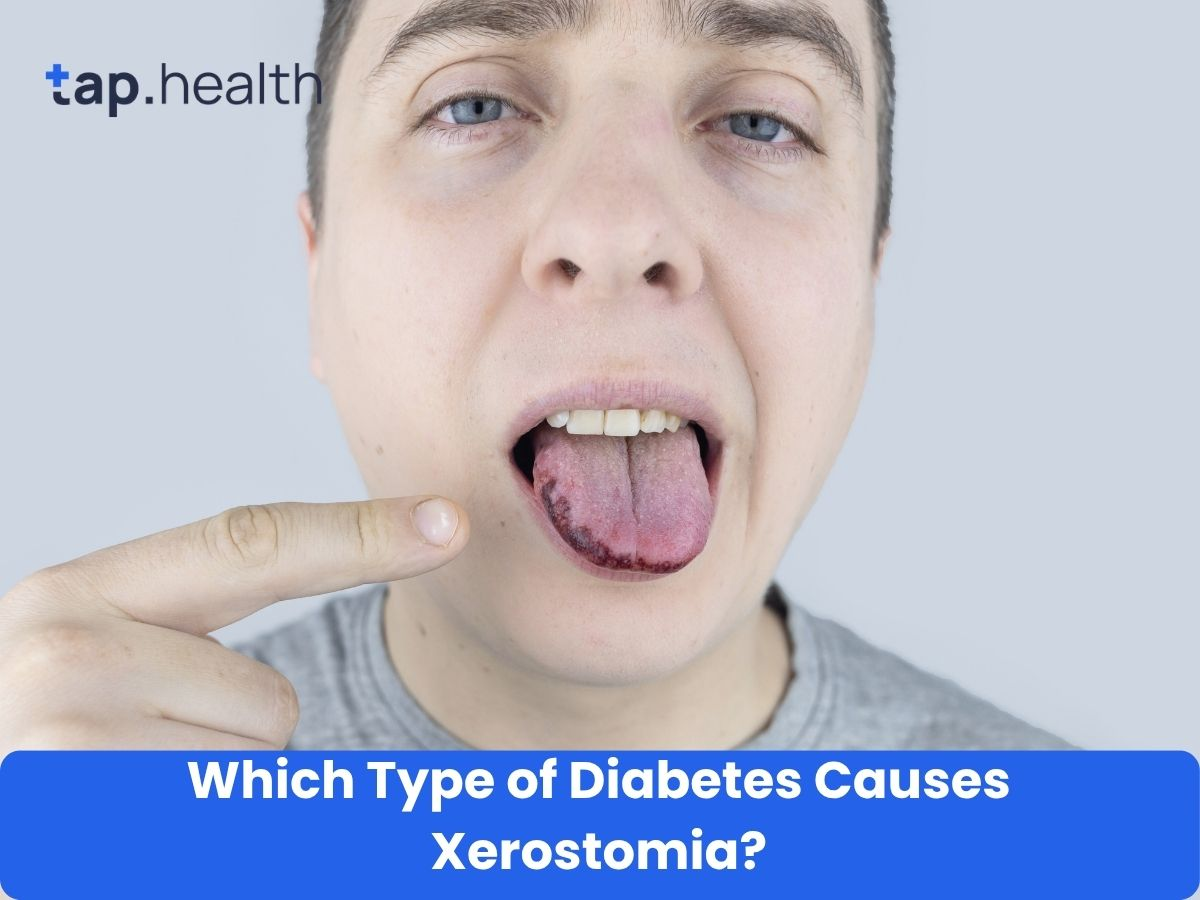
What Do Diabetes Tongue and Oral Changes Look Like?
Diabetes affects the mouth in visible, identifiable ways beyond just dryness. Doctors and dentists often look at the tongue and oral tissues as clues to a patient’s diabetic control.
Geographic Tongue
Some diabetics develop a condition called geographic tongue — irregular, smooth, reddish patches on the tongue that look like a map, surrounded by white or yellowish borders. While not exclusive to diabetes, it is more common in people with uncontrolled blood sugar.
Oral Thrush (Candidiasis)
The dry, sugar-rich environment of a diabetic’s mouth is ideal for the overgrowth of Candida fungi. This causes white, creamy patches on the tongue, inner cheeks, and throat — a condition called oral thrush or candidiasis. It can cause soreness, burning, and difficulty swallowing.
Red, Swollen, or Bleeding Gums
Periodontal (gum) disease is strongly linked to diabetes. High blood sugar impairs the body’s ability to fight bacterial infection, making gums more susceptible to inflammation, recession, and eventually tooth loss. The gums may appear red, puffy, and bleed easily during brushing.
Dry, Cracked Tongue
In severe xerostomia, the tongue itself may develop deep fissures (cracks) and appear dry and shrivelled. This can be painful and increases the risk of infection in the cracked areas.
Can You Have Dry Mouth Without Having Diabetes?
Absolutely — and this is an important point. Dry mouth is not always caused by diabetes. There are many other conditions and circumstances that cause xerostomia, including Sjögren’s syndrome (an autoimmune condition that attacks the salivary glands), radiation therapy to the head and neck for cancer, over 400 different medications across multiple drug classes, severe anxiety or stress, tobacco and alcohol use, and advancing age (older adults naturally produce less saliva).
This is why dry mouth alone is not a diagnosis of diabetes. However, if dry mouth is occurring alongside other classic symptoms of diabetes — frequent urination, increased thirst, fatigue, or weight loss — then getting blood sugar tested is strongly advisable.
Which Type of Diabetes Is More Harmful or Dangerous?
This is a question many newly diagnosed patients ask, and it deserves a careful, honest answer. Both types of diabetes are serious conditions that require lifelong management. Neither should be taken lightly.
Type 1 Diabetes — Acute Risks
Type 1 carries a higher risk of acute, life-threatening episodes. Diabetic ketoacidosis (DKA) — where the body starts breaking down fat for energy in the absence of insulin, producing toxic ketone acids — can develop within hours or days and is a medical emergency. People with Type 1 also face the risk of severe hypoglycaemia (dangerously low blood sugar) from insulin use.
Type 2 Diabetes — Long-Term Risks
Type 2, while generally more slowly progressing, is associated with a higher overall burden of long-term complications simply because it is far more common and is often undiagnosed for years. Heart disease, kidney failure (diabetic nephropathy), nerve damage (neuropathy), and vision loss (retinopathy) are serious complications that develop over time in poorly controlled Type 2 diabetes.
The bottom line: uncontrolled diabetes of any type is dangerous. Type 1 can kill quickly through DKA; Type 2 can silently damage organs over decades. Both require equally serious attention, though the management strategies differ significantly.
How to Stop Dry Mouth With Diabetes — Proven Strategies That Work
Managing xerostomia in diabetes is a two-pronged effort: controlling your blood sugar (which addresses the root cause) and directly managing the oral symptoms (which provides day-to-day relief). Here is a comprehensive approach:
1. Prioritise Blood Sugar Control
This is the single most effective intervention. When blood glucose levels are consistently within the target range, the osmotic diuresis that causes dehydration and dry mouth slows dramatically. Work with your diabetologist to fine-tune your medication, diet, and lifestyle for optimal glycaemic control.
2. Stay Consistently Hydrated
Drink small sips of water frequently throughout the day rather than gulping large quantities at once. Aim for at least 8 to 10 glasses of water daily unless your doctor has advised otherwise (e.g., for kidney disease). Avoid caffeinated beverages and alcohol, which are dehydrating.
3. Use Saliva Substitutes
Over-the-counter saliva substitutes — available as mouth sprays, gels, or rinses — can provide temporary relief. Products containing carboxymethylcellulose or hydroxyethylcellulose are commonly recommended. Your dentist or pharmacist can suggest appropriate options available in India.
4. Chew Sugar-Free Gum or Suck Sugar-Free Lozenges
The act of chewing stimulates the salivary glands to produce more saliva. Sugar-free gum containing xylitol is particularly beneficial as xylitol also has antibacterial properties that protect teeth from decay.
5. Breathe Through Your Nose
If you tend to breathe through your mouth — particularly during sleep — work on nose breathing. Using a humidifier in your bedroom adds moisture to the air and can significantly reduce morning dry mouth.
6. Maintain Excellent Oral Hygiene
Brush your teeth at least twice daily with a fluoride toothpaste. Floss daily. Use an alcohol-free mouthwash — alcohol-based mouthwashes dry out the mouth further. Visit your dentist every six months at minimum for professional cleaning and early detection of any oral complications.
7. Review Your Medications With Your Doctor
Ask your doctor to review all medications you are taking. Some may have alternatives that are less likely to cause dry mouth. Never stop a medication on your own — always do this in consultation with your healthcare provider.
- Control blood sugar levels — this addresses the root cause of xerostomia
- Drink water regularly in small sips throughout the day
- Use alcohol-free saliva substitutes or oral moisturisers
- Chew xylitol-based sugar-free gum to stimulate saliva
- Use a bedroom humidifier and switch to nose breathing during sleep
- Follow strict oral hygiene: brush, floss, and use alcohol-free rinse
- Visit your dentist every six months for professional monitoring
Key Takeaways
Xerostomia — or dry mouth — is a genuinely common and distressing complication of diabetes. Both Type 1 and Type 2 diabetes cause xerostomia, primarily through high blood sugar driving dehydration and reducing saliva production. However, Type 2 diabetes patients are statistically more likely to experience it, partly due to its prevalence and partly due to the multiple medications often involved in its management.
Dry mouth is sometimes an early warning sign of undiagnosed diabetes, making it a symptom worth taking seriously rather than dismissing. If you have diabetes and are troubled by persistent dry mouth — especially at night — know that this is not just an inconvenience. It is a signal about your blood sugar control and your oral health that deserves proper medical attention.
The good news is that xerostomia in diabetics is manageable. With better blood sugar control, smart hydration strategies, appropriate oral care products, and regular dental check-ups, you can significantly reduce the impact of dry mouth on your daily life. Work with your doctor and your dentist together — because in diabetes, oral health and systemic health are deeply interconnected.
Frequently Asked Questions (FAQs)
Which type of diabetes causes xerostomia most commonly?
Both Type 1 and Type 2 diabetes can cause xerostomia. However, Type 2 diabetes is responsible for the majority of cases simply because it is far more prevalent — accounting for nearly 90 to 95 per cent of all diabetes diagnoses. Additionally, the medications used in Type 2 diabetes management often contribute independently to dry mouth.
Is dry mouth an early sign of diabetes?
Yes, dry mouth can be an early warning sign of undiagnosed or poorly controlled diabetes. It commonly appears alongside other classic symptoms such as increased thirst, frequent urination, and unusual fatigue. If you notice this combination of symptoms, consult your doctor and get your blood glucose levels tested as soon as possible.
How does diabetes cause dry mouth?
High blood sugar causes the kidneys to pull fluid from body tissues to flush excess glucose out through urine — a process called osmotic diuresis. This leads to dehydration, which reduces saliva production. Over time, nerve damage caused by uncontrolled diabetes can also impair the signals that tell the salivary glands to produce saliva.
What does diabetes dry mouth feel like?
Diabetic dry mouth typically feels like a sticky, thick, or pasty sensation inside the mouth. Many people also experience a burning or rough tongue, cracked lips, persistent bad breath, difficulty swallowing, and a thirst that water does not fully satisfy. Symptoms are often worse at night and first thing in the morning.
Why is dry mouth worse at night with diabetes?
Saliva production naturally decreases during sleep, and for diabetics whose saliva output is already reduced, this nighttime drop is particularly noticeable. Mouth breathing — common in overweight Type 2 diabetics with sleep apnoea — further dries out oral tissues. Overnight blood sugar fluctuations also contribute to worsening symptoms by morning.
Which diabetes medications cause dry mouth?
Several medications commonly prescribed alongside diabetes drugs can cause or worsen dry mouth. These include diuretics (water pills for blood pressure), certain antidepressants, antihistamines, and some blood pressure medications. If your dry mouth seems medication-related, speak to your doctor about possible alternatives — do not stop any medication on your own.
Can I have dry mouth without having diabetes?
Absolutely. Dry mouth has many causes beyond diabetes, including Sjögren’s syndrome, cancer radiation therapy, certain medications (over 400 drug types), anxiety, tobacco use, and ageing. Dry mouth alone is not a definitive sign of diabetes, but when it occurs alongside other diabetic symptoms, blood sugar testing is strongly recommended.
Which type of diabetes is more dangerous — Type 1 or Type 2?
Both types are serious and require lifelong management. Type 1 carries higher acute risks, such as diabetic ketoacidosis, which can be life-threatening within hours. Type 2, being more common and often undiagnosed for years, leads to a greater overall burden of long-term complications including heart disease, kidney failure, and nerve damage. Uncontrolled diabetes of either type is genuinely dangerous.
How can I stop dry mouth if I have diabetes?
The most effective approach combines blood sugar control (the root cause) with direct oral management strategies. Drink water frequently, use sugar-free xylitol gum to stimulate saliva, try over-the-counter saliva substitutes, use a humidifier at night, and follow strict oral hygiene. Regular dental check-ups are essential, and reviewing your medication list with your doctor can also help significantly.
Does diabetes xerostomia cause tooth decay?
Yes. Saliva plays a critical role in neutralising acids and washing away food debris and bacteria. When saliva is reduced, the risk of tooth decay, gum disease, and oral thrush rises sharply. Diabetics with xerostomia are at considerably higher risk of dental problems, which is why consistent dental care is an essential part of diabetes management.