Being diagnosed with type 2 diabetes often feels like the end of all things sweet. The moment your doctor tells you that your blood sugar is high, you likely assume that desserts, sweet tea, and treats are gone forever.
It is completely natural to feel frustrated by this. In Indian culture, sweets are a huge part of our celebrations, festivals, and daily hospitality. A cup of morning chai just does not feel the same without a little sweetness.
This leads to one of the most common questions asked in every diabetes clinic: what type of sugar should diabetes take? Do you have to live a completely sugar-free life, or are there safe alternatives that will not harm your health?
The good news is that you do not have to give up sweetness. You just need to change where that sweetness comes from. In this comprehensive, easy-to-understand guide, we will break down the science of sugar and diabetes. We will explore the safest natural sweeteners, expose common myths about jaggery and honey, and teach you how to satisfy your cravings safely.
Can You Eat Sugar With Diabetes Type 2?
When people ask, can you eat sugar with diabetes type 2, the answer requires a little bit of science. To put it simply: yes, but the type and amount matter deeply.
Type 2 diabetes is a condition where your body becomes resistant to insulin. Insulin is the hormone that helps move glucose (sugar) from your blood into your cells for energy. Because your insulin is not working properly, eating pure sugar causes it to pile up in your bloodstream.
However, your body still needs glucose to survive. Your brain and muscles run on it. The trick is getting that glucose from complex carbohydrates (like whole grains, lentils, and vegetables) rather than simple, refined sugars (like white table sugar).
Refined sugar digests instantly, causing a massive, dangerous spike in your blood glucose. Complex carbs digest slowly, giving you a steady, safe release of energy. So, while you can consume foods that turn into sugar in the body, you must strictly control your intake of direct, refined sweets.
Should Diabetics Avoid Sugar Completely?
A very common myth is that a diabetic person must eat absolutely zero sugar. So, should diabetics avoid sugar completely?
The medical answer is no. It is almost impossible to avoid sugar entirely because it naturally exists in many healthy foods.
There is a massive difference between “naturally occurring sugars” and “added sugars.” Naturally occurring sugars are found in whole fruits (fructose) and dairy products like milk and curd (lactose). These foods also contain dietary fibre, protein, and vitamins. The fibre slows down digestion, meaning the natural sugar enters your blood slowly and safely.
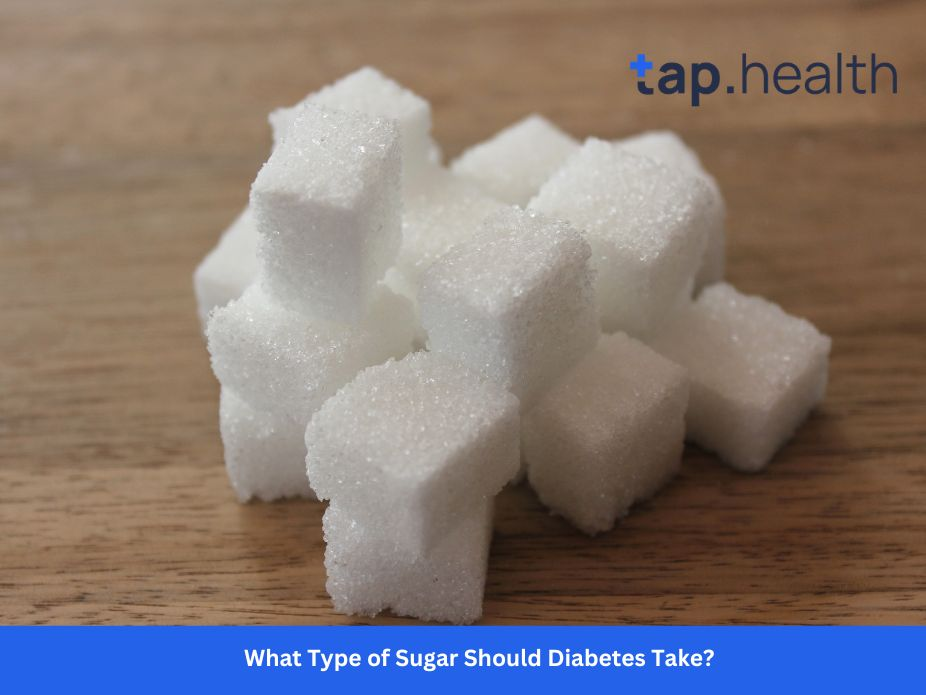
Added sugars, on the other hand, are the enemy. These are the sugars added to cold drinks, biscuits, sweets, and packaged foods. They offer zero nutritional value and spike your blood sugar instantly. You do not need to avoid the natural sugar in a whole apple, but you should absolutely avoid the added sugar in a glass of packaged apple juice.
What Type of Sugar Should Diabetes Take? (The Safe Alternatives)
If you want to add sweetness to your tea or dessert without raising your blood sugar, you need to use sugar substitutes. But not all substitutes are safe.
So, what type of sugar should diabetes take? The best options are zero-calorie, natural sweeteners that do not impact your glycaemic index (GI).
Best Natural Sugar for Diabetics
If you are looking for the best natural sugar for diabetics, plant-based sweeteners are your top choice. They are extracted from nature, not made in a chemical laboratory.
- Stevia: Stevia is extracted from the leaves of the Stevia rebaudiana plant. It is up to 300 times sweeter than regular sugar but contains zero calories and zero carbohydrates. It does not raise blood sugar at all, making it arguably the safest choice for daily use in tea or coffee.
- Monk Fruit Extract: Similar to Stevia, monk fruit sweetener is completely natural. It contains compounds called mogrosides, which are intensely sweet but do not affect blood glucose. It also has no bitter aftertaste, which some people experience with Stevia.
- Erythritol: This is a type of “sugar alcohol” found naturally in certain fruits. It passes through your body almost entirely undigested. It has zero impact on your blood sugar and does not cause tooth decay. It is excellent for baking diabetic-friendly cakes or sweets.
Which Sugar is Good for Diabetes Patient? (Artificial Sweeteners)
Artificial sweeteners are man-made chemicals that provide sweetness without calories. While they are technically safe for blood sugar, many people prefer to avoid them due to concerns about long-term gut health.
- Sucralose (Splenda): This is made from real sugar, but its chemical structure is changed so your body cannot absorb it. It is very popular and highly effective for baking.
- Aspartame (Equal): Widely used in diet sodas. While it does not spike blood sugar, it loses its sweetness when heated, so it is not good for cooking.
- Saccharin (Sweet’N Low): One of the oldest artificial sweeteners. It is safe for blood sugar but often leaves a strong metallic aftertaste.
If you ask a dietitian which sugar is good for diabetes patient use, they will almost always steer you towards natural options like Stevia or Erythritol over these artificial chemicals.
Busting the Myth: Are Jaggery and Honey Safe?
In Indian households, there is a very dangerous misconception about traditional sweeteners. Many people believe that replacing white sugar with gur (jaggery) or honey makes a sweet completely safe for diabetics.
This is entirely false. When discussing sugar for diabetes type 2, you must understand that your stomach treats jaggery, honey, coconut sugar, and brown sugar almost exactly the same as white refined sugar.
While jaggery and honey do contain tiny amounts of trace minerals and antioxidants, they are still packed with simple carbohydrates and calories. They have a very high Glycaemic Index. Eating a piece of jaggery will spike your blood sugar just as fast and just as high as eating a spoon of white sugar. If you have type 2 diabetes, you must limit jaggery and honey just as strictly as refined sugar.
Understanding the Sugar Limit for Diabetics
Even with natural sugar from fruits, moderation is the key to surviving diabetes. You must know your boundaries.
The American Heart Association (AHA) provides strict guidelines. For a healthy adult without diabetes, the maximum daily limit of added sugar is 25 grams (6 teaspoons) for women and 36 grams (9 teaspoons) for men.
However, the sugar limit for diabetics is much stricter. Most endocrinologists advise people with type 2 diabetes to aim for as close to zero grams of added sugar as possible.
Is 2g of Sugar a Lot for a Diabetic?
When you start reading food labels, you might panic over small numbers. A very common question is: is 2g of sugar a lot for a diabetic?
The simple answer is no. Two grams of sugar is an incredibly small amount (less than half a teaspoon). If you eat a packaged snack that contains only 2g of sugar per serving, it will likely have a very minimal impact on your blood glucose.
However, you must look at the big picture. If you eat ten different snacks throughout the day, each containing 2g of hidden sugar, you have suddenly consumed 20g of sugar without realising it. Always check the label, but do not panic over a single, isolated gram or two.
What Happens When a Type 2 Diabetic Eats Too Much Sugar?
It is easy to slip up during a festival or a family wedding. But understanding the consequences can help you stay disciplined.
What happens when a type 2 diabetic eats too much sugar? The effects are both immediate and long-term.
Short-Term Effects (Hyperglycaemia)
Within an hour of eating a heavy, sugary sweet, your blood glucose will skyrocket. Your body will try to flush this toxic level of sugar out through your urine. You will suddenly feel incredibly thirsty. You will need to use the bathroom constantly. As the sugar remains trapped in your blood, your cells will starve for energy, leaving you feeling utterly exhausted, lethargic, and dizzy. Your vision may even become temporarily blurry.
Long-Term Effects
If eating too much sugar becomes a daily habit, the chronic high blood sugar acts like tiny shards of glass travelling through your blood vessels. Over the years, this destroys the delicate vessels in your eyes (retinopathy), your kidneys (nephropathy), and your nerves (neuropathy). It heavily increases your risk of a heart attack or a stroke. A moment of sweetness is never worth a lifetime of complications.
Reading Labels: How to Spot Hidden Sugars
The food industry is very clever. They know people are trying to avoid sugar, so they hide it under different, scientific-sounding names.
When you buy packaged foods, you must read the ingredient list. If you see any of the following terms, you are looking at hidden added sugar:
- High-fructose corn syrup
- Maltodextrin
- Dextrose
- Maltose
- Agave nectar
- Rice syrup
- Caramel
Even if a product claims to be “Diet” or “Healthy,” always turn the packet around and look at the “Total Carbohydrates” and “Added Sugars” lines. A true diabetic-friendly food will have zero added sugars and high dietary fibre.
Real-Life Scenario
Let us look at the story of Sanjay, a 55-year-old bank manager from Delhi. Sanjay was diagnosed with type 2 diabetes three years ago. His biggest struggle was his love for his morning and evening chai, which he always drank with two spoons of sugar.
When his doctor told him to stop, Sanjay switched to jaggery (gur), assuming it was a healthy, natural alternative. Six months later, his HbA1c test came back dangerously high at 8.4%. He was shocked.
Sanjay sat down with a clinical dietitian and asked, “what type of sugar should diabetes take?” The dietitian explained that jaggery was acting exactly like white sugar in his bloodstream.
She introduced him to Stevia drops. The first few days, Sanjay missed the heavy, syrupy taste of his old tea. But he stuck with it. He used two drops of Stevia in his morning chai and stopped buying sweet biscuits, replacing them with roasted makhana (fox nuts). Within three months, Sanjay’s energy levels improved drastically, and his HbA1c dropped to a much safer 6.8%. He learned that he could still enjoy his sweet tea; he just needed the right science in his cup.
Expert Contribution
To provide you with the most accurate clinical perspective, we consulted Dr. Rajesh Khanna, a senior endocrinologist specialising in metabolic disorders.
“The word ‘sugar’ creates intense fear in newly diagnosed patients,” explains Dr. Khanna. “They either try to starve themselves of all carbohydrates, or they fall for marketing gimmicks selling ‘diabetic-friendly honey’.”
Dr. Khanna adds, “When patients ask me about sugar for diabetes type 2, I tell them to embrace plant-based science. Stevia and Erythritol are incredible tools. They allow my patients to enjoy a festive dessert or a sweet cup of coffee without damaging their blood vessels. Diabetes management is not about suffering; it is about making smart, educated swaps that protect your pancreas.”
Recommendations Grounded in Proven Research and Facts
Managing your condition requires an evidence-based approach. Based on strict guidelines from the American Diabetes Association (ADA) and the World Health Organization (WHO), here are the clinical facts:
- Use Non-Nutritive Sweeteners: The ADA officially supports the use of non-nutritive sweeteners (like Stevia and Monk Fruit) as a safe way to reduce overall calorie and carbohydrate intake without sacrificing taste.
- Avoid Liquid Sugar: Sugary drinks, including packaged fruit juices and regular sodas, are the most dangerous items for a diabetic. They cause the fastest blood sugar spikes because they require zero digestion.
- Count Total Carbohydrates, Not Just Sugar: A food can have zero sugar but still be packed with refined flour (like white bread), which turns into sugar instantly. Always monitor your total carbohydrate intake per meal.
- Eat Fruit, Don’t Drink It: The WHO recommends consuming natural sugars through whole, fresh fruits. The fibre in a whole orange protects your blood sugar; a glass of orange juice does not.
Key Takeaways
Living with diabetes means you have to be mindful of your plate, but it does not mean your life has to be tasteless or miserable.
If you have been wondering what type of sugar should diabetes take, you now have a clear, safe, and actionable roadmap.
Here are your key takeaways to remember:
- Natural is Best: Stevia, Monk Fruit, and Erythritol are the best, safest zero-calorie sweeteners for managing blood sugar.
- Jaggery is Not a Cure: Jaggery, honey, and brown sugar will spike your blood sugar exactly like white sugar. They must be avoided.
- Fruit is Safe: Do not fear the natural sugar in whole fruits. The fibre protects you.
- Read the Labels: Watch out for hidden sugars like maltodextrin and high-fructose corn syrup in packaged foods.
- 2g is Fine: A couple of grams of sugar in a serving is generally safe, but monitor your total daily intake strictly.
By making smart, educated swaps in your kitchen, you can continue to enjoy the sweetness of life while keeping your diabetes firmly under control.
Frequently Asked Questions
What type of sugar should diabetes take?
The safest and best options for people with diabetes are zero-calorie, zero-glycaemic natural sweeteners. Stevia and Monk Fruit extract are plant-based options that provide sweetness without raising blood sugar. Erythritol, a natural sugar alcohol, is also an excellent and safe choice for baking and daily use.
Best natural sugar for diabetics?
Stevia is widely considered the best natural sugar substitute for diabetics. It is extracted from the leaves of a plant, contains absolutely zero calories, and has no impact on blood glucose levels. Monk fruit sweetener is another top-tier natural option that leaves no bitter aftertaste.
Which sugar is good for diabetes patient: Jaggery or White Sugar?
Neither is good. Both jaggery (gur) and white sugar have a high glycaemic index and will cause a rapid, dangerous spike in blood sugar levels. A diabetic patient should avoid both and use safe alternatives like Stevia or Sucralose instead.
Is 2g of sugar a lot for a diabetic?
No, 2 grams of sugar is a very small amount (less than half a teaspoon). Consuming a food item with only 2g of sugar per serving will likely have a minimal impact on your blood sugar. However, you must track your overall daily intake to ensure those small amounts do not add up.
Can you eat sugar with diabetes type 2?
Yes, but the type of sugar is critical. You should safely consume naturally occurring sugars found in whole, high-fibre fruits and dairy products. However, you should strictly limit or completely avoid refined, added sugars found in sweets, cold drinks, and packaged biscuits.
What happens when a type 2 diabetic eats too much sugar?
In the short term, eating too much sugar causes severe hyperglycaemia, leading to extreme thirst, frequent urination, blurry vision, and heavy fatigue. In the long term, chronic high sugar damages blood vessels, leading to heart disease, kidney failure, and blindness.
Should diabetics avoid sugar completely?
It is virtually impossible and unnecessary to avoid all sugar, as it naturally occurs in healthy foods like vegetables and whole fruits. Diabetics should not avoid natural, fibre-rich foods, but they should aim to eliminate refined, added sugars from their daily diet entirely.
What is the strict sugar limit for diabetics?
While the American Heart Association limits healthy adults to 25-36 grams of added sugar daily, medical professionals advise people with type 2 diabetes to keep their added sugar intake as close to zero as possible to maintain stable glycaemic control.
References
- American Diabetes Association (ADA) – Get to Know Carbs
- Mayo Clinic – Artificial sweeteners and other sugar substitutes
- Harvard T.H. Chan School of Public Health – Carbohydrates and Blood Sugar
- World Health Organization (WHO) – Sugars intake for adults and children
- National Health Service (NHS) – Food and Keeping Active with Diabetes