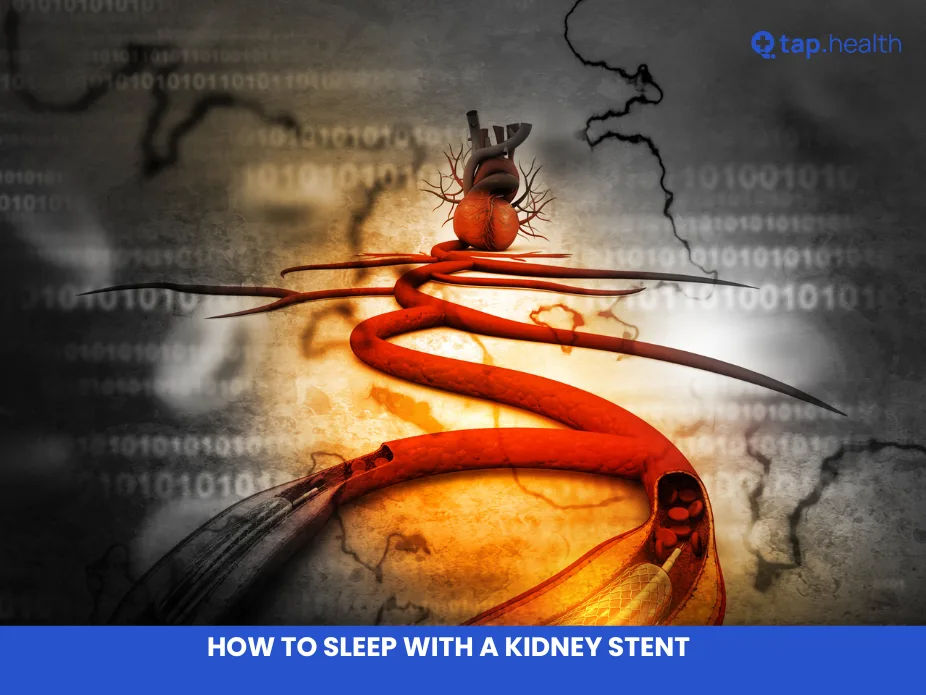
A kidney stent (also called ureteral stent or DJ stent) is a thin, flexible tube placed between the kidney and bladder to ensure smooth urine flow. It is commonly used after kidney stone removal, ureteric stricture, or post-urology surgery. While life-saving, it often causes flank pain, bladder spasms, frequent urination, and lower abdominal discomfort — symptoms that worsen at night.
Best Sleeping Positions with a Kidney Stent
Finding the right position is the fastest way to reduce stent pain while sleeping:
- Sleep on the side opposite the stent to minimize direct pressure.
- Back sleeping with a pillow under the knees helps align the spine and reduces pulling sensation.
- Slightly elevate your head and upper body using a wedge pillow to decrease reflux of urine toward the kidney.
Most patients report 40–60% pain reduction simply by switching positions.
Pillow Hacks for Ureteral Stent Patients Swear By
- Full-body pillow or pregnancy pillow between the knees and arms prevents rolling onto the painful side.
- Wedge pillow or folded blanket under the torso keeps the ureter in a relaxed position.
- Small lumbar pillow behind the lower back while side-sleeping offers extra support.
Pain Management Tips Before Bedtime
- Take prescribed alpha-blockers (tamsulosin, silodosin) or antispasmodics exactly as advised — they relax the ureter and bladder.
- Use doctor-approved OTC pain relievers (ibuprofen or paracetamol) 30–45 minutes before sleep.
- Apply a warm compress or heating pad on the flank or lower abdomen for 15–20 minutes to relax smooth muscles.
Smart Hydration Strategy to Reduce Nighttime Urination
Drink 2–2.5 liters of water throughout the day, but taper off after 7–8 p.m. Empty your bladder completely before bed. Avoid caffeine, carbonated drinks, citrus juices, and spicy food in the evening as they irritate the bladder lining.
Pre-Sleep Relaxation Routine for Stent Patients
- Warm shower or bath to soothe muscles.
- 5–10 minutes of deep breathing or guided meditation.
- Light stretching or yoga poses (child’s pose, cat-cow) without straining the abdomen.
- Dim lights and no screens 30 minutes before bed.
Real Patient Stories
Priya from Delhi shares: “The first three nights were horrible. Then I started sleeping semi-upright with a wedge pillow and took my tamsulosin at dinner — I finally slept 6 hours straight.”
Arjun, a software engineer in Hyderabad, says: “Switching to left-side sleeping (my stent was on the right) and using a heating pad changed everything.”
When to Contact Your Urologist Urgently
Seek immediate help if you experience:
- Fever >101°F or chills
- Severe unbearable pain not relieved by medication
- Blood clots in urine or no urine output
- Persistent vomiting
How Long Does Discomfort Last?
Most patients feel maximum discomfort in the first 3–7 days. Symptoms gradually decrease significantly after 7–10 days, and sleep usually returns to normal within 2 weeks. Full relief comes after stent removal (usually 2–6 weeks).
Can TapHealth Help Manage Diabetes Alongside Kidney Stent Recovery?
Yes! Many patients have both kidney stents and diabetes. TapHealth’s 24/7 virtual care platform lets you consult top urologists and endocrinologists from home, track blood sugar, get instant prescription refills, adjust diabetes medications safely during recovery, and monitor for urinary infections — all without leaving your bed. Perfect for painless stent + diabetes management.