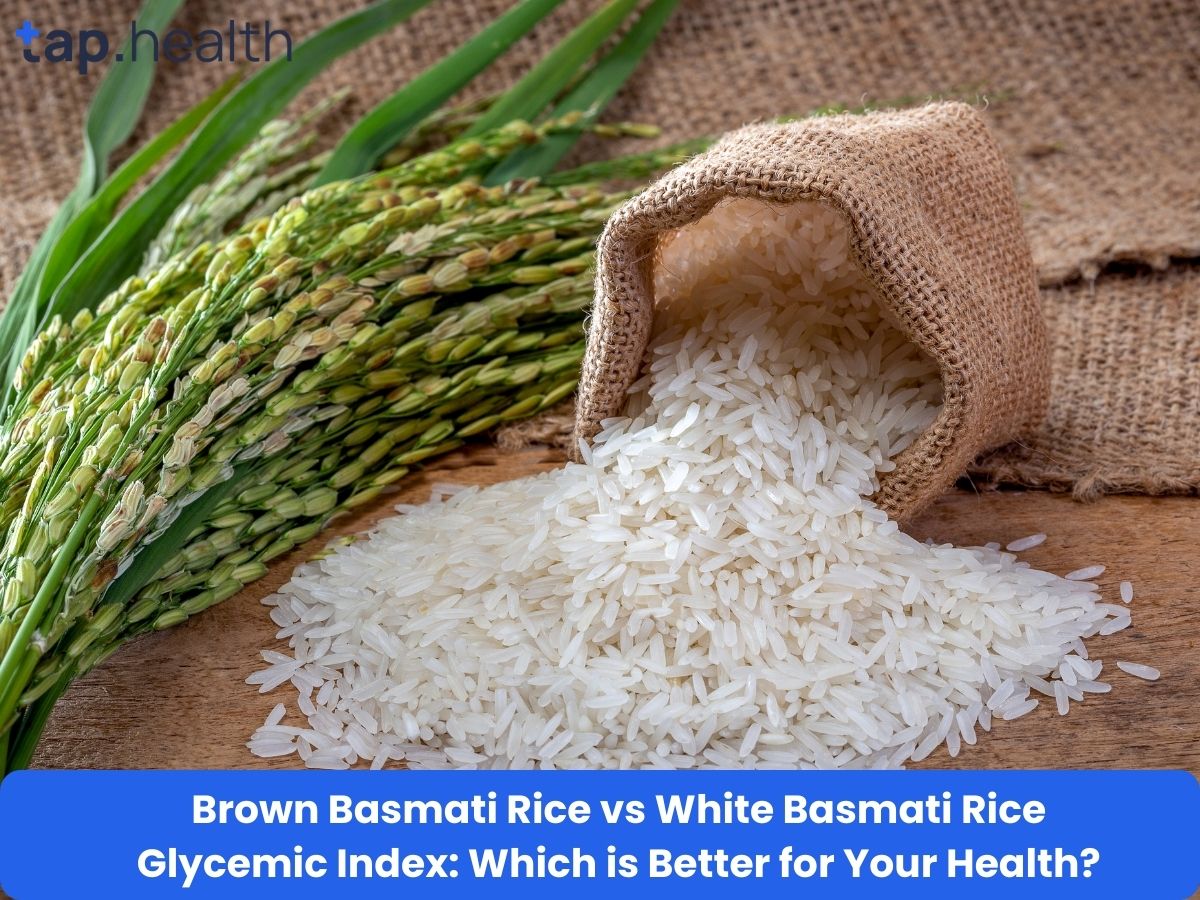
In India, rice is not just a food item; it is an emotion. Whether it is Rajma Chawal in the North or Sambar Sadam in the South, a meal often feels incomplete without that comforting heap of rice. However, with the rising cases of diabetes and lifestyle diseases in our country, the humble rice grain has come under scrutiny.
We are often told to switch to brown rice. But let’s be honest—giving up the aroma and fluffy texture of white Basmati is hard. This leads to the big question: Is there really a massive difference between brown basmati rice vs white basmati rice glycemic index? Is the switch worth the taste compromise?
This comprehensive guide will break down everything you need to know. We aren’t just going to throw numbers at you; we will explain the science, the nutrition, and the real-world impact on your blood sugar, all in simple, easy-to-understand language.
Understanding Glycemic Index (GI) and Glycemic Load
Before we compare the rice types, we need to understand the measuring stick we are using: the Glycemic Index (GI).
Think of your body like a car and carbohydrates (like rice) as fuel.
- High GI foods (70-100) are like jet fuel. They burn instantly, causing your blood sugar to zoom up very fast. This leads to an “insulin spike” followed by a crash, making you hungry again quickly.
- Medium GI foods (56-69) are like standard petrol. They burn at a moderate pace.
- Low GI foods (0-55) are like premium diesel. They burn slowly and steadily, giving you sustained energy without shocking your system.
Glycemic Load (GL) is equally important. While GI tells you how fast sugar enters your blood, GL tells you how much sugar enters based on the portion size. For a diabetic or health-conscious person, aiming for Low GI and Low GL is the goal.
Brown Basmati Rice vs White Basmati Rice Glycemic Index: The Comparison
This is the core of the debate. Let’s look at the numbers.
The GI of White Basmati Rice
Surprisingly, white Basmati rice is unique. Unlike short-grain sticky rice (like Sona Masoori or Jasmine rice) which has a high GI of over 70, White Basmati Rice has a medium GI, typically ranging between 56 and 69.
Why? Because Basmati rice is high in amylose, a type of starch that is harder for the body to digest. This means even white Basmati doesn’t spike blood sugar as aggressively as other white rices.
The GI of Brown Basmati Rice
Brown Basmati Rice has a lower GI, typically ranging between 50 and 58. Because the bran layer (the outer skin) is left intact, the digestive enzymes in your stomach have to work harder to break it down. This results in a slower, gentler release of sugar into your bloodstream.
The Verdict: While Brown Basmati definitely has a lower GI, White Basmati is not a “villain.” It is actually one of the best options among white rices. However, for strict blood sugar control, the brown rice vs white rice glycemic index comparison always favors the brown version.
Nutritional Breakdown: What’s Inside the Grain?
The difference isn’t just about speed (GI); it’s about what you get in the package.
White Basmati Rice
When rice is milled to become white, the bran and germ are removed. These layers contain most of the nutrients. White Basmati is essentially the “endosperm”—mostly starch (carbohydrates) with a little bit of protein.
- Pros: Easy to digest, tastes great, cooks fast.
- Cons: Low fiber, fewer vitamins.
Brown Basmati Rice
Brown rice is a “whole grain.” It keeps the bran and germ.
- Fiber: It has roughly 20% to 30% more fiber than white rice. Fiber acts like a net, trapping sugar and slowing down absorption.
- Magnesium: Essential for insulin sensitivity (helping your body use sugar). Brown rice is a good source.
- B Vitamins: Crucial for energy.
When you look at brown basmati rice vs white basmati rice nutrition, brown rice offers a “full package” of nutrients, whereas white rice is mostly just energy.
Read this: Is Basmati Rice Good for Diabetics?
Why Does Brown Basmati Have a Lower GI?
You might wonder, “It’s the same grain, so why is the number different?”
- The Bran Barrier: Imagine trying to get into a house. White rice is a house with the door open. Brown rice is a house with a locked gate (the bran). Your body takes time to unlock that gate. That delay lowers the GI.
- Fiber Content: Fiber is indigestible. It adds bulk to the food and physically blocks digestive enzymes from attacking the starch immediately.
- Chewing Factor: You have to chew brown rice more. This stimulates saliva but also slows down your eating speed, which gives your body time to process the incoming food.
Basmati Rice vs. Regular White Rice
This is a crucial distinction for Indian households. Many people think “Rice is Rice.” That is incorrect.
- Short Grain / Sona Masoori / Kolam: These are low in amylose. They become sticky when cooked. They have a High GI (70+). They digest very fast.
- Basmati (Long Grain): These are high in amylose. The grains stay separate. They have a Medium to Low GI.
If you absolutely hate brown rice, switching from Sona Masoori to aged White Basmati is already a massive health upgrade. The glycemic index basmati rice vs white rice (regular) shows a significant improvement.
Is Basmati Rice Safe for Diabetics?
This is the most asked question: “Can I eat rice if I have sugar?”
The answer is Yes, but with conditions.
The Case for Brown Basmati
For diabetics, basmati rice vs brown rice for diabetics discussions usually end with Brown Basmati being the winner. The extra fiber ensures that your post-meal blood sugar graph looks like a gentle hill rather than a steep mountain.
The Case for White Basmati
If you are eating White Basmati, you must practice Portion Control. You cannot eat a mountain of rice.
- Portion: Limit to 1 small cup (cooked).
- Pairing: Never eat rice alone. Always pair it with Dal (protein), Sabzi (fiber), and maybe some Ghee (healthy fat). This combination lowers the overall GI of the meal.
Weight Loss: Which Rice Wins?
When discussing basmati rice or brown rice for weight loss, Brown Basmati takes the trophy, but not just because of calories.
In terms of calories, both are very similar! One cup of cooked white rice and one cup of cooked brown rice have roughly the same calories.
The Weight Loss Secret is Satiety (Feeling Full). Because Brown Basmati has high fiber and requires more chewing, you feel full faster and stay full longer. You are less likely to snack on biscuits two hours after lunch. With white rice, the faster digestion can lead to hunger pangs shortly after eating.
Cooking Tips to Lower GI
Did you know you can hack the GI of your rice? Here is how to make your rice healthier, whether it is brown or white.
- The Cooling Method (Retrogradation): Cook your rice (white or brown) and then put it in the fridge for 12-24 hours. Reheat it before eating. This process turns some of the starch into “Resistant Starch.” Resistant starch acts like fiber and lowers the GI.
- Add Fat: Adding a teaspoon of Ghee or Coconut oil while cooking can slow down digestion.
- Drain the Starch: Cook rice in an open pot with lots of water (like pasta) and drain the excess white starchy water once cooked. This removes some of the easy-to-digest starch.
Taste and Texture: The Real Barrier
Let’s address the elephant in the room. Why don’t people switch?
- White Basmati: Fluffy, aromatic, soft, neutral taste. Absorbs curries well.
- Brown Basmati: Chewy, nuttier taste, takes longer to cook.
Transition Tip: If you find brown rice too hard to eat, try mixing them. Start with 50% White Basmati and 50% Brown Basmati mixed together. Slowly increase the brown rice quantity as your family gets used to the texture.
Real-Life Scenario
Let’s look at a typical Indian situation to make this clear.
Meet Mr. Sharma: Mr. Sharma is 50 years old and pre-diabetic. He loves his Sunday Rajma Chawal.
- Scenario A: He eats a large plate of sticky white rice with Rajma.
- Result: His blood sugar spikes to 180 mg/dL within an hour. He feels sleepy (food coma) and wakes up hungry.
- Scenario B: He switches to Brown Basmati Rice. He eats a moderate portion with a side of cucumber salad.
- Result: The fiber in the brown rice and salad slows down the digestion. His blood sugar rises gently to 140 mg/dL. He feels energetic and full for 4 hours.
This simple switch in grain type changed how his body reacted to the exact same meal.
Expert Contribution
To ensure we are giving you the best advice, we looked at what nutritionists and medical experts say about brown rice vs basmati rice glycemic index.
Dr. Rujuta Diwekar (Celebrity Nutritionist) often emphasizes eating local and traditional foods. While she supports white rice, she emphasizes eating it with Ghee and Dal to lower the Glycemic Load.
Dr. V. Mohan (Leading Diabetologist) suggests that for strict diabetes management, reducing the quantity of rice (carbohydrates) is priority number one. However, if choosing between grains, whole grains like Brown Basmati or Millets offer better metabolic benefits due to the intact fiber profile.
The Consensus: It is not just about the grain; it is about the plate. Brown Basmati allows you to be slightly more flexible, while White Basmati requires stricter discipline with vegetables and protein pairing.
Recommendations Grounded in Proven Research and Facts
Based on data from credible sources like Harvard Health and the Glycemic Index Foundation, here are actionable recommendations:
- For Diabetics: Make Brown Basmati your default rice. The lower GI (50-55) provides a safety buffer.
- For Pre-Diabetics: You can alternate. Use Brown Basmati for daily meals and White Basmati for special occasions (Biryani).
- For Weight Loss: Choose Brown Basmati. The satiety factor will help you eat less without feeling deprived.
- Cooking: Always soak Brown Basmati for at least 30-60 minutes before cooking. This softens the bran and makes it easier to digest.
- Shopping: When looking at brown basmati rice price, it is often slightly higher than standard white rice, but consider it an investment in your health. Brands like India Gate, Daawat, and organic store brands are reliable.
Conclusion
The battle of brown basmati rice vs white basmati rice glycemic index has a clear winner in terms of numbers: Brown Basmati. With a lower GI, higher fiber, and better nutrient profile, it is the superior choice for managing diabetes and weight.
However, White Basmati is not the enemy. It is significantly better than short-grain sticky rice. If you love White Basmati, you can still enjoy it by controlling your portions, adding plenty of vegetables, and perhaps using the cooling method to increase resistant starch.
Ultimately, the best rice is the one you can enjoy in moderation while keeping your health goals on track. Small changes, like switching from white to brown—or even just adding more Dal to your White Basmati—can make a massive difference to your long-term health.
Frequently Asked Questions (FAQ) on Brown Basmati Rice vs White Basmati Rice Glycemic Index
Which basmati rice has the lowest glycemic index?
Brown Basmati rice generally has the lowest glycemic index, typically ranging between 50 and 55. This is due to the presence of the bran layer and high fiber content which slows down digestion.
Is Basmati rice better than brown rice for diabetics?
Generally, Brown Basmati is better than White Basmati for diabetics because of its higher fiber and magnesium content. However, White Basmati is better than regular short-grain white rice. If you compare White Basmati vs. Brown Rice (non-basmati), Brown Rice is usually superior for blood sugar control.
Can I eat White Basmati rice if I want to lose weight?
Yes, you can, but portion control is critical. White Basmati rice has calories similar to brown rice but lacks fiber, so it doesn’t keep you full as long. Pairing it with a lot of fiber-rich vegetables (Sabzi) and protein can make it part of a weight-loss diet.
Does soaking rice reduce the glycemic index?
Soaking rice helps remove some excess starch and makes the grain expand more, which might help with portion control. However, the most effective way to lower GI is cooling the rice after cooking (increasing resistant starch) or draining the starchy water during cooking.
Why is Brown Basmati rice more expensive?
Brown Basmati rice often has a shorter shelf life because the natural oils in the bran layer can go rancid. It also requires careful processing to ensure the bran stays intact but the husk is removed. These factors, along with lower demand compared to white rice, often drive the price up.
What is the glycemic index of brown rice vs wheat?
Whole wheat (used for Roti) generally has a GI of around 62-65, while Brown Rice has a GI of around 50-55. Surprisingly, Brown Rice often has a lower GI than whole wheat flour, though wheat Roti may have more protein.
How much rice should a diabetic eat per day?
There is no single rule, but a common recommendation is to limit carbohydrate intake per meal. For most diabetics, 45-60 grams of carbs per meal is standard. This equals roughly 1 small bowl (katori) of cooked rice, ensuring the rest of the plate is filled with veggies and protein.