We all want to have our cake and eat it too. In a country like India, where tea needs to be sweet and festivals are incomplete without mithai, giving up sugar is incredibly hard. That is why so many of us turn to the little yellow, blue, or green packets of artificial sweeteners.
It feels like the perfect cheat code: you get the sweet taste without the calories. But recently, you might have seen scary headlines or heard whispers in family WhatsApp groups asking, “Can artificial sweeteners cause diabetes?”
It sounds contradictory, doesn’t it? These products are made for diabetics. How could they possibly cause the very disease they are supposed to help manage?
As a medical content strategist, I have dug deep into the latest research from the World Health Organization (WHO), the Mayo Clinic, and major diabetes associations to give you a clear, honest answer. We are going to move past the marketing hype and look at what actually happens inside your body when you swap sugar for chemicals.
What Are Artificial Sweeteners? (The Basics)
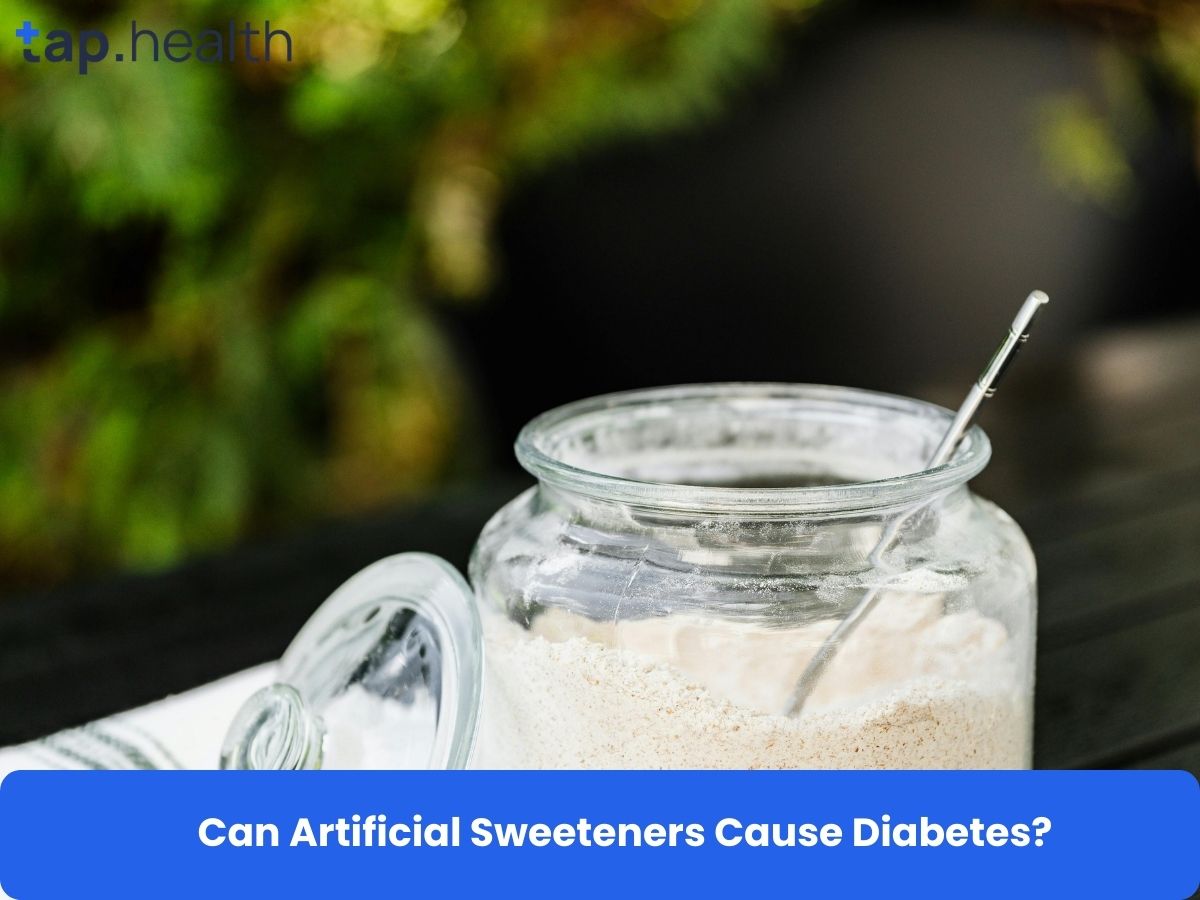
Before we answer the big question, let us clarify what we are talking about. Artificial sweeteners, also known as non-nutritive sweeteners (NNS), are chemical substances used to sweeten foods and drinks.
They are “intense” sweeteners because they are hundreds of times sweeter than regular sugar. You only need a tiny pinch to match the sweetness of a whole spoon of sugar.
Common types you will find on supermarket shelves include:
- Aspartame (often in diet sodas).
- Sucralose (found in yellow packets).
- Saccharin (the old-school sweetener).
- Acesulfame Potassium (Ace-K).
Then there are “natural” zero-calorie sweeteners like Stevia and Monk Fruit, which are slightly different but often lumped into the same category by consumers.
The Big Question: Can Artificial Sweeteners Cause Diabetes?
If you want a simple “yes” or “no,” here it is: Artificial sweeteners do not directly cause diabetes in the way sugar does, but they may increase your risk indirectly.
Let me explain that properly so it makes sense.
When you eat regular sugar, your blood glucose spikes immediately. Your pancreas pumps out insulin to handle it. If you do this too much, your system breaks, leading to Type 2 diabetes.
Artificial sweeteners have zero calories and zero carbohydrates. When you eat them, your blood sugar does not spike immediately. So, chemically speaking, they do not trigger a diabetic reaction in the moment.
However, the long-term story is different. Emerging research suggests that relying heavily on these sweeteners might confuse your body’s metabolism and gut health, which could lead to diabetes down the road.
Do Artificial Sweeteners Raise Insulin Levels?
This is where the science gets really interesting. Many people search for, “Do artificial sweeteners raise insulin levels?”
The answer lies in something called the Cephalic Phase Insulin Release.
The “Sweet Taste” Trick
When you taste something sweet, your brain tells your pancreas, “Get ready! Sugar is coming!” Your pancreas releases a little bit of insulin in preparation. But with artificial sweeteners, the sugar never arrives.
- The Problem: Your body pumped out insulin for no reason.
- The Result: High insulin levels in the blood (hyperinsulinemia) can eventually lead to insulin resistance, which is the hallmark of Type 2 diabetes.
While studies are still debating exactly how strong this effect is in humans, it shows that “tricking” your body isn’t always consequence-free.
Can Artificial Sweeteners Cause Type 2 Diabetes? (The Gut Connection)
Recent studies have shifted focus from the pancreas to the stomach. We now know that our gut bacteria (microbiome) play a huge role in preventing diabetes.
How Sweeteners Affect Your Gut: Some studies, particularly on saccharin and sucralose, suggest that these chemicals can kill off “good” bacteria in your gut or change the balance of microbes.
- When your gut bacteria are unhappy, your body becomes worse at processing glucose.
- This creates a state of glucose intolerance.
- Over time, glucose intolerance can evolve into full-blown Type 2 diabetes.
So, when people ask, “Can artificial sweeteners cause type 2 diabetes?”, the answer is that they might damage the gut health required to prevent it.
The “License to Eat” Effect
There is a psychological side to this, too. Doctors call it the Compensation Effect.
Imagine you order a Diet Coke. Because you “saved” calories on the drink, you might feel justified in eating a larger slice of pizza or an extra gulab jamun.
- The Trap: You end up eating more calories and simple carbs because you think the diet drink cancelled them out.
- The Outcome: You gain weight.
- The Link: Weight gain is the #1 cause of Type 2 diabetes.
In this scenario, the sweetener didn’t cause the diabetes—the bad diet did. But the sweetener gave you the false confidence to eat that bad diet.
Worst Artificial Sweeteners for Diabetics
Not all sweeteners are created equal. If you are already diabetic or trying to avoid it, you need to know which ones to watch out for.
1. Aspartame
Common in diet sodas. While approved by food safety agencies, it has been the subject of controversy for decades. Some studies link it to increased inflammation.
- Verdict: Use with caution.
2. Sucralose
This is very common in baking because it handles heat well. However, some research indicates it might affect insulin sensitivity in people who are not used to consuming it.
- Verdict: Okay in moderation, but don’t overdo it.
3. Saccharin
The oldest one on the list. Studies have shown it has the strongest negative effect on gut bacteria.
- Verdict: Try to avoid.
What is the Safest Sweetener for Diabetics?
If you need sweetness, Stevia and Erythritol are generally considered the safest bets.
- Stevia: It is natural (from a leaf) and doesn’t seem to mess with insulin or gut bacteria as much as chemical options.
- Erythritol: A sugar alcohol that passes through the body mostly unchanged. It has very little effect on blood sugar or insulin.
Can Artificial Sweeteners Cause Diarrhoea?
Yes, this is a very real side effect! If you have ever eaten too many “sugar-free” candies, you might have spent the rest of the evening in the bathroom.
This usually happens with Sugar Alcohols (like Sorbitol, Xylitol, and Maltitol).
- Why? Your body cannot fully digest them. They sit in your intestines and ferment, pulling water into the bowel.
- Symptoms: Gas, bloating, and explosive diarrhoea.
While this isn’t diabetes, it is a sign that your digestive system is struggling with what you ate.
Can Artificial Sweeteners Cause Cancer?
You will often see the query “can artificial sweeteners cause cancer” popping up alongside diabetes questions.
The Short Answer: Current major health organisations (like the WHO and FDA) state that in normal amounts, approved sweeteners are safe and do not cause cancer in humans. Recently, the WHO classified aspartame as “possibly carcinogenic,” but this was for people consuming massive amounts (like 10+ cans of diet soda a day). For the average person having one coffee with a sweetener, the cancer risk is negligible.
Real-Life Scenario
Let’s look at a case that might sound familiar to many Indian households.
Meet Meera (Age 45): Meera was diagnosed with pre-diabetes. Her doctor told her to lose weight and cut sugar.
- Meera’s Action: She replaced her morning sugary chai with tea containing two pellets of artificial sweetener. She switched to “Sugar-Free” biscuits and drank Diet Cola with lunch.
- The Result: After one year, Meera had gained 3 kgs, and her pre-diabetes had turned into Type 2 diabetes.
What Went Wrong? Meera fell into the “Health Halo” trap.
- Cravings: The intense sweetness of the artificial sweeteners kept her addicted to the taste of sweet food. She never retrained her palate to enjoy less sweet things.
- Gut Health: The heavy use of chemicals likely disrupted her digestion.
- False Security: She ate more processed “sugar-free” snacks (which are still full of refined flour/maida) thinking they were healthy.
The Lesson: Artificial sweeteners are not a magic eraser for a bad diet.
Expert Contribution
What do the big global health bodies say?
The World Health Organization (WHO) 2023 Guideline: In a major shift, the WHO advised against using non-sugar sweeteners to control body weight. They stated: “Replacing free sugars with non-sugar sweeteners does not help with weight control in the long term. We need to consider other ways to reduce free sugars intake, such as consuming food with naturally occurring sugars, like fruit, or unsweetened food and beverages.”
Dr. V. Mohan (Leading Diabetologist in India): Often emphasises that while sweeteners are better than pure sugar for someone with uncontrolled diabetes, the ultimate goal should be to reduce the dependence on sweetness altogether. Water and buttermilk are better than Diet Coke.
Recommendations Grounded in Proven Research and Facts
If you are confused about what to put in your tea, here is a practical, research-backed guide:
1. The “Step-Down” Method
Do not just swap sugar for chemicals. Aim to reduce sweetness.
- Week 1: Use sweetener.
- Week 2: Use half the sweetener.
- Week 3: Try adding spices like cardamom (elaichi) or cinnamon (dalchini) to distract your tongue.
2. Choose Natural Over Artificial
If you must use a substitute, pick Stevia or Monk Fruit. They are plant-based and have a better safety profile regarding gut health compared to aspartame or saccharin.
3. Read the “Sugar-Free” Label
“Sugar-Free” does not mean “Carb-Free.” A sugar-free cake is still made of flour and butter. It will still spike your blood sugar. Always check the total carbohydrates on the back of the pack.
4. Watch Your Gut
If you feel bloated or gassy after using sweeteners, stop immediately. Your gut bacteria are complaining. Listen to them.
5. Water is King
Often, we drink sweet things because we are thirsty. If you crave a soda, drink a glass of cold water first. The craving usually disappears.
Key Takeaways
- Direct Cause? No: Artificial sweeteners do not contain glucose, so they don’t spike blood sugar immediately.
- Indirect Risk? Yes: They may confuse your insulin response, damage gut bacteria, and increase cravings, which can lead to Type 2 diabetes over time.
- Weight Loss Myth: The WHO says they don’t help with long-term weight control.
- Best Option: Stevia is safer than chemical options like aspartame.
- Ultimate Goal: Train your tongue to enjoy natural flavours rather than relying on intense sweetness, whether from sugar or chemicals.
Frequently Asked Questions (FAQ) on Can Artificial Sweeteners Cause Diabetes
Can artificial sweeteners cause diabetes reddit users discuss?
Yes, many users on Reddit forums like r/diabetes share anecdotes about sweeteners stalling their weight loss or causing cravings. While not scientific proof, these discussions highlight that individual reactions to sweeteners vary, and many find they manage blood sugar better by avoiding sweet tastes altogether.
Can artificial sweeteners cause type 2 diabetes?
Research suggests a link. While they don’t cause it directly like sugar, they may alter gut bacteria and insulin sensitivity. Long-term use is associated with a higher risk of metabolic syndrome, which is a precursor to Type 2 diabetes.
Do artificial sweeteners raise insulin levels?
They can. This is called the “cephalic phase insulin release.” When your tongue tastes sweetness, your brain may signal the pancreas to release insulin in anticipation of sugar. If no sugar arrives, this excess insulin can contribute to insulin resistance.
What is the safest sweetener for diabetics?
Stevia and Erythritol are generally considered the safest. Stevia is natural and doesn’t spike blood sugar. Erythritol is a sugar alcohol that is well-tolerated by the gut and has a negligible effect on insulin levels compared to artificial chemicals.
Does aspartame cause diabetes?
Aspartame itself does not cause diabetes, but heavy consumption is linked to increased body mass index (BMI) and metabolic issues in some studies. It is better to use it sparingly or choose natural alternatives like Stevia.
Can artificial sweeteners cause chronic diarrhea?
Yes, especially sugar alcohols like sorbitol, xylitol, and maltitol. If consumed in large amounts (like in sugar-free gum or candies), they can act as laxatives, causing bloating, gas, and chronic diarrhoea.
Why are artificial sweeteners bad for diabetics?
They can keep you addicted to sweet tastes, making it harder to stick to a healthy diet. Furthermore, if they disrupt your gut microbiome, they might worsen your body’s ability to manage blood sugar naturally over time.
Can diabetics use sugar free products?
Yes, but with caution. “Sugar-free” often means the product still contains carbohydrates from flour or milk, which will raise blood sugar. Always read the nutritional label for “Total Carbohydrates,” not just the sugar content.