When you or a loved one is managing type 1 diabetes, the search for anything that might help — even a little bit — can feel all-consuming. You might have heard about kalonji oil, also known as black seed oil or Nigella sativa, and wondered: Could this humble seed oil really make a difference in my blood sugar control?
The short answer is: Kalonji oil is not a cure or a replacement for insulin therapy in type 1 diabetes. However, emerging research suggests it may offer certain supportive benefits that are worth understanding. This guide will walk you through everything you need to know — what the science actually says, how black seed oil might affect blood sugar, the critical safety precautions you must take, and the most common questions people ask. We will keep the language simple, the facts clear, and the advice practical.
Understanding Type 1 Diabetes and Why “Cure” Is a Misleading Word
Before we can understand how kalonji oil might play a role, we need to quickly revisit what type 1 diabetes actually is. This is important because the goal of using any natural supplement alongside your medications must be crystal clear: support, not replace.
What Happens Inside the Body in Type 1 Diabetes?
Type 1 diabetes is an autoimmune condition. The body’s own immune system mistakenly identifies the insulin-producing beta cells in the pancreas as foreign invaders and destroys them. Once these cells are gone, the body loses its ability to produce insulin — the hormone that moves glucose from your blood into your cells for energy.
Without insulin injections, blood sugar levels rise dangerously high, leading to life-threatening complications. This is fundamentally different from type 2 diabetes, where the body usually still produces some insulin but becomes resistant to its effects. Therefore, any discussion about using kalonji oil for type 1 diabetes must begin with one non-negotiable truth: there is no known cure for type 1 diabetes, and insulin is irreplaceable.
The Real Goal: Complementary Support
The realistic question, then, is not “Can kalonji oil cure my diabetes?” but rather “Can kalonji oil help improve my blood sugar levels, reduce inflammation, or protect against diabetes-related complications when used alongside my insulin therapy?” This is where the scientific evidence becomes relevant.
What Is Kalonji Oil? Understanding Nigella Sativa and Its Active Compounds
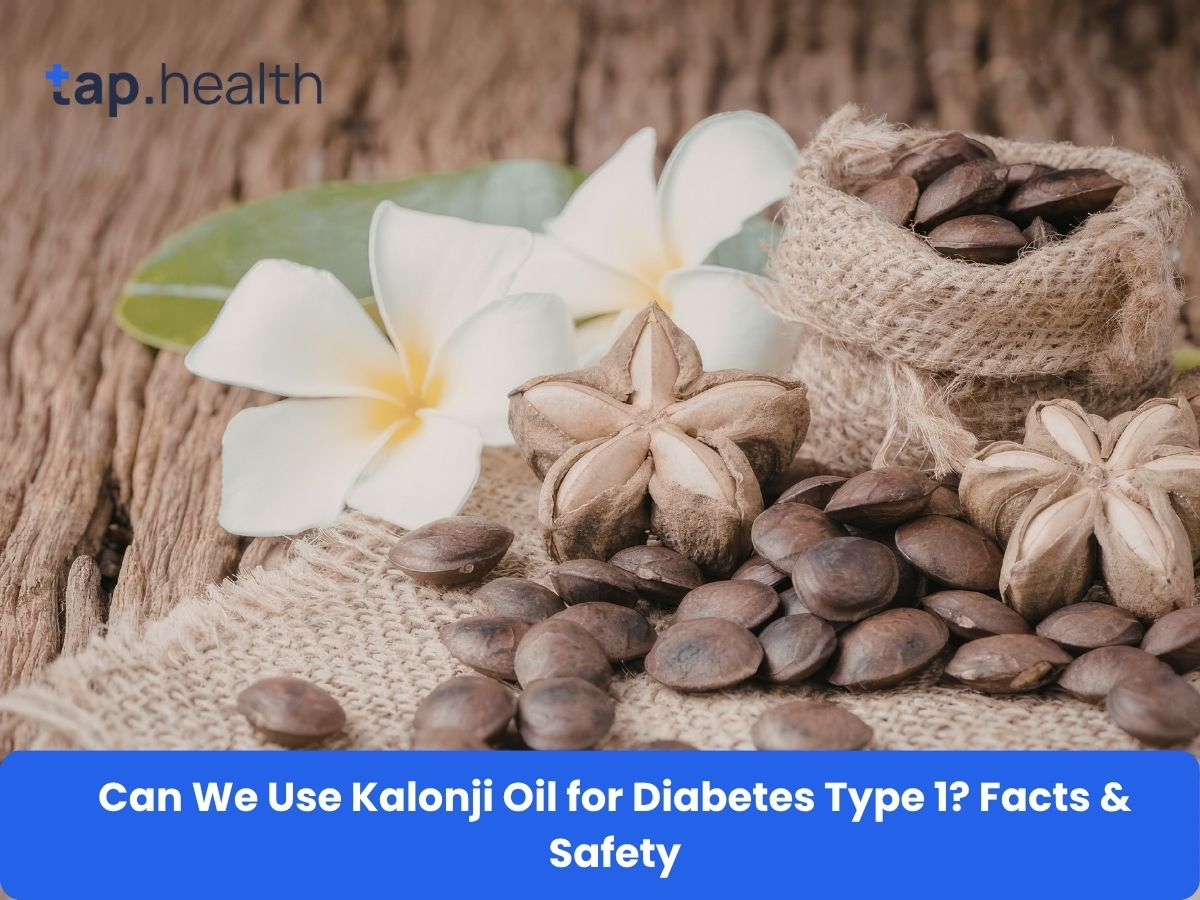
Kalonji, also known as black seed, black cumin, or Nigella sativa, is a small flowering plant native to South and Southeast Asia, the Middle East, and parts of Africa. Both the seeds and the oil pressed from them have been used for thousands of years in traditional medicine systems, including Ayurveda and Unani medicine.
The Power of Thymoquinone
The compound that gets the most scientific attention is thymoquinone. This is the main bioactive component in kalonji oil and is responsible for many of the effects studied in laboratories and human trials. Thymoquinone has demonstrated several properties that are relevant to diabetes:
- Anti-inflammatory effects: It may help reduce low-grade chronic inflammation, which is implicated in the long-term complications of diabetes.
- Antioxidant properties: Thymoquinone can help neutralise harmful free radicals that cause oxidative damage to cells. This is particularly important for people with diabetes, as high blood sugar levels increase oxidative stress throughout the body.
- Immunomodulatory potential: Early animal research suggests thymoquinone may influence immune system activity — a finding of particular interest for autoimmune conditions like type 1 diabetes.
Kalonji oil also contains other beneficial compounds, including healthy fatty acids, and is used in Indian and Middle Eastern cooking. Powdered kalonji seeds are often sprinkled on roti, paratha, or incorporated into various dishes.
Can We Use Kalonji Oil for Diabetes Type 1? What the Research Says
Now, let us get to the central question: can we use kalonji oil for diabetes type 1? The evidence can be divided into two broad categories — animal studies and human research — and understanding their differences is crucial.
Animal Studies: Promising but Preliminary Findings
Most of the specific research on kalonji oil and type 1 diabetes comes from animal models. In these studies, scientists induce a form of type 1 diabetes in laboratory rats and then administer Nigella sativa oil to observe the effects.
A 2013 study found that high doses of Nigella sativa oil significantly elevated serum insulin levels in diabetic rats, providing a measurable therapeutic effect. In this animal model, the oil appeared to have a repairing effect on damaged pancreatic tissue, which is remarkable since type 1 diabetes is characterised by precisely this kind of damage.
Another significant study investigated the immunomodulatory effect of Nigella sativa oil in type 1 diabetic rats. The researchers found that treatment with the oil, particularly its active component thymoquinone, led to significant decreases in immunological parameters — essentially, it appeared to calm down the autoimmune attack. The researchers concluded that Nigella sativa oil may provide new strategies for “the clinical management of IDDM” (Insulin-Dependent Diabetes Mellitus, an older term for type 1 diabetes).
A 2016 overview in the British Journal of Pharmaceutical Research further noted that Nigella sativa seeds contributed to enhanced insulin production, improved glucose tolerance, and beta cell proliferation in experimental models. They also suggested the seeds could play a role in treating complications of diabetes such as nephropathy, neuropathy, and atherosclerosis.
These findings are genuinely exciting in a scientific context. However, and this is the critical part, these studies were conducted on rats, not humans. Animal results do not always translate directly to human outcomes. The doses used, the controlled conditions, and the physiological differences mean we must be extremely cautious about drawing conclusions for people.
Human Research: The Evidence Gap for Type 1 Diabetes
If you search for human clinical trials specifically studying kalonji oil for type 1 diabetes, you will encounter a significant gap in the literature. The majority of human studies have focused on type 2 diabetes, not type 1.
What the human studies show for type 2 diabetes is still worth understanding, as it gives us a picture of how kalonji oil affects blood sugar parameters in people more generally. A comprehensive 2019 systematic review and meta-analysis pooled data from 17 randomised controlled trials and found that Nigella sativa supplementation led to significant reductions in fasting blood glucose, postprandial blood glucose, and HbA1c. Interestingly, the analysis also found that the oil form was more effective than the powder form in reducing fasting glucose.
However, these studies do not answer the specific question about type 1 diabetes for several key reasons:
- Different disease mechanisms: Type 2 diabetes involves insulin resistance, whereas type 1 involves autoimmune destruction of beta cells. A substance that improves insulin sensitivity in type 2 may not necessarily provide the same benefit to someone who produces little to no insulin.
- Different patient populations: The study participants were type 2 diabetics with some residual insulin production. Extrapolating these results to type 1 diabetics who are completely insulin-dependent is scientifically unsound.
- No long-term safety data for type 1: The interactions between kalonji oil and the autoimmune nature of type 1 diabetes have not been studied in humans over extended periods.
The Current Scientific Consensus
The current evidence, as summarised by the MSD Manual, suggests that type 1 diabetes is triggered by environmental exposures in people who are genetically susceptible. There is moderate evidence that various natural compounds, including Nigella sativa, may help regulate blood sugar levels, but none are recommended as replacements for standard medical therapy. As noted by the authoritative fact-checking platform THIP Media, driven by physicians: “No, kalonji cannot cure diabetes. While kalonji seeds have been studied for their potential to help regulate blood sugar levels, there is no scientific evidence that they can cure diabetes, and diabetes — whether its type 1 or type 2 — cannot be cured”.
Potential Benefits of Kalonji Oil for Someone with Type 1 Diabetes
Even though kalonji oil is not a cure, that does not mean it is entirely without potential value for someone managing type 1 diabetes. The supporting benefits may come from broader metabolic and anti-inflammatory effects.
1. Improved Blood Sugar Control as an Adjunct
If your pancreas still produces a small amount of insulin — which can happen in the early stages of type 1 diabetes or during the “honeymoon period” soon after diagnosis — the blood sugar-lowering effects of kalonji oil observed in general population studies might provide modest support. A 2019 meta-analysis found that Nigella sativa oil supplementation reduced HbA1c by an average of 0.57%.
While 0.57% may sound small, it is clinically meaningful. Think of it like a small tailwind while cycling — you still need to pedal with your insulin therapy, but the effort might feel slightly easier. However, this effect has not been specifically confirmed in type 1 diabetic populations.
2. Anti-Inflammatory Protection
Chronic inflammation is a major contributor to diabetes complications over time, including cardiovascular disease, kidney damage, and nerve damage. The thymoquinone in kalonji oil has well-documented anti-inflammatory effects that may help protect against these long-term outcomes. Reducing inflammation is like constantly dampening the low-level fire that high blood sugar fuels throughout the body.
3. Antioxidant Defence
People with diabetes experience elevated oxidative stress — essentially, an imbalance between harmful free radicals and the body’s ability to neutralise them. Kalonji oil is rich in antioxidants that may help counteract this damage. The seeds are “packed with antioxidants that neutralise harmful free radicals and prevent oxidative damage to cells”.
4. Lipid Profile Improvement
The same meta-analysis that showed improved blood sugar also found significant improvements in lipid profiles, with reductions in total cholesterol and LDL (the “bad” cholesterol). Since people with type 1 diabetes are at increased risk for heart disease, any additional benefit to cardiovascular health is welcome.
How to Use Black Seed Oil for Diabetes: Practical Guidance
If you and your doctor decide that trying kalonji oil as a complementary approach makes sense for you, it is essential to understand the proper usage guidelines.
Recommended Dosage
Research provides some general dosage parameters, mostly based on studies in type 2 diabetes and general metabolic health:
- Oil form: The most commonly studied doses range from 1 to 3 grams (approximately 1 to 3 mL) per day, typically divided into one or two doses. Some studies have used 2.5 mL twice daily, for a total of 5 mL per day.
- Seed or powder form: Doses of 1 to 2 grams of ground seeds per day have been used in studies lasting 8 to 12 weeks.
- Duration: Most studies range from 4 to 12 weeks of continuous use.
For people with type 2 diabetes, preliminary research suggests that 2 grams per day may be the optimal dose for achieving beneficial effects on both lipids and blood glucose. However, in the absence of specific data for type 1 diabetes, the principle of “start low and go slow” is the safest approach.
Practical Tips for Consumption
- Take with food: Consuming kalonji oil with a meal can help reduce the chance of digestive upset, which is one of the more common side effects.
- Start with half a teaspoon: Begin with approximately 0.5 teaspoons (roughly 2.5 mL or 500 mg) once per day and gradually increase if well-tolerated, up to a maximum of 1 teaspoon (about 5 mL) daily.
- Choose cold-pressed oil: Opt for high-quality, cold-pressed kalonji oil to ensure the bioactive compounds like thymoquinone remain intact. Store it in a cool, dark place to prevent oxidation.
- Monitor blood sugar closely: When starting any supplement that can affect blood sugar, check your glucose levels more frequently than usual, especially in the first few weeks.
Important: This information is for educational purposes only. The exact dosage and suitability for your individual situation must be determined in consultation with your diabetologist or endocrinologist.
Black Seed Oil and Metformin: Safety and Interaction Concerns
Many people with diabetes, including those with “double diabetes” (type 1 diabetes with insulin resistance) or LADA (Latent Autoimmune Diabetes in Adults), may be taking metformin alongside insulin. Understanding how kalonji oil might interact with metformin is essential.
The Hypoglycemia Risk
The primary concern when combining kalonji oil with metformin or any antidiabetes medication is the risk of hypoglycemia (blood sugar dropping too low). Pharmacist-reviewed interaction databases classify this as a “moderate” interaction, meaning it is a possible concern that has been documented in animal research and some limited human studies.
The reasoning is straightforward: if kalonji oil independently lowers blood sugar, and your diabetes medication also lowers blood sugar, taking them together could theoretically push your sugar levels too low. This is not a reason to avoid kalonji oil entirely, but it is a strong reason for careful monitoring and medical supervision.
How Metformin and Kalonji Oil Compare
A study comparing Nigella sativa oil head-to-head with metformin in newly diagnosed type 2 diabetes patients found an interesting pattern. Nigella sativa was inferior to metformin in terms of lowering fasting blood glucose, 2-hour postprandial glucose, and HbA1c. However, Nigella sativa was comparable to metformin in lowering body weight, waist circumference, and BMI, and it was well-tolerated with no significant side effects reported.
This tells us that while kalonji oil should not be seen as a replacement for standard medications, it may offer complementary metabolic benefits that go beyond just blood sugar control. Again, this study was in type 2 diabetes, so the direct applicability to type 1 diabetes is limited.
Black Seed Oil Side Effects and Kidney Safety: What You Must Know
No supplement is completely without risk, and kalonji oil is no exception. Understanding potential side effects is a critical part of making an informed decision.
Common and Mild Side Effects
In most human studies, kalonji oil has been generally well-tolerated, especially at doses of 1 to 3 grams per day. The most commonly reported side effects include:
- Gastrointestinal upset: Some people experience mild stomach discomfort, nausea, or bloating, particularly when taking the oil on an empty stomach.
- Skin reactions: When applied topically, some people may develop a rash or dermatitis.
Serious Side Effects: Kidney and Liver Concerns
While rare, there are documented cases of more serious adverse effects that every user should be aware of.
A 2024 case report published in the journal Toxicon described a patient who developed rhabdomyolysis (severe muscle breakdown), acute kidney injury, and hepatotoxicity (liver damage) after consuming black seed oil at a dose of 2000 mg per day for one month. The authors concluded: “It is important to keep in mind that rhabdomyolysis, acute renal damage, and hepatotoxicity might occur following the use of black seed oil”.
An animal study on the toxic effects of different doses of Nigella sativa oil found that while moderate doses were safe, large doses caused concerning effects on the kidneys, including tubular necrosis and glomerular injury, as well as liver damage. The researchers concluded: “Large doses of Nigella sativa oil have toxic effects on the histological structure of the kidney and to a lesser degree on the liver. Therefore, Nigella oil should be used in proper doses”.
A separate case report documented acute kidney injury in a woman who consumed black seed oil in high doses. Remarkably, the patient had been taking the oil as a renal protective agent — and it ended up damaging her kidneys instead. She required dialysis, though her kidney function did eventually improve.
Why Kidney Safety Matters for People with Diabetes
This is particularly relevant for people with diabetes because they are already at elevated risk for kidney disease (diabetic nephropathy). Introducing a supplement with any potential for kidney toxicity — however rare — requires careful consideration. If you have any existing kidney issues or elevated creatinine levels, the risk-benefit calculus changes significantly.
General Safety Guidelines
- Stay within recommended doses. Most serious side effects have occurred at doses of 2,000 mg (2 grams) per day or higher for extended periods. The commonly recommended dose of 1–3 grams should not be significantly exceeded without medical supervision.
- Monitor liver and kidney function. If you are taking kalonji oil regularly, periodic blood tests for liver enzymes and kidney function are advisable.
- Use caution with blood pressure medications. Kalonji oil may have additive effects with medications for blood pressure, as it has been shown to modestly reduce blood pressure.
The Safety Summary from Examine.com, an evidence-based resource, states: “Black seed is generally well tolerated. Rare cases of kidney injury have been observed with dosages of 2,000 to 2,500 mg per day. Black seed may increase the effects of medications used for type 2 diabetes and hypertension”.
Is Black Seed Oil Good for Diabetes? Reviews, Community Experiences, and Reddit Discussions
When people search for “black seed oil for diabetes reviews” or “black seed oil blood sugar Reddit,” they are looking for real-world experiences beyond the clinical studies. Let us look at what community feedback suggests while maintaining a critical perspective.
Anecdotal Reports
Online communities like Reddit and diabetes forums contain many personal accounts from people who have experimented with black seed oil. A common pattern emerges: some users report modest improvements in fasting blood sugar readings, while others notice no effect at all. A few report feeling more energetic and less inflamed. These subjective reports are not scientific evidence, but they do reflect the variability in individual responses.
The key caution, however, is that anecdotes are not controlled data. People who share their experiences online tend to be self-selecting — either very positive or very negative. The silent majority who experience nothing notable rarely post about it.
What the Clinical Trials Conclude
From the perspective of controlled clinical research, the systematic reviews and meta-analyses provide the strongest evidence. The consistent finding is that Nigella sativa produces statistically significant but relatively modest reductions in blood sugar parameters. A reduction in fasting blood glucose of about 10–21 mg/dL and an HbA1c decrease of around 0.4–0.6% is what the highest-quality evidence suggests.
These are meaningful reductions at the population level, but they are not dramatic enough to replace standard treatments. They are best characterised as supportive or adjunctive benefits — the kind that might help you edge closer to your blood sugar targets when combined with proper medical care, diet, and exercise.
Is Black Seed Oil Good for Prediabetes?
Prediabetes is the stage where blood sugar levels are elevated but not yet high enough for a type 2 diabetes diagnosis. The research on black seed oil for prediabetes is more directly applicable because prediabetes shares the insulin resistance mechanism with type 2 diabetes.
A 2019 study investigating dosage variation of black seed oil in patients at risk of metabolic syndrome found that administration of 1.5 to 3 mL per day for 20 days significantly decreased HbA1c levels. The study concluded that black cumin seed oil, combined with hypoglycaemic drugs, may help reduce HbA1c levels in at-risk patients.
For someone with prediabetes, incorporating black seed oil alongside lifestyle modifications like dietary changes and increased physical activity may offer additional support in preventing progression to full diabetes. However, the same cautions about dosage, quality, and medical supervision apply strongly here.
Can Diabetic Patients Do PRP Treatment?
Some of you may have come across questions about PRP (Platelet-Rich Plasma) therapy and diabetes. Let us address this briefly, as it is tangentially related to the broader conversation about diabetes management.
What Is PRP Treatment?
PRP therapy involves drawing a small amount of your own blood, processing it in a centrifuge to concentrate the platelets (which are rich in growth factors), and then injecting this concentrated plasma into a targeted area to stimulate healing. It is used for hair restoration, skin rejuvenation, joint pain, and wound healing.
Is PRP Safe for Diabetic Patients?
The answer depends on whether the diabetes is well-controlled. Uncontrolled diabetes is listed as a contraindication for PRP therapy because it impairs healing and increases infection risk. However, if your diabetes is well-controlled, PRP may be considered for specific purposes, particularly wound healing.
Paradoxically, PRP therapy has been studied specifically for treating diabetic foot ulcers — a common and serious complication of diabetes. A 2025 review found that PRP therapy “shows significant potential in the management of diabetic foot ulcers” by accelerating wound healing and tissue regeneration. Another study concluded that PRP can “effectively and safely promote the healing of diabetic lower extremity wounds”.
So, a diabetic patient with a foot ulcer may actually be a good candidate for PRP to help heal that ulcer — provided their overall health and blood sugar control are optimised. For cosmetic PRP (hair or skin), uncontrolled diabetes is generally considered a relative contraindication.
Who Is Not a Good Candidate for PRP?
Beyond uncontrolled diabetes, several conditions make someone a poor candidate for PRP:
- Blood disorders such as thrombocytopenia (low platelet count) or clotting disorders.
- Active infections, either local or systemic.
- Active cancer or ongoing chemotherapy/radiation therapy.
- Use of blood-thinning medications (anticoagulants).
- Severe anaemia with low haemoglobin levels.
- Pregnancy or breastfeeding.
A thorough medical evaluation is essential before proceeding with PRP therapy.
How Much Do 3 Sessions of PRP Cost?
In India, the cost of PRP therapy varies widely depending on the city, clinic, and the specific treatment area. Based on Indian market data, the typical cost per session ranges from ₹4,000 to ₹15,000 in metro areas like Bengaluru, Mumbai, Delhi, and Chennai.
For a 3-session package, which is the commonly recommended initial course for hair or skin treatments, you can expect to pay approximately ₹12,000 to ₹35,000 in most Indian clinics. Some clinics may charge more if the package includes add-ons like microneedling, imaging, or topical boosters.
In the United States, the comparable cost for a 3-session PRP package is typically between 1,100and1,100and2,400, depending on the clinic and treatment area.
What Is the Best Injectable for Type 2 Diabetes?
This question comes up often in the context of diabetes treatment evolution. While it is not directly related to kalonji oil, it is an important topic for people exploring all their diabetes management options.
The “best” injectable depends on individual patient factors, but here is an overview of the current landscape:
GLP-1 Receptor Agonists
These are among the most effective and widely prescribed injectables for type 2 diabetes. The leading option in this class is semaglutide (marketed as Ozempic for diabetes and Wegovy for weight management). It is a once-weekly injection that mimics the GLP-1 hormone, helping patients feel fuller, slowing stomach emptying, and lowering blood sugar after meals.
The New Generation: CagriSema
A new experimental treatment called CagriSema from Novo Nordisk represents the next evolution. It is a once-weekly injection combining semaglutide (GLP-1 mimic) with a second component that mimics amylin, another hormone involved in appetite regulation. In a large Phase III clinical trial involving nearly 2,800 adults with type 2 diabetes, CagriSema delivered superior results compared to semaglutide alone. Patients taking CagriSema lost over 14% of their body weight on average, compared to just over 10% on semaglutide alone, and achieved better HbA1c reductions.
Once-Weekly Insulin
The FDA recently approved the first once-weekly basal insulin, insulin icodec (Awiqli), for adults with type 2 diabetes. This reduces the number of injections from seven to one per week, potentially improving adherence and quality of life.
The Bottom Line
For people with type 2 diabetes currently on metformin who need additional control, GLP-1 agonists like semaglutide are often considered first-line injectable options due to their strong glucose-lowering and weight-loss effects. However, “best” is always individual — what works wonderfully for one person may cause intolerable side effects in another. All treatment decisions should be made in partnership with your endocrinologist.
Key Takeaways
Let us summarise what we have covered about using kalonji oil for type 1 diabetes:
- Kalonji oil is not a cure for type 1 diabetes. It cannot replace insulin therapy. Current scientific consensus confirms that neither type 1 nor type 2 diabetes can be completely cured, and depending on unproven remedies can be dangerous and delay essential medical care.
- Animal studies are promising but not definitive. Research in diabetic rats has shown that Nigella sativa oil can improve blood sugar markers, reduce autoimmune damage, and even partially repair pancreatic tissue. However, these results have not been confirmed in human type 1 diabetics.
- Modest blood sugar benefits may exist as an adjunct. Meta-analyses of human studies, mostly in type 2 diabetes, show that Nigella sativa supplementation can modestly reduce fasting blood glucose (by 10–21 mg/dL) and HbA1c (by 0.4–0.6%) when used alongside standard treatment.
- Safety concerns must be taken seriously. Rare but serious side effects include acute kidney injury, liver toxicity, and rhabdomyolysis, particularly at doses exceeding 2,000 mg per day. People with existing kidney issues or those on multiple medications are at higher risk.
- Interactions with diabetes medications are real. Kalonji oil can increase the blood sugar-lowering effects of medications like metformin, potentially causing hypoglycemia. Blood sugar monitoring is essential when starting the supplement.
- Use with caution and under medical supervision. If you are interested in trying kalonji oil, the safe approach is: start with a low dose (0.5 teaspoon daily), monitor your blood sugar closely, periodically check kidney and liver function, and always inform your doctor.
Frequently Asked Questions
How to use black seed oil for diabetics?
Start with a low dose of approximately 0.5 teaspoons (roughly 2.5 mL) once daily, taken with food to reduce the chance of stomach upset. If well-tolerated, you can gradually increase to 1 teaspoon (about 5 mL) per day. Always consult your diabetologist before starting, monitor your blood sugar closely, and choose a high-quality, cold-pressed oil.
Can black seed oil be taken with metformin?
Black seed oil and metformin can be taken together, but doing so requires caution. Since both substances can lower blood sugar, combining them may increase the risk of hypoglycemia (blood sugar dropping too low). This interaction is rated as “moderate,” so monitoring your glucose levels carefully and consulting your doctor is essential.
Is black seed oil good for diabetes?
Evidence suggests black seed oil may offer supportive benefits in managing diabetes, particularly by modestly reducing fasting blood glucose and HbA1c levels. It may also improve cholesterol profiles and reduce inflammation. However, the evidence comes largely from studies in type 2 diabetes, and it is best viewed as a complementary aid, not a primary treatment.
Is black seed oil good for prediabetes?
Preliminary research suggests black seed oil may help lower HbA1c levels in people at risk of metabolic syndrome, making it potentially beneficial alongside lifestyle changes for prediabetes. Even small doses (1.5–3 mL per day) have shown significant effects over short periods. However, medical consultation before use remains important.
What does Reddit say about black seed oil for blood sugar?
Community discussions on Reddit and other forums contain mixed experiences. Some users report noticeable improvements in fasting blood sugar readings, while others notice minimal or no effect. These anecdotal reports vary widely in reliability and should not replace evidence-based medical advice.
Does black seed oil lower blood sugar?
Yes, meta-analyses of clinical trials show that Nigella sativa supplementation can significantly reduce fasting blood glucose (by roughly 10–21 mg/dL on average), postprandial blood glucose (by around 15 mg/dL), and HbA1c (by approximately 0.4–0.6%). Most studies showing these effects have been conducted in type 2 diabetic populations.
What are the side effects of black seed oil on kidneys?
Rare but serious kidney side effects have been documented, including acute kidney injury, particularly at doses of 2,000 mg or more per day for extended periods. Animal studies confirm that large doses can damage kidney tubules and glomeruli. People with existing kidney problems should be especially cautious.
Can diabetic patients do PRP treatment?
Patients with well-controlled diabetes can typically undergo PRP treatment, and PRP is actually used therapeutically to promote healing of diabetic foot ulcers. However, uncontrolled diabetes is generally considered a contraindication because it impairs wound healing and increases infection risk.
How much do 3 sessions of PRP cost in India?
In India, the cost of a 3-session PRP package typically ranges from ₹12,000 to ₹35,000, depending on the clinic’s location, reputation, and any additional treatments included, such as microneedling or imaging. Individual session costs in metro areas range from ₹4,000 to ₹15,000.
What is the best injectable for type 2 diabetes?
The “best” injectable varies by individual patient factors, but GLP-1 receptor agonists like semaglutide (Ozempic) are widely regarded as first-line injectable options for many patients due to strong glucose-lowering and weight-loss effects. Emerging treatments like the combination injection CagriSema and once-weekly insulin (Awiqli) represent the newest generation of options.