In every Indian household, dinner time comes with a familiar debate. On one side, there are the rice lovers, and on the other, the Roti loyalists. For generations, we have been told that Roti (Chapati) is healthier. We see our parents switching from rice to chapatis the moment the doctor mentions “blood sugar” or “weight gain.”
But is the humble Chapati truly a magic bullet for health? Or is it just another source of carbohydrates that we are eating too much of?
For the millions of Indians managing diabetes, pre-diabetes, or obesity, guessing isn’t enough. You need facts. You need to know the chapati glycemic index.
In this comprehensive guide, we will roll out the facts (pun intended). We will compare the GI of wheat roti with rice and millets like Jowar and Bajra. We will explore whether adding ghee makes it better or worse, and finally answer the burning question: Is Roti actually safe for diabetics?
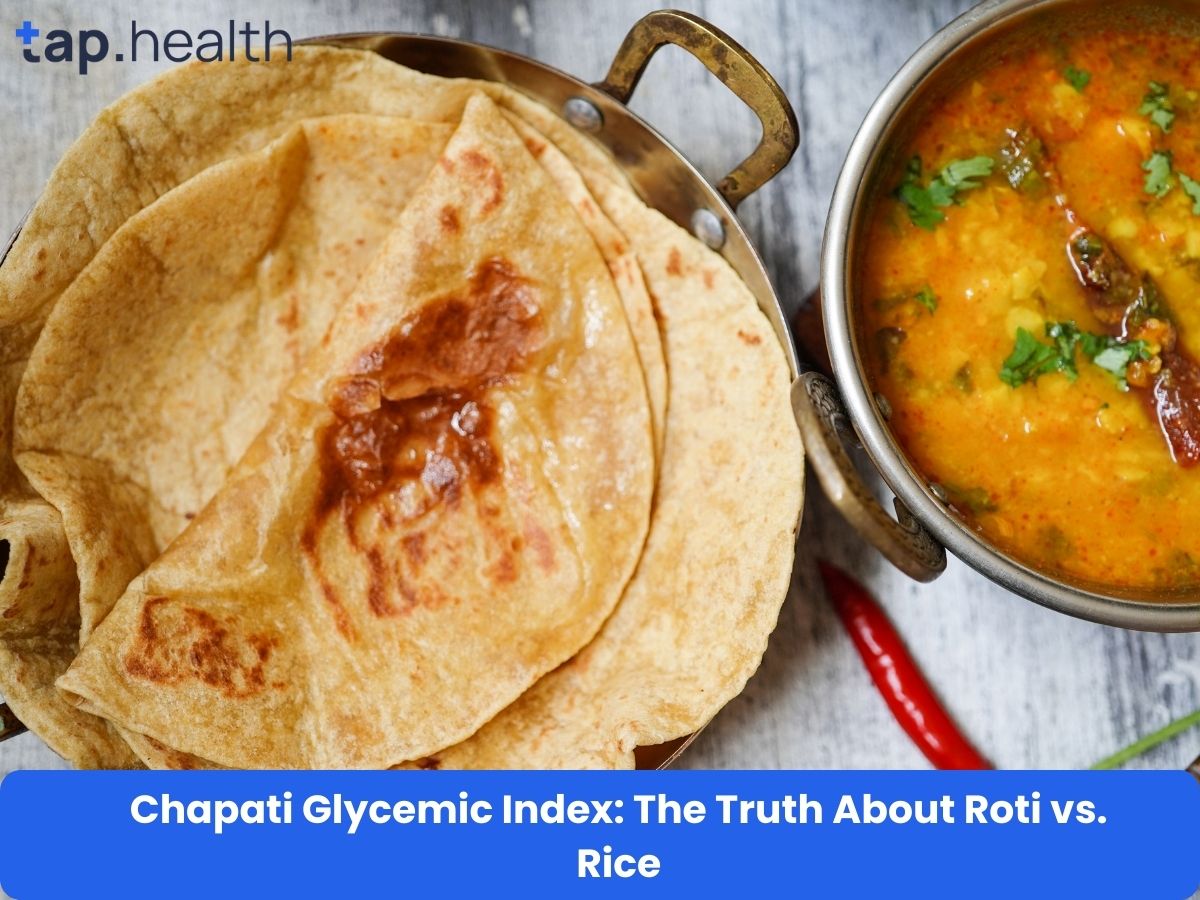
What is a Chapati? (Atta Roti)
Before we look at the numbers, let’s define what we are eating. A standard Indian Chapati (or Phulka/Roti) is an unleavened flatbread made from Whole Wheat Flour (Atta).
Unlike the bread found in the West, which is often made of refined flour (Maida) and yeast, Indian Chapati is made from the whole grain. This means it retains:
- The Bran: The outer layer rich in fiber.
- The Germ: The nutrient-packed core.
- The Endosperm: The starchy middle.
Because it contains fiber and protein, it behaves differently in your body compared to refined foods like white bread or white rice.
Understanding Glycemic Index (GI)
To judge if Chapati is safe, we use the Glycemic Index (GI).
Think of GI as a speedometer for your blood sugar. It measures how fast a food raises your glucose levels on a scale of 0 to 100.
- Low GI (0-55): These foods digest slowly. They release energy steadily, like a slow-burning candle. (Ideal for Diabetics).
- Medium GI (56-69): A moderate rise in sugar. Safe in moderation.
- High GI (70+): These digest instantly, causing a rapid “sugar spike” like rocket fuel. (e.g., White Rice, Sugar, Maida).
For a diabetic patient, the goal is to keep meals in the Low to Medium range.
The Magic Number: Chapati Glycemic Index
So, where does our staple food fit on this scale?
The Glycemic Index of a Whole Wheat Chapati is approximately 62.
This places Chapati in the Medium GI category.
It is not “Low GI” like Dal or leafy vegetables, but it is certainly not “High GI” like white bread or white rice.
Why isn’t it lower? Even though it has fiber, wheat is still a carbohydrate-rich grain. Grinding it into flour (Atta) breaks down the grain structure, making it easier for the body to digest than eating whole wheat berries (like Dalia).
However, the GI can change based on how you make it:
- Commercial Atta (highly refined): GI might be higher (~65-69).
- Chakki Fresh Atta (coarse): GI is lower (~55-60) because of higher bran content.
Glycemic Index of Roti vs Rice
This is the ultimate Indian dietary battle. “Glycemic index of roti vs rice”—who wins?
| Feature | White Rice | Whole Wheat Chapati |
| Glycemic Index | ~73 (High) | ~62 (Medium) |
| Fiber Content | Very Low | Moderate |
| Protein Content | Low | Moderate |
| Digestion Speed | Fast (Spikes sugar) | Slower (Steady energy) |
| Satiety | Low (Hungry soon) | High (Keeps you full) |
Export to Sheets
The Verdict: Chapati is better than White Rice. Because of the fiber and protein in wheat, chapati digests slower than polished white rice. This prevents the sharp insulin spike that follows a rice meal.
However, if you compare Brown Rice (GI ~68) vs Chapati (GI ~62), the difference is smaller. But for most Indians eating white Sona Masoori or Basmati, switching to Roti is a healthy move.
Chapati Glycemic Index and Load
We cannot talk about GI without discussing the Chapati Glycemic Index and Load.
While GI tells you the speed of the spike, Glycemic Load (GL) tells you the amount of the sugar impact based on portion size.
- 1 Chapati (Medium, approx 6 inch):
- Carbs: ~15g to 18g
- Glycemic Load: ~9 to 10 (Low).
The Trap: One chapati has a Low GL. But who eats just one? If you eat 3 Chapatis, the Glycemic Load jumps to ~30 (High).
This is why doctors say, “Portion control is key.” Eating 4 chapatis can spike your sugar just as much as a bowl of rice.
Multigrain, Jowar, Ragi, and Bajra Roti
If wheat is “Medium GI,” can we go lower? Yes, by switching grains.
1. Jowar Roti Glycemic Index
Jowar (Sorghum) is excellent.
- GI: ~62.
- Benefit: Although the GI is similar to wheat, Jowar has a higher Glycemic Load per gram? No, it’s actually gluten-free and has high resistant starch, which improves gut health and insulin sensitivity over time.
2. Bajra Roti Glycemic Index
Bajra (Pearl Millet) is a winter superfood.
- GI: ~54 (Low).
- Verdict: Bajra is superior to wheat for diabetes. It digests very slowly and is rich in magnesium.
3. Ragi Chapati Glycemic Index
Ragi (Finger Millet) is rich in calcium.
- GI: ~65 to 80 (Medium/High).
- Surprise: Ragi actually has a higher GI than wheat if not cooked properly. However, its high fiber content makes it healthy. For strict blood sugar control, Bajra or Jowar is often better than Ragi.
4. Multigrain Chapati Glycemic Index
This is the champion.
- GI: ~45 to 55 (Low).
- Why: When you mix Wheat with Besan (Chickpea flour), Soya, and Oats, you drastically increase the protein and fiber. This lowers the overall GI of the roti.
Is Chapati Ok for Diabetics?
The query “Is chapati ok for diabetics?” gets a definite YES.
But it comes with a “User Manual”:
- Don’t Sieve the Atta: Many households sieve (chaanna) the flour to remove the “husk” (choker) to make soft rotis. Stop doing this. That husk is the fiber that lowers the GI.
- Add Ghee: Surprisingly, adding a teaspoon of Ghee to your chapati lowers its GI. The fat slows down digestion. Dry rotis might digest faster!
- Eat with Protein: Never eat Roti with just potato sabzi (double carb). Eat it with Dal, Paneer, or Chicken. The protein acts as a brake on sugar absorption.
How Many Chapatis Can a Diabetic Eat?
This depends on your body weight and activity level, but a general rule for a sedentary diabetic is:
- Lunch: 2 Medium Chapatis (6 inch).
- Dinner: 1.5 to 2 Medium Chapatis.
If you are still hungry, fill up on Sabzi (vegetables) and Salad, not more Roti.
Real-Life Scenario
Let’s meet Mr. Verma, a 50-year-old bank employee from Delhi.
The Habit: Mr. Verma was diagnosed with Type 2 Diabetes. He immediately stopped eating rice. For lunch, he would carry 4 soft Wheat Chapatis and Aloo-Gobi sabzi. Despite quitting rice, his sugar levels remained high (180 mg/dL post-meal).
The Mistake: He was eating too many carbohydrates (4 Rotis + Potato) and not enough protein or fiber.
The Fix: His dietician changed his tiffin:
- The Roti: Reduced to 2 Multigrain Rotis (Wheat + Besan + Methi leaves).
- The Sabzi: Swapped Aloo-Gobi for Bhindi (Okra) or Paneer.
- The Add-on: Added a bowl of cucumber salad.
The Result: Mr. Verma felt fuller because of the extra fiber and protein. His post-lunch sugar dropped to 140 mg/dL within two weeks. He realized it wasn’t just about quitting rice; it was about managing the Roti too.
Expert Contribution
We consulted medical guidelines to get the professional stance.
Dr. R. Gupta, Diabetologist: “I call Chapati the ‘safe middle ground.’ It is not a superfood, but it is reliable. The biggest mistake Indians make is using highly refined ‘Premium Sharbati Atta’ which is almost like Maida. I advise patients to buy coarse-ground Atta or mix 20% Soya/Besan flour into their bin. This simple ‘Atta Hack’ can reduce HbA1c levels significantly.”
Nutritionist Perspective: “Chewing matters. Roti requires more chewing than rice. This stimulates saliva and signals the brain that you are full. This satiety factor is why Roti eaters often manage weight better than Rice eaters.”
Recommendations Grounded in Proven Research and Facts
Based on data from the National Institute of Nutrition (NIN) and Harvard Health, here are actionable tips:
- The “Multigrain Ratio”: Make your own low-GI flour at home.
- 5 kg Whole Wheat.
- 1 kg Kala Chana (Black Chickpea) or Besan.
- 500g Oats or Barley (Jau).
- Result: A tasty Roti with a GI under 50.
- The “Stale Roti” Science: Believe it or not, a Baasi Roti (stale/leftover roti) has a lower GI than a fresh hot one. The starch retrogrades (changes structure) overnight and becomes resistant starch. Eating a leftover roti with milk for breakfast is surprisingly healthy!
- Avoid “Rumali Roti”: Rumali roti is usually made of Maida (GI ~75) and is very thin, digesting instantly. Stick to Tawa Roti or Tandoori Roti made of whole wheat.
- Vegetable Stuffing: Make stuffed Parathas (without frying). Stuffing the dough with grated Gobi, Mooli, or Spinach reduces the amount of flour per roti and increases fiber.
Conclusion
The verdict on the chapati glycemic index is clear: It is a Medium GI (62) food.
It is significantly better for your blood sugar than white rice or refined bread, thanks to its fiber and protein content. However, it is still a source of carbohydrates. Eating unlimited chapatis will spike your sugar just like any other carb.
The secret to mastering your health isn’t to banish the Roti, but to upgrade it. Switch to coarse Atta, mix in some millets or besan, and always—always—watch your portion size. With these small tweaks, your daily Roti becomes a powerful tool in your fight against diabetes.
Frequently Asked Questions (FAQ)
Is chapati ok for diabetics?
Yes. Chapati made from whole wheat flour is safe for diabetics in moderation. It has a lower glycemic index than rice and contains fiber. However, portion control (limiting to 2 per meal) is crucial.
Which has more sugar, chapati or rice?
Rice has a higher glycemic impact. While both contain carbohydrates (which turn to sugar), white rice has a higher Glycemic Index (~73) than whole wheat chapati (~62). Rice spikes blood sugar faster than chapati.
What is the glycemic index of Atta roti?
The glycemic index of a standard Atta Roti (Whole Wheat) is approximately 62. This places it in the Medium GI category. If the Atta is highly refined, the GI can be higher; if it is coarse or multigrain, the GI is lower.
How many chapatis can a diabetic eat?
A general guideline for a diabetic is 2 medium chapatis (approx 6 inches) for a main meal (Lunch/Dinner). This provides about 30-35g of carbohydrates. This should be accompanied by plenty of Dal and Sabzi to fill the stomach.
Is Jowar roti better than wheat roti?
Yes, slightly. While the GI is similar, Jowar is gluten-free and contains high fiber and antioxidants. It is excellent for gut health and reducing inflammation, making it a great alternative for diabetics.
Does adding ghee to chapati increase sugar?
No, it actually helps. Adding a small amount of ghee (fat) to a chapati lowers its Glycemic Index. The fat slows down the stomach emptying rate, leading to a slower release of sugar into the blood.
What is the multigrain chapati glycemic index?
Multigrain chapati has a lower GI, typically ranging from 45 to 55, depending on the mix. Adding Besan (Chickpea flour), Soya, or Oats to wheat flour significantly improves its blood sugar profile.
Rice vs chapati glycemic index – can I eat brown rice?
Brown rice (GI ~68) is better than white rice but still slightly higher than Chapati (GI ~62). If you prefer rice, brown rice or red rice are the best alternatives to chapati.
References:
- National Institute of Nutrition (NIN): Glycemic Index of Common Indian Foods. Link
- Harvard Health Publishing: Glycemic index for 60+ foods. Link
- Diabetes.co.uk: Bread, Pasta, Rice and Diabetes. Link
- WebMD: Health Benefits of Whole Wheat. Link
- University of Sydney: GI Search Database. Link
(Disclaimer: This content is for educational purposes only. Always consult your doctor or a certified dietitian before making significant changes to your diet, especially if you have diabetes or celiac disease.)