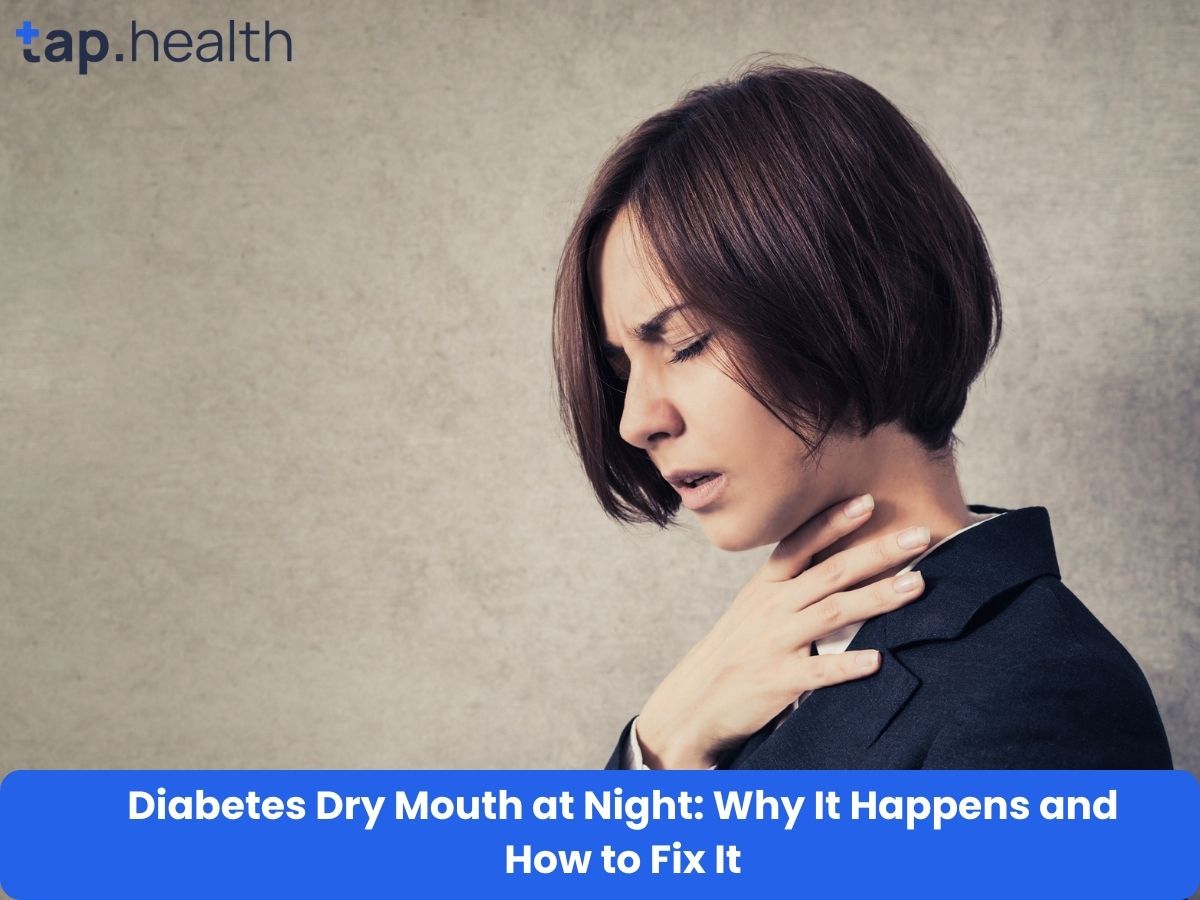
It is 3:00 AM. You jolt awake, not because of a bad dream, but because your tongue feels like it is glued to the roof of your mouth. Your throat is scratching, your lips are cracked, and you feel an intense, desperate need for water. You reach for the bottle on your bedside table—a bottle you have refilled twice already tonight.
If this sounds familiar, you are struggling with diabetes dry mouth at night.
While dry mouth (Xerostomia) can happen at any time, it is notoriously worse while you sleep. For people with diabetes, this nocturnal dryness isn’t just annoying; it disrupts deep sleep, ruins dental health, and can be a sign that your blood sugar levels are spiking dangerously while you dream.
In this detailed guide, written in simple Indian English, we will uncover the science behind why the night is so difficult for diabetics. We will explore the hidden link between dry mouth and sleep apnea, the damage it does to your teeth, and the practical steps you can take to finally get a full night’s rest.
Why Is Dry Mouth Worse at Night for Diabetics?
You might feel fine during the day, but the moment you lie down, the dryness sets in. Why? It is usually a “Double Whammy” of biology and disease.
1. The Natural Dip vs. The Diabetic Drop
Biology: Even in a healthy person, salivary glands naturally slow down at night. We don’t need to digest food while we sleep, so the body conserves energy by reducing saliva flow.Diabetes: If you have high blood sugar, your body is already dehydrated because your kidneys are overworking to flush out glucose through urine.The Result: When you combine the natural night-time drop in saliva with diabetic dehydration, your mouth loses almost all protection. You end up with a severe condition called Nocturnal Xerostomia.
2. High Night-Time Blood Sugar (The Dawn Phenomenon)
Many diabetics experience high blood sugar overnight due to the “Dawn Phenomenon” (a surge of hormones in the early morning) or a heavy dinner.
- The Mechanism: High glucose in the blood pulls fluid from your tissues.
- The Effect: While you are sleeping, your body is literally drying itself out from the inside to dilute the sugar. This manifests as intense thirst and a parched mouth.
3. Diabetes and Sleep Apnea Link
This is a critical connection. Type 2 Diabetes and Obstructive Sleep Apnea (OSA) are closely linked (often due to weight).
- What happens: If you have sleep apnea, you stop breathing for short periods. Your body forces you to breathe through your mouth to get air.
- The Dryness: Mouth breathing evaporates whatever little saliva is left instantly. If you wake up with a dry mouth and a headache, you might have undiagnosed sleep apnea.
4. Diabetic Neuropathy
Long-term diabetes damages nerves (Neuropathy). This doesn’t just affect feet; it affects the Autonomic Nervous System that controls your salivary glands. The signal from your brain to “make saliva” might be broken or weak.
The Hidden Dangers: It’s Not Just About Thirst
Ignoring diabetes dry mouth at night is dangerous. Saliva is your mouth’s natural defense system. It washes away bacteria and neutralizes acid. When that protection disappears for 8 hours every night, the consequences are severe:
- Rapid Tooth Decay: Without saliva, sugar and acid sit on your teeth all night. This leads to cavities, especially near the gum line.
- Gum Disease (Gingivitis): Dry gums recede and bleed easily, leading to tooth loss.
- Fungal Infections: A dry, sweet (due to high blood sugar) mouth is a paradise for yeast. This causes Oral Thrush—painful white patches on the tongue.
- Poor Sleep Cycle: If you wake up 3-4 times to drink water and use the bathroom, you never reach “Deep Sleep.” Poor sleep increases stress hormones (cortisol), which raises blood sugar further. It is a vicious cycle.
Read this: Is Dry Throat a Symptom of Diabetes?
Real-Life Scenario
Meet Suresh (55, Bank Manager): Suresh has had Type 2 diabetes for 10 years. He keeps a 1-litre bottle next to his bed and finishes it every night. He wakes up tired, with bad breath and a “sticky” feeling in his mouth. He thought it was just the AC drying the air.The Turning Point: His dentist found three new cavities in one year. The dentist asked, “Suresh, do you snore?” Suresh said yes.The Diagnosis: The dentist explained that high evening sugar combined with snoring (mouth breathing) was drying him out.The Fix:
- Suresh stopped eating rice/roti (heavy carbs) at dinner to lower night sugar.
- He started using a humidifier in the room.
- He used a specific “dry mouth gel” before bed.The Outcome: He now wakes up once at most, and his gum health has improved.
Expert Contribution
We consulted Dr. K. Mehra, an Endocrinologist and Sleep Specialist.
“Patients tell me they drink water all night but still feel dry. I tell them: ‘Water hydrates the body, but it doesn’t coat the mouth.’ Water washes away the little saliva you have. For night-time dryness, you need to control the sugar first, and then use saliva substitutes or gels that stay in the mouth longer than water.”
Recommendations Grounded in Proven Research
According to the National Sleep Foundation and American Diabetes Association:
- The “Bedroom Humidity” Rule: Research shows that maintaining bedroom humidity between 40-60% significantly reduces dry throat complaints. Air Conditioners (ACs) strip moisture; a humidifier adds it back.
- Nasal Breathing: Studies confirm that mouth breathing dries the oral cavity 10 times faster than nasal breathing. Using nasal strips can help keep nasal passages open.
- Glycemic Control: A study in the Journal of Oral Pathology found that patients with HbA1c > 8% had significantly lower salivary flow rates than those with controlled sugar.
6 Steps to Fix Diabetes Dry Mouth at Night
If you are tired of waking up parched, try this nightly routine.
1. Check Your Evening Sugar
Don’t guess. Check your blood sugar before bed. If it is high (>160 mg/dL), your dry mouth is likely due to osmotic diuresis (peeing out sugar). Talk to your doctor about adjusting your dinner or evening medication.
2. Use a Humidifier
In India, we use fans and ACs heavily. Both dry out the air.
- Tip: Place a cool-mist humidifier near your bed. If you don’t have one, keep a wide bowl of water in the room to naturally evaporate and moisten the air.
3. Change Your Bedside Drink
Water is good, but it evaporates fast.
- Try: Keep ice chips to suck on if you wake up.
- Product: Ask your chemist for a “Dry Mouth Gel” or oral rinse (like Biotene). Apply it to your tongue and gums right before sleep. It creates a coating that lasts for hours.
4. Clear Your Nose
If you can’t breathe through your nose, you will breathe through your mouth.
- Action: Use a saline nasal spray or steam inhalation before bed to clear congestion.
5. Review Your Meds
Do you take blood pressure medicine or diuretics at night? Ask your doctor if you can switch the timing to the morning to reduce night-time dehydration.
6. Avoid “Drying” Triggers at Dinner
- No Alcohol: Alcohol before bed guarantees a dry mouth.
- No Caffeine: No tea/coffee after 6 PM.
- Less Salt: Avoid salty pickles or papad at dinner, which increase thirst.
Key Takeaways
- The Cause: It is a mix of high blood sugar, natural night-time saliva drop, and often mouth breathing.
- The Risk: It ruins teeth and disrupts sleep, creating a cycle of high sugar and fatigue.
- The Check: Always check if you are snoring; sleep apnea is a major cause.
- The Fix: Humidify your room, use oral gels, and manage evening glucose levels.
FAQ: Frequently Asked Questions
Why do I get dry mouth at night even if my sugar is normal?
If your sugar is normal, look at your medication (side effects), your environment (AC/Fan), and your breathing. If you sleep with your mouth open or snore, your saliva evaporates rapidly regardless of your sugar levels.
Is dry mouth a sign of high or low blood sugar?
Dry mouth is a classic sign of High Blood Sugar (Hyperglycemia). Low blood sugar (Hypoglycemia) usually causes sweating, hunger, and palpitations, but rarely dry mouth.
What is the best home remedy for dry mouth at night?
Using a humidifier is the best environmental change. For immediate relief, applying a little coconut oil or a specialized dry mouth gel to the inside of your cheeks and tongue before sleep can help retain moisture.
Does diabetes cause mouth breathing?
Indirectly, yes. Diabetes is linked to obesity, and obesity is the leading cause of Sleep Apnea. Sleep Apnea forces you to breathe through your mouth to get oxygen, leading to severe dryness.
Can I use mouthwash for dry mouth?
Only if it is alcohol-free. Regular mouthwashes contain alcohol, which burns and dries the tissue further. Look for “moisturising” mouthwashes specifically designed for Xerostomia.
References
- Sleep Foundation: Dry Mouth at Night: Causes and Cures
- American Diabetes Association: Mouth Care and Diabetes
- Mayo Clinic: Xerostomia (Dry Mouth)
- Journal of Diabetes Investigation: Association between salivary flow and HbA1c
- National Institute of Dental and Craniofacial Research: Dry Mouth
Disclaimer: This article is for educational purposes only. Chronic dry mouth can destroy teeth and gums. Please consult your dentist and endocrinologist for a coordinated treatment plan.