You reach for a shirt in your wardrobe, and a sharp jolt of pain freezes you in place. You try to wash your hair, but your arm simply refuses to go that high. If you have diabetes, this isn’t just a “stiff muscle”—it is likely a warning sign that high blood sugar is attacking your joints.
Shoulder pain, particularly Frozen Shoulder (Adhesive Capsulitis), is incredibly common in people with diabetes. In fact, research suggests up to 20% of diabetics will struggle with this debilitating condition at some point.
The good news? It is treatable. You do not have to live in pain or lose your independence.
In this detailed guide, written in simple Indian English, we will break down exactly how to treat diabetes shoulder pain. We will cover everything from simple home exercises you can do while watching TV to advanced medical treatments for stubborn cases.
Why Treat It Differently?
Treating a “diabetic shoulder” is different from treating a regular injury.
- Regular Injury: Usually needs rest.
- Diabetic Shoulder: Needs movement and sugar control.
High blood sugar makes the collagen in your shoulder joint “sticky” (a process called glycosylation). If you rest it too much, it freezes faster. The goal of treatment is to break these sticky adhesions and get the joint moving again.
Phase 1: Immediate Home Treatments (Start Today)
If the pain is mild to moderate, you can often manage it at home with discipline.
1. The “Sugar Detox” for Your Joints
This is the most important step. No amount of exercise will help if your blood sugar is spiking daily, making the joint glue itself back together.
- Action: Check your HbA1c. If it is above 7%, work with your doctor to bring it down.
- Why: Lowering sugar levels stops new “sticky” collagen from forming, giving your shoulder a chance to heal.
2. Heat Therapy (The “Thaw” Method)
Since the joint is “frozen,” heat helps to relax the stiff capsule before you stretch.
- How: Apply a hot water bag or a heating pad to the painful shoulder for 15 minutes before you do any exercises.
- Caution: Do not use heat if the shoulder is red, hot, or swollen (which signals acute infection).
3. TENS Therapy
A Transcutaneous Electrical Nerve Stimulation (TENS) machine is a small, battery-operated device available at most chemists.
- How it works: It sends tiny electrical pulses to the nerve endings, blocking the pain signal to the brain.
- Usage: Use it for 20 minutes to relieve pain so you can sleep or exercise better.
Phase 2: The “Big 3” Exercises (Physical Therapy)
Movement is medicine. You need to stretch the capsule daily. Warning: These might hurt slightly. That is normal. Sharp, tearing pain is not.
Exercise 1: The Pendulum Stretch
- Goal: Creates space in the joint socket.
- How: Lean forward, resting your good hand on a table. Let the painful arm hang down loosely like a pendulum. Swing it gently in small circles.
- Reps: 10 circles clockwise, 10 anti-clockwise.
Exercise 2: The Finger Walk
- Goal: Improves overhead reach.
- How: Stand facing a wall, about an arm’s length away. Touch the wall at waist level with your painful arm. Slowly “walk” your fingers up the wall like a spider, going as high as you can tolerate. Hold for 10 seconds.
- Reps: Do this 5 times.
Exercise 3: The Towel Stretch
- Goal: Improves internal rotation (reaching behind the back).
- How: Hold a towel behind your back. Use your good arm (top) to pull the towel up, dragging the painful arm (bottom) gently up your back.
- Reps: Hold for 10 seconds, repeat 5 times.
Phase 3: Medical Treatments (When Home Remedies Fail)
If 6 weeks of home exercise doesn’t help, it’s time to see an Orthopedist.
4. Corticosteroid Injections
This is a powerful anti-inflammatory shot injected directly into the shoulder joint.
- Benefit: It drastically reduces pain and swelling, making it easier to do physical therapy.
- Diabetic Warning: Steroids cause a temporary spike in blood sugar. You must monitor your glucose closely for 48 hours after the injection.
5. Hydrodilatation
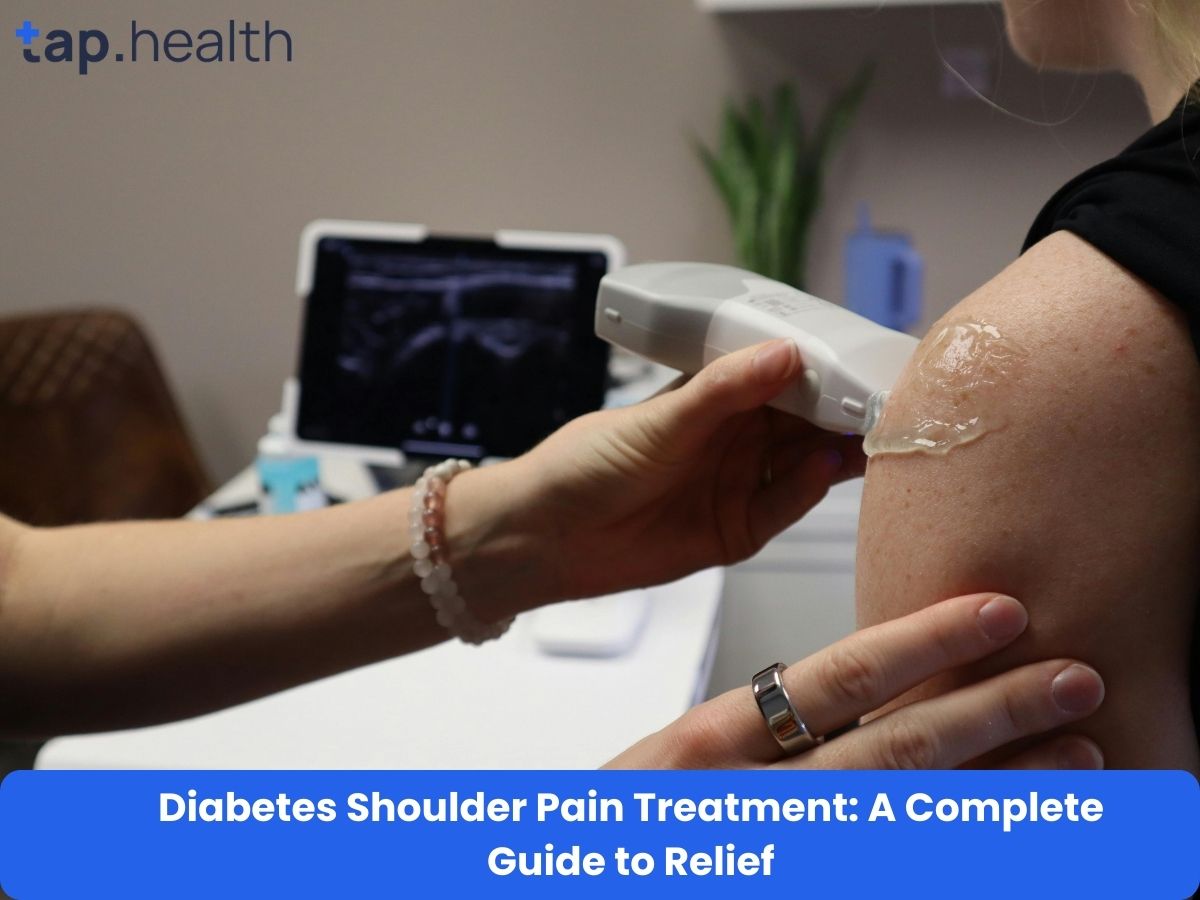
This is a specialized procedure often done by radiologists or orthopedists.
- The Procedure: The doctor injects a mix of saline (salt water) and steroid into the joint capsule.
- The Effect: The fluid physically expands and stretches the tight capsule from the inside, breaking the adhesions. It is like blowing up a balloon to stretch it out.
6. Manipulation Under Anesthesia (MUA)
If the shoulder is completely stuck, the doctor puts you to sleep (general anesthesia) and forcefully moves the shoulder to tear the scar tissue.
- Recovery: You will need aggressive physical therapy immediately after waking up to keep the joint moving.
7. Arthroscopic Surgery
This is the last resort.
- The Procedure: Keyhole surgery where the surgeon cuts the tight portions of the joint capsule to release it.
- Success Rate: Very high, but requires weeks of rehab.
Real-Life Scenario
Meet Rahul (45, Software Engineer): Rahul ignored his shoulder pain for 3 months. By the time he saw a doctor, he couldn’t lift his arm past his shoulder level. Treatment Plan:
- Doctor: Prescribed a short course of painkillers and checked his Vitamin D and B12 (both low). Supplements were started.
- Physio: Rahul did the “Wall Walk” exercise every morning in the shower (the hot water helped loose the muscles).
- Result: It took 4 months of daily work, but he regained 90% of his motion without needing surgery.
Expert Contribution
We consulted Dr. V. Singh, a Sports Medicine Specialist.
“The biggest mistake diabetic patients make is stopping movement because of pain. With a diabetic frozen shoulder, ‘No Pain, No Gain’ is partially true. You must push into the discomfort zone to stretch that capsule. If you baby it, it will freeze permanently.”
Also Read this : Is Shoulder Pain a Symptom of Diabetes?
Recommendations Grounded in Proven Research
According to the American Physical Therapy Association and Diabetes Care Journal:
- Early Intervention: Starting physio within the first 3 months of pain leads to much faster recovery than waiting until the joint freezes completely.
- Night Positioning: Do not sleep on the painful shoulder. Place a pillow under the arm while sleeping on your back to keep the joint in a neutral, open position.
- Holistic Management: Treating the shoulder alone isn’t enough. Patients who lowered their HbA1c by 1% showed faster recovery times in physiotherapy.
Key Takeaways
- Don’t Wait: The longer you ignore stiffness, the harder it is to treat.
- Control Sugar: High sugar fuels the “freezing” process.
- Move Daily: Pendulum swings and wall walks are your best friends.
- Watch for Spikes: If you get a steroid injection, expect high sugar for a few days.
- Be Patient: Diabetic shoulder pain takes months to heal, not days. Consistency is key.
FAQ: Frequently Asked Questions
Is heat or cold better for diabetic shoulder pain?
Heat is usually better for “Frozen Shoulder” because it relaxes the stiff muscles and capsule before exercise. Ice is better if you have acute, throbbing pain or recent injury (like a fall) to reduce inflammation.
Can physiotherapy cure diabetic shoulder pain?
Yes, in most cases. A structured physiotherapy program involving stretching and strengthening is the gold standard treatment. It works best when combined with good blood sugar control.
How long does diabetic frozen shoulder last?
Without treatment, it can last for 18 months to 3 years. With aggressive treatment (physio + sugar control), significant improvement can be seen in 6 to 9 months.
Are steroid injections safe for diabetics?
Yes, but with caution. Steroids raise blood sugar temporarily. You should inform your doctor about your diabetes so they can adjust the dose or monitor you. The pain relief often outweighs the temporary sugar spike.
What vitamins help shoulder pain?
Vitamin D and Vitamin B12 deficiency are common in diabetics and can worsen muscle and nerve pain. Ask your doctor to test your levels; supplements can help speed up recovery.
References
- Mayo Clinic: Frozen Shoulder Diagnosis & Treatment
- American Academy of Orthopaedic Surgeons: Frozen Shoulder
- Diabetes.co.uk: Diabetes and Shoulder Pain
- Cleveland Clinic: Adhesive Capsulitis (Frozen Shoulder) Management