Imagine walking into a supermarket or your local kirana store. You have a list of things you cannot eat.
“No sugar,” says your diabetes doctor.
“No wheat or maida,” says your gut (or your Celiac diagnosis).
Suddenly, your shopping basket looks empty. No biscuits, no regular bread, no atta for your daily roti. You feel stuck. You might grab a packet of “Gluten-Free Bread” thinking it is healthy, only to find out later that it spiked your blood sugar faster than a spoonful of sugar.
This is the daily struggle for thousands of Indians managing both Diabetes and Gluten Intolerance (or Celiac Disease). It feels like walking a tightrope. You need to avoid gluten to save your gut, but you need to avoid high-carb gluten substitutes (like rice flour and potato starch) to save your blood sugar.
So, what can you eat?
The answer is: A lot. India is home to some of the world’s best naturally gluten-free and diabetes-friendly superfoods.
We will build the ultimate gluten-free diabetic food list. We will move beyond the expensive packaged foods and look at the dals, millets, and sabzis that can heal your body. We will teach you which grains spike sugar, which ones stabilize it, and how to cook delicious meals that keep both your gut and your glucometer happy.
Why Do You Need a Gluten-Free Diabetic Diet?
Before we get to the food list, let’s understand why you are here. Usually, people fall into one of two categories:
- The Double Diagnosis (Type 1 Diabetes + Celiac): People with Type 1 Diabetes are genetically prone to Celiac Disease. For them, gluten causes actual damage to the intestine. A strict gluten-free diet is a medical necessity.
- The Sensitive Type 2: Many Type 2 diabetics find that wheat makes them feel bloated, lethargic, or inflamed. Reducing gluten often helps reduce inflammation, which can improve insulin sensitivity.
The Trap:
The biggest mistake people make is swapping Wheat Roti for White Rice or Gluten-Free Processed Bread.
- Wheat: Moderate Glycaemic Index (GI).
- Rice/Potato Flour: Very High Glycaemic Index (GI).
By trying to go gluten-free, you might accidentally wreck your blood sugar control. The goal of this list is to find the “Sweet Spot”: Foods that are No Gluten + Low Carb/High Fibre.
The Golden Rules of a Gluten-Free Diabetic Diet
- Read Labels for “Starch”: If a gluten-free packet lists “Potato Starch,” “Corn Starch,” or “Rice Flour” as the first ingredient, put it back. It is a sugar bomb.
- Fiber is Your Best Friend: Gluten-free diets can be low in fiber. You must actively choose high-fiber millets and vegetables to keep your digestion moving and sugar stable.
- Whole Over Processed: A bowl of Chana Dal is always better than “Gluten-Free Dal Crackers.”
The Ultimate Gluten-Free Diabetic Food List
Let’s break this down by food groups, focusing on what is easily available in Indian kitchens.
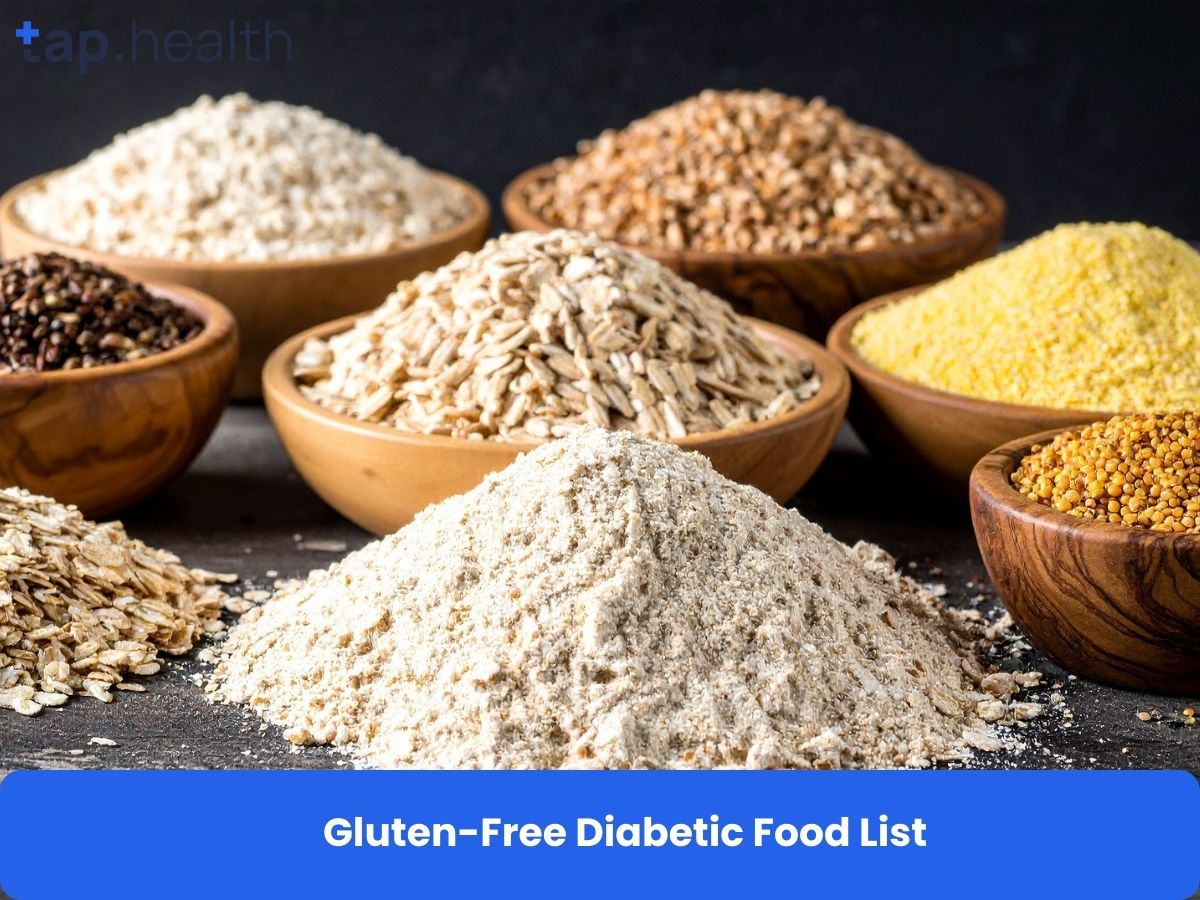
1. Whole Grains & Millets (The Roti Replacements)
This is the most important section. You need a replacement for your daily Gehu ki Roti.
| Grain/Millet | GI Score | Diabetic Verdict | How to Use |
| Sorghum (Jowar) | Low (~62) | Excellent. | Make Jowar Bhakri or Roti. It is high in fiber and keeps you full. |
| Pearl Millet (Bajra) | Low (~54) | Excellent. | Best for winter. Make Bajra Roti with methi leaves. |
| Finger Millet (Ragi) | Med-High | Good (in moderation). | High calcium but high carb. Mix with lots of veggies. Don’t eat excessively. |
| Amaranth (Rajgira) | Low | Superfood. | Use for upma or porridge. High protein content. |
| Buckwheat (Kuttu) | Low (~50) | Excellent. | Not just for fasting! Great for pancakes or cheela. |
| Quinoa | Low (~53) | Excellent. | A complete protein. Use instead of rice for Pulao. |
| Brown Rice | Medium | Okay (Portion Control). | Better than white rice, but still carb-heavy. Limit to 1 small bowl. |
| Oats | Low (~55) | Caution Needed. | Must be labeled “Certified Gluten-Free” to avoid cross-contamination. |
Avoid: White Rice, Maida, Semolina (Suji/Rava), Barley (Jau – contains gluten), Rye.
2. Pulses and Legumes (The Protein Backbone)
Pulses are naturally gluten-free and have a low Glycaemic Index because of their protein and resistant starch. They should be the star of your plate.
- Bengal Gram (Chana Dal): The holy grail for diabetics. Very low GI.
- Chickpeas (Kabuli Chana/Chole): High fiber. Great for salads or curry.
- Kidney Beans (Rajma): Excellent, but watch the oil/gravy you cook them in.
- Green Gram (Moong Dal): Lightest on the stomach. Whole green moong is better than yellow split moong.
- Black Gram (Urad Dal): Used for Idli/Dosa. Note: Fermentation increases the GI slightly, so eat with coconut chutney (fat) to balance it.
- Soybean: Extremely low carb. Soya chunks or tofu are great additions.
3. Vegetables (Starchy vs Non-Starchy)
Vegetables are gluten-free, but for diabetes, we watch the starch.
Green Light (Eat Freely):
- Spinach (Palak), Methi, Sarson (Mustard Greens).
- Ladyfinger (Bhindi).
- Brinjal (Baingan).
- Cauliflower & Cabbage (Gobi).
- Bitter Gourd (Karela) – A diabetic medicine in itself!
- Bottle Gourd (Lauki).
- Cucumber, Tomato, Radish (Mooli).
Yellow Light (Eat in Moderation):
- Carrots and Beetroot (Healthy, but have some sugar).
- Green Peas (Matar).
Red Light (Avoid or Limit Strictly):
- Potato (Aloo) – The biggest spiker.
- Sweet Potato (Shakarkandi).
- Yam (Jimikand).
- Corn.
4. Fruits (Nature’s Dessert)
Fruits contain fructose. Eat them whole, never juiced.
Best Choices:
- Guava (Amrood) – High fiber, great for sugar control.
- Jamun (Indian Blackberry) – Known to help lower blood sugar.
- Papaya (not too ripe).
- Apple and Pear (with skin).
- Berries (Strawberries, Mulberries).
- Orange/Mosambi (eat the segments, don’t juice).
Limit/Avoid:
- Mango, Banana, Chikoo, Grapes, Lychee (Very high sugar).
5. Dairy and Alternatives
Milk is gluten-free, but it contains lactose (milk sugar).
- Curd/Yogurt (Dahi): The best option. Probiotics help gut health.
- Paneer (Cottage Cheese): Zero carb, high protein. Excellent for dinner.
- Milk: Stick to 1 cup a day.
- Buttermilk (Chaas): Excellent. Add jeera and salt, avoid sugar.
6. Nuts, Seeds, and Healthy Fats
These have zero gluten and zero impact on blood sugar. They are your safety net against hunger.
- Nuts: Almonds (Badam), Walnuts (Akhrot), Pistachios. (Avoid Cashews as they have some carbs).
- Seeds: Chia seeds, Flax seeds (Alsi), Pumpkin seeds. (Sprinkle on your salad or dahi).
- Fats: Ghee, Olive Oil, Mustard Oil, Coconut Oil.
Foods to Avoid (The Danger Zone)
This list is just as important as the “Safe” list. These foods might look innocent but are dangerous for a gluten-free diabetic.
- Processed “Gluten-Free” Snacks: GF biscuits, cakes, and chips are usually made of potato starch, corn flour, and sugar. They will spike your glucose instantly.
- Sauces: Soy sauce often contains wheat. Ketchup is full of sugar. Look for “Tamari” (GF soy sauce) or make fresh chutneys.
- Compounded Asafoetida (Hing): Most Indian Hing powder is mixed with Maida to keep it free-flowing. You must buy “Compounded Hing with Rice Flour” or pure Hing crystals.
- Instant Soups: Thickeners in soups are usually wheat-based.
- Beer: Made from barley/wheat. Avoid.
A Sample 1-Day Indian Meal Plan
Here is how you put it all together. This menu is 100% Gluten-Free and Diabetes-Friendly.
Early Morning:
- 1 glass warm water with methi seeds (soaked overnight).
- 5 soaked almonds + 1 walnut.
Breakfast:
- Option A: Besan Cheela (Chickpea flour pancakes) with lots of grated spinach and onions. Mint chutney.
- Option B: Moong Dal Idli (no rice) with Sambhar (lots of veggies).
Mid-Morning Snack:
- 1 small Guava or a glass of salted Buttermilk (Chaas).
Lunch:
- 2 small Jowar Rotis.
- 1 bowl Bhindi Masala (made with little oil).
- 1 bowl Tadka Dal (yellow or black).
- Salad (Cucumber/Tomato).
Evening Tea:
- Tea/Coffee (no sugar).
- Handful of roasted Makhana (Fox nuts) or roasted Chana.
Dinner:
- Option A: Grilled Paneer Tikka with Salad.
- Option B: Quinoa Khichdi with lots of vegetables (peas, carrots, beans, cauliflower).
- Note: Keep dinner light and grain-free if possible.
Bedtime:
- 1/2 cup warm milk with a pinch of turmeric (Haldi).
Real-Life Scenario
Meet Anjali (42, Software Engineer from Bangalore):
Anjali was diagnosed with Type 2 Diabetes three years ago. Recently, she started feeling bloated and tired every time she ate her regular wheat roti. Her doctor suspected gluten sensitivity.
The Mistake:
Anjali switched to “Gluten-Free Bread” and White Rice to avoid wheat.
The Consequence:
Within two months, her HbA1c (average sugar) jumped from 6.8% to 7.5%. She gained 3 kgs. She was confused—she was eating “healthy” gluten-free food!
The Expert Fix:
Her dietician explained that the GF bread was made of corn starch (high carb) and rice is high GI.
They switched her diet to:
- Lunch: Jowar Bhakri instead of rice.
- Dinner: Salad + Grilled Fish/Paneer (No grains).
- Snack: Roasted seeds instead of GF biscuits.
The Result:
Her bloating stopped (no gluten), and her sugar dropped back to 6.5% (low carb). She learned that “Gluten-Free” does not equal “Carb-Free.”
Expert Contribution
We consulted Dt. S. Malhotra, Clinical Nutritionist & Diabetes Educator:
“The hardest part for my Indian patients is giving up the ‘Roti’. They feel a meal is incomplete without it.
I tell them: Don’t just remove wheat; replace it with Millets. Millets like Jowar and Bajra are the original grains of India. They were what our ancestors ate before the Green Revolution brought wheat everywhere. They are naturally gluten-free, high in fiber, and slow-digesting. They are the perfect marriage for a diabetic gut.”
Recommendations Grounded in Proven Research and Facts
According to the American Diabetes Association (ADA) and AIIMS (India) nutrition guidelines:
- The Fiber Factor: A study published in the Journal of Nutrition confirms that soluble fiber (found in oats, lentils, and psyllium) slows down glucose absorption. When going gluten-free, you must supplement fiber because you are losing the fiber from wheat.
- Cross-Contamination: Research shows that even minute traces of gluten can trigger inflammation in Celiac patients, which raises cortisol and blood sugar. Using separate tawas (griddles) for wheat and gluten-free rotis is essential in a mixed kitchen.
- Glycaemic Load: It is not just the GI, but the Load. Eating a small portion of brown rice (Medium GI) is better than a massive plate of millet (Low GI). Portion size is king.
Conclusion: Key Takeaways
So, what should be on your gluten-free diabetic food list?
- Grains: Jowar, Bajra, Quinoa, Amaranth, Buckwheat. (Avoid Rice/Corn flour).
- Proteins: All Dals, Paneer, Eggs, Chicken, Fish, Soya.
- Veggies: Leafy greens, Gourd family, Cruciferous veggies. (Avoid Potato).
- The Trap: Do not buy processed “Gluten-Free” snacks; they are full of starch and sugar.
- The Strategy: Focus on Whole Foods. If it comes from a plant and hasn’t been processed into a powder, it is likely safe.
Managing diabetes and gluten intolerance together is a challenge, but it is also an opportunity to eat cleaner, fresher, and more nutritious food than ever before.
Read this: Gluten and Type 2 Diabetes
Frequently Asked Questions (FAQs) on Gluten-Free Diabetic Food List
Can diabetics eat gluten-free bread?
Be very careful. Most commercial gluten-free breads are made from refined flours like rice flour, potato starch, or corn starch to make them fluffy. These ingredients have a very high Glycaemic Index and can spike blood sugar rapidly. Always check the label for fiber content, or choose breads made from almond flour or flaxseed meal.
Is rice good for a gluten-free diabetic diet?
Rice is naturally gluten-free, but White Rice has a high Glycaemic Index, which is bad for diabetes. Brown Rice, Red Rice, or Black Rice are better options as they contain more fiber. However, portion control is essential. It is better to swap rice with Quinoa or Millets for better sugar control.
Are oats gluten-free and safe for diabetics?
Oats are naturally gluten-free and are excellent for diabetics because they contain beta-glucan, a fiber that lowers blood sugar. However, oats are often processed in factories that handle wheat, leading to contamination. You must buy oats labeled “Certified Gluten-Free” if you have Celiac disease.
Which Indian flour is best for gluten-free diabetics?
Jowar (Sorghum) and Bajra (Pearl Millet) are the best options. They are readily available, affordable, and have a low Glycaemic Index. Besan (Chickpea Flour) is also excellent for making cheelas and mixing with other flours to increase protein content.
Does a gluten-free diet help lose weight?
Not automatically. In fact, many people gain weight on a gluten-free diet because they replace wheat with high-calorie, processed gluten-free snacks. Weight loss happens only if you replace gluten with vegetables, lean proteins, and whole non-gluten grains, creating a calorie deficit.
Can I eat Dalia (Broken Wheat) if I am gluten-free?
No. Dalia is made from wheat. It contains gluten. A great gluten-free alternative to Dalia is Quinoa or Broken Jowar, which have a similar texture and can be cooked as a porridge or upma.
References
- Mayo Clinic: Gluten-free diet: What’s allowed, what’s not
- Healthline: The Best Gluten-Free Grains for Diabetics
Disclaimer: This article is for informational purposes only. Every individual’s body reacts differently. Always monitor your blood sugar response when introducing new foods and consult your dietician.