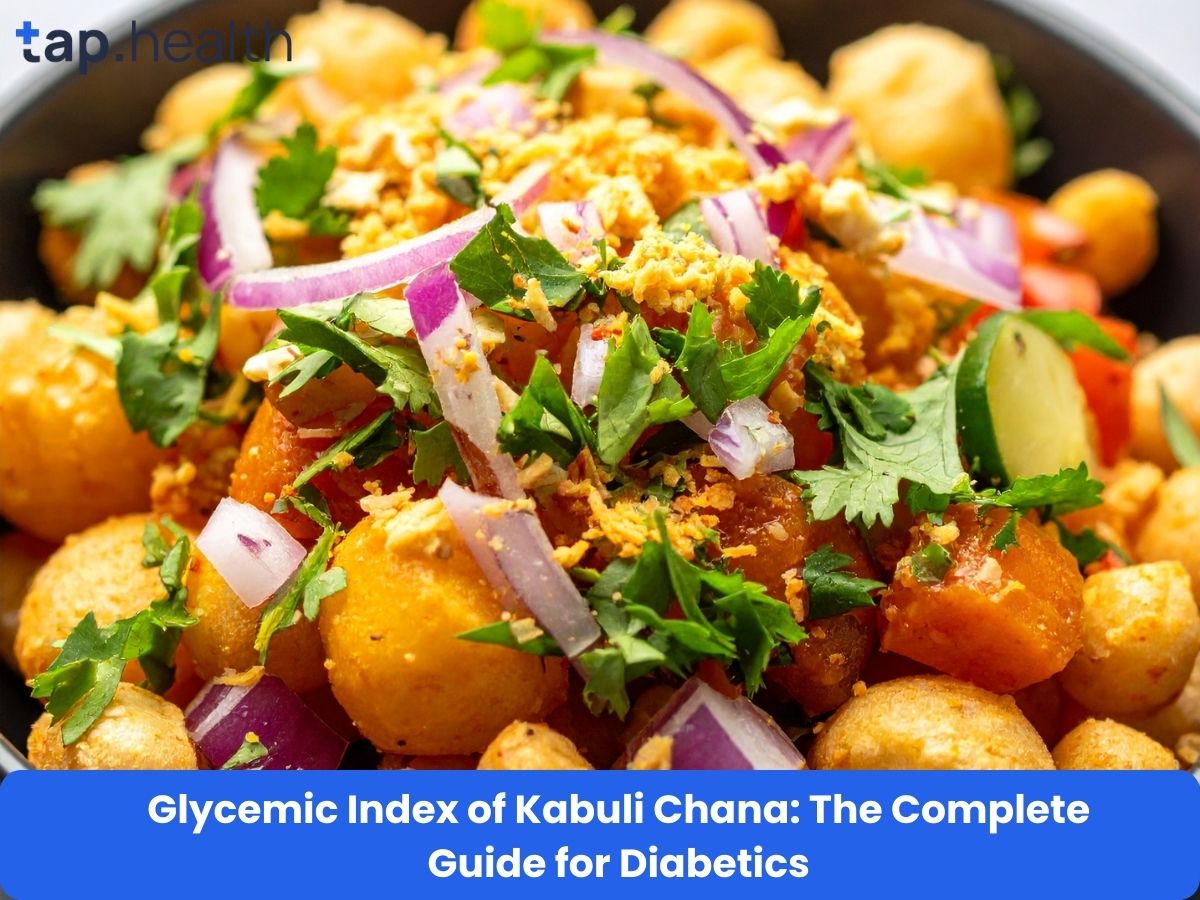
In almost every Indian home, Sunday lunch is incomplete without a steaming bowl of Chole Bhature or Chana Masala. We love our Kabuli Chana (white chickpeas). They are creamy, delicious, and deeply satisfying.
But if you have been diagnosed with diabetes or are watching your weight, looking at that bowl of chole might make you nervous. You might be asking: Will this spike my blood sugar? Is Kabuli Chana actually healthy, or is it just a carb bomb?
It is a valid concern. We are often told to avoid “starchy” foods.
In this detailed guide, we are going to break down the glycemic index of kabuli chana. We will cut through the confusion, compare it to its darker cousin (Kala Chana), and give you the honest facts about whether this kitchen staple is a friend or foe to your blood sugar.
What Is the Glycemic Index?
Before we dive into the chana bowl, let’s quickly understand the measuring tape we are using.
The Glycemic Index (GI) is a ranking system from 0 to 100. It measures how fast a food raises your blood glucose (sugar) levels after you eat it.
- Low GI (0–55): These foods digest slowly. They are the “safe zone” for diabetics.
- Medium GI (56–69): Moderate impact.
- High GI (70–100): These foods digest fast and cause sharp sugar spikes.
The goal for anyone managing insulin is to stick to the Low GI zone to keep energy steady and avoid the dangerous sugar crash.
What Is the Glycemic Index of Kabuli Chana?
Here is the good news: The glycemic index of kabuli chana is Low.
According to international databases, the GI of boiled Kabuli Chana (chickpeas) sits roughly between 28 and 33.
This is incredibly low. To put it in perspective, white rice has a GI of about 73, and white bread is around 75. Kabuli Chana sits way down at the bottom of the scale.
Why Is It So Low?
You might wonder, “But isn’t chana a carbohydrate?” Yes, but it is a “complex” carbohydrate.
- Fibre: Kabuli Chana is packed with fibre. Fibre acts like a speed bump in your gut, slowing down digestion.
- Protein: It is a plant-protein powerhouse. Protein further slows down the absorption of sugar into your bloodstream.
- Resistant Starch: Chickpeas contain a special type of starch that resists digestion, feeding healthy gut bacteria instead of spiking your blood sugar.
So, when you ask is chickpeas high glycemic, the answer is a definitive no.
White Chana Glycemic Index and Load
While the GI tells us about speed, the Glycemic Load (GL) tells us about the quantity. This is often a better measure for real-life eating.
- Formula: GL = (GI x Carbs in a serving) / 100.
Let’s look at the glycemic index of kabuli chana per 100g (boiled):
- Carbohydrates: Roughly 27g.
- GI: 33.
- Glycemic Load: (33 x 27) / 100 = approx 8.9.
A Glycemic Load under 10 is considered Low. This means a standard bowl of boiled Kabuli Chana has a very minimal impact on your blood sugar levels.
Glycemic Index of Black Chana vs. Kabuli Chana
In India, we have two main players: the big white Kabuli Chana and the smaller, dark brown Kala Chana (Bengal Gram). Which one wins the diabetes battle?
Glycemic Index of Black Chana (Kala Chana)
Kala Chana is tougher and has a thicker skin than the white variety.
- GI Score: Very Low (often cited around 10–12 for Chana Dal, and slightly higher for the whole black seed).
- Nutrient Profile: It has slightly higher fibre and iron content than Kabuli Chana.
The Verdict
While the glycemic index of kabuli chana vs chickpeas (white) shows they are the same thing, comparing white vs black shows a slight edge for Black Chana. Kala Chana is technically “better” because of the lower GI, but Kabuli Chana is still excellent. Both are far superior to potatoes or rice.
Glycemic Index of Chana Dal
When we split the Kala Chana and remove the skin, we get Chana Dal. This is a staple in almost every Indian meal.
- GI Score: Remarkably Low (approx 8).
- Why: Chana Dal is incredibly dense. Even when pressure cooked, it retains its structure and digests very slowly.
If you are diabetic, replacing your white rice with a bowl of thick Chana Dal (tadka included!) is one of the smartest diet swaps you can make.
Glycemic Index of Chana Flour (Besan) and Sattu
We don’t just eat chana whole; we grind it into flour. Does this change the GI?
Glycemic Index of Chana Flour (Besan)
Besan is made from ground Chana Dal.
- GI Score: Low (approx 35–40).
- Grinding a grain usually raises its GI because it makes it easier to digest. However, because chana is so high in fibre and protein, Besan remains a low-GI flour. It is much better than Maida (refined wheat flour) or even plain Rice flour.
Glycemic Index of Chana Sattu
Sattu is roasted chana flour, often consumed as a cooling drink in North India.
- GI Score: Low.
- Sattu is a “superfood” for diabetics. It provides instant energy without the sugar spike. A glass of sattu sharbat (salt, not sweet) is the perfect diabetic breakfast drink.
Is Kabuli Chana Good for Diabetes?
This is the million-dollar question: Is kabuli chana good for diabetes?
Yes, absolutely. Here is why:
- Prevents Spikes: The low GI means it releases energy slowly. You won’t feel tired or hungry an hour after eating.
- Appetite Control: The high fibre and protein keep you full for longer. This stops you from snacking on biscuits or namkeen later.
- Heart Health: Diabetics are at higher risk for heart disease. The fibre in chana helps lower “bad” cholesterol (LDL).
The “Chole Bhature” Trap
We have established that boiled kabuli chana is healthy. But here is where we go wrong in India.
We rarely eat just plain boiled chana. We turn it into Chole.
- The Chole: If cooked with less oil and minimal potato, the glycemic index of chole remains low to medium.
- The Bhatura: This is the villain. Bhatura is made of Maida (GI 75+) and deep-fried.
When you eat Chole Bhature, the healthy chana cannot cancel out the massive sugar spike caused by the fried maida. The Fix: Eat your Chole with a Roti, a multigrain paratha, or even brown rice. Skip the Bhatura.
Real-Life Scenario
Let’s look at a common situation to see how this works.
Meet Meera. Meera is a 45-year-old homemaker from Pune who loves cooking. She has pre-diabetes and has been trying to cut carbs.
- Old Habit: For lunch, she used to eat a large plate of white rice with a thin watery dal and a small side of veggies. She felt sleepy by 3 PM (sugar crash).
- The Switch: She swapped the rice for a Chickpea Salad made with boiled kabuli chana, cucumbers, tomatoes, and chaat masala.
- The Result: The gi index of chickpeas (33) is less than half of white rice (73). Her blood sugar stayed stable. She felt energetic throughout the afternoon and didn’t crave tea and biscuits at 4 PM.
Expert Contribution
We consulted nutrition experts to validate the role of Kabuli Chana.
Dr. S. Verma, Diabetologist: “I often tell my patients that pulses are their best friends. Kabuli Chana is excellent because of the ‘Second Meal Effect’. Studies show that eating lentils or chickpeas at lunch can actually keep your blood sugar lower at dinner time too. It improves insulin sensitivity for hours.”
Nutritionist A. Roy adds: “The glycemic index of kabuli chana is perfect for Indian vegetarians who struggle to get protein. However, portion control is key. Just because it is low GI doesn’t mean you can eat three bowls. It still has calories.”
Recommendations Grounded in Proven Research and Facts
Based on the kabuli chana gi index data, here are practical tips for your kitchen:
- Soak and Sprout: Soaking chana overnight reduces bloating. If you can sprout them slightly, you increase the protein content and make them even easier to digest.
- Watch the Pairings: Don’t ruin the low GI of chana by pairing it with high GI foods like white bread (Kulcha) or Maida puri. Pair it with whole wheat roti or Bajra roti.
- Canned vs Fresh: In India, we usually use dried raw chana. If you use canned chickpeas (common in the West), rinse them well. The canning liquid is often salty. Freshly boiled is always better.
- Use Besan: Use chana flour (Besan) to make cheelas (pancakes) instead of using rice batter for dosas. This lowers the GI of your breakfast instantly.
- Hummus: Try making Hummus (blended chickpeas with sesame paste). It is a delicious, low-GI dip that replaces butter or jam on your toast.
Conclusion
So, what is the verdict on the glycemic index of kabuli chana?
It is a winner. With a GI score of around 30, Kabuli Chana is a “green light” food for diabetics and health watchers. It is nutrient-dense, filling, and versatile.
Whether you prefer the nuttier Kala Chana or the creamy Kabuli Chana, you are making a smart choice for your body. The key is to prepare it simply—boiled, in a curry, or as a salad—and avoid drowning it in oil or pairing it with refined flour.
Next time you are at the grocery store, grab that packet of white chana with confidence. It is one of the tastiest ways to keep your blood sugar in check.
Key Takeaways:
- Kabuli Chana GI: Low (~33).
- Kala Chana GI: Very Low (~12).
- Chana Dal GI: Extremely Low (~8).
- Best Form: Boiled or roasted (Sattu).
- Avoid: Deep-fried pairings (Bhatura).
Frequently Asked Questions (FAQs) on Glycemic Index of Kabuli Chana
What is the glycemic index of kabuli chana per 100g?
The glycemic index (GI) doesn’t change by weight, but the Glycemic Load (GL) does. The GI of kabuli chana is approximately 33. For a 100g serving of boiled chana, the Glycemic Load is around 9, which is considered low. This makes it a very safe food for managing blood sugar levels.
Is boiled kabuli chana good for diabetics?
Yes, boiled kabuli chana is excellent for diabetics. It is rich in fibre and protein, which slow down the absorption of carbohydrates. This prevents rapid blood sugar spikes. However, ensure you do not cook it with excessive oil or serve it with high-GI foods like Maida bhaturas.
Which has a lower GI: Kala Chana or Kabuli Chana?
Kala Chana (black chickpeas) generally has a lower glycemic index compared to Kabuli Chana (white chickpeas). While Kabuli Chana has a GI of around 33, Kala Chana and Chana Dal can have a GI as low as 8 to 12. Both are healthy, but Kala Chana is slightly better for strict sugar control.
Does besan (chana flour) have a high glycemic index?
No, besan has a low glycemic index, typically around 35–40. Because it is made from ground chana dal, it retains a good amount of protein and fibre. It is a much healthier alternative to refined wheat flour (maida) or rice flour for making rotis, cheelas, or pakoras.
What is the glycemic index of chana sattu?
Chana sattu (roasted gram flour) has a low glycemic index. It is considered a superfood for diabetics because it provides sustained energy without spiking insulin. A drink made of sattu and water (namkeen sattu) is an ideal summer beverage for blood sugar management.
Are chickpeas high in carbohydrates?
Chickpeas are a source of carbohydrates, but they are “complex” carbohydrates. Unlike the simple carbs in sugar or bread, the carbs in chickpeas are wrapped in fibre and protein. This means they are digested slowly and provide steady energy, making them safe despite the carb count.
Can I eat hummus if I have diabetes?
Yes, hummus is a fantastic snack for diabetics. It is made from blended kabuli chana and tahini (sesame paste), both of which are low GI. The healthy fats in tahini further slow down sugar absorption. Use it as a dip for cucumber sticks or carrots instead of chips.