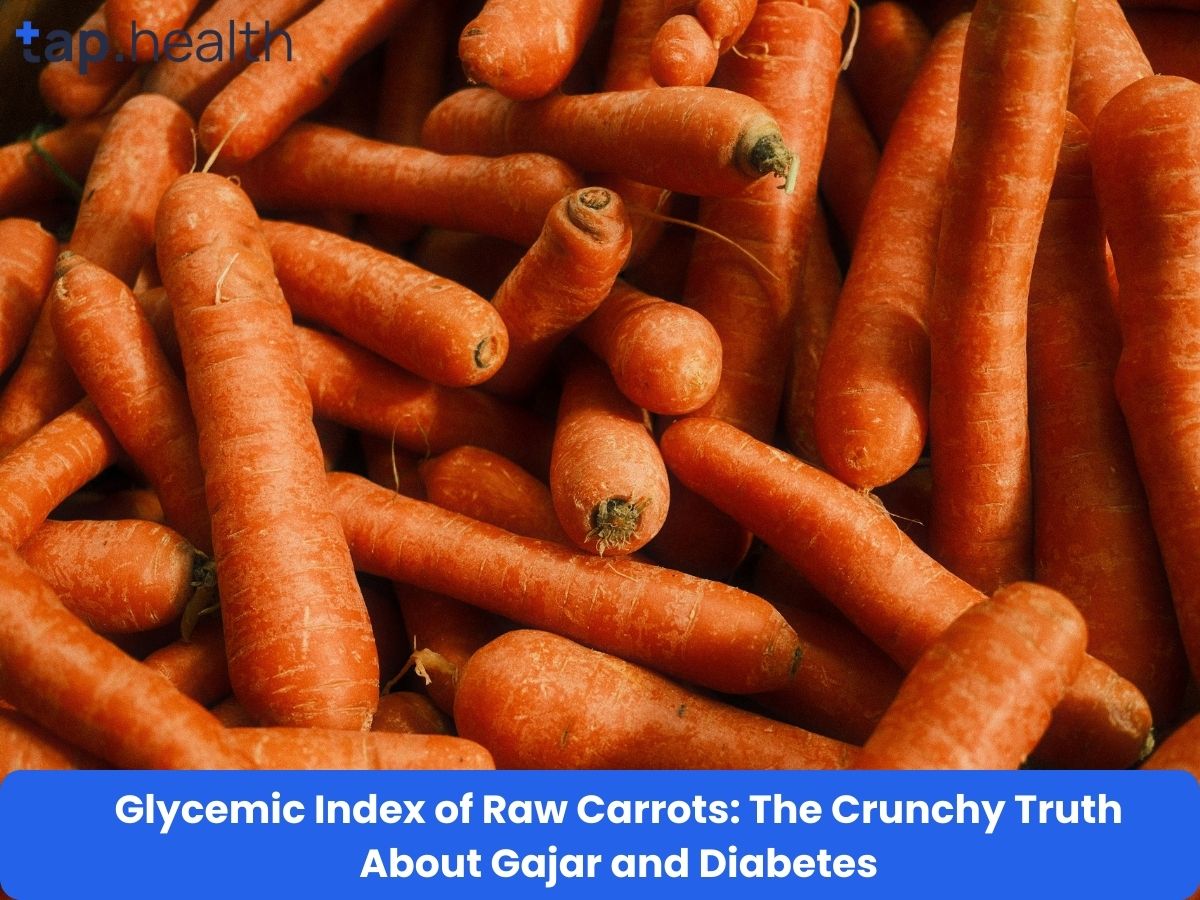
In every Indian household, winter brings a basket full of bright red or orange vegetables. We use them in Sabzi, we grate them for Gajar ka Halwa, and we slice them up with cucumber for a fresh salad. I am talking, of course, about the humble Carrot (Gajar).
But for those managing diabetes, this sweet, crunchy vegetable is often looked at with suspicion. We have grown up hearing, “Don’t eat carrots, they are too sweet!” or “Carrots are full of sugar.”
So, what is the truth? Should you toss that salad, or is it actually safe to eat? The answer lies in understanding the glycemic index of raw carrots.
In this detailed guide, we will dig deep into the science. We will look at how raw carrots affect your blood sugar compared to cooked ones, the difference between red and orange varieties, and whether that glass of carrot juice is a friend or a foe. We are keeping it simple, honest, and grounded in medical facts.
Also Read: 20 Best Food for Diabetes
What is Glycemic Index (GI)?
Before we bite into the carrot, let’s quickly understand the measuring tape we are using.
The Glycemic Index (GI) is a ranking system for carbohydrates. Think of it like a speedometer for your blood sugar, ranging from 0 to 100.
- Low GI (0-55): These foods digest slowly. They release energy like a slow-burning candle. (Best for diabetics).
- Medium GI (56-69): A moderate rise in sugar.
- High GI (70+): These digest instantly, causing a “sugar spike” like a rocket. (e.g., White bread, sugar, glucose).
For a diabetic patient, the goal is simple: Eat mostly Low GI foods to keep your sugar levels flat and stable.
The Magic Number: Glycemic Index of Raw Carrots
So, where does Gajar fit on this scale?
The glycemic index of raw carrots is approximately 16.
Yes, you read that correctly. Just 16.
This places raw carrots firmly in the Very Low GI category.
Many people are shocked by this number because carrots taste sweet. But sweetness does not always mean a high glycemic spike. The sugar in raw carrots is trapped inside tough fibrous cells. Your body has to work hard to break down this fibre to get to the sugar, which means the sugar enters your bloodstream very slowly.
So, when you ask “what is the glycemic index of carrot”, the answer depends heavily on how you eat it. But in its raw, crunchy form, it is one of the safest vegetables you can snack on.
Raw vs. Cooked Carrot Glycemic Index
Here is where things get interesting. In India, we often cook our carrots in Sambars, Sabzis, or pressure-cook them with peas (Matar Gajar). Does cooking change the numbers?
Yes, it does.
The cooked carrot glycemic index rises to about 39 to 49.
Why the jump? When you boil or pressure cook carrots, the heat softens the tough fibre and alters the structure of the starch (a process called gelatinization). This makes the natural sugars easier to digest and absorb.
The Verdict: While the GI increases, 39-49 is still considered Low GI. So, while raw carrots are better (GI 16), cooked carrots are still safe for diabetics, provided they are not cooked in sugar or honey.
Carrot Glycemic Load: The Full Picture
Looking at the GI is good, but looking at the Carrot Glycemic Load (GL) is better.
While GI tells you how fast sugar enters your blood, GL tells you how much sugar is actually entering based on the portion size.
- GI of Raw Carrots: 16 (Low)
- Glycemic Load of Raw Carrots: ~2 (Extremely Low)
To put this in perspective, a food with a GL under 10 is considered low. Because carrots are mostly water (about 88%) and fibre, you would have to eat a massive bucket of carrots to get a significant sugar spike.
This explains the glycemic index and load of raw carrots perfectly: High nutrition, sweet taste, but very little actual impact on your glucose meter.
Glycemic Index of Carrot Juice
This is the only danger zone. In winter, fresh carrot juice stalls pop up everywhere in North India. Is it healthy?
The glycemic index of carrot juice is significantly higher, often around 45 to 60.
Why?
- Fibre Removed: Juicing strips away the pulp (fibre). Without fibre to slow it down, the sugar hits your blood much faster.
- Concentration: It takes 4-5 carrots to make one glass of juice. You are drinking the sugar of 5 carrots in 2 minutes. You would never eat 5 raw carrots that fast.
Expert Tip: If you have diabetes, it is better to eat your carrots than to drink them. If you must drink juice, blend it (don’t strain it) so you keep the fibre, or mix it with vegetable juice that has a lower GI, like spinach or cucumber.
Red Carrot Glycemic Index vs. Orange Carrots
In India, we get the special “Desi Gajar” (Red Carrots) in winter, while the Orange Carrots (English/Hybrid) are available year-round.
- Red Carrots: Rich in Lycopene (good for the heart). They tend to be slightly sweeter.
- Orange Carrots: Rich in Beta-Carotene (good for eyes).
Does the color change the GI? Not significantly. The red carrot glycemic index is very similar to the orange one. Both fall in the Low GI category when raw. The slight difference in sugar content is balanced out by the fibre. So, whether you choose red or orange, both are safe.
Glycemic Index of Raw Baby Carrots
You might see bags of “Baby Carrots” in supermarkets. These are often just regular carrots shaved down to a smaller size, or harvested early.
The glycemic index of raw baby carrots is the same as regular raw carrots. They might taste slightly sweeter or have a softer crunch, but the metabolic impact is identical. They are a perfect, handy snack for diabetics on the go.
Is Raw Carrot Good for Diabetes?
The query “is raw carrot good for diabetes” gets a big YES. Here is why they are a superfood for your pancreas:
- Vision Protection: Diabetics are at higher risk for eye issues (retinopathy). Carrots are packed with Vitamin A and Beta-carotene, which protect your eyes.
- Heart Health: The potassium in carrots helps regulate blood pressure.
- Fibre Power: The pectin (soluble fibre) in carrots helps lower cholesterol levels and slows down the digestion of other foods in your meal.
- Weight Loss: Raw carrots are crunchy and filling but low in calories. Snacking on them prevents you from eating high-calorie biscuits.
How Many Carrots Can a Diabetic Eat a Day?
Even though they are healthy, moderation is key. So, how many carrots can a diabetic eat a day?
Nutritionists generally recommend 1 to 2 medium-sized carrots per day.
Why limit it?
- Carbohydrate Counting: One medium carrot has about 6 grams of carbs. If you are counting carbs, you need to factor this in.
- Skin Colour: Eating excessive amounts of beta-carotene can turn your skin slightly orange (a condition called Carotenemia). It is harmless but looks strange!
Comparison: Carrots vs. Other Vegetables
How does Gajar compare to other salad staples?
Glycemic Index of Cucumber
- GI: 15
- Verdict: Cucumbers are mostly water. They are the ultimate “free food” for diabetics. Combining carrots and cucumbers makes a perfect low-GI salad.
Glycemic Index of Beetroot
- GI: 64 (Medium)
- Verdict: Beetroot contains more sugar than carrots. While healthy, diabetics should eat beetroot in smaller portions compared to carrots.
What is the Lowest Glycemic Vegetable?
Green leafy vegetables (Spinach, Methi, Lettuce) and cruciferous vegetables (Broccoli, Cauliflower) have the lowest GI, often less than 10. Raw carrots (GI 16) are very close to the bottom of the list.
Who Should Not Eat Raw Carrots?
While safe for most, there are a few exceptions:
- Dental Issues: Raw carrots are hard. Elderly people or those with weak teeth/dentures might struggle. Grating the carrot helps.
- Digestive Issues: If you have severe IBS (Irritable Bowel Syndrome), the tough fibre in raw carrots might cause bloating. Steaming them (Low-Medium GI) is a better option.
- Allergy: Though rare, some people have an oral allergy syndrome reacting to pollen in carrots.
Real-Life Scenario
Let’s meet Mr. Sharma, a 52-year-old accountant from Delhi.
The Problem: Mr. Sharma has Type 2 Diabetes. He loves his food but has a sweet tooth. Every evening at 5 PM, he gets hungry and eats chai with two digestive biscuits. His post-evening sugar levels were always spiking. He avoided carrots because his neighbor told him, “Gajar grows underground, so it is full of sugar like potatoes.”
The Switch: His dietician corrected the myth. She told him to stop the biscuits and start eating carrot sticks with hummus or just plain crunchy Desi Gajar with a pinch of chaat masala.
The Outcome:
- Satiety: The chewing required for the raw carrots made him feel fuller than the soft biscuits.
- Blood Sugar: Because are raw carrots low glycemic (Yes!), his evening sugar spikes disappeared.
- Bonus: He noticed his digestion improved due to the extra fibre.
This simple switch saved Mr. Sharma roughly 200 empty calories a day and stabilized his glucose levels.
Expert Contribution
We consulted nutritional guidelines to get a professional perspective.
Dr. S. Iyer, Clinical Nutritionist: “I constantly fight the myth that carrots are bad for diabetics. The glycemic index of gajar is incredibly low when raw. The confusion comes because carrots have natural sugar. But nature packages that sugar with fibre and water. I tell my patients: You typically don’t get diabetes from eating too many carrots; you get it from processed foods. Enjoy your salad without fear.”
The “Crunch Effect”: Experts also note that the physical act of chewing crunching vegetables releases stress and signals satiety to the brain faster than soft foods.
Recommendations Grounded in Proven Research and Facts
Based on data from the American Diabetes Association and Harvard Health, here are actionable tips for including carrots in your diet:
- Go Raw for Best Results: To get the GI of 16, wash, peel, and eat them raw.
- Don’t Fear the Cooked: If you prefer cooked carrots, just don’t over-boil them to mush. Lightly steaming them keeps the GI closer to the low end (around 39).
- Pair with Fat: Vitamin A and Beta-carotene are “fat-soluble.” This means your body needs a little fat to absorb them. Dip your carrots in a yogurt dip, hummus, or add a few crushed peanuts to your carrot salad. This also lowers the GI further.
- Avoid Sugar Glazes: A popular dish is “glazed carrots” made with honey or sugar. Avoid this. Use spices like cumin (jeera), paprika, or herbs to flavor cooked carrots instead.
- Watch the Juice: As mentioned, limit glycemic index of carrot juice exposure. If you juice, keep the portion small (half a glass) and mix with celery or tomato juice.
Conclusion
The numbers are clear. With a glycemic index of 16, raw carrots are not the enemy. They are a crunchy, sweet, nutrient-packed ally in your fight against diabetes.
The myth that they are “too high in sugar” comes from a misunderstanding of how the body processes whole foods versus processed sugar. While they are sweeter than spinach, their fiber content ensures that sugar is released slowly and safely.
So, the next time you see fresh red winter carrots in the market, don’t walk past them. Buy a kilo, wash them well, and enjoy the crunch. Your eyes, your heart, and your blood sugar levels will thank you.
Frequently Asked Questions (FAQ) on Glycemic Index of Raw Carrots
What is the glycemic index of carrot?
The glycemic index depends on how it is prepared. Raw carrots have a GI of approximately 16 (Very Low). Cooked/Boiled carrots have a higher GI ranging from 39 to 49 (Low). Both are generally safe for diabetics.
Do raw carrots spike blood sugar?
No, raw carrots do not spike blood sugar. Their low GI (16) and low Glycemic Load (~2) mean they release glucose very slowly into the bloodstream. They are considered a safe snack for preventing sugar spikes.
Are raw carrots low glycemic?
Yes, raw carrots are definitively low glycemic. Any food with a GI under 55 is considered low, and raw carrots sit comfortably at 16. Even cooked carrots remain in the low category.
Who should not eat raw carrots?
People with severe digestive issues like active IBS (who struggle with raw fiber), those with dental problems who cannot chew hard foods, or young children/infants (choking hazard) should avoid whole raw carrots. Steaming or grating them is a better alternative for these groups.
What is the glycemic index of gajar (red carrot)?
The glycemic index of gajar (Indian red carrot) is very similar to the standard orange carrot, typically around 16 to 20 when raw. The slight difference in sweetness does not significantly impact the GI due to the fiber content.
Glycemic index of raw rice vs carrots?
This is a huge difference. Glycemic index of raw rice (meaning white rice cooked) is High, usually around 70-73. Raw carrots have a GI of 16. Carrots are infinitely better for blood sugar control than white rice.
What is the glycemic index of raw baby carrots?
Glycemic index of raw baby carrots is the same as regular carrots, around 16. They are nutritionally very similar to full-grown carrots and are a convenient low-GI snack.
Is carrot juice good for diabetics?
Carrot juice should be consumed with caution. The glycemic index of carrot juice is higher (45-60) because the fiber is removed. It is better to eat the whole vegetable. If you drink juice, limit the portion size.
Glycemic index of beetroot vs carrot?
Raw Carrots (GI 16) have a lower glycemic index than Raw Beetroot (GI ~64). While both are healthy root vegetables, carrots have a smaller impact on blood sugar than beetroots.
References:
- Harvard Health Publishing: Glycemic index for 60+ foods. Link
- American Diabetes Association: Non-starchy Vegetables. Link
- University of Sydney: GI Search Database. Link
- WebMD: Health Benefits of Carrots. Link
- National Institutes of Health (NIH): Carrots and Diabetes. Link
(Disclaimer: This content is for educational purposes only. Always consult your doctor or a certified dietitian before making significant changes to your diet, especially if you have diabetes.)