What is a High-Protein Diet for Muscle Building?
A high-protein diet emphasizes protein-rich foods over standard balanced meals. Protein serves as the core nutrient for muscle growth, repair, and body functions. Muscles consist primarily of protein, and without sufficient intake, repair slows, halting progress in strength training.
How Does Protein Support Muscle Building?
During workouts, muscle fibers tear microscopically. Protein rebuilds these tears, strengthening and enlarging tissue. High-protein intake supplies amino acids essential for post-exercise recovery and hypertrophy.
What Protein Intake is Needed for Muscle Growth?
General recommendation: 0.8g protein per kg body weight daily. For muscle building: 1.2-2.2g per kg, based on activity level. Calculate by multiplying weight in kg by target range for optimal muscle protein synthesis.
What are the Benefits of High-Protein Diets for Muscle Gain?
- Promotes Muscle Growth: Repairs exercise-induced tears, boosting lean mass.
- Supports Muscle Recovery: Replenishes amino acids post-workout, reducing soreness.
- Boosts Metabolism: Higher thermic effect burns more calories, aiding fat loss for visible gains.
- Reduces Muscle Loss During Weight Loss: Preserves tissue in calorie deficits.
- Keeps You Full Longer: Controls hunger, supporting sustained energy.
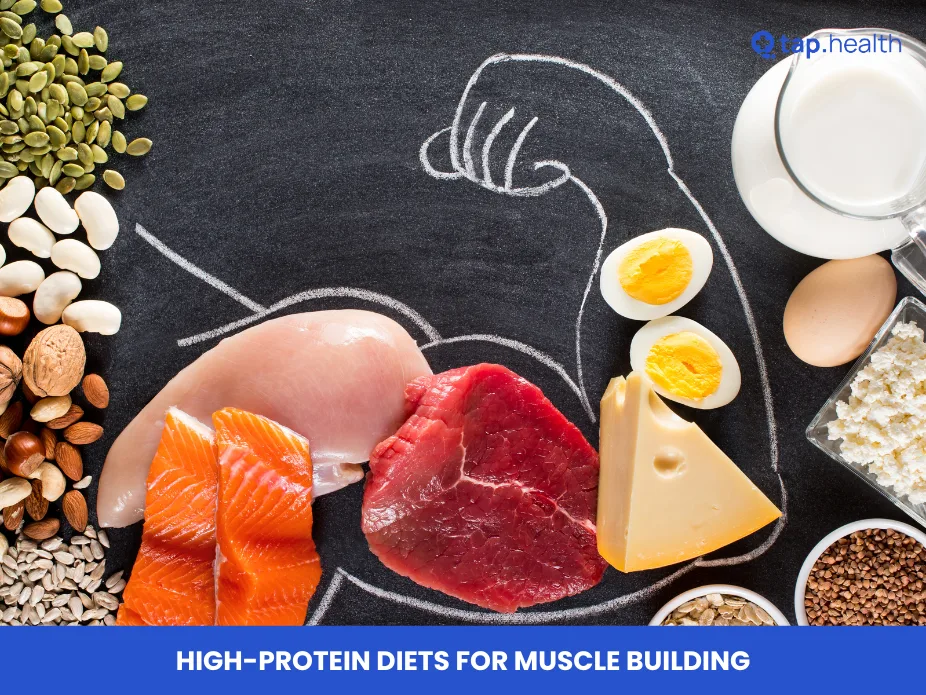
What are the Best Protein Sources for Muscle Building?
- Chicken Breast: 31g protein per 100g; lean, versatile for grilling or baking.
- Eggs: 6g per large egg; complete protein with essential amino acids.
- Greek Yogurt: 15g per 6oz; probiotic-rich for snacks or smoothies.
- Fish (Salmon/Tuna): 22g per 3oz; omega-3s enhance recovery.
- Lean Beef: 23g per 3oz; iron-boosted for energy.
- Lentils/Beans: 18g per cup cooked; plant-based fiber combo.
- Tofu/Tempeh: 10-15g per 4oz; soy-based for vegetarians.
Incorporate these high-protein foods for muscle building into meals for sustained amino acid delivery.
How to Plan High-Protein Meals for Muscle Growth?
Distribute intake evenly: Include protein in every meal/snack. Pair with carbs like quinoa or sweet potatoes for workout fuel. Post-workout: Consume within 30-60 minutes for maximum muscle protein synthesis.
Real-Life High-Protein Diet Examples for Muscle Building
Busy Professional: Breakfast protein shake (whey, almond milk, banana). Lunch: Chicken salad with quinoa. Dinner: Salmon, sweet potatoes, broccoli.
Vegetarian Athlete: Breakfast tofu scramble. Lunch lentil salad. Post-workout pea protein shake. Plant-based proteins match meat for gains.
Expert Insights on Protein Intake for Muscle Recovery
Dr. John Berardi, Precision Nutrition co-founder: “Protein is critical for muscle recovery and growth, especially when you are training intensely. Consuming the right amount of protein at the right times can make a significant difference in your muscle-building efforts.”
How Can TapHealth Help Manage Diabetes with High-Protein Diets?
TapHealth offers tools to track protein intake while monitoring blood sugar, ensuring high-protein diets support muscle building without spiking glucose levels in diabetes management.
FAQs
1. How much protein do I need for muscle building?
The general recommendation for muscle building is around 1.6 to 2.2 grams of protein per kilogram of body weight per day. If you weigh 70 kg (154 lbs), that would be approximately 112 to 154 grams of protein daily.
2. Can I build muscle on a plant-based diet?
Yes, you can build muscle on a plant-based diet by consuming a variety of plant-based protein sources like tofu, tempeh, lentils, beans, quinoa, and nuts. You may need to be more intentional about combining different protein sources to ensure you get all the essential amino acids.
3. Is it possible to consume too much protein?
While protein is essential for muscle building, consuming excessive amounts may strain your kidneys and lead to other health issues. Stick to the recommended range based on your body weight and activity level.
References:
- Precision Nutrition. “Protein for Muscle Growth: How Much Do You Really Need?” Link to Precision Nutrition
- Mayo Clinic. “High-Protein Diets: Are They Safe?” Link to Mayo Clinic