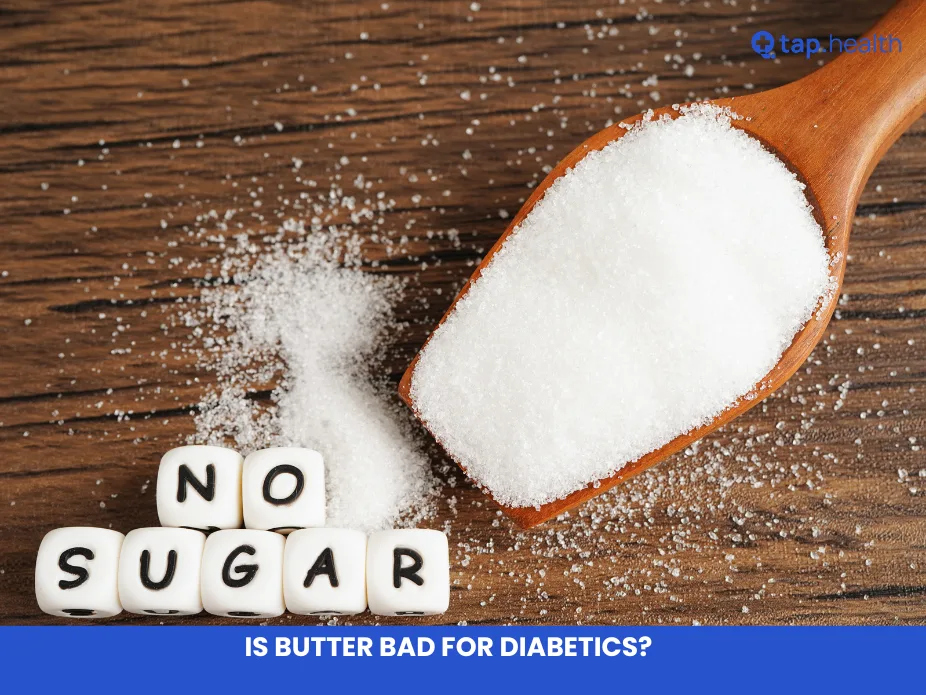
Managing diabetes means paying close attention to every bite. One question that keeps coming up is – is butter bad for diabetics? This guide breaks down the science, blood sugar effects, heart risks, and practical ways to enjoy butter safely.
Nutritional Breakdown of Butter for Diabetes Management
A single tablespoon (14g) tablespoon of butter contains:
- Calories: 102
- Total Fat: 11.5g
- Saturated Fat: 7.3g (63% of fat)
- Monounsaturated Fat: 3g
- Polyunsaturated Fat: 0.4g
- Carbohydrates & almost zero carbohydrates (0.01g)
- Rich in vitamins A, D, E, K2, and B12
Because it has virtually no carbs or sugar, butter scores a glycemic index of 0 – meaning it causes no direct blood sugar spike.
How Butter Affects Blood Sugar and Insulin Sensitivity
Butter itself does not raise blood glucose levels. The near-zero carbohydrate content keeps post-meal sugar stable. However, high saturated fat intake over time is linked to reduced insulin sensitivity and higher insulin resistance in some studies. Long-term excessive saturated fat can make diabetes control harder, even if individual meals look fine on the glucometer.
Saturated Fat, Heart Disease, and Diabetes Risk
People with diabetes already face 2–4 times higher risk of heart disease. The American Heart Association and American Diabetes Association both recommend keeping saturated fat under 10% of daily calories (≈20g on a 2000-calorie diet). One tablespoon of butter delivers over 7g saturated fat – nearly 35–40% of the daily limit in one pat. Regular over-consumption raises LDL cholesterol and cardiovascular risk.
What Research Really Says About Butter and Diabetes
A 2019 systematic review and meta-analysis of 16 studies found butter consumption has neutral or only slightly negative association with type 2 diabetes, heart disease, and overall mortality when consumed in moderate amounts. Replacing saturated fats with polyunsaturated fats (nuts, seeds, fish, olive oil) consistently shows better cardiometabolic outcomes.
Expert Recommendations on Butter for Diabetics
Leading diabetes experts, including Dr. V. Mohan and functional nutritionists like Smriti Kochar, agree:
- Butter and ghee are not forbidden
- Use in strict moderation (1–2 teaspoons max per day)
- Prefer grass-fed butter or ghee for better fatty acid profile and vitamin K2
- Always balance with low-glycemic, high-fiber meals
Best Butter Alternatives for People with Diabetes
- Extra-virgin olive oil – heart-healthy monounsaturated fats
- Avocado or avocado oil – potassium + fiber bonus
- Nut butters (almond, peanut) without added sugar
- Seed butters (tahini, pumpkin seed)
- Ghee (in very small amounts) – higher smoke point, slightly less saturated fat than butter
- For baking: unsweetened applesauce, mashed banana, or Greek yogurt
Practical Ways Indians Manage Butter and Ghee with Diabetes
Many successfully include small amounts of homemade white butter or A2 ghee in roti, dal, or vegetable sabzi while keeping total saturated fat low. The key is portion control and pairing with plenty of non-starchy vegetables, legumes, and whole grains to blunt any potential insulin response.
Can Diabetics Eat Butter Daily?
Yes – in moderation. Most guidelines allow 1–2 teaspoons (5–10g) per day as part of an overall heart-healthy, low-glycemic eating pattern. Monitor your own blood sugar and lipid response, because individual tolerance varies.
Final Verdict: Is Butter Bad for People with Diabetes?
No, butter is not inherently “bad” for diabetics, but it isn’t harmless either. Enjoy it sparingly, prioritize unsaturated fats most of the time, and focus on the total dietary pattern rather than any single food.
TapHealth and Diabetes: Is Butter Safe for Daily Use?
At TapHealth, we help thousands of Indians manage and even reverse type 2 diabetes through personalized low-carb, moderate-fat plans. Our members safely include small amounts of butter or ghee while achieving excellent HbA1c, weight, and lipid improvements. The secret? Precise portions, real-time glucose monitoring, and balancing every meal. If you’re confused about butter, ghee, oils, or any food in diabetes, let TapHealth’s certified diabetes coaches guide you with an evidence-based, India-friendly plan that fits your lifestyle and palate.