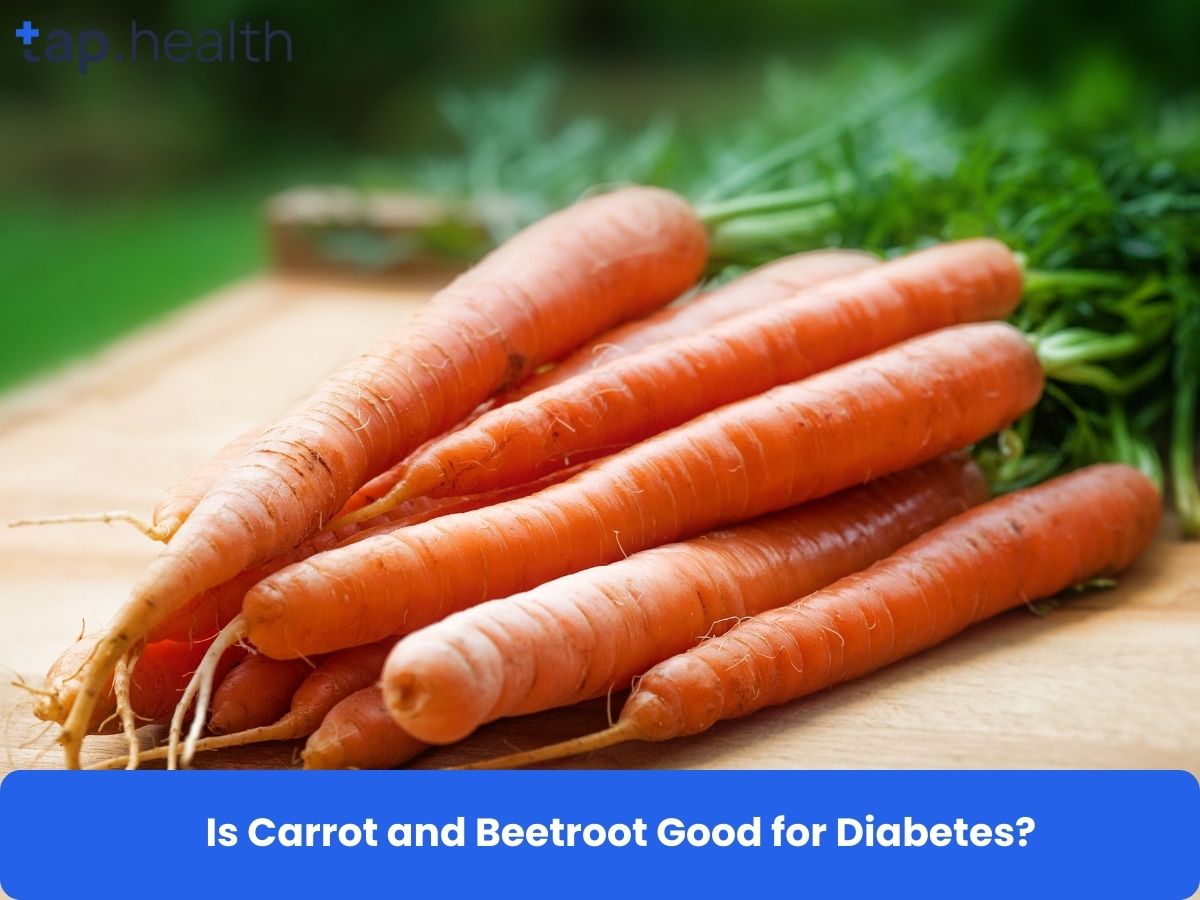
It is a familiar scene in Indian vegetable markets during winter. The carts are piled high with deep purple Beetroots (Chukandar) and bright red Desi Carrots (Gajar).
You instinctively reach for them to make a fresh salad or a glass of Kanji. But then, a doubt creeps in. You’ve heard the rumors:
“Beetroot has too much sugar.”
“Carrots are sweet, so they must spike insulin.”
“Root vegetables grow underground, so they are full of starch like potatoes.”
As a diabetic, you are constantly told to avoid “sweet” things. So, looking at these naturally sweet vegetables, you might wonder: Is carrot and beetroot actually good for diabetes?
The short answer is YES. In fact, they are not just “safe”—they are nutritional powerhouses that can help protect your eyes, heart, and kidneys from diabetic damage. However, how you eat them (raw vs. cooked vs. juiced) makes a massive difference to your blood sugar levels.
We will explore the Glycemic Index (GI) of these roots, why raw beetroot is a “superfood” while cooked beetroot requires caution, and the verdict on the popular Carrot-Beetroot Juice.
Short Answer – Are Carrot and Beetroot Safe for Diabetics?
Yes, both carrot and beetroot are safe and highly recommended for diabetics.
While they do contain natural sugars, they are chemically very different from the sugar in a Gulab Jamun.
- Carrots: Are non-starchy vegetables. They do not spike blood sugar significantly.
- Beetroots: Have a “medium” GI but a very low Glycemic Load (GL). This means you would have to eat a huge amount to cause a sugar spike.
The Golden Rule: Eat them RAW (Salad) or lightly cooked (Sabzi). Avoid drinking large glasses of strained juice, as removing the fiber turns them into a sugar shot.
Also Read: 20 Best Food for Diabetes
Nutritional Profile of Carrot and Beetroot
To understand why they are safe, let’s look at what is inside them. Don’t be fooled by the sweet taste; the chemistry tells a different story.
Here is the breakdown for 100 grams (Raw):
| Nutrient | Carrot (Red) | Beetroot (Chukandar) | Diabetic Impact |
| Calories | 41 kcal | 43 kcal | Low. Good for weight loss. |
| Carbs | 9.6g | 9.6g | Moderate. Much lower than Roti (50g). |
| Sugar | 4.7g | 6.8g | Natural Sugar. Buffered by fiber. |
| Fiber | 2.8g | 2.8g | High. Slows down digestion. |
| Glycemic Index | 16 (Low) | 32 (Low/Med) | Safe in raw form. |
| Key Nutrient | Vitamin A | Nitrates | Protects Eyes vs. Lowers BP. |
The Takeaway: Both vegetables have roughly the same carb count. While beetroot has slightly more sugar, it is packed with Nitrates, a compound that is essentially “medicine” for a diabetic’s blood pressure.
Glycaemic Index (GI) and Glycaemic Load (GL)
This is where the confusion lies. The GI measures how fast a food spikes sugar. The GL measures the total impact of a serving.
Carrot GI & GL
- Raw GI: ~16 (Very Low)
- Boiled GI: ~39 (Low)
- Glycemic Load: ~2 (Extremely Low)
Beetroot GI & GL
- Raw GI: ~30 to 32 (Low)
- Boiled/Cooked GI: ~64 (Medium)
- Glycemic Load: ~5 (Low)
Crucial Insight: Notice how the GI of beetroot doubles when you cook it? Heat breaks down the fiber and makes the sugar easier to absorb. This is why Raw Beetroot Salad is far superior to Beetroot Halwa or overcooked curry for diabetes control.
Effect of Carrot on Blood Sugar Levels
Carrots are often unfairly grouped with potatoes because they grow underground. This is a mistake.
- Non-Starchy: The American Diabetes Association classifies carrots as “non-starchy.”
- Vision Protector: High blood sugar damages the retina (Retinopathy). Carrots are rich in Beta-Carotene (Vitamin A), which strengthens the eye and protects vision.
- Fiber Buffer: If you eat a carrot before your lunch (Rice/Roti), the fiber coats your stomach, reducing the sugar spike from the grains. This is called the “Fiber Preload Effect.”
Effect of Beetroot on Blood Sugar Levels
Beetroot is a unique vegetable because it acts almost like a pharmaceutical drug for your blood vessels.
1. The Nitrate Effect (Blood Pressure Control)
Diabetics are at high risk for Hypertension (High BP). Beetroot is rich in Inorganic Nitrates.
- When you eat it, your body converts nitrates into Nitric Oxide.
- Nitric Oxide relaxes and widens your blood vessels.
- Result: Better blood flow and lower blood pressure within hours of eating.
2. Alpha-Lipoic Acid (Nerve Protection)
Beetroot contains an antioxidant called Alpha-Lipoic Acid. Studies suggest this compound can help reduce nerve damage (Neuropathy) caused by high blood sugar.
3. Does it spike sugar?
Because of the fiber, the sugar release is slow. However, if you drink concentrated juice without fiber, you might see a temporary rise.
Raw vs Cooked Carrot and Beetroot – Which Is Better?
This is the most important section for your daily diet.
Raw (Salad/Kachumber) – The Winner
- GI: Lowest.
- Nutrients: Heat-sensitive vitamins (Vitamin C) remain intact.
- Best for: Strict blood sugar control.
- Recipe Idea: Grated Beetroot + Carrot + Lemon Juice + Chaat Masala.
Cooked (Sabzi/Poriyal) – Good in Moderation
- GI: Higher (especially beetroot). Cooking “gelatinizes” the starch, making it digest faster.
- Nutrients: Cooking carrots actually increases Vitamin A absorption. Cooking beetroot reduces nitrates slightly.
- Advice: Don’t boil them to mush. Stir-fry them (Poriyal) with coconut and mustard seeds. The fat from the coconut lowers the GI back down.
Portion Size – How Much Can Diabetics Eat?
Even healthy foods can be overeaten.
Recommended Daily Intake
- Carrots: 1 to 2 medium carrots (approx. 100-150g).
- Beetroot: Half to 1 medium beetroot (approx. 80-100g).
Why limit beetroot?
Beetroot is moderately high in Oxalates, which can cause kidney stones if eaten in excess. Since diabetics are already prone to kidney issues, moderation is key. Stick to one small beetroot a day.
Carrot and Beetroot Juice – Is It Safe for Diabetics?
This is a trendy drink: “The ABC Juice” (Apple, Beetroot, Carrot).
Is it safe?
No, usually not.
Here is why:
- Fiber Loss: Juicing throws away the pulp (fiber). Fiber is the only thing stopping that sugar from rushing into your blood.
- Sugar Concentration: One glass of juice contains the sugar of 3 carrots and 1 beetroot. That is roughly 20-25g of sugar (almost as much as a Coke) hitting your system in seconds.
The “Safe” Way to Drink It:
If you must have juice:
- Limit portion to 100ml (half a glass).
- Don’t Strain: Drink it with the pulp (smoothie style).
- Add “Breakers”: Add ginger, lemon, and a pinch of black pepper. Add a tsp of chia seeds or olive oil to slow down absorption.
Is Beetroot and Carrot Kanji Good for Diabetes?
Kanji is a traditional North Indian fermented probiotic drink made in winter with black carrots, beetroot, mustard seeds, and water.
Verdict: YES, Highly Recommended.
- Fermentation: The fermentation process eats up some of the natural sugars.
- Probiotics: It is rich in gut-healthy bacteria (Lactobacillus). A healthy gut improves insulin sensitivity.
- Hydration: It is savory and water-based, unlike sugary fruit juices.
- Caution: Watch the salt if you have high blood pressure.
Benefits of Carrot and Beetroot for People with Diabetes
Why should you bother eating them?
- Improves Insulin Sensitivity: The antioxidants (betalains) in beetroot help your cells respond better to insulin.
- Reduces Bad Cholesterol: The soluble fiber binds to LDL cholesterol.
- Fights Inflammation: Diabetes causes chronic internal swelling. These root veggies are anti-inflammatory.
- Prevents Anemia: Beetroot is decent in iron and folate, helping with energy levels.
Best Ways to Eat Carrot and Beetroot for Diabetes Control
- The “Preload” Salad: Eat a bowl of grated carrot and beet 20 minutes before lunch. This creates a fiber mesh in your stomach, preventing your Roti/Rice from spiking your sugar.
- South Indian Thoran: Stir-fry with curry leaves, mustard seeds, and grated coconut. The fat in coconut is excellent for slowing down the sugar.
- Roasted Wedges: Toss chunks in olive oil and roast. Avoid adding honey or brown sugar glazes.
- Raita: Grate them into unsweetened curd (Dahi). The protein in curd balances the carbs.
Real-Life Scenario
Meet Anjali (45, Banker from Mumbai):
Anjali was diagnosed with Pre-diabetes. She loved her morning glass of fresh juice (4 carrots + 1 beet).
- The Problem: Her post-breakfast sugar was always high (180 mg/dL), despite eating healthy.
- The Doctor’s Tip: Her doctor explained that she was drinking “liquid sugar.”
- The Switch: She swapped the juice for a Raw Salad (1 carrot + 1/2 beet grated). She ate this before her poha.
- The Result: Her post-breakfast sugar dropped to 140 mg/dL within a week. The fiber made the difference.
Expert Contribution
We consulted Dr. N. Mehta, Clinical Dietician:
“I often see diabetics banning beetroot completely but happily eating white bread. This is backward logic. The sugar in beetroot is wrapped in nature’s packaging—fiber and antioxidants. White bread is naked starch.
I prescribe ‘Beetroot Poriyal’ or ‘Carrot Salad’ specifically to my patients with high blood pressure. The nitrates in beetroot work better than some supplements. Just avoid the ‘Halwa’ versions. Gajar Halwa is a dessert, not a vegetable dish.”
Recommendations Grounded in Proven Research and Facts
According to the Journal of Nutrition and Harvard Health:
- Nitrate Timing: To get the blood pressure benefits of beetroot, eat it 2-3 hours before exercise. It improves oxygen flow to muscles.
- Cooking Loss: Boiling beetroot causes the healthy nitrates to leak into the water. Steaming or Roasting is scientifically better to preserve nutrients.
- The “Beeturia” Warning: If your urine turns pink after eating beetroot, don’t panic! It affects 10-14% of the population and is harmless.
Conclusion: Key Takeaways
So, is carrot and beetroot good for diabetes?
- YES. They are safe, nutritious, and protective.
- Stick to Raw: Raw grated salad has the lowest impact on blood sugar.
- Avoid Juice: Strained juice causes spikes.
- Beetroot is for BP: It lowers blood pressure significantly.
- Carrot is for Eyes: It protects against diabetic eye damage.
- Watch Portions: 1 cup combined per day is the safe limit.
Don’t ban these colorful roots from your plate. Just eat them the smart way—crunchy, raw, or lightly cooked—and let them work their magic on your health.
Frequently Asked Questions on Is Carrot and Beetroot Good for Diabetes?
Can diabetics eat carrot and beetroot daily?
Yes, in moderation. Eating one medium carrot and half a beetroot daily is safe. It provides essential fiber, antioxidants, and vitamins without causing significant blood sugar spikes. However, monitor your blood sugar to see how your body reacts initially.
Is carrot and beetroot juice good for diabetes?
Generally No. Juicing removes the fiber, turning the vegetables into a concentrated sugar drink that can spike blood glucose rapidly. If you want to drink it, limit it to 100ml, do not strain the pulp, and add lemon or ginger to lower the glycemic load.
Is beetroot and carrot kanji good for diabetes?
Yes! Kanji is a fermented probiotic drink. The fermentation process reduces the sugar content and increases gut-healthy bacteria, which can improve insulin sensitivity. It is a much healthier option than fresh juice.
Does beetroot increase blood sugar immediately?
If eaten raw, No. Raw beetroot has a low Glycemic Index (GI ~30). It releases sugar slowly. However, boiled/cooked beetroot has a higher GI (~64), so it might raise sugar faster. Always prefer raw salad over cooked curry for strict control.
Can sugar patients eat gajar ka halwa?
No. Traditional Gajar Ka Halwa is loaded with sugar, khoya (milk solids), and ghee. It is a high-calorie, high-sugar dessert that is dangerous for diabetics. You can make a “Diabetic Halwa” using Stevia and low-fat milk, but eat it sparingly.
Why is my urine red after eating beetroot?
This is called Beeturia. It happens because the body excretes the red pigment (betalain) through urine. It is completely harmless and happens to about 14% of people. Drink more water to flush it out.
Is carrot good for diabetic patients with eye problems?
Absolutely. Diabetes is the leading cause of adult blindness (Retinopathy). Carrots are rich in Beta-Carotene, which the body turns into Vitamin A. Vitamin A is critical for maintaining the health of the retina and preventing vision loss.
References
- Healthline: Beetroot Benefits for Diabetes
- American Diabetes Association: Non-Starchy Vegetables List
- Journal of Hypertension: Dietary Nitrate from Beetroot Juice
Disclaimer: This article is for informational purposes only. Every individual’s metabolism is unique. Always monitor your blood sugar response and consult your doctor or dietician before making significant changes to your diet.