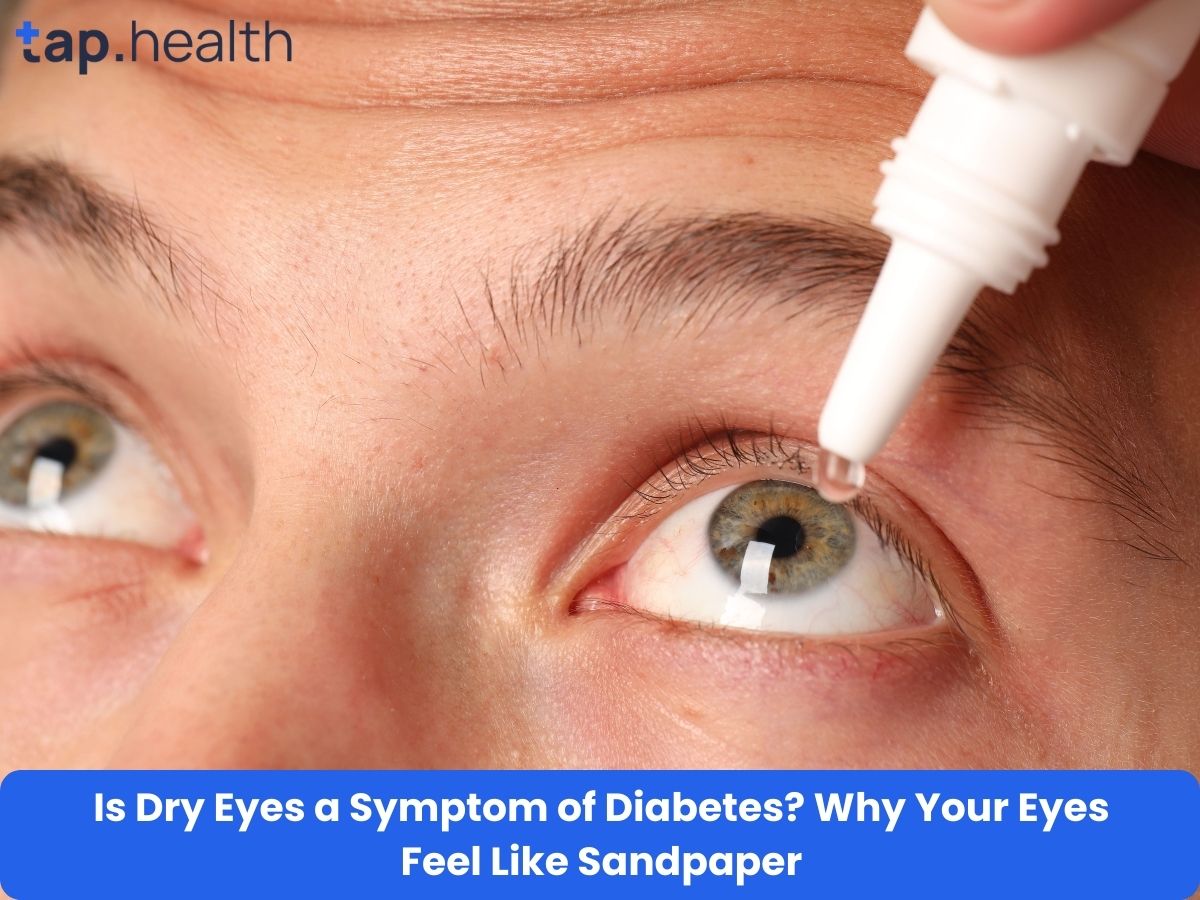
It is 4:00 PM. You are sitting at your desk, staring at your computer screen. You rub your eyes. They feel burning, gritty, and tired—like someone has thrown a handful of sand into them.
You blame the air conditioning. You blame the long hours. You reach for a bottle of “cooling” eye drops.
But what if the problem isn’t the screen? What if it’s your blood sugar?
The question is: “Is dry eyes a symptom of diabetes?”
The answer is Yes.
While most people worry about Diabetic Retinopathy (blindness caused by damage to the back of the eye), a far more common—and annoying—symptom is Dry Eye Syndrome (DES).
Research shows that over 50% of people with diabetes suffer from chronic dry eyes. It is often one of the earliest “whispers” that your glucose levels are out of control, long before the more serious vision problems start.
In this comprehensive guide, we are going to look beyond the blur. We will explain the science of “Corneal Neuropathy,” why high sugar destroys your tear film, and how to get relief when eye drops just aren’t enough.
The Science: How Sugar Dries Out Your Eyes
To understand why your eyes burn, you have to understand that a “tear” is not just water. It is a complex mixture of Water, Oil, and Mucus.
Diabetes attacks all three layers of this protective shield.
1. The Nerve Damage (Corneal Neuropathy)
This is the scariest part. Your cornea (the front window of the eye) has more nerves than almost anywhere else in your body.
- The Job: These nerves tell your brain: “The eye is dry! Blink now!”
- The Diabetes Effect: Just like high sugar damages the nerves in your feet (numbness), it damages the nerves in your cornea.
- The Result: You lose the sensation of dryness. You don’t blink often enough. Your tears evaporate, and you don’t even realize it until your eyes are red and inflamed.
2. The “Quality” Drop (Inflammation)
High blood sugar creates systemic inflammation.
- The Glands: This inflammation attacks the tiny Lacrimal Glands (which make water) and Meibomian Glands (which make oil).
- The Result: Your glands stop producing enough oil. Without oil, the water in your tears evaporates instantly. You might have “watery” eyes that act dry because the tears are of poor quality and don’t stick to the eye.
3. Dehydration (The Kidney Connection)
We know that high blood sugar makes you urinate frequently (Polyuria).
- The Result: If your body is dehydrated, it prioritizes vital organs like the heart and brain. The eyes are the first to lose moisture. If you are thirsty, your eyes are already dry.
Dry Eyes vs. Retinopathy: Knowing the Difference
It is vital not to confuse the two. Both affect diabetics, but one is annoying, and the other is dangerous.
| Feature | Dry Eye Syndrome (DES) | Diabetic Retinopathy |
| Location | Surface of the eye (Cornea). | Back of the eye (Retina). |
| Symptom | Burning, grittiness, redness, stinging. | Painless blurry vision, floating spots, dark areas. |
| Cause | Poor tear quality & nerve damage. | Leaking blood vessels in the retina. |
| Treatment | Drops, hydration, warm compresses. | Laser surgery, injections. |
| Urgency | Discomfort (Quality of Life). | Emergency (Sight-threatening). |
Note: If you have dry eyes, it does not mean you are going blind. However, having dry eyes makes it harder for doctors to diagnose Retinopathy because the surface blur hides the internal damage.
Real-Life Scenario
Let’s meet Mr. Iyer, a 52-year-old accountant.
The Symptom:
Mr. Iyer noticed that by afternoon, his eyes would turn red and water uncontrollably. It was paradoxical—his eyes were wet, but they felt dry and burning. He thought he had an eye infection or an allergy to office dust.
The Diagnosis:
He visited an ophthalmologist. The doctor did a “Tear Break-up Time” test.
- Result: His tears were evaporating in 3 seconds (Normal is >10 seconds).
- The Cause: The doctor asked about his diabetes. Mr. Iyer admitted his HbA1c was 8.2%. The high sugar had blocked the oil glands in his eyelids.
The Fix:
- Immediate: Warm compresses on the eyes every night to melt the blocked oil.
- Systemic: Bringing his sugar down to 7%.
- Result: The burning stopped in 3 weeks.
Expert Contribution
We consulted eye specialists to understand the best approach.
Dr. S. Reddy, Ophthalmologist:“I tell my diabetic patients: ‘Don’t ignore the grit.’ If your eyes feel sandy, it means your corneal nerves are misfiring. This creates a dangerous cycle. Because the nerves are numb, you might scratch your eye and not feel it. In a diabetic, a small scratch can turn into a non-healing ulcer that causes blindness. Dry eye is not just a nuisance; it’s a risk factor for infection.”
Endocrinologist Perspective:“Omega-3 fatty acids are the best friend of a diabetic eye. Consuming flaxseeds or fish oil supplements helps improve the quality of the oil in your tears. I often prescribe Omega-3s alongside diabetes medication for patients complaining of eye strain.”
Recommendations Grounded in Proven Research and Facts
If you are blinking and burning right now, here is your action plan:
- The “20-20-20” Rule:Diabetic eyes fatigue faster.
- The Rule: Every 20 minutes, look at something 20 feet away for 20 seconds.
- Why: This forces you to blink (resetting the tear film) and relaxes the focusing muscle, which is often swollen due to high sugar.
- Warm Compress (The Oil Melt):Your oil glands are likely clogged.
- Take a clean cloth, dip it in warm water, and place it on your closed eyelids for 5 minutes before bed.
- This melts the hardened oil and allows your natural tears to lubricate the eye again.
- Choose “Preservative-Free” Drops:Don’t just buy any “Cooling” drops (like those with camphor/menthol). They feel good for 5 minutes but dry the eye out more later.
- Buy Carboxymethylcellulose or Hyaluronic Acid drops that say “Preservative-Free.” These mimic natural tears without chemicals.
- Control the AC:Air conditioning acts like a vacuum for moisture.
- If you sit under an AC vent, wear glasses (even zero power) to create a “windshield” that protects your eyes from the dry air.
Key Takeaways
- Yes, Dry Eye is a Symptom: It affects 50% of diabetics due to nerve damage and inflammation.
- Corneal Neuropathy: High sugar damages eye nerves, meaning you don’t blink enough because you lose the sensation of dryness.
- Tear Quality: Diabetes destroys the oil glands, causing tears to evaporate instantly.
- Infection Risk: A dry diabetic eye is prone to scratches and ulcers that don’t heal.
- The Fix: Hydration, Omega-3s, and warm compresses are more effective than just using random eye drops.
Frequently Asked Questions (FAQ)
Can dry eyes be reversed?
Yes and No. You can restore the comfort and tear film quality by controlling blood sugar and using warm compresses. However, if the nerve damage (neuropathy) in the cornea is severe, the sensation of dryness might not fully return, meaning you will have to consciously remember to blink and use drops for life.
Why are my eyes dry in the morning?
This is often due to Lagophthalmos. Many diabetics have slight nerve damage in the eyelids, which prevents them from closing completely while sleeping. A tiny gap remains open, drying out the eye all night. Using a thick “Gel Drop” or ointment before bed helps.
Does Lasik surgery cause dry eyes in diabetics?
Yes. Lasik cuts the corneal nerves. Since diabetics already have weak corneal nerves, healing is much slower, and dry eye symptoms can become severe and permanent. Most doctors advise against Lasik if your HbA1c is not strictly controlled.
Can drinking water fix dry eyes?
It helps. Systemic dehydration (from frequent urination) worsens dry eyes. Drinking 2-3 liters of water helps maintain the “aqueous” (water) layer of your tears. However, water alone won’t fix the “oil” layer blockage; for that, you need Omega-3s and warm compresses.
Is blurry vision always Retinopathy?
No. In fact, fluctuating blurry vision is most often caused by Dry Eyes or High Sugar swelling the lens. If you blink a few times and your vision clears up, it is Dry Eye. If blinking does nothing, it might be Retinopathy or a Cataract.
References:
- American Academy of Ophthalmology: Diabetes and Dry Eye Connection. Link
- Journal of Diabetes Investigation: Prevalence of Dry Eye in Diabetics. Link
- Mayo Clinic: Dry Eyes Symptoms and Causes. Link
- National Eye Institute: Diabetic Eye Disease. Link
- Review of Optometry: Managing the Diabetic Cornea. Link
(Disclaimer: This content is for educational purposes only. If you have sudden vision loss, floaters, or severe pain, consult an ophthalmologist immediately.)