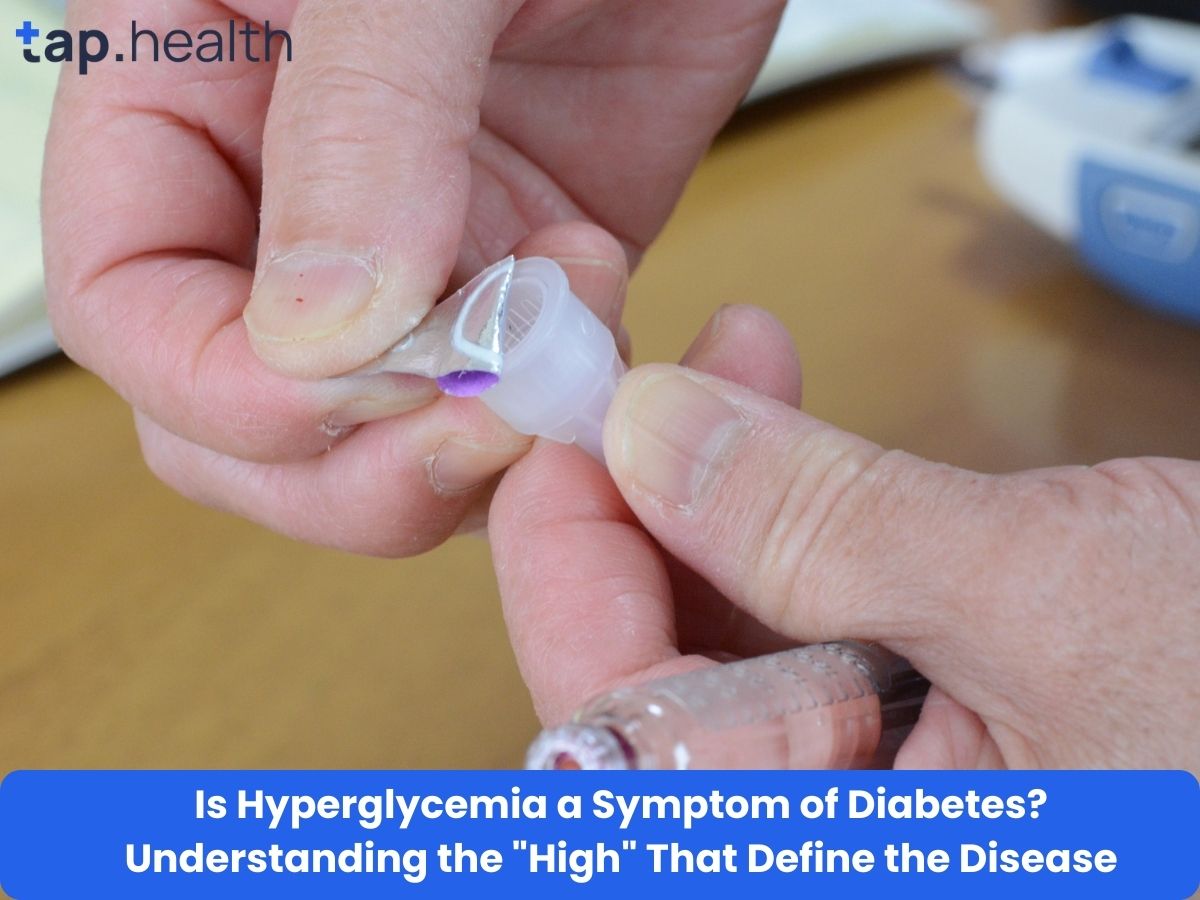
You get your blood test report back. You see a complicated medical word printed in bold red letters: Hyperglycemia. Your heart skips a beat. You know “Hyper” means too much, and “Glycemia” means sugar. But does this mean you have diabetes? Or did you just eat too many Gulab Jamuns last night?
The question is: “Is hyperglycemia a symptom of diabetes?”
The answer is surprisingly nuanced. Technically, Hyperglycemia is the defining characteristic of diabetes. You cannot be diagnosed with diabetes without it. However, not everyone with hyperglycemia has diabetes.
You can have high blood sugar due to stress, infection, or medication (like steroids) without having the chronic disease of diabetes. But if your hyperglycemia is persistent and comes with specific warning signs, it is the red flag that your pancreas has stopped working.
In this comprehensive guide, we will decode the medical jargon. We will explain the “Traffic Light” system of blood sugar, the classic “3 P’s” of symptoms, and how to tell if your high sugar is a temporary spike or a permanent condition.
What is Hyperglycemia? (The Definition)
In simple English, Hyperglycemia means “High Blood Sugar.”
- Hyper = High
- Glyc = Glucose (Sugar)
- Emia = Blood
It happens when there is too much sugar floating in your bloodstream because your body lacks insulin (Type 1) or cannot use the insulin it has (Type 2).
The “Traffic Light” of Blood Sugar: How do you know if you have it? Look at the numbers (Fasting):
- 🟢 Green (Normal): 70 to 99 mg/dL.
- 🟡 Yellow (Prediabetes/Mild Hyperglycemia): 100 to 125 mg/dL.
- 🔴 Red (Diabetes/Severe Hyperglycemia): 126 mg/dL or higher.
The “Classic 3” Symptoms of Hyperglycemia
If your blood sugar stays in the “Red Zone” for too long, your body reacts violently. Doctors call these the “3 P’s”:
1. Polyuria (Excessive Urination)
- What it is: Visiting the bathroom every hour, especially at night.
- Why: Your kidneys are trying to save your life. They filter the blood, see the excess toxic sugar, and flush it out with water.
2. Polydipsia (Excessive Thirst)
- What it is: Drinking 3-4 liters of water and still feeling parched with a “cotton mouth.”
- Why: Because you are peeing out all your fluids (Polyuria), your body is dehydrated. Your brain screams “Drink!” to replace the lost water.
3. Polyphagia (Excessive Hunger)
- What it is: Eating a full meal and feeling hungry again 30 minutes later.
- Why: Even though your blood is full of sugar, your cells are empty because insulin isn’t opening the door. Your cells send “Starvation Signals” to the brain, making you eat more—which ironically raises your sugar even higher.
The “Hidden” Signs: When It’s Not Obvious
Not everyone gets the Classic 3 immediately. Often, hyperglycemia shows up in sneakier ways:
- Brain Fog: You feel groggy, slow, and unable to concentrate. High sugar thickens the blood, slowing down oxygen delivery to the brain.
- Slow Healing: A mosquito bite or a razor cut takes weeks to heal. Bacteria love sugar, and high sugar “stuns” your immune system.
- Fungal Infections: Recurrent yeast infections (Thrush) in women or jock itch in men. Fungus thrives on glucose.
- Angry Moods: We call it “Hangry,” but high sugar causes irritability and anxiety due to hormonal fluctuations.
Is It Diabetes or Just “Stress Sugar”?
This is where the confusion lies. Can you have Hyperglycemia without Diabetes? Yes. This is called Stress Hyperglycemia.
Common Triggers for Non-Diabetic High Sugar:
- Severe Illness: A heart attack, stroke, or severe infection releases cortisol, spiking sugar temporarily.
- Steroids: Medicines like Prednisone (often used for asthma or arthritis) are famous for causing massive sugar spikes.
- Surgery: The physical trauma of surgery often raises glucose levels in the hospital.
The Difference:
- Temporary: Once the illness or medicine stops, the sugar returns to normal.
- Diabetes: The sugar stays high permanently unless managed with diet or pills.
Real-Life Scenario
Let’s meet Karan, a 28-year-old gym enthusiast.
The Scare: Karan was taking a “Mass Gainer” supplement and eating 6 meals a day. One day, he fainted at the gym. At the hospital, his random blood sugar was 240 mg/dL. The doctor said: “You have Hyperglycemia.”
The Panic: Karan thought: “I have diabetes! My life is over.”
The Reality: Further tests showed his HbA1c (3-month average) was normal (5.2%).
- The Cause: He had consumed a massive amount of simple carbs (glucose powder) right before the workout, causing a temporary “Acute Spike.”
- The Verdict: He had Hyperglycemia (the event), not Diabetes (the disease).
Expert Contribution
We consulted endocrinologists to define the danger zones.
Dr. M. Chawla, Diabetologist: “Patients ignore Hyperglycemia because it doesn’t hurt immediately. But I tell them: ‘Sugar is like shards of glass.’ Every minute it stays above 180, it is scratching the inside of your blood vessels. You might feel fine today, but 10 years later, that scratching turns into blindness and kidney failure. Treat the number, not just the feeling.”
Critical Warning (DKA): “If you have Type 1 Diabetes and your sugar is above 250 mg/dL with nausea, vomiting, or stomach pain, this is NOT just Hyperglycemia. This is Diabetic Ketoacidosis (DKA). Your blood is turning acidic. Go to the ER immediately.”
Recommendations Grounded in Proven Research and Facts
If your glucometer shows a high number, here is your “Emergency Protocol”:
- Don’t Panic, Hydrate:
- Action: Drink 2 large glasses of plain water immediately.
- Why: Water helps dilute the sugar in the blood and helps kidneys flush it out.
- The “Correction” Walk:
- Action: If you are not feeling dizzy or vomiting, go for a 15-minute brisk walk.
- Why: Muscles burn glucose for fuel. Walking is the fastest natural way to lower a spike.
- Caution: If your sugar is over 250 mg/dL AND you have Type 1, check for Ketones first. Do not exercise if ketones are present (it makes it worse).
- Check Your Meds:
- Did you miss a dose? Did you eat a heavier meal than usual?
- Note: Never “double dose” insulin without a doctor’s plan. Taking too much can send you crashing into Hypoglycemia (Low Sugar), which is immediately dangerous.
Key Takeaways
- Hyperglycemia = High Blood Sugar. It is the main sign of diabetes.
- The Threshold: Fasting > 126 mg/dL or Post-meal > 200 mg/dL usually confirms diabetes.
- The Symptoms: Look for the 3 Ps: Polyuria (Peeing), Polydipsia (Thirst), Polyphagia (Hunger).
- Not Always Diabetes: Stress, steroids, and heavy meals can cause temporary hyperglycemia.
- The Fix: Hydration and movement are the best first-aid for a mild sugar spike.
Frequently Asked Questions (FAQ)
What blood sugar level is dangerous?
Generally, a reading above 250 mg/dL requires immediate attention. If it stays above 300 mg/dL despite medication, or if you have ketones/vomiting, it is a medical emergency requiring hospitalization.
Can eating sweets cause hyperglycemia in non-diabetics?
Yes, but briefly. If a healthy person eats a box of sweets, their sugar might spike to 140 or 150 mg/dL for an hour. However, their body produces insulin quickly, bringing it back to normal (under 100) within 2 hours. In diabetics, it stays high for hours or days.
How does hyperglycemia damage the body?
Think of high sugar as “thick, sticky syrup.” It moves slowly. It clogs the tiniest blood vessels first—the ones in your Eyes (Blindness), Kidneys (Failure), and Feet (Amputation). This damage is cumulative; it builds up over years.
Why is my blood sugar high in the morning without eating?
This is the Dawn Phenomenon. In the early morning (4 AM – 8 AM), your body releases hormones (cortisol/growth hormone) to wake you up. These hormones release stored sugar. In diabetics, the body doesn’t have enough insulin to handle this morning surge, leading to high fasting numbers.
Does drinking water lower blood sugar?
Yes. Dehydration concentrates the sugar in your blood. Drinking water adds volume to the blood (diluting the sugar) and helps the kidneys filter the excess glucose out through urine. It is the simplest and safest home remedy for mild hyperglycemia.+1
References:
- American Diabetes Association: Hyperglycemia (High Blood Glucose). Link
- Mayo Clinic: Hyperglycemia in Diabetes. Link
- Cleveland Clinic: High Blood Sugar Symptoms. Link
- NHS UK: Diabetic Ketoacidosis (DKA). Link
- Journal of Clinical Endocrinology: Stress Hyperglycemia. Link
(Disclaimer: This content is for educational purposes only. If your blood sugar is consistently above 250 mg/dL, consult your doctor immediately.)