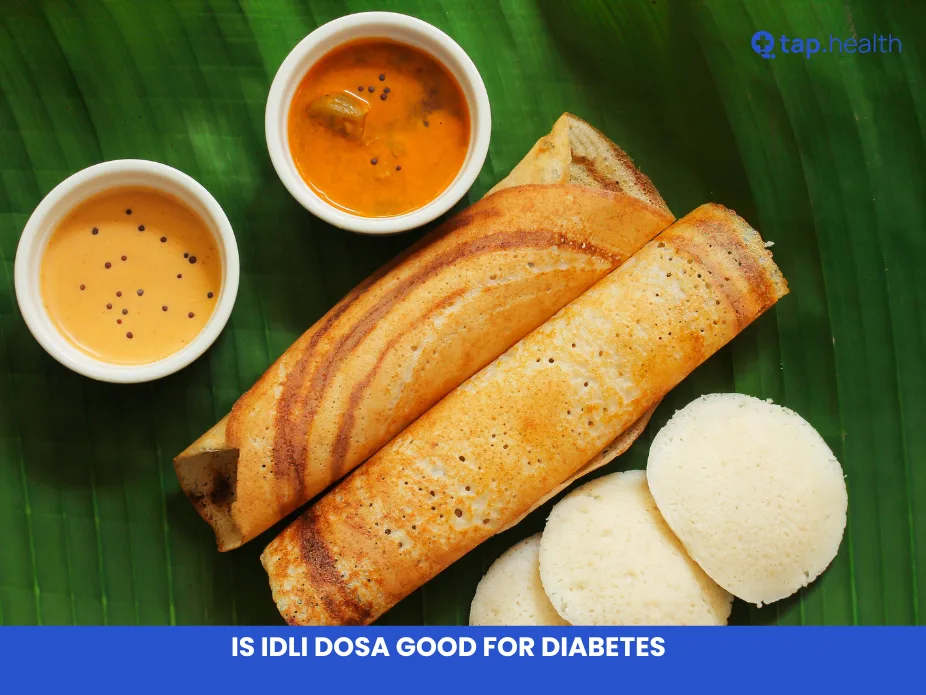
Managing diabetes involves making mindful food choices to maintain healthy blood sugar levels. A Yes, idli and dosa can be safely enjoyed by people with diabetes when prepared with smart modifications and eaten in controlled portions.
Understanding Glycemic Index of Idli and Dosa
Idli has a low to medium glycemic index (GI 45–60) because of natural fermentation that increases resistant starch and fiber. Dosa usually falls in the medium GI range (60–70). Using brown rice, millets, or adding vegetables further lowers the effective GI and prevents sharp blood sugar spikes.
Nutritional Breakdown of Idli vs Dosa for Diabetics
One plain idli (40 g): ~39 g carbs, 9 g protein, 2 g fat One medium plain dosa (60 g): ~50 g carbs, 10 g protein, 4–6 g fat
Both are naturally low-fat, probiotic-rich due to fermentation, and easy to digest, making them better than refined-flour breakfast options.
How Diabetics Can Safely Eat Idli and Dosa
- Switch to Whole Grains Use brown rice, foxtail millet, barnyard millet, or quinoa instead of white rice to increase fiber and lower GI.
- Boost Protein Content Add extra urad dal, moong dal, chana dal, paneer, or tofu to the batter for better satiety and slower glucose release.
- Load with Vegetables Mix grated carrots, spinach, beans, capsicum, or onions in dosa batter or serve vegetable sambar.
- Strict Portion Control Limit to 2 small idlis or 1 medium vegetable dosa per meal along with protein side dishes.
- Minimal Oil Use non-stick pan or just a few drops of heart-healthy oil; avoid ghee-laden restaurant versions.
- Pair Wisely Combine with high-protein sambar, groundnut chutney, or Greek yogurt instead of coconut chutney alone.
Proven Health Benefits of Modified Idli Dosa for Diabetes
- Improved gut health from fermentation (supports insulin sensitivity)
- Higher fiber slows carbohydrate absorption
- Low saturated fat helps weight management
- Rich in B-vitamins and minerals from lentils
- Keeps you full longer, reducing overall calorie intake
Real-Life Success Story
Mr. Ravi, a 55-year-old diabetic from Bangalore, reduced his fasting sugar from 160 to 110 mg/dL in three months just by switching to brown rice-ragi idli, vegetable oats dosa, and limiting himself to two pieces with sambar and curd every morning.
Expert Recommendation
Leading diabetologist Dr. Priya Menon says, “Fermented foods like idli and dosa have lower glycemic load than roti or bread when made with whole grains and paired with protein. They are excellent breakfast choices for Indian diabetics.”
Quick Diabetic-Friendly Idli Dosa Recipes
- Ragi Idli 2 parts ragi flour + 1 part urad dal + methi seeds – ferment 8 hours.
- Oats Moong Dal Dosa (Instant) Powdered oats + soaked yellow moong dal + spinach puree – no fermentation needed.
- Multi-Millet Vegetable Dosa Equal parts foxtail, kodo, little, and barnyard millet + extra dal + veggies.
Common Mistakes to Avoid
- Eating 4–5 plain white rice idlis at once
- Using only coconut chutney (high fat)
- Having sweet sambar with jaggery
- Deep-fried masala dosa from restaurants
Frequently Asked Questions
Q. Which is better for diabetes – idli or dosa?
A. Steamed idli is slightly better due to zero oil, but vegetable stuffed dosa with minimal oil is equally good.
Q. Can diabetics eat dosa daily?
A. Yes, 4–5 times a week if made with whole grains, vegetables, and portion controlled.
Q. Is fermented dosa batter good for diabetes?
A. Yes – longer fermentation (12–14 hours) reduces starch and GI significantly.
Q. Are millet idlis safe for diabetics?
A. Absolutely – millets have GI as low as 45–55 and are rich in magnesium that improves insulin sensitivity.
Q. Can I eat idli at night for diabetes?
A. Better to keep it for breakfast or lunch; pair with plenty of vegetables and protein if eating at dinner.
Is Idli Dosa Good for Diabetes? TapHealth Verdict
Yes! Idli and dosa are excellent traditional choices for diabetes management when you choose whole grain or millet versions, add protein and vegetables, control portions, and monitor your blood sugar response. With these simple tweaks, you can enjoy your favorite South Indian breakfast guilt-free every day.