You wake up in the morning, and your fingers feel curled and tight. You try to reach for the coffee mug on the top shelf, but your shoulder locks up in pain. You walk down the stairs, and your knees creak and ache more than they used to.
You think: “I am just getting old. Maybe it’s arthritis.”
You pop a painkiller and move on.
But if you have high blood sugar, that pain might not be simple aging.
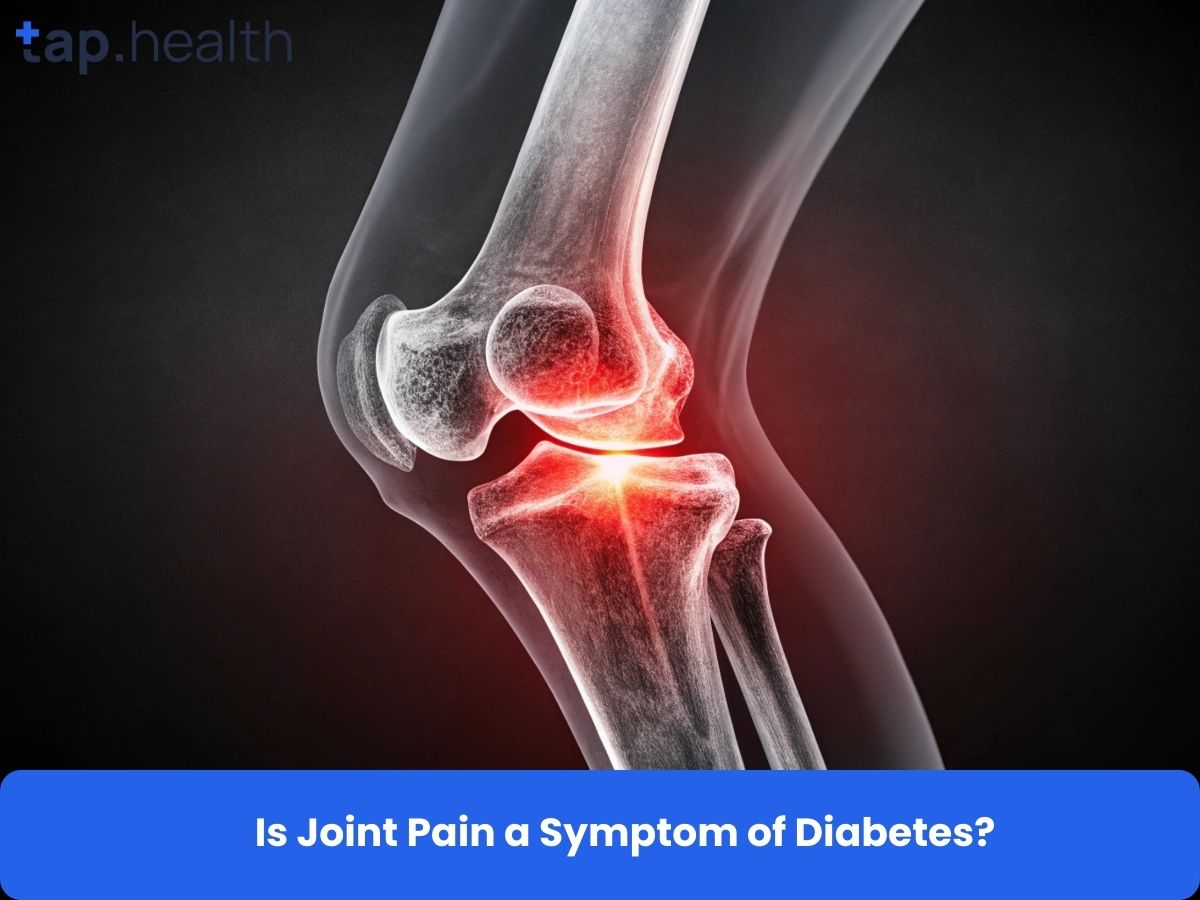
The question is: “Is joint pain a symptom of diabetes?”
The answer is Yes.
While we often talk about diabetes damaging the eyes and kidneys, it also attacks your Connective Tissue—the tendons, ligaments, and cartilage that hold your skeleton together.
In fact, conditions like Frozen Shoulder are so common in diabetics (affecting up to 20% of patients) that orthopedics often test for sugar the moment they see a stiff shoulder.
In this comprehensive guide, we are going to explore the concept of “Sugar Rust.” We will explain how excess glucose acts like glue in your joints, why your fingers might be getting stuck, and how to get moving again.
The Science: How Sugar “Rusts” Your Hinges
To understand the pain, you have to understand a process called Glycosylation.
Imagine pouring sticky sugar syrup into a door hinge. Over time, the syrup hardens, and the hinge becomes stiff and difficult to move.
This is exactly what happens in your body.
- The “Glue” Effect: Collagen is a protein that makes up your tendons and ligaments. It is supposed to be elastic and flexible like a rubber band.
- The Attack: When blood sugar is high, the excess glucose attaches itself to the collagen. This forms sticky molecules called Advanced Glycation End-products (AGEs).
- The Result: The collagen becomes thick, stiff, and brittle. It loses its elasticity. Instead of stretching, it tears or locks up. This causes pain, limited range of motion, and stiffness.
The “Diabetic Hand”: Specific Conditions
Diabetes loves to attack the upper body joints, especially the hands and shoulders.
1. Frozen Shoulder (Adhesive Capsulitis)
This is the hallmark of diabetic joint pain.
- The Symptom: Severe pain and stiffness in the shoulder. You cannot raise your arm above your head or reach behind your back to tuck in your shirt.
- The Link: High sugar causes the capsule surrounding the shoulder joint to thicken and tighten. Diabetics are 5 times more likely to get this than non-diabetics.
2. Trigger Finger (Stenosing Tenosynovitis)
- The Symptom: You bend your finger, and it gets “stuck” in the curled position. When you try to straighten it, it snaps open with a painful “click” or “pop.”
- The Link: The tendon sheath in the finger becomes inflamed and thickened due to sugar deposits (AGEs), trapping the tendon.
3. Dupuytren’s Contracture
- The Symptom: The skin on your palm thickens and forms knots. Eventually, one or more fingers (usually the ring or little finger) are pulled permanently inward toward the palm.
- The Link: It is a fibrosis (scarring) condition accelerated by metabolic issues.
Charcot Joint: The Dangerous Foot Condition
While shoulder pain is annoying, Charcot Neuroarthropathy (Charcot Foot) is destructive.
- The Mechanism: This happens due to severe Neuropathy (nerve damage).
- The Danger: You lose sensation in your feet. You walk on a fractured bone or sprained ligament without feeling pain. The bones grind against each other and disintegrate.
- The Symptom: The foot becomes red, warm, and swollen. Eventually, the arch of the foot collapses, leading to a “Rocker-Bottom Foot” deformity.
- Urgency: If your diabetic foot is red and swollen (even if it doesn’t hurt), see a doctor immediately.
Arthritis vs. Diabetic Joint Pain: What’s the Difference?
Is it Osteoarthritis (wear and tear) or Diabetes?
| Feature | Diabetic Joint Stiffness | Osteoarthritis (OA) |
| Primary Cause | Thickened tendons/ligaments (Soft tissue). | Worn-out cartilage (Bone-on-bone). |
| Key Symptom | Limited Motion. (You physically can’t move the arm past a point). | Pain with Motion. (You can move it, but it hurts). |
| Common Sites | Shoulder, Hands, Feet. | Knees, Hips, Lower Back. |
| Skin Changes | Skin over the joint may feel thick/waxy. | No skin changes. |
| Response | Responds well to stretching & sugar control. | Responds well to rest & anti-inflammatories. |
Note: Diabetics are also at higher risk for Osteoarthritis because obesity (common in Type 2) puts extra weight on the knees.
Real-Life Scenario
Let’s meet Mrs. Rao, a 55-year-old teacher.
The Symptom:
Mrs. Rao found it increasingly difficult to write on the blackboard. Her right shoulder hurt whenever she lifted her arm. She stopped wearing sarees because draping them was too painful. She assumed she had slept on it wrong.
The Diagnosis:
She visited an orthopedic surgeon. He tried to lift her arm, but it was “frozen” at 90 degrees.
He asked: “Are you diabetic?”
She said yes, but admitted she hadn’t checked her sugar in months. Her HbA1c was 9.5%.
The Fix:
- Therapy: She started aggressive physical therapy to stretch the capsule.
- Sugar: She started insulin to bring the “glue” levels down rapidly.
- Result: It took 6 months, but she regained 80% of her motion. The doctor told her: “If we hadn’t fixed the sugar, the other shoulder would have frozen too.”
Expert Contribution
We consulted physiotherapists and rheumatologists.
Dr. K. Mehta, Orthopedic Surgeon:“I call Frozen Shoulder the ‘Diabetes Detector.’ If a patient walks in with a frozen shoulder and no history of injury, I send them for a sugar test. 30% of the time, they are undiagnosed diabetics. The sugar essentially shrink-wraps the joint.”
Physiotherapist Perspective:“Diabetic stiffness is stubborn. You cannot just ‘rest it off.’ In fact, rest makes it worse. We use the phrase ‘Motion is Lotion.’ You have to gently move the joint through its full range every single day to break the sugar bonds forming in the tissue.”
Recommendations Grounded in Proven Research and Facts
If your joints feel like rusty hinges, here is your maintenance plan:
- The “Wall Walk” (For Shoulders):
- Action: Stand facing a wall. Walk your fingers up the wall as high as you can until you feel a stretch (not sharp pain). Hold for 10 seconds.
- Frequency: Do this 3 times a day to prevent the shoulder from freezing further.
- Hand Exercises:
- Action: Place your hand flat on a table. Lift each finger one by one. Then, make a tight fist and open it wide.
- Why: This keeps the tendons gliding smoothly and prevents Trigger Finger.
- Check Your Feet:
- If your foot is swollen, red, and hot, do NOT walk on it. This could be Charcot Foot. Walking on it can cause permanent deformity. See a doctor immediately.
- Anti-Inflammatory Diet:
- Sugar causes inflammation.
- Eat: Turmeric (Haldi), Ginger, and Omega-3 rich foods (Walnuts/Fish). These are natural painkillers that reduce joint swelling.
- Manage Weight:
- Every 1 kg of weight loss removes 4 kg of pressure from your knees. If you have diabetic knee pain, losing weight is the most powerful painkiller.
Key Takeaways
- Yes, Joint Pain is a Symptom: Excess sugar binds to collagen (Glycosylation), making tendons and ligaments thick and stiff.
- Upper Body Risk: Frozen Shoulder and Trigger Finger are strongly linked to uncontrolled diabetes.
- Charcot Foot: A dangerous condition where nerve damage hides the pain of broken bones in the foot. Redness and swelling are key signs.
- Motion is Lotion: Unlike injury pain, diabetic stiffness needs movement and stretching to get better.
- Control Sugar: High sugar accelerates the “rusting” process. Lowering it stops the damage.
Frequently Asked Questions (FAQ)
Can diabetes cause knee pain?
Yes. While shoulder pain is more specific to “connective tissue” damage, diabetes causes knee pain through two ways:
- Obesity: Excess weight destroys knee cartilage.
- Neuropathy: Weak thigh muscles (due to nerve damage) destabilize the knee joint, causing pain.
Will the stiffness go away if I lower my sugar?
It will stop getting worse. Lowering sugar prevents new AGEs (sticky bonds) from forming. However, the existing stiffness often requires Physical Therapy to break down. Sugar control + Exercise is the cure; sugar control alone is prevention.
Can statins (cholesterol meds) cause joint pain in diabetics?
Yes. Many diabetics take statins for heart health. A known side effect is muscle aches and joint pain. If your pain started after starting a cholesterol pill, talk to your doctor about switching brands or taking CoQ10 supplements.
Is “cracking” joints bad for diabetics?
Not necessarily, but it won’t help. The “crack” is just gas bubbles popping. It doesn’t fix the thickened tendons caused by diabetes. Gentle stretching is far more effective than cracking.
What is “Prayer Sign” in diabetes?
This is a simple test doctors do. Put your palms together in a “Namaste” or prayer position. Try to press them flat against each other.
- Normal: Palms touch completely.
- Diabetic Cheiroarthropathy: You cannot press the palms flat; there is a gap between the fingers and palms because the skin is too thick and stiff. This confirms diabetic joint damage.
References: