If you have grown up in India, Sabudana (Sago) is likely a comforting part of your diet. Whether it is a bowl of warm, sweet Sabudana Kheer during a festival, or a plate of fluffy, peanut-filled Sabudana Khichdi on a fasting day (vrat), these little white pearls are deeply woven into our food culture.
But when you or a loved one is diagnosed with diabetes, everything on your plate comes under the microscope. Suddenly, that innocent bowl of Khichdi brings up a lot of anxiety. You know that rice and potatoes can spike your blood sugar, but what about these white pearls?
You might be asking: “Is sago good for diabetes?” “Will it cause a sugar spike?” “Do I have to give up my favourite fasting food forever?”
There is a lot of confusion surrounding Sabudana. Because it is a traditional “fasting” food, many people mistakenly believe it is automatically a “health” food. In this comprehensive guide, we will break down exactly what Sago is made of. We will look at its carbohydrate content, its Glycaemic Index, and most importantly, we will show you the smart, science-backed ways to eat it so it does not send your glucometer reading through the roof.
Can People with Diabetes Eat Sago (Sabudana)?
The short answer is yes, but with strict portion control and smart pairings. Sabudana is almost entirely composed of pure starch (carbohydrates). It is not a low-carb or “free” food. If you eat a large bowl of plain Sabudana, your blood sugar will definitely spike. However, if you treat it as an occasional treat, keep the portion size very small, and pair it with lots of fibre and protein, you can safely fit it into a diabetic diet. It is all about how you cook it.
What Is Sago (Sabudana)?
Before we look at how it affects your blood sugar, let us understand what you are actually eating.
How Sago Is Made
Sago, known locally as Sabudana, is not a grain or a seed. It is a highly processed starch. True Sago is extracted from the spongy centre (pith) of various tropical palm trees. The starch is washed, purified, and shaped into the small, round, white pearls we buy in the market.
Sago vs Tapioca Pearls – Are They the Same?
In modern Indian markets, what we call “Sabudana” is rarely true palm sago. Instead, it is almost exclusively made from Tapioca root (Cassava or Kappa). The cassava root is crushed, the pure starch is extracted, and it is formed into pearls. Whether it is palm sago or tapioca sago, the nutritional profile is practically identical: it is pure starch.
Nutritional Profile of Sago (Sabudana)
To understand why Sago is tricky for diabetics, we need to look under the microscope. Here is what is inside a standard 100-gram serving of dry Sabudana:
Carbohydrates and Calories
- Calories: Roughly 350 kcal
- Carbohydrates: 85 to 90 grams
This is an incredibly dense source of energy. To put that in perspective, 100g of Sabudana has more carbohydrates than 100g of white rice.
Fibre, Protein, and Micronutrients (Low Amounts)
- Protein: Less than 1 gram
- Fibre: Less than 1 gram
- Fat: Less than 1 gram
Because Sabudana is heavily processed to extract just the starch, almost all the natural fibre, vitamins, and minerals of the original root are lost. It provides a tiny amount of calcium and iron, but it is essentially “empty calories.”
Why Sabudana Is Considered a Starchy Food
Starch is a type of complex carbohydrate. When you digest starch, your body breaks it down into simple glucose (sugar). Because Sabudana lacks fibre and protein to slow down this digestion process, that glucose rushes into your bloodstream very quickly.
Glycaemic Index and Glycaemic Load of Sago
For a person with diabetes, the Glycaemic Index (GI) is the speedometer of how fast a food raises blood sugar.
Why Sago Can Raise Blood Sugar Quickly
- Sabudana (Sago) GI: Typically ranges between 65 and 70 (Medium to High).
Foods with a high GI break down rapidly. Since Sago lacks dietary fibre, your stomach enzymes turn those white pearls into pure glucose in record time. This leads to a sharp, sudden spike in blood sugar.
GI vs GL – Why Portion Size Matters More
The Glycaemic Load (GL) is a more accurate measure because it factors in how much you actually eat. Since Sago is so dense in carbs, even a moderate serving size results in a very high Glycaemic Load. Eating a full plate of Sabudana Khichdi will overload your system with carbs, forcing your pancreas to pump out massive amounts of insulin.
Does Preparation Method Change the Blood Sugar Spike?
Yes. * Boiling/Soaking: Boiling makes the starch easier to digest, which keeps the GI high.
- Cooling: If you cook Sabudana and let it cool down completely, some of the starch turns into “resistant starch.” Resistant starch acts a bit like fibre and digests slower.
- Frying: Deep frying (like Sabudana Vada) adds massive amounts of fat. While fat slows down the immediate sugar spike, it causes “insulin resistance,” keeping your blood sugar elevated for hours after the meal.
Does Sago Increase Blood Sugar in Diabetes?
Let us look at real-world scenarios of how Sago affects your glucometer readings.
Sago Eaten Alone vs With Protein/Fat
- Scenario A (Sago Alone): You eat a bowl of plain, boiled Sabudana with a little salt. Your blood sugar will shoot up rapidly within 30 to 45 minutes because there is nothing to slow down digestion.
- Scenario B (Sago + Fibre/Protein): You eat a small amount of Sabudana mixed with crushed peanuts, vegetables, and a side of curd. The protein in the peanuts and curd, plus the fibre in the veggies, act like a traffic jam in your stomach. The sugar is released slowly, creating a much smaller, flatter blood sugar curve.
Sabudana Khichdi vs Sabudana Kheer vs Vada (Impact Difference)
- Sabudana Khichdi: The safest option, if made with lots of peanuts, vegetables, and minimal oil.
- Sabudana Kheer: The most dangerous option. You are combining a high-carb starch with milk and added sugar/jaggery. This is a double sugar spike.
- Sabudana Vada: Deep-fried with potatoes (aloo). This is a “carb-on-carb” bomb wrapped in unhealthy fats. It will cause sustained high blood sugar and weight gain.
Why Fasting Foods Can Be Tricky for Diabetics
During Hindu fasting (Navratri, Ekadashi), standard grains like wheat and rice are forbidden. People turn to Sabudana and potatoes. Ironically, a “fasting” diet often contains more simple carbohydrates and less protein than a regular daily diet, making fasting days notoriously difficult for blood sugar control.
Is Sago Good for Type 2 Diabetes?
Given its high starch content, is it actually “good” for you?
When Small Portions May Be Okay
Sago is not inherently toxic. It is gluten-free and easy to digest, which makes it good for people with severe stomach issues. For a Type 2 diabetic, it can be “okay” if used as an occasional source of quick energy before a heavy workout, provided the portion is strictly controlled.
When Sago Is Not a Good Choice
If you are looking for a daily breakfast staple, Sabudana is a terrible choice. It lacks the complex nutrition, fibre, and sustained energy that a diabetic needs to start their day.
Frequency Guidance (Occasional vs Daily)
Treat Sabudana like a dessert or a special festival treat. It should not appear on your plate more than once or twice a month.
Read this : Gestational Diabetes NCP
Is Sago Good for Gestational Diabetes?
Gestational Diabetes (GDM) requires incredibly tight blood sugar control to protect the developing baby.
Why Portion Control Is Critical in GDM
Pregnancy hormones naturally make the mother’s body highly resistant to insulin. High-carb foods like Sabudana will cause extreme spikes in a pregnant woman’s blood sugar. This excess sugar crosses the placenta, causing the baby to grow too large (macrosomia).
Better Ways to Include It (If Allowed by Dietitian)
If a pregnant woman strongly craves Sabudana during a festival, she must measure it strictly. A safe portion would be 2 to 3 tablespoons of cooked Khichdi, eaten alongside a large bowl of protein-rich Dal or paneer to blunt the spike.
When to Avoid Sago in Pregnancy Diabetes
If your fasting sugars are already high, or if you are struggling to control your post-meal numbers even with medication, it is best to avoid Sago entirely until after delivery.
Best Ways to Eat Sago for Diabetes (To Reduce Sugar Spike)
If you are going to eat Sabudana, you must “hack” the recipe to make it safer. Here is the cheat code.
Pair With Protein (Peanuts, Curd, Paneer)
Never eat Sago naked. Always add a heavy dose of protein.
- Mix in a generous handful of roasted, crushed peanuts.
- Serve your Khichdi with a bowl of unsweetened Greek yogurt (curd).
- Add small cubes of roasted paneer or tofu into the mix.
Add Fibre (Vegetables, Salad)
Since Sago has no fibre, you must add your own. Load your Sabudana Khichdi with green beans, capsicum, spinach, or carrots. Always eat a fresh cucumber and tomato salad before taking your first bite of Sago.
Use Smaller Portion Sizes
Cut your usual portion in half. If you normally eat a full bowl, eat half a bowl and fill the rest of the space with a protein source.
Avoid Added Sugar and Deep Frying
Never make sweet Sabudana Kheer if you are diabetic. Avoid the deep-fried Vadas. Stick to shallow pan-cooking with minimal oil or ghee.
Best Time to Eat (Lunch vs Night)
The best time to eat Sabudana is during lunch, when your metabolism is most active and you have the whole afternoon to walk and burn off the carbohydrates. Avoid eating it for dinner, as it will likely lead to high fasting blood sugar the next morning.
How Much Sago Can a Diabetic Eat?
Portion control is your best defence.
Portion Size in Cups / Katori
- Safe Serving: 1/3 to 1/2 cup of cooked Sabudana Khichdi (approx. 50-75 grams).
- Visual: It should not take up more than one-quarter (25%) of your dining plate.
How Often Per Week Is Reasonable
Do not eat it weekly. Reserve it for special occasions or specific fasting days, ideally no more than once or twice a month.
Checking Post-Meal Sugar Response
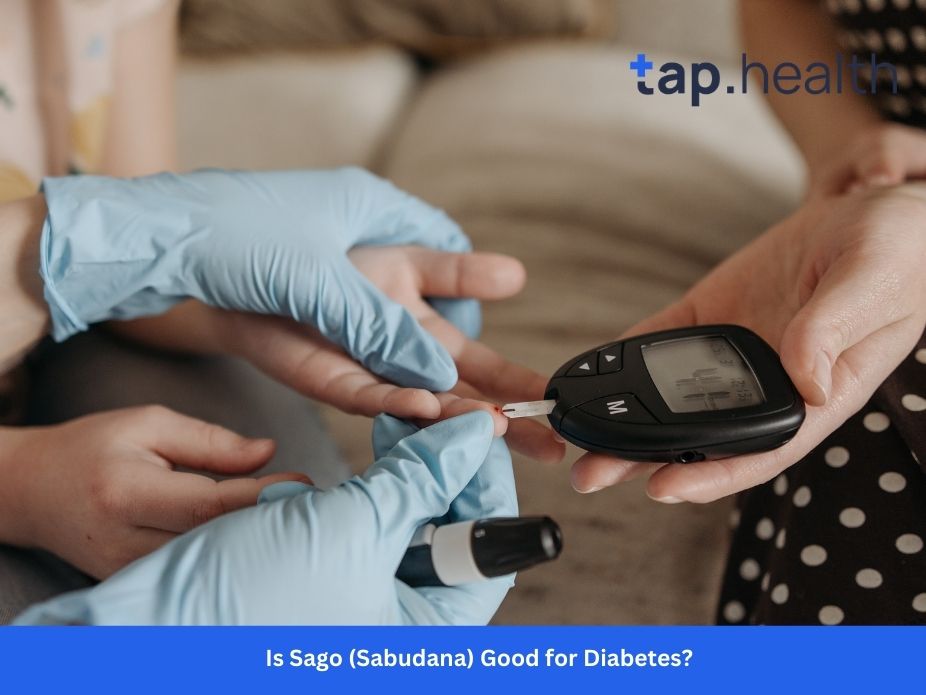
Every diabetic body reacts differently. The only way to know your true limit is to use your glucometer. Check your blood sugar 2 hours after eating Sabudana. If the reading jumps by more than 40-50 points from your pre-meal level, you need to reduce the portion next time.
Sago vs Other Carb Foods for Diabetes
How does Sabudana stack up against your regular daily staples?
Sago vs Rice
- Winner: Rice (specifically Brown or Parboiled Rice). While both are starchy, whole-grain rice retains some fibre and B-vitamins. Sago is more processed and has less nutritional value than rice.
Sago vs Poha (Flattened Rice)
- Winner: Poha. Poha goes through less processing. It retains a small amount of fibre and iron, making it a slightly better breakfast option than Sabudana, though both require portion control.
Sago vs Oats
- Winner: Oats. Oats (especially rolled or steel-cut) are incredibly high in soluble fibre (beta-glucan), which actively lowers blood sugar and cholesterol. Oats are vastly superior to Sago for daily diabetic management.
Sago vs Millets (Ragi, Jowar, Bajra)
- Winner: Millets. Millets are the ultimate superfood for diabetes. They have a low Glycaemic Index, massive amounts of fibre, and high protein. If you are fasting, try making a Khichdi out of Barnyard Millet (Sama ke Chawal) instead of Sabudana.
Who Should Avoid or Strictly Limit Sago?
Some individuals should keep Sabudana off their plates entirely.
Uncontrolled Diabetes / High HbA1c
If your HbA1c is above 8%, or your daily sugars are erratic, your body is currently struggling to process basic carbohydrates. Adding a dense starch like Sago will only worsen the situation.
Weight Loss Goals / High Triglycerides
Sabudana is very calorie-dense. If your doctor has advised you to lose weight to improve insulin sensitivity, or if your blood triglycerides (fats) are high from excess carbs, Sabudana will stall your progress.
People Who Experience Large Post-Meal Sugar Spikes
If you know your body is highly reactive to starchy foods (like potatoes or white rice), it will react similarly to Sabudana. Stick to leafy greens and proteins.
Common Myths About Sabudana and Diabetes
Let us clear up some dangerous kitchen folklore.
Myth: Sabudana Is Healthy So It’s Safe for Diabetes
Fact: Just because a food is natural or traditional does not mean it is low in sugar. Sabudana is pure starch and acts very similarly to white sugar once inside your stomach.
Myth: Fasting Foods Don’t Raise Blood Sugar
Fact: Many Indian fasting foods (Sabudana, potatoes, sweet potatoes, chestnut flour) are incredibly high in carbohydrates. Fasting diets require careful planning for diabetics to avoid extreme highs and lows.
Myth: Sabudana Gives “Energy” So It Must Be Good for Diabetics
Fact: It gives “quick energy” because it breaks down into glucose rapidly. For a marathon runner, this quick energy is great. For a diabetic sitting at a desk, this “quick energy” is a dangerous blood sugar spike.
Real-Life Scenario
Meet Mrs. Kulkarni, a 58-year-old retired teacher from Pune with Type 2 diabetes. During the fasting month of Shravan, she decided to follow tradition and eat Sabudana Khichdi for lunch. She used to eat a large, full plate mixed with potatoes.
When she checked her blood sugar two hours later, she was shocked to see it at 240 mg/dL. Her doctor explained the starch trap.
The next week, she modified her approach. She swapped out half the Sabudana for sprouted moong (green gram). She removed the potatoes entirely and added a huge handful of roasted peanuts and green beans. She ate this smaller portion alongside a bowl of thick curd. Two hours later, her reading was a much safer 145 mg/dL. She enjoyed her tradition without compromising her health.
Expert Contribution
We consulted Dr. R. Sharma, a leading Clinical Nutritionist and Diabetes Educator:
“The biggest mistake patients make is treating Sabudana like a vegetable. It is not. You must mentally classify Sabudana in the same category as white bread or maida. It is a refined carbohydrate.
I never tell my patients they must completely ban it, because banning cultural foods leads to frustration. Instead, I teach them ‘food buffering.’ If you want to eat a starchy food like Sago, you must build a buffer around it with protein (peanuts) and fibre (salads) to slow down the glucose absorption.”
Recommendations Grounded in Proven Research and Facts
According to guidelines from the American Diabetes Association (ADA) and the National Institute of Nutrition (India):
- Carbohydrate Quality: The ADA strongly recommends choosing complex carbohydrates rich in dietary fibre over refined starches. Sabudana falls into the refined starch category and should be limited.
- Glycaemic Load: Research indicates that diets with a consistently high Glycaemic Load contribute to worsening insulin resistance. Regular consumption of dense starches like tapioca pearls elevates GL significantly.
- Meal Pairing: Clinical studies confirm that adding fat and protein to a high-carbohydrate meal significantly reduces the postprandial (post-meal) glycaemic excursion compared to eating the carbohydrate alone.
Conclusion: Key Takeaways
So, is sago good for diabetes? * No, not by itself. It is a highly processed, pure starch with a high Glycaemic Index and almost zero fibre.
- Yes, if managed correctly. You can enjoy it safely on rare occasions by keeping the portion size very small (1/2 cup).
- The Golden Rule: Never eat Sago alone. Always load it with crushed peanuts, vegetables, and a side of protein like curd to slow down the sugar spike.
- Better Alternatives: For daily meals, replace Sago with high-fibre options like Oats, Poha, or Millets.
You do not have to give up your festive favourites entirely. By understanding how starch works and cooking it smartly, you can honour your traditions while protecting your blood sugar.
Frequently Asked Questions on Is Sago (Sabudana) Good for Diabetes? Benefits, Risks, and Best Ways to Eat It
Does sago increase sugar?
Yes, significantly. Sago (Sabudana) is almost 90% pure carbohydrate (starch). When digested, this starch breaks down rapidly into glucose, causing a quick and sharp increase in your blood sugar levels.
What is the miracle food for diabetes?
There is no single “miracle” food that cures diabetes. However, foods rich in soluble fibre and low in carbohydrates act as “superfoods” for blood sugar control. Examples include Methi (Fenugreek) seeds, Bitter Gourd (Karela), Millets (like Ragi or Jowar), and leafy green vegetables.
What is the disadvantage of sago?
The main disadvantage of sago is its lack of nutritional depth. It provides high calories and dense carbohydrates but contains virtually no fibre, protein, vitamins, or minerals. It provides “empty calories” that easily lead to weight gain and high blood sugar.
Is sabudana better than rice?
No, for a diabetic, rice is generally better. Specifically, brown rice or parboiled rice retains more fibre and B-vitamins than Sabudana. Because Sabudana is highly processed to extract only the starch, it lacks the structural fibre that even white rice partially retains.
What is sabudana?
Sabudana consists of small, white pearls made from extracted starch. While traditionally made from the pith of tropical palm trees, almost all commercial Sabudana available in India today is made from the starch of the Tapioca root (Cassava).
Sabudana and diabetes: Can it be dangerous?
It is not “dangerous” in a toxic sense, but eating large quantities frequently is very harmful to diabetes management. It will cause severe, sustained spikes in blood sugar (Hyperglycaemia), which over time leads to nerve damage, kidney issues, and eye problems.
Disclaimer: This article is for educational purposes only and does not constitute medical advice. Every individual’s blood sugar response is different. Always consult your doctor or a registered dietitian before making significant changes to your diabetic meal plan.