Introduction: The Sweet Dilemma of the Diabetes Capital
In the verdant landscapes of the Indian subcontinent, from the sun-drenched coasts of Tamil Nadu to the misty mornings of West Bengal, a silent revolution is taking place in our kitchens. For the better part of the 20th century, the sparkling white purity of refined sugar was a symbol of modernity. It was clean, it was convenient, and it was undeniably sweet. It replaced the muddy, dark lumps of traditional jaggery in our tea tumblers, our payasams, and our festive offerings. We embraced this industrial marvel, unknowingly ushering in a metabolic crisis that has now earned India the dubious distinction of being the “Diabetes Capital of the World.”
Today, as millions of Indians grapple with insulin resistance, obesity, and fluctuating blood glucose levels, there is a collective turning back of the clock. We are looking past the supermarket shelves lined with bleached crystals and returning to the wisdom of our ancestors. We are rediscovering the earthy, caramel-complex, and nutrient-dense sweetener known as Palm Sugar, or Karupatti in Tamil, Thaati Bellam in Telugu, and Nolen Gur (in its date palm variant) in Bengali.
But this return to tradition is not merely nostalgic; it is driven by hard science. The modern consumer is armed with data, and the metric driving this shift is the Glycemic Index (GI). The question echoing through doctor’s clinics and nutrition seminars is precise: What is the palm sugar glycemic index, and is it truly a metabolic safe haven for those monitoring their blood sugar?
This comprehensive report is designed to be the definitive resource on the subject. We will move beyond the superficial marketing claims and dive deep into the biochemistry, the agricultural heritage, the medical research, and the culinary applications of palm sugar. We will dissect the nuances between the Palmyra palm and the Coconut palm, analyze the expert opinions of leading Indian diabetologists, and provide you with the practical tools to distinguish the “black gold” of genuine Karupatti from the adulterated fakes flooding the market.
Whether you are a diabetic patient navigating a low-GI diet, a concerned parent looking to build immunity in your children, or a culinary enthusiast trying to perfect a traditional recipe, this report covers every angle with exhaustively researched detail.
The Botanical Identity: What Exactly is Palm Sugar?
To truly understand the health implications and the palm sugar glycemic index, we must first establish exactly what we are putting into our bodies. The term “Palm Sugar” is often used loosely in the global market, creating confusion between several distinct products. In the Indian context, precision is key.
The Source: Borassus flabellifer (Palmyra Palm)
When a nutritionist or a grandmother in South India speaks of “Palm Sugar” or Karupatti, they are referring to the sweetener derived from the Palmyra Palm (Borassus flabellifer). This majestic tree is the state tree of Tamil Nadu and is often referred to as the “Karpaha Veruksham” (Celestial Tree) because every part of it—from the fronds to the timber to the sap—is useful.1
The Palmyra palm is a robust, drought-resistant survivor. It thrives in the arid red soil of districts like Thoothukudi, Tirunelveli, and Ramanathapuram. Unlike sugarcane, which is a water-guzzling crop requiring significant irrigation and often chemical fertilizers, the Palmyra palm grows wild and organically. It requires no pesticides, meaning the sugar derived from it is naturally residue-free. The sugar produced from its sap is characteristically dark, almost black or dark brown, hard, and possesses a distinct medicinal flavor profile with notes of smoke, chocolate, and earthiness.
The Cousin: Cocos nucifera (Coconut Palm)
Often confused with Palmyra sugar is Coconut Sugar or Coconut Palm Sugar. This is derived from the sap of the cut flower bud of the coconut tree (Cocos nucifera). While they share a similar low-glycemic profile, coconut sugar is typically lighter in color (golden brown), softer in texture, and tastes more like standard butterscotch or brown sugar. It is widely produced in Kerala, the Philippines, and Indonesia.1
For the purpose of this report, while the glycemic principles apply to both, our primary focus will be on the traditional Indian Palmyra Palm Sugar (Karupatti), as it is the powerhouse of medicinal benefits in the Indian pharmacopeia.
The Winter Delicacy: Phoenix sylvestris (Date Palm)
In West Bengal and Bangladesh, “Palm Sugar” often refers to Nolen Gur or Khejur Gur, derived from the sap of the Wild Date Palm (Phoenix sylvestris). This sugar is seasonal, available primarily in winter, and has a unique aroma that dissipates quickly. It shares the mineral richness of its southern counterpart but has a distinct culinary role in Bengali sweets like Sandesh and Rosogolla.1
The Science of Manufacturing: From Sap to Sugar
The low palm sugar glycemic index is not an accident of nature alone; it is preserved through a specific, artisanal manufacturing process that has remained unchanged for centuries. Unlike white sugar, which is centrifuged, bleached with sulphur dioxide, and stripped of all non-sucrose elements, palm sugar is a “whole” food. Understanding this process is crucial to understanding why it affects blood sugar differently.
Step 1: The Hazardous Climb (Tapping)
The production of Karupatti is a labor-intensive art form. It begins in the early hours of the dawn, often before sunrise. A specialized worker, known as a tapper, climbs the tall Palmyra tree—which can grow to heights of 60 to 90 feet. He uses no safety harnesses, relying on strength and traditional foot-grips.
Step 2: Slaking (The Critical Chemistry)
Once at the crown of the tree, the tapper identifies the mature flower bud (spadix). He makes a precise incision to induce the flow of sap, known as Neera or Padaneer.
This is where the science happens. The sap is naturally rich in wild yeasts. In the tropical heat, these yeasts would immediately begin fermenting the sugars in the sap into alcohol (Toddy) within hours of collection. To prevent this fermentation and keep the product non-alcoholic and sweet, the tapper coats the inside of the collection pot with Slaked Lime (Calcium Hydroxide).4
This addition of lime serves two critical functions:
- Preservation: It raises the pH of the sap to an alkaline level, creating an environment where yeast cannot survive, thus arresting fermentation instantly.
- Nutritional Enhancement: It fortifies the sap with calcium, which eventually ends up in the sugar, contributing to its bone-health benefits.
Step 3: Boiling and The Maillard Reaction
The collected sap is brought down and filtered through a cloth to remove physical impurities like insects or wood shavings. It is then poured into massive iron vats and boiled over wood fires using dried palm fronds as fuel.
As the sap boils, the water evaporates. This prolonged heating process triggers the Maillard Reaction—a chemical reaction between amino acids and reducing sugars that gives browned food its distinctive flavor. This reaction creates the dark color and the complex flavor profile of the sugar. It also generates antioxidant compounds that are absent in refined white sugar, which is processed in a vacuum to prevent browning.4
Step 4: Crystallization
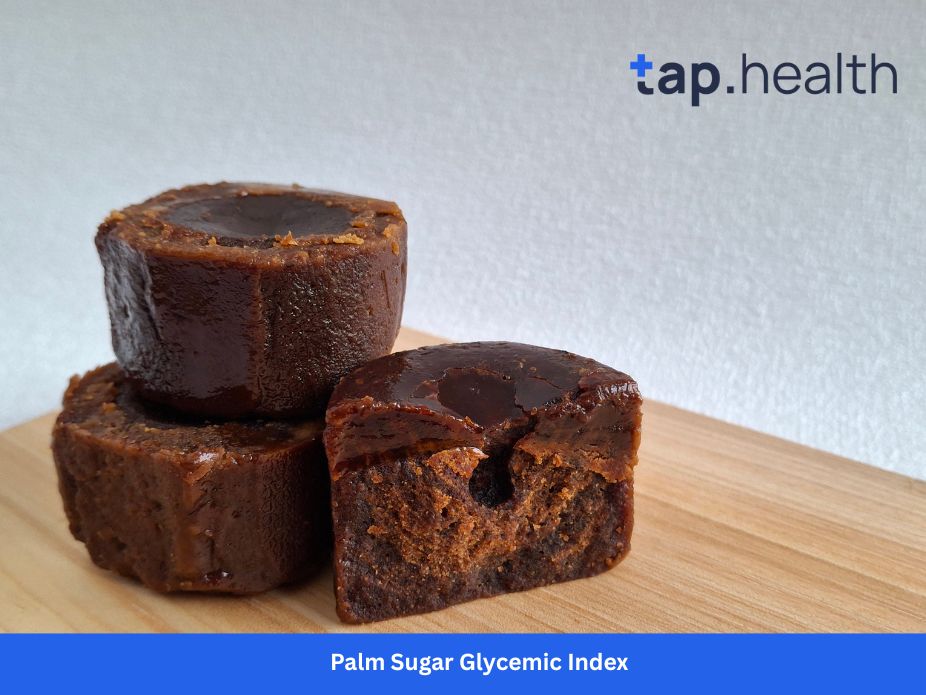
Once the sap thickens into a syrup and reaches the “hard crack” stage (approximately 110°C to 115°C), it is removed from the fire. The viscous liquid is poured into coconut shells or rectangular wooden moulds to set. No artificial setting agents, no bleaching chemicals, and no preservatives are added. The result is a rock-hard block of Karupatti, preserving the complete nutritional matrix of the sap.4
Deep Dive: The Palm Sugar Glycemic Index
Now, we address the core query: the palm sugar glycemic index. To evaluate its safety for diabetics, we must first demystify what GI actually measures and where palm sugar sits on the spectrum.
Understanding the Glycemic Index (GI) Scale
The Glycemic Index is a ranking system (from 0 to 100) that quantifies how quickly a carbohydrate-containing food raises blood glucose levels after consumption compared to pure glucose.8
- High GI (70 and above): These foods are rapidly digested and absorbed. They cause a sharp, sudden spike in blood sugar, forcing the pancreas to release a massive surge of insulin. This is often followed by a rapid drop in blood sugar (hypoglycemia), triggering hunger and cravings. Examples include white bread, cornflakes, and refined white sugar.
- Medium GI (56 to 69): These foods undergo moderate digestion. Examples include table honey, brown rice, and unrefined cane sugar.
- Low GI (55 and under): These foods are digested and absorbed slowly. They produce a gradual, steady rise in blood sugar and insulin levels, providing sustained energy. Examples include lentils, green vegetables, and Palm Sugar.
The Numbers: Where Does Palm Sugar Stand?
Extensive research, including data from the University of Sydney’s International Glycemic Index Database, consistently places authentic palm sugar in the Low GI category.
| Sweetener | Glycemic Index (GI) | Impact on Metabolic Health |
| Glucose (Standard Reference) | 100 | Immediate, sharp spike. |
| Refined White Sugar (Sucrose) | 65 – 68 | Rapid rise. High metabolic stress. |
| High Fructose Corn Syrup | 70+ | Rapid rise. Linked to fatty liver. |
| Honey (Commercial) | 55 – 60 | Moderate rise. varies by floral source. |
| Cane Jaggery | 50 – 60 | Moderate rise. Lower than sugar but still significant. |
| Coconut Sugar | 35 – 54 | Slow, steady rise. |
| Palm Sugar (Karupatti) | 35 – 40 | Slow, steady rise. Minimal insulin stress. |
| Stevia | 0 | No glycemic impact. |
Source Data: 8
The Verdict: With a GI ranging between 35 and 40, palm sugar has nearly half the glycemic impact of refined white sugar. This classification is the primary reason it is championed as a diabetic-friendly alternative. However, the number alone tells only half the story. We must understand why it is low.
The Secret Ingredient: Inulin
Why does palm sugar, which is sweet and contains sucrose, have such a low GI? The answer lies in a specific type of soluble dietary fiber called Inulin.12
White sugar is 99.9% pure sucrose. When ingested, enzymes in the stomach break it down instantly, flooding the bloodstream with glucose. Palm sugar, however, is a complex matrix. It contains significant amounts of inulin.
Inulin acts as a metabolic “brake.” It is a polysaccharide that humans cannot fully digest in the upper gastrointestinal tract. When you consume palm sugar, the inulin forms a gel-like substance that slows down the absorption of glucose in the intestines. This ensures that the sugar enters the bloodstream as a trickle rather than a flood. Furthermore, inulin acts as a prebiotic, passing into the colon where it feeds beneficial gut bacteria, promoting overall digestive health.11
Glycemic Load (GL): The Practical Measure
While GI measures the speed of absorption, Glycemic Load (GL) measures the amount of carbohydrate. It is calculated as: (GI x Grams of Carbs) / 100.
Even though palm sugar has a low GI, it is still a carbohydrate. If consumed in large quantities, the Glycemic Load will be high. This is why portion control remains essential. A teaspoon of palm sugar has a low GI and a low GL. A cup of palm sugar has a low GI but a very high GL, which will still disrupt blood sugar levels.17
Nutritional Biochemistry: The Hidden Pharmacy
If you examine white sugar under a microscope, you see pure crystals of sucrose. It is “empty calories”—energy without nutrition. If you examine Karupatti, you see a complex substance teeming with minerals, vitamins, and phytonutrients. This nutritional density is why traditional Indian medicine systems like Siddha and Ayurveda classify Karupatti as a therapeutic food.18
Mineral Profile: The Earth Elements
Because palm sugar is unrefined, it retains the mineral content of the fertile soil and the sap.
| Nutrient | Palm Sugar (Karupatti) | Refined White Sugar | Benefit Analysis |
| Iron | 2.0 – 3.0 mg / 100g | 0 mg | Critical for hemoglobin synthesis. Essential for combating anemia. |
| Potassium | ~1000 mg / 100g | 0 mg | Vital for electrolyte balance, lowering blood pressure, and reducing water retention. |
| Magnesium | 29 – 30 mg / 100g | 0 mg | Supports nerve function, muscle relaxation, and bone density. |
| Calcium | 90 – 100 mg / 100g | 0 mg | Essential for bone health (boosted by the lime used in processing). |
| Zinc | Trace amounts | 0 mg | Supports immune function and wound healing. |
| Phosphorus | Present | 0 mg | Works with calcium for bone strength. |
Source Data: 7
Key Insight: The high potassium content makes palm sugar an “electrolyte sweetener.” Unlike white sugar, which causes inflammation and water retention (bloating), the potassium in palm sugar helps regulate cellular fluid balance. This is why Padaneer (the raw sap) is used as a hydration drink in summer.
The Vitamin B12 Phenomenon
One of the most biologically significant aspects of Borassus flabellifer sugar is the presence of Vitamin B12. Vitamin B12 (Cobalamin) is essential for nerve health and red blood cell formation and is almost exclusively found in animal products, making it a common deficiency in vegetarian India.
Research indicates that Palmyra palm sugar contains trace amounts of Vitamin B12 (approx. 20 mcg per 100g). This presence is attributed to the symbiotic relationship between the palm tree and specific yeasts or bacteria involved in the sap flow before boiling.19 While one cannot rely solely on sugar to cure a B12 deficiency due to the calorie count, palm sugar stands out as one of the few plant-based ingredients to offer this vital nutrient.
Antioxidant Capacity
Palm sugar is rich in polyphenols and flavonoids, antioxidants that fight oxidative stress in the body. The dark color of Karupatti is a visual indicator of these compounds. Studies have shown that these antioxidants can help reduce inflammation and may even protect the pancreas from the oxidative damage associated with high blood sugar levels, creating a protective loop that white sugar destroys.11
Comprehensive Health Benefits
Beyond the palm sugar glycemic index, the incorporation of Karupatti into the daily diet offers a spectrum of health benefits documented in both traditional wisdom and modern studies.
1. Respiratory Health (The Cough Remedy)
In the Siddha system of medicine, Karupatti is the primary vehicle for treating respiratory ailments. It is believed to work as a bronchodilator and an expectorant.
- The Mechanism: The magnesium content helps relax the bronchial muscles, while the unique medicinal compounds in the palm sap help soothe inflamed throat tissues.
- Application: It is typically combined with dry ginger (Chukku) and black pepper (Milagu) to make “Karupatti Coffee” or Kashayam. This concoction helps dissolve phlegm and clear chest congestion during the monsoon and winter seasons.21
2. Digestive Aid and Gut Health
Unlike refined sugar which feeds harmful gut bacteria (candida) and causes bloating, palm sugar supports digestion.
- The Mechanism: The inulin fiber acts as a prebiotic, feeding the “good” bacteria like Bifidobacteria. Additionally, in Ayurveda, eating a small piece of Karupatti after a heavy meal is prescribed to activate digestive enzymes and prevent acidity.23
- Constipation Relief: The fiber content aids in regular bowel movements, making it a gentle remedy for constipation in children and the elderly.
3. Women’s Health: Puberty to Postpartum
Karupatti has a special place in the diet of Indian women.
- Puberty: When a girl reaches puberty, traditional households in Tamil Nadu serve Urad Dal Kali (a black gram porridge) sweetened with Karupatti. The high iron content helps replenish blood lost during menstruation, while the calcium supports the skeletal growth spurt occurring at that age.25
- Pregnancy & Lactation: It is considered a “galactagogue,” helping to improve breast milk supply. Its iron content fights gestational anemia, a common concern in Indian pregnancies.26
- Uterine Health: It is believed to help expel lochia (discharge) after childbirth and invigorate the uterus to return to its pre-pregnancy size.
4. Sustainable Energy
The lower glycemic index means that palm sugar provides a “slow burn” of energy. Unlike the “sugar rush” and subsequent crash associated with white sugar or glucose drinks, Karupatti releases glucose gradually. This makes it an excellent sweetener for athletes or children, providing sustained stamina without the hyperactivity or fatigue crashes.27
Expert Contribution: The Medical vs. Holistic Debate
Navigating the advice on sugar can be confusing. To provide a balanced view, we analyze the perspectives of leading experts in the field.
The Diabetologist’s View: Dr. V. Mohan
Dr. V. Mohan, one of India’s most respected diabetologists and researchers, offers a word of caution regarding the “natural sweetener” trend.
- The Warning: He emphasizes that while palm sugar has a better nutrient profile and lower GI, it is not calorie-free. “Moderation is the key,” he asserts. He warns against the “Health Halo” effect, where patients believe they can eat unlimited amounts of a “healthy” sugar.
- The Science: He points out that ultimately, sucrose is sucrose. If a diabetic patient consumes excessive calories from palm sugar, it will still lead to weight gain and insulin resistance over time.
- The Verdict: Use it as a replacement for white sugar, not an addition. If you use 1 teaspoon of white sugar, replace it with 1 teaspoon of palm sugar—do not increase the dose.28
The Nutritionist’s View: Rujuta Diwekar
Celebrity nutritionist Rujuta Diwekar advocates for a return to traditional wisdom, focusing on the quality of food rather than just calories.
- The Philosophy: She argues that we should not fear traditional sugars like Jaggery and Karupatti because they are “time-tested.” She emphasizes their role in seasonality.
- Seasonal Eating: Diwekar recommends consuming jaggery and palm sugar primarily in the winter months. She classifies them as “warming” foods that boost immunity and metabolism during the cold season, whereas sugar (in the form of Sherbets) is more appropriate for summer cooling.29
- Satiety: She notes that the complex flavor and nutrient density of palm sugar provide better satiety signals to the brain, naturally limiting overconsumption compared to the addictive nature of white sugar.
The Research Consensus
A synthesis of data from the Journal of Food Science and Technology and the University of Sydney suggests a middle ground: Palm sugar is biochemically superior to white sugar due to its micronutrients and lower GI, but it must be treated as a sweetener, not a supplement. It is the “lesser of two evils” in the context of blood sugar, but a “superfood” in the context of minerals.4
Real-Life Scenario: The Impact of Switching
To illustrate the practical application of the palm sugar glycemic index, let us consider a realistic scenario involving a typical Indian family.
The Profile: Mr. Iyer, a 58-year-old retired bank manager in Chennai. He has been managing Type 2 Diabetes for 10 years. His HbA1c hovers around 7.2%. He has a sweet tooth and misses his morning filter coffee with sugar.
The Intervention:
- Previous Habit: Consumed 2 teaspoons of refined white sugar in his morning coffee and another 2 in his evening tea. This caused a rapid spike in his fasting glucose levels.
- The Switch: On his doctor’s advice to lower GI, he switched to Karupatti.
- The Method: He did not just add Karupatti. He replaced the white sugar with an equal (or slightly lesser) amount of crushed Karupatti.
- The Result (3 Months Later):
- Glucose Stability: His post-prandial (after meal) glucose spikes were less jagged. The coffee gave him energy but didn’t leave him feeling jittery or hungry an hour later.
- Cravings: The intense, earthy flavor of Karupatti was more satisfying. He found he needed less of it to feel “treated.”
- Digestion: He reported less acidity and bloating, a common side effect he hadn’t realized was linked to his white sugar intake.
- Data: His HbA1c showed a marginal improvement to 6.9%, aided by diet and exercise, but supported by the removal of high-GI refined sugar.
Key Takeaway: The switch worked because he used the lower GI to stabilize his levels, but he respected the calorie limit to manage his weight.
Recommendations Grounded in Proven Research and Facts
Based on the extensive review of literature and expert opinion, here are the evidence-based recommendations for incorporating palm sugar into your life.
1. For Diabetics
- Limit: Restrict intake to 1-2 teaspoons per day maximum.
- Pairing: Always consume palm sugar with a source of fiber or protein (e.g., in a lentil payasam or with nuts) to further lower the glycemic load.
- Monitoring: Test your blood sugar 2 hours after consuming palm sugar for the first time to see your individual response. Bodies vary.
2. For Weight Watchers
- Satiety Tool: Use the intense flavor of palm sugar to wean yourself off “mild” white sugar. The strong taste signals the brain “dessert is over” sooner.
- Metabolism: The B-vitamins and minerals support a healthy metabolism, unlike empty calories that disrupt it.
3. For Parents
- Immunity: Replace white sugar in milk with palm sugar to boost iron and zinc intake for growing children.
- Teeth: While all sugar can cause cavities, palm sugar is less sticky and processed than high-fructose corn syrup candies, and contains calcium which is vital for teeth.
Culinary Arts: How to Cook with Karupatti
Using palm sugar requires a slight adjustment in culinary techniques because it behaves differently than refined sugar.
The Curdling Challenge
A common frustration is that adding palm sugar to hot milk causes it to curdle or split.
- The Science: Palm sugar is slightly acidic and rich in minerals. When added to boiling milk, the acidity and heat denature the milk proteins.
- The Solution: Make a syrup. Boil the milk separately. Turn off the heat and let it cool for 2-3 minutes. In a separate vessel, dissolve the palm sugar in a little water to make a thick syrup and filter it. Stir the syrup into the warm (not boiling) milk.
Famous Recipes
- Karupatti Kaapi (Palm Jaggery Coffee):
- Ingredients: Coarse coffee powder, dry ginger (Chukku), coriander seeds, Karupatti.
- Method: Boil water with the spices and jaggery. Add coffee powder and let it brew. Strain and serve black or with a splash of milk. This is the ultimate cold remedy.
- Karupatti Halwa:
- A specialty of Tirunelveli. It is made by extracting milk from soaked wheat berries, cooking it with ghee and dark palm sugar syrup until it reaches a glossy, gelatinous consistency. The palm sugar gives it a black sheen and a depth of flavor that white sugar simply cannot match.31
- Healthy Porridge:
- Mix millet flour (Ragi or Bajra) with water and cook until thick. Sweeten with palm sugar and top with grated coconut. This is a breakfast of champions in rural India.
Adulteration Alert: How to Spot the Fake
As the popularity of the palm sugar glycemic index grows, so does the market for adulterated products. Unscrupulous sellers often mix white sugar, chalk powder, or chemicals into palm jaggery to increase weight and improve color.
The Purity Tests
How do you know if your Karupatti is genuine?
| Feature | Genuine Karupatti | Adulterated / Fake |
| Color | Dark, dull brown to black. Matte finish. | Light golden, yellowish, or overly shiny/polished. |
| Hardness | Rock hard. Difficult to break with hands. | Soft, crumbly, or feels waxy/oily. |
| Taste | Sweet with a hint of saltiness and smoke. Complex. | Overly sugary sweet (like candy) with no saltiness. One-dimensional. |
| Dissolving | Leaves some natural residue (fiber) but water remains fluid. | May leave white powder (chalk) at the bottom or turn water milky/cloudy. |
| Reaction | Does not get sticky easily in humidity. | Gets sticky and “weeps” moisture quickly. |
Source Data: 32
The Chalk Test
Dissolve a piece of the sugar in a glass of transparent water. If you see white particles settling at the bottom that look like lime or chalk powder, the product is adulterated. Genuine palm sugar may leave some dark wood shavings or sediment, but never white powder.32
Conclusion: The Sweet Spot of Health
The journey through the botany, chemistry, and culture of palm sugar leads us to a clear and empowering conclusion. Karupatti is not just a sweetener; it is a superfood survivalist that has stood the test of time.
Its Glycemic Index of 35-40 makes it a vastly superior choice to refined sugar for maintaining stable blood glucose levels. Its rich profile of iron, potassium, B12, and antioxidants turns a “guilty pleasure” into a nutritive act. It connects us to the soil, supports sustainable agriculture, and heals our bodies in ways that industrial sugar destroys.
However, in our modern world of sedentary lifestyles, the fundamental law of nutrition applies: Quality over Quantity. Palm sugar is the healthier choice, but it is not a license to gluttony. By choosing authentic Karupatti and using it with mindfulness—in your morning coffee, your festive sweets, or your herbal remedies—you are making a powerful investment in your long-term health.
Make the switch today. Your blood sugar, your gut, and your taste buds will thank you.
Frequently Asked Questions (FAQs)
What is the exact glycemic index of palm sugar?
The glycemic index of pure palm sugar typically ranges between 35 and 40. This is classified as Low GI. In comparison, refined white sugar has a GI of roughly 65-68, and honey has a GI of about 55-60. The low value of palm sugar is due to the presence of inulin fiber which slows down glucose absorption.
Is palm sugar safe for diabetics to eat every day?
Yes, but only in strict moderation. While it has a low glycemic index and won’t spike blood sugar as drastically as white sugar, it still contains carbohydrates and calories. Dr. V. Mohan and other experts recommend using it as a replacement for white sugar in small quantities (e.g., 1-2 teaspoons), rather than adding it as an extra supplement.
Does palm sugar contain Vitamin B12?
Yes, research suggests that palm sugar derived from the Palmyra tree (Borassus flabellifer) contains trace amounts of Vitamin B12 (roughly 20mcg/100g). This is unique for a plant-based product and is believed to be a result of the natural microbial activity in the sap before processing. It is beneficial for vegetarians and vegans.
Why does my milk curdle when I add palm sugar?
Palm sugar is unrefined, slightly acidic, and rich in minerals. When added directly to boiling milk, this acidity can denature the milk proteins, causing it to split or curdle. To prevent this, make a syrup of the palm sugar separately, let the boiled milk cool down slightly (below boiling point), and then stir the syrup in.
Is palm sugar the same as brown sugar?
No. Commercial Brown Sugar is usually just refined white sugar with some molasses added back for color; it has a high GI (approx 64) and no health benefits. Palm Sugar is a natural, unrefined sweetener from the sap of the palm tree with a low GI (35) and a rich profile of minerals and vitamins.
Can I give palm sugar to my baby?
In traditional Indian culture, palm sugar is often introduced to infants (older than 6-8 months) in porridges because it is rich in iron and helps prevent constipation. However, modern pediatric guidelines recommend avoiding all added sugars and salts for children under 1 year of age. Consult your pediatrician before introducing it.
How can I test if my palm jaggery is pure?
Perform the Chalk Test. Dissolve a piece of the jaggery in a glass of water. If you see white powder settling at the bottom, it is likely adulterated with chalk. Also, pure palm jaggery should be dark, dull (not shiny), and very hard. If it is soft or overly sweet without a hint of saltiness, it may be mixed with white sugar.
Does palm sugar expire?
Pure palm sugar has a very long shelf life because of its low moisture content. If stored in an airtight container in a cool, dry place, it can last for over a year. However, if it is exposed to moisture, it may become sticky or develop mold. Old palm sugar may become harder but is usually safe to consume if no mold is visible.
Works cited
- Coconut sugar – Wikipedia, accessed November 28, 2025, https://en.wikipedia.org/wiki/Coconut_sugar
- A Comparison of Coconut Sugar vs Coconut Palm Sugar – Santa Barbara Chocolate, accessed November 28, 2025, https://www.santabarbarachocolate.com/blog/a-comparison-of-coconut-sugar-vs-coconut-palm-sugar/
- Palm Jaggery: Delicious Recipes To Satisfy Your Sweet Tooth – Netmeds, accessed November 28, 2025, https://www.netmeds.com/c/health-library/post/palm-jaggery-delicious-recipes-to-satisfy-your-sweet-tooth
- Coconut Sugar: Chemical Analysis and Nutritional Profile; Health Impacts; Safety and Quality Control; Food Industry Applications, accessed November 28, 2025, https://pmc.ncbi.nlm.nih.gov/articles/PMC9964017/
- A palm sugar for every region – Paticheri, accessed November 28, 2025, https://www.paticheri.com/2025/03/12/a-palm-sugar-for-every-region/
- how to make palm candy at home in tamil nadu – YouTube, accessed November 28, 2025, https://www.youtube.com/watch?v=_OtZAeb7eC4
- Palm sap sugar an unconventional source of sugar exploration for bioactive compounds and its role on functional food development – NIH, accessed November 28, 2025, https://pmc.ncbi.nlm.nih.gov/articles/PMC10073893/
- The International Glycemic Index (GI) Database – Research Data Australia, accessed November 28, 2025, https://researchdata.edu.au/international-glycemic-index-gi-database/11115
- What’s the Glycemic Index for Coconut Sugar? – Healthline, accessed November 28, 2025, https://www.healthline.com/health/diabetes/coconut-sugar-glycemic-index
- GI Search – Glycemic Index, accessed November 28, 2025, https://glycemicindex.com/gi-search/
- Is Palm Sugar Healthy?- Facts You Should Know – Roots Veyr, accessed November 28, 2025, https://www.rootsveyr.com/blogs/is-palm-sugar-healthy-facts-you-should-know/
- 3 Reasons why you should choose Coconut and Palm Sugar over white suga, accessed November 28, 2025, https://www.thedivinefoods.com/blogs/news/3-reasons-why-you-should-choose-coconut-and-palm-sugar-over-white-sugar
- Coconut Sugar: A Healthy Sugar Alternative or a Big, Fat Lie? – Healthline, accessed November 28, 2025, https://www.healthline.com/nutrition/coconut-sugar
- Is Organic Palm Jaggery (Karupatti) a Healthier Alternative to Regular Sugar?, accessed November 28, 2025, https://bnborganics.com/blogs/news/palm-jaggery-better-option-than-sugar
- Date Sugar vs Coconut Sugar: Sweetener Showdown – Date Lady, accessed November 28, 2025, https://ilovedatelady.com/blogs/blog/date-sugar-vs-coconut-sugar-sweetener-showdown
- Coconut palm sugar for diabetes: Is it safe to eat? – Medical News Today, accessed November 28, 2025, https://www.medicalnewstoday.com/articles/317613
- Is Palm Sugar Good For Diabetics – Sugar.Fit, accessed November 28, 2025, https://www.sugarfit.com/blog/palm-sugar-for-diabetes/
- The Role of Palm Candy in Ayurvedic Medicine and Wellness, accessed November 28, 2025, https://www.naatusakkarai.com/blog/the-role-of-palm-candy-in-ayurvedic-medicine-and-wellness
- Palmyra Palm Sugar-The Healthier Alternative – Agro-Eco Wisdom: The Indian Context, accessed November 28, 2025, https://agriwisdom.wordpress.com/2019/12/14/palmyra-palm-sugar-the-healthier-alternative/
- Sustainable Processes and Chemical Characterization of Natural Food Additives: Palmyra Palm (Borassus Flabellifer Linn.) Granulated Sugar – MDPI, accessed November 28, 2025, https://www.mdpi.com/2071-1050/12/7/2650
- What is Karupatti (Palm Jaggery)? Benefits of Karupatti Every Mother S – Healthy Master, accessed November 28, 2025, https://healthymaster.in/blogs/english/what-is-karupatti-palm-jaggery-benefits-of-karupatti-every-mother-should-know
- Natural cough remedy for kids: Check out this quick recipe using palm sugar – Onmanorama, accessed November 28, 2025, https://www.onmanorama.com/food/recipe/2024/09/24/palm-sugar-ginger-drink-home-remedy-for-kids-cough.html
- Palm Jaggery Vs White Sugar: 4 things to know – Sweet Karam Coffee, accessed November 28, 2025, https://sweetkaramcoffee.in/blogs/happiness-is-homemade/palm-jaggery-vs-white-sugar-4-things-to-know
- Palm Jaggery vs. Jaggery Powder: Key Differences & Benefits – Continental Hospitals, accessed November 28, 2025, https://continentalhospitals.com/blog/palm-jaggery-vs-jaggery-powder-key-differences-and-benefits/
- 10 Incredible Benefits Of Palm Jaggery (Karupatti)! – Standard Cold Pressed Oil, accessed November 28, 2025, https://standardcoldpressedoil.com/palm-jaggery-benefits
- Karupatti – Health Benefits of Palm Jaggery – Sweet Karam Coffee, accessed November 28, 2025, https://sweetkaramcoffee.in/blogs/happiness-is-homemade/karupatti-the-magical-sweetener
- Palm Jaggery vs White Sugar: The Healthier Sweet Choice for Daily Use – Nature’s Trunk, accessed November 28, 2025, https://www.naturestrunk.com/blogs/news/palm-jaggery-vs-white-sugar-the-healthier-sweet-choice-for-daily-use
- Sugar-Free, Jaggery, or Refined Sugar: What’s Best for Diabetics? – MrMed, accessed November 28, 2025, https://www.mrmed.in/health-library/diabetes/best-sweetener-for-diabetics
- Is sugar really that bad? Rujuta Diwekar drops 5 truth bombs and we so want to believe them, accessed November 28, 2025, https://timesofindia.indiatimes.com/life-style/health-fitness/health-news/is-sugar-really-that-bad-rujuta-diwekar-drops-5-truth-bombs-and-we-so-want-to-believe-them/articleshow/121360066.cms
- Should You Replace Sugar With Jaggery? Celeb Nutritionist Rujuta Diwekar Explains, accessed November 28, 2025, https://food.ndtv.com/food-drinks/do-you-think-using-jaggery-will-make-your-sweet-healthy-that-s-not-true-3442167
- How To Make Karupatti Halwa – A Popular Dessert From Tamil Nadu – NDTV Food, accessed November 28, 2025, https://food.ndtv.com/food-drinks/how-to-make-karupatti-halwa-a-popular-dessert-from-tamil-nadu-2312464
- Dart: Detect Adulteration with rapid test – Eat Right India, accessed November 28, 2025, https://eatrightindia.gov.in/dart/
- How to test the purity of jaggery you buy from the market | – The Times of India, accessed November 28, 2025, https://timesofindia.indiatimes.com/life-style/health-fitness/health-news/how-to-test-the-purity-of-jaggery-you-buy-from-the-market/articleshow/116647614.cms