It is Sunday afternoon. The smell of spices fills the house. You are starving.
On the table, there are two choices.
One is a steaming bowl of deep red Rajma (Kidney Beans) in a thick, tomato gravy.
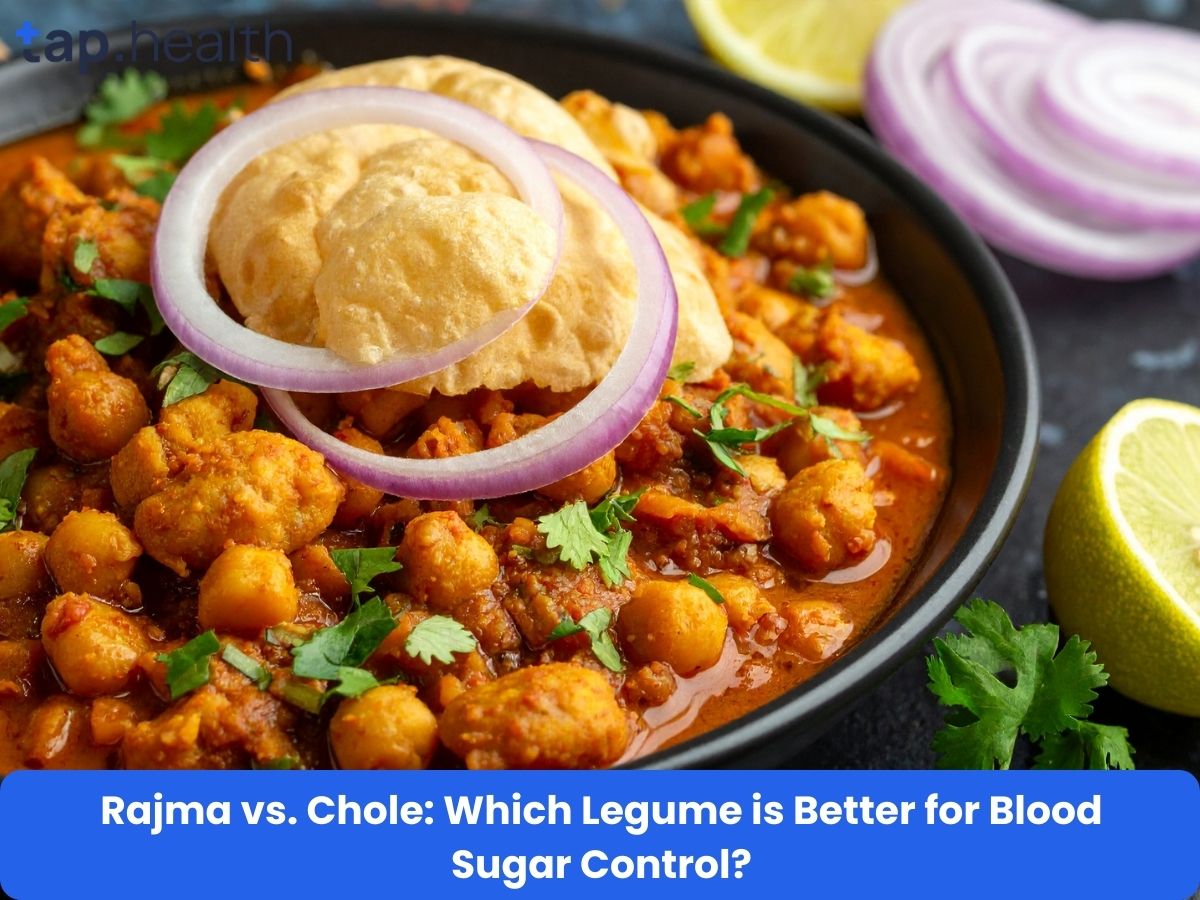
The other is a bowl of golden, spicy Chole (Chickpeas/Garbanzo Beans) garnished with coriander and ginger.1
Both are delicious. Both are the kings of North Indian comfort food. And usually, both are served with a mountain of white rice or a fluffy Bhatura.
But if you have diabetes or are watching your weight, this delicious Sunday lunch feels like a math exam.
“Which one has more carbs?”
“Which one will spike my sugar?”
“Is Rajma heavier than Chole?”
We are told legumes are healthy. We are told they are full of protein. But they are also full of starch. So, which bean wins the battle of the blood sugar?
In this comprehensive guide, we are going to pit the heavyweights of the legume world against each other: Rajma vs. Chole. We will analyze their Glycemic Index (GI), break down the nutritional facts, and tell you exactly which bowl you should reach for to keep your insulin happy.
The Contenders: The Red Bean vs. The White Bean
To the average eater, they are just “Dals.” But biologically, they offer different benefits.
1. Rajma (Red Kidney Beans)
- The Look: Dark red, kidney-shaped, thick skin.
- The Reputation: “Meaty,” heavy, and filling. It is arguably the most popular bean in Punjab.
- The Nutrient Profile: Known for high protein and excellent mineral content (Iron, Molybdenum).2
2. Chole (Chickpeas / Kabuli Chana)3
- The Look: Beige, round, bumpy texture.
- The Reputation: Versatile. Used in curries, salads, and hummus.4
- The Nutrient Profile: Famous for fiber and being incredibly heart-healthy.5
Nutritional Showdown: The Numbers Game
Let’s look at 100g of boiled (cooked) beans. Note that these values are without the oil and gravy—just the beans.
| Feature | Rajma (Cooked, 100g) | Chole (Cooked, 100g) | The Winner |
| Calories | ~127 kcal | ~164 kcal | Rajma (Fewer calories) |
| Carbohydrates | ~22g | ~27g | Rajma (Lower Carbs) |
| Dietary Fiber | ~6.4g | ~7.6g | Chole (Higher Fiber) |
| Protein | ~8.7g | ~8.9g | Tie (Very close) |
| Fat | ~0.5g | ~2.6g | Rajma (Lower Fat) |
| Glycemic Index | ~24 (Low) | ~28 (Low) | Rajma (Slight edge) |
The Analysis:
It is a very tight race.
- Rajma is lighter in calories and carbs.
- Chole is denser but packs more fiber.
- Both are nutritional powerhouses compared to rice or wheat.
The Glycemic Index Battle: How Slow is Slow?
For a diabetic, the Glycemic Index (GI) is the most important metric.
The Glycemic Index of Rajma is ~24.
The Glycemic Index of Chole is ~28.
Both of these numbers are Extremely Low.
To compare:
- White Rice GI: ~70
- Wheat Roti GI: ~62
- Potato GI: ~80
What does this mean?
Whether you eat Rajma or Chole, the sugar release into your bloodstream is practically a slow drip. The thick skin of the beans and the complex starch structure make it very difficult for your stomach enzymes to break them down quickly.
The Verdict: Both are superstars. A difference of 4 points (24 vs 28) is biologically insignificant. You cannot go wrong with either.
The “Rice Effect”: Where the Real Danger Lies
If both are Low GI, why do diabetics often see a sugar spike after Sunday lunch?
It is not the Bean. It is the Buddy.
Nobody eats plain boiled Rajma. We eat Rajma-Chawal (Rice).6
Nobody eats plain Chole. We eat Chole-Bhature (Fried Maida).7+1
The Math of the Meal:
- Rajma (GI 24) + White Rice (GI 70) = High GI Meal.
- Chole (GI 28) + Bhatura (GI 75) = Very High GI Meal.
The problem isn’t the legume; it’s the vehicle you use to eat it. The starch from the rice hits your blood fast, while the bean is still digesting.
The Solution:
If you want to keep the benefit of the bean, you must change the partner.
- Eat Rajma with Brown Rice or Salad.
- Eat Chole with Multigrain Roti or Quinoa.
Resistant Starch: The Secret Weapon
Both Rajma and Chole contain something magical called Resistant Starch.
What is it?
It is a type of carb that acts like fiber. It resists digestion in the small intestine and goes straight to the colon, where it feeds healthy gut bacteria.
- The Benefit: It improves insulin sensitivity.
- The Hack: Resistant starch increases when you cook the beans, cool them down, and then reheat them. Leftover Rajma or Chole from the fridge is actually healthier for your blood sugar than fresh hot beans!
Digestion and The “Gas” Factor
This is the one downside. Both beans are notorious for causing bloating and gas.8
Why?
They contain Oligosaccharides (complex sugars) that humans cannot fully digest.9 Bacteria in the gut ferment them, producing gas.10+1
- Rajma: Often harder to digest because of its thicker skin and specific lectins. It must be soaked and cooked thoroughly to destroy toxins.
- Chole: Slightly easier on the stomach for some, especially if the skin is removed (though removing skin removes fiber).
For Diabetics:
Gas can be uncomfortable, but it is actually a sign that the fiber is working and delaying digestion. It confirms the “Low GI” status.
Real-Life Scenario
Let’s meet Mrs. Kapoor, a 48-year-old teacher from Delhi.
The Context:
Mrs. Kapoor had Type 2 Diabetes.11 She avoided potatoes and rice but ate large bowls of Chole every week. However, she cooked her Chole with lots of oil and served it with two Aloo Parathas.
The Problem:
Her post-meal sugar was 180 mg/dL. She blamed the Chole. “It’s too heavy,” she said.
The Fix:
Her dietitian corrected her method.
- Reduce Oil: The heavy oil was increasing calorie load.
- Change the Side: Swap Aloo Paratha for a Bajra Roti or a Cucumber Salad.
- Portion: 1 cup Chole + 1 Roti. Not 2 cups Chole + 2 Parathas.
The Result:
Her sugar dropped to 140 mg/dL. The Chole wasn’t the enemy; the combination was.
Expert Contribution
We consulted medical experts to get the professional stance.
Dr. A. Singh, Diabetologist:
“I consider legumes the ‘Safety Net’ for vegetarians. Rajma and Chole are excellent because they prevent the sugar spike from the rotis or rice eaten with them. If I had to pick one, I lean slightly towards Rajma for weight loss because it has fewer calories, but Chole is better for cholesterol due to its specific fiber type. Rotate them!”
Nutritionist Perspective:
“Soak your beans! Soaking Rajma and Chole for 8-10 hours reduces the gas-causing compounds and makes the protein more bio-available. 12Never cook Rajma in the same water you soaked it in—throw that water away to reduce bloating.”
Recommendations Grounded in Proven Research and Facts
Based on data from the American Journal of Clinical Nutrition and NIN, here are actionable tips:
- The Canned Trap:Avoid canned Rajma or Chole. They are often loaded with Sodium (bad for blood pressure) and preservatives. Always cook from dried beans.
- The Salad Swap:Don’t just make curry. Boiled Chole or Rajma makes an excellent cold salad.
- Mix boiled beans with chopped onions, tomatoes, lemon juice, and chaat masala.
- This meal has a GI of roughly 25. It is the ultimate diabetic lunch.
- Soaking Rule:Soak Rajma for at least 12 hours. Soak Chole for 8 hours. This ensures they cook evenly and digest better.
- Kidney Bean Toxicity:Raw Rajma contains a toxin (Phytohaemagglutinin).13 Never eat undercooked Rajma. It must be boiled for at least 10-15 minutes vigorously. Slow cookers sometimes don’t get hot enough to kill the toxin. Pressure cooking is best.
Key Takeaways
- Rajma has slightly fewer calories and carbs, making it great for strict weight watchers.14
- Chole has slightly more fiber, making it excellent for heart health and satiety.
- Both are Low GI: Rajma (~24) and Chole (~28) are both very safe for blood sugar.
- The Danger is the Rice: Eating these beans with white rice or fried bread negates their health benefits.
- Verdict: It is a tie. Rotate them in your diet to get a mix of nutrients.
Conclusion
So, Rajma vs. Chole: Which legume wins?
It is a Draw.
Both Kidney Beans and Chickpeas are nutritional superheroes. They are the perfect antidote to the high-carb Indian diet. They provide the protein and fiber needed to slow down sugar absorption.
The choice comes down to taste and tolerance. If Rajma gives you gas, choose Chole. If you want fewer calories, choose Rajma. But whatever you do, don’t drown them in oil or pair them with a mountain of white rice. Let the bean be the star of the plate, not the sidekick to the starch.
Frequently Asked Questions (FAQ) on Rajma vs. Chole
Is Rajma good for weight loss?
Yes. Rajma is high in protein and fiber but low in fat.15 This combination keeps you feeling full for a long time, preventing overeating. The low glycemic index also helps regulate insulin, the fat-storage hormone.16+1
Can I eat Chole Bhature if I have diabetes?
It is risky. While the Chole is healthy, the Bhature is deep-fried refined flour (Maida). A single meal can contain over 800 calories and cause a massive sugar spike. If you must eat it, eat a large portion of Chole and only half a Bhatura.
Which bean has more protein?
They are almost identical. Both Rajma and Chole provide about 8-9 grams of protein per 100g (cooked). However, this is incomplete protein. You need to eat them with a grain (like roti or rice) or seeds to get a complete amino acid profile.
Does Rajma increase uric acid?
For some, yes. Legumes contain purines, which can break down into uric acid.17 People with Gout or severe kidney issues are often advised to limit Rajma and Chole intake.18 Consult your doctor if you have high uric acid.+1
Why does Rajma cause more gas than Chole?
Rajma has a tougher skin and higher levels of specific complex sugars (raffinose) that ferment in the gut. Ensuring you soak the beans and discard the soaking water helps reduce this effect significantly.
Is Hummus good for diabetics?
Yes, excellent. Hummus is made from blended Chole (chickpeas) and Tahini (sesame paste).19 It is low carb, high fiber, and high in healthy fats. It is a perfect dip for vegetables or whole-wheat toast.
References:
- University of Sydney: GI Search Database. Link
- Harvard Health: Legumes and Diabetes. Link
- American Journal of Clinical Nutrition: Fiber and Glycemic Control. Link
- National Kidney Foundation: Beans and Kidney Health. Link
- Diabetes.co.uk: Beans and Blood Sugar. Link
(Disclaimer: This content is for educational purposes only. Always consult your doctor or a certified dietitian before making significant changes to your diet, especially if you have high uric acid or kidney stones.)