In almost every Indian household, the morning rush often ends with a quick, steaming plate of Poha. It is light, tasty, and easy to cook. But if you have been diagnosed with diabetes or are simply trying to lose weight, you might have paused with your spoon in mid-air. You are likely wondering: Is this safe for me?
For years, white poha (flattened rice) has been the standard. But recently, red poha (made from red rice) has entered the spotlight as a “superfood.” But does it live up to the hype? What exactly is the red poha glycemic index, and is it truly better than the white version?
This comprehensive guide will break down the science, the numbers, and the practical benefits of red poha. We will keep it simple, honest, and backed by facts—so you can enjoy your breakfast without the guilt.
What is Red Poha? A Quick Introduction
Before we dive into the numbers, let’s understand what we are eating. Red poha, also known as red flattened rice, is made from red rice grains that have not been polished.
The key difference lies in the colour. That reddish-brown tint comes from a pigment called anthocyanin. More importantly, because red poha undergoes less processing than white poha, it retains the bran layer. This bran is where all the magic happens—it holds the fibre, vitamins, and minerals that are often stripped away in white rice.
When you search for “red rice poha glycemic index,” you are essentially asking how this bran layer changes the way your body digests sugar.
Understanding the Glycemic Index (GI)
To know if red poha is healthy, we first need to understand the Glycemic Index (GI). Think of GI as a speedometer for food. It measures how fast a food raises your blood sugar levels on a scale of 0 to 100.
- Low GI (0–55): These foods digest slowly. They give you steady energy without a sugar spike.
- Medium GI (56–69): These cause a moderate rise in blood sugar.
- High GI (70+): These digest very fast, causing a rapid sugar spike followed by a crash.
For anyone managing diabetes (Type 2) or insulin resistance, aiming for Low to Medium GI foods is the golden rule.
Red Poha Glycemic Index: The Numbers Revealed
So, where does red poha stand?
The Red Poha Glycemic Index is approximately 50 to 60.
This places it squarely in the Low to lower-Medium GI category.
In comparison, white poha often has a GI ranging from 70 to 80 (High). The difference is significant. Because red poha retains its fibre-rich bran, your body takes longer to break down the carbohydrates. This slow digestion prevents the sudden “sugar rush” that white rice or white poha might cause.
Red Poha Glycemic Index Per 100g
When looking at the red poha glycemic index per 100g, the GI value remains the same (around 50-60), but the Glycemic Load (GL) changes based on how much you eat.
- A 100g serving of red poha provides about 70-75g of carbohydrates.
- Because of the fibre, the net impact on your blood sugar is far gentler than eating 100g of white rice.
Red Poha vs. White Poha Glycemic Index: The Showdown
This is the most common question: “Red poha vs white poha glycemic index — which one wins?” Let’s look at the comparison table below.
| Feature | Red Poha (Red Flattened Rice) | White Poha (White Flattened Rice) |
| Glycemic Index | ~50–60 (Low/Medium) | ~70–80 (High) |
| Processing | Semi-polished; retains bran. | Highly polished; bran removed. |
| Fibre Content | High. Keeps you full longer. | Low. Digests very quickly. |
| Taste & Texture | Nuttier taste, slightly coarser texture. | Soft, neutral taste, melts in the mouth. |
| Iron Content | High (Good for Haemoglobin). | Low (unless fortified). |
| Best For | Diabetics, Weight Loss, PCOS. | Quick Energy, Easy Digestion. |
As you can see, the white red poha glycemic index gap is wide. If you are diabetic, the switch to red is a simple but powerful change.
Is Red Poha Good for Diabetes?
The short answer is: Yes.
When patients ask, “Red poha good for diabetes?” or “Red poha for diabetes type 2,” nutritionists generally give a thumbs up. Here is why:
- Fibre is a Barrier: The bran in red poha acts like a physical barrier. It slows down the enzymes in your stomach that turn starch into glucose.
- Satiety: Because it is coarser and heavier, you chew it more and feel full faster. This naturally stops you from overeating.
- Nutrient Density: Diabetics often struggle with inflammation. The antioxidants (anthocyanins) in red rice help fight inflammation in the body.
However, a word of caution: Is poha low glycemic index automatically? Only if it is the red variety. White poha can still spike your sugar if eaten alone.
How to Reduce the Glycemic Index of Poha Even Further
Even though red poha has a lower GI, how you cook it matters. You can turn a healthy dish into an unhealthy one if you drown it in oil and potatoes. Here is how to reduce glycemic index of poha recipes:
1. The 50-50 Rule (Add Veggies)
Do not just eat flattened rice. Add an equal amount of vegetables. Peas, carrots, beans, capsicum, and onions add fibre. Fibre lowers the overall GI of the meal.
2. Add Good Fats & Protein
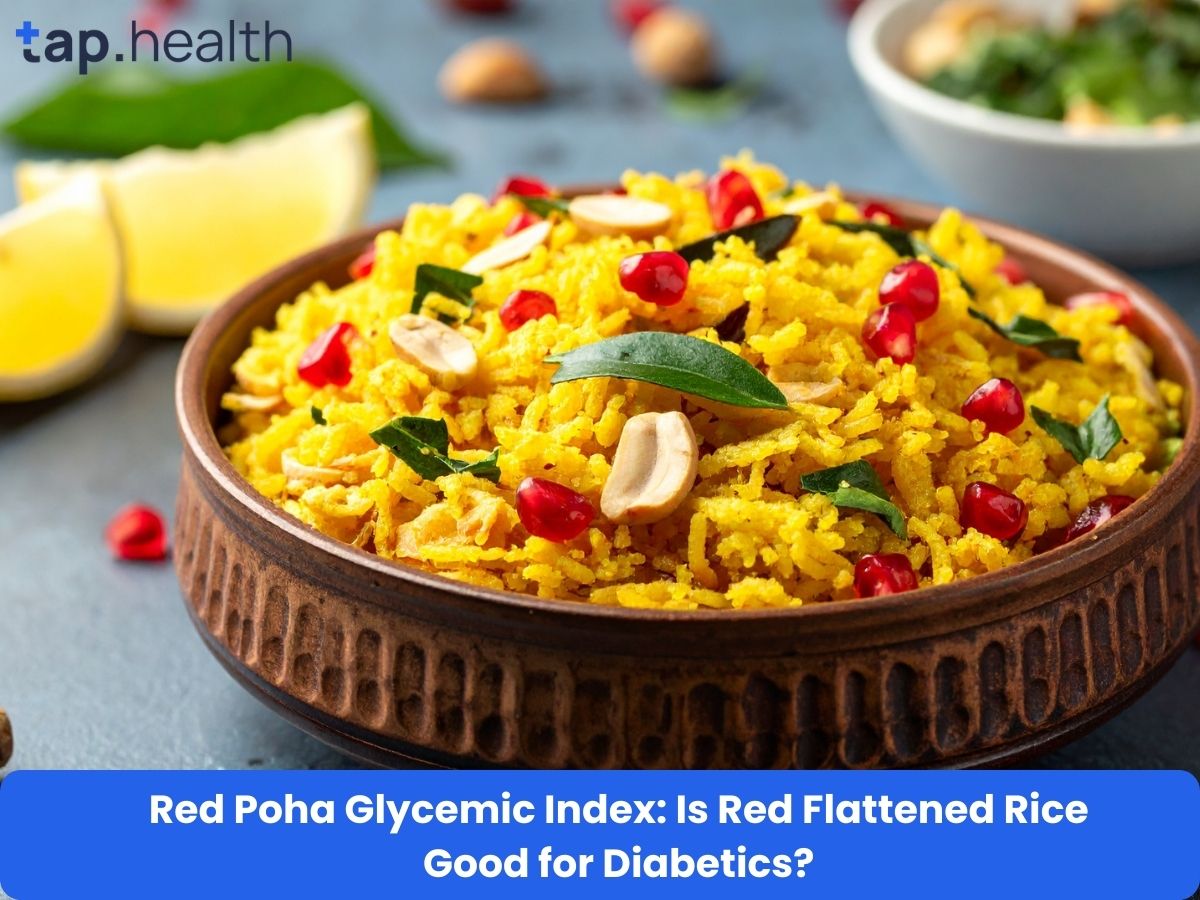
Adding peanuts (groundnuts) or even a few cashew nuts introduces healthy fats and proteins. Protein slows down carbohydrate absorption. You can also add sprouts (moong beans) to the poha.
3. Use Lemon Juice
Squeezing fresh lemon juice over your poha does more than just add tang. The acidity in lemon helps lower the glycemic response of the meal by slowing starch digestion.
4. Skip the Potatoes (Aloo)
Traditional “Aloo Poha” combines rice (carb) with potato (carb). This is a double whammy for blood sugar. Try using sweet potato or simply sticking to green veggies instead.
Comparison with Other Breakfasts: Upma and Rice
Upma Glycemic Index vs. Red Poha
Many people debate between Upma and Poha.
- Upma Glycemic Index: Upma is usually made from Rava (Semolina/Sooji). Rava is refined wheat and has a medium-to-high GI (around 65-70).
- Verdict: Red rice poha glycemic index is generally better than plain Rava Upma. However, if you make Upma with broken wheat (Dalia) or oats, that would be healthier than white poha.
Glycemic Index of Poha vs. Rice
- White Rice: GI is ~75+.
- Red Poha: GI is ~55.
- Verdict: Poha is essentially parboiled and flattened rice. During the parboiling process, some starch is retrograded (made resistant), which can make Poha slightly better than plain boiled rice. Red Poha is the clear winner here.
Nutritional Profile: Red Poha Calories Per 100g
If you are counting calories, here is what you need to know about red poha calories per 100g:
- Calories: ~330–350 kcal (Uncooked)
- Carbohydrates: ~75g
- Protein: ~7–8g
- Fat: ~1–2g
- Fibre: ~3–5g
- Iron: ~20mg (Very High)
Note: These are values for raw flakes. When you soak them, they absorb water and expand, so the calorie density per bowl drops.
Read this : Poha Glycemic Index
Real-Life Scenario
Let’s look at Mrs. Sharma, a 52-year-old school teacher from Pune. She was diagnosed with pre-diabetes last year.
- Old Habit: Every morning, she ate a large bowl of white Kanda Poha (onion poha) with potatoes and sev (fried noodles) on top. She felt sleepy by 11:00 AM—a classic sign of a sugar crash.
- The Change: Her dietician suggested switching to Red Poha. Mrs. Sharma initially found the texture “chewy.”
- The Adjustment: She started soaking the red poha for 5 minutes longer than white poha to soften it. She replaced the potatoes with steamed peas and added roasted peanuts.
- The Result: After three months, her HbA1c (average blood sugar) dropped slightly. More importantly, she reported feeling energetic until lunch without the mid-morning slump.
This scenario proves that red poha good for diabetes isn’t just a theory; it works in practice when combined with the right cooking methods.
Expert Contribution
We consulted with clinical nutritionists to understand the medical perspective.
“The biggest mistake patients make is assuming ‘healthy’ means ‘unlimited’,” says Dr. Anjali Roy, a Certified Diabetes Educator. “Red poha has a lower GI than white poha, yes. But it is still a carbohydrate. If you eat three bowls of red poha, your sugar will spike. The benefit lies in the fibre and iron content. It is a smarter carb, not a free pass.”
Experts also highlight the iron factor. Red poha is often richer in iron than white varieties.
“For vegetarian women in India, anaemia is a major issue. Red poha is a fantastic source of plant-based iron. Squeezing lemon on it (Vitamin C) helps absorb that iron better,” adds Dr. Roy.
Recommendations Grounded in Proven Research and Facts
Based on the red poha glycemic index and nutritional data, here are actionable recommendations:
- Portion Control: Stick to red poha glycemic index 1 cup serving (cooked). This is roughly 150g cooked weight. It provides energy without overloading your glucose system.
- Soak Properly: Red poha is thicker. Wash it under running water and let it sit in a strainer for 10-15 minutes. It needs more time to soften than the delicate white variety.
- Read the Label: When buying, ensure the package says “Red Rice Poha” or “Red Aval.” Sometimes, brands mix white and red. You want 100% red rice flakes.
- Pair with Curd: Eating a small bowl of curd (dahi) alongside your poha adds protein and probiotics, further lowering the GI impact of the meal.
Key Takeaways
- Better GI Score: The red poha glycemic index (50-60) is significantly lower than white poha (70+).
- Diabetes Friendly: Yes, red poha is good for diabetes due to high fibre and slower digestion, but portions must be controlled.
- Nutrient Dense: It retains the bran layer, offering more iron, fibre, and antioxidants than white rice.
- Cook Smart: Always add vegetables and a source of protein (peanuts/sprouts) to ensure a balanced blood sugar response.
- Red vs. White: Red poha wins on health metrics; white poha wins on convenience and softness. For health, choose red.
Frequently Asked Questions (FAQ) on Red Poha Glycemic Index
What is the Red Poha Glycemic Index Per 100g?
The glycemic index is a ranking, not a quantity, so it stays the same regardless of weight. The red poha glycemic index is roughly 50 to 60. However, the Glycemic Load of 100g of red poha is moderate, making it a safe choice if eaten in limited quantities.
Is Red Poha Good for Diabetes Type 2 Patients?
Yes, absolutely. Red poha for diabetes is a recommended swap for white rice or white poha. The fibre in the red bran layer slows down glucose absorption. However, diabetics should strictly avoid adding potatoes and sugar to the dish.
What is the Difference Between Red Rice Poha and Brown Rice Poha Glycemic Index?
They are very similar. Both brown rice poha glycemic index and red rice poha GI fall in the 50-60 range. Red rice often has slightly more antioxidants (anthocyanins) due to its pigment, while brown rice poha is simply unpolished white rice. Both are healthier than white poha.
Is Poha High Glycemic Index or Low?
It depends on the variety. White poha is considered High Glycemic Index (~70+). Red poha is considered Low to Medium Glycemic Index (~50-60). So, if you are asking “is poha high glycemic index”, the answer is yes for white, but no for red.
How Many Calories are in Red Poha Per 100g?
Red poha calories per 100g (uncooked) are approximately 330-350 calories. Once cooked with water and vegetables, the caloric density decreases, making a standard bowl roughly 200-250 calories depending on the oil used.
Can I Eat Red Poha Daily for Weight Loss?
Yes. Since red poha is high in fibre, it keeps you full for longer periods compared to white bread or cornflakes. This reduces snacking and helps in calorie management, making it effective for weight loss plans.
How Does Red Poha Compare to Upma Glycemic Index?
Standard Upma made from refined Semolina (Sooji) has a higher GI than red poha. Upma glycemic index is usually around 65-70. Unless the Upma is made from oats or broken wheat, Red Poha is generally the lower-sugar option.
What is the Glycemic Index of Poha vs Rice?
Boiled white rice has a GI of over 73. White poha is similar (70+). Red poha is significantly lower (50-60). Therefore, in the battle of glycemic index of poha vs rice, red poha is the clear winner for health.