In India, we have a sweet tooth that is hard to ignore. From the morning cup of strong Masala Chai to the Kaju Katli at Diwali, sweetness is part of our culture. But with diabetes becoming a household issue across the country, many of us are scared. We want the sweetness, but we fear the sugar spike.
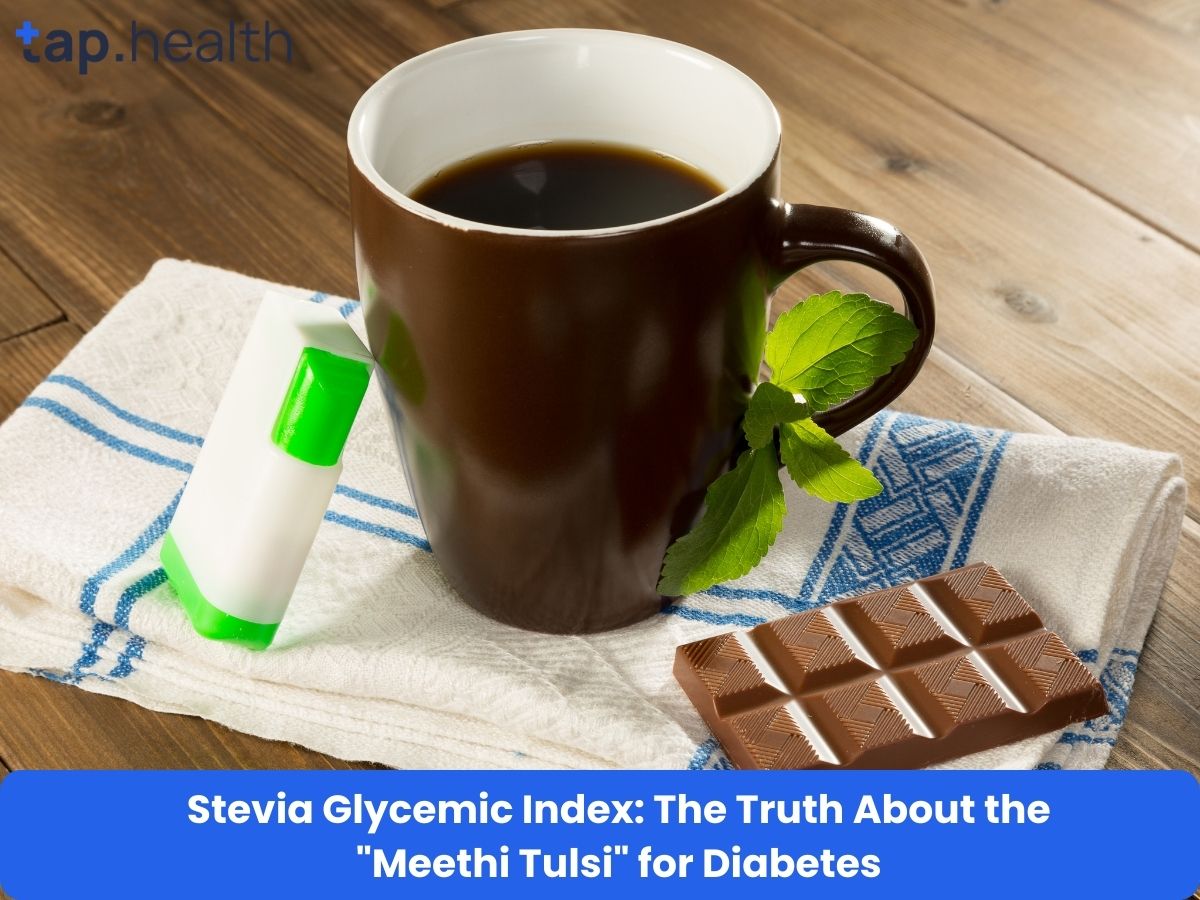
You have probably heard of Stevia. Maybe your doctor mentioned it, or you saw a green bottle in the “Sugar-Free” aisle at the supermarket. It is often called Meethi Tulsi (Sweet Basil) in India. But is it really safe? Does it actually help with blood sugar, or is it just another marketing gimmick?
The most important number you need to know is the stevia glycemic index.
In this detailed guide, we are going to break down everything you need to know about Stevia. We will look at how it affects your body, compare it with Jaggery and Monk Fruit, and answer the scary questions about safety. We are keeping it simple, honest, and grounded in science.
What is Stevia?
Before we get into the numbers, let’s understand what we are putting in our tea.
Stevia comes from the plant Stevia rebaudiana, which is native to South America but is now widely grown in India and China. The leaves of this plant contain natural compounds called steviol glycosides. These compounds are incredibly sweet—about 200 to 300 times sweeter than regular sugar.
Unlike artificial sweeteners (like aspartame or sucralose) which are made in a lab, Stevia is naturally derived from a leaf. This gives it a “natural” label that appeals to many health-conscious Indians.
Understanding Glycemic Index (GI)
To understand why Stevia is popular, you first need to understand the Glycemic Index (GI).
Think of GI as a speedometer for your blood sugar. It measures how fast a food causes your glucose levels to shoot up.
- High GI (70+): Foods that digest instantly and spike sugar fast (e.g., White bread, Glucose, Maida).
- Medium GI (56-69): Moderate rise.
- Low GI (0-55): Slow digestion, steady energy.
For a diabetic, the goal is to eat low GI foods to avoid those dangerous spikes.
The Stevia Glycemic Index: The Magic Number
So, what is the stevia glycemic index?
The Glycemic Index of Stevia is 0.
Yes, zero.
This means that when you consume Stevia, it has absolutely no effect on your blood sugar levels. It does not trigger an insulin response.
Why is it zero? Even though Stevia tastes sweet, your body does not digest it the way it digests sugar. The steviol glycosides pass through your upper digestive tract mostly intact. When they reach the colon, gut bacteria break them down, but the glucose released is eaten by the bacteria, not absorbed into your bloodstream.
Because of this, Stevia provides the sweet taste without the calories or the glucose load. This makes it a “Free Food” for diabetics.
Stevia vs. Sugar vs. Other Sweeteners
It is easy to say “Stevia is good,” but how does it compare to the other jars in your kitchen? Let’s look at the stevia glycemic index vs sugar and others.
1. Stevia vs. White Sugar
- White Sugar GI: ~65
- Stevia GI: 0
- Verdict: Sugar causes rapid inflammation and insulin spikes. Stevia does not. Stevia is the clear winner for health.
2. Which is Better: Jaggery or Stevia?
This is a very common question in India. We love our Gur (Jaggery).
- Jaggery GI: ~84 (Very High)
- Stevia GI: 0
- Verdict: Many people think Jaggery is “safe” because it is natural. This is a myth. Jaggery is still sugar. It spikes blood sugar just as fast as white sugar. If you are diabetic, Stevia is much safer than Jaggery.
3. Stevia vs. Honey
- Honey GI: ~58
- Stevia GI: 0
- Verdict: Honey is slightly better than sugar but still raises blood glucose. Honey vs stevia glycemic index comparisons show Stevia is the only one that keeps blood sugar flat.
4. Stevia vs. Monk Fruit Glycemic Index
- Monk Fruit GI: 0
- Stevia GI: 0
- Verdict: Both are excellent natural options. Which is healthier, monk fruit or stevia? They are tied in health benefits. However, Monk Fruit tastes more like sugar and lacks the bitter aftertaste that Stevia sometimes has. Stevia is cheaper and easier to find in India.
5. Stevia vs. Artificial Sweeteners (Sucralose/Aspartame)
- Sucralose Glycemic Index: 0
- Verdict: While Sucralose (Splenda) also has a 0 GI, it is artificial. Some studies suggest it might negatively affect gut bacteria. Pure stevia is generally considered a cleaner, more natural choice.
Is Stevia Good for Diabetes Type 2?
The short answer is Yes.
Stevia is not just “harmless”; it might actually be helpful.
- Insulin Sensitivity: Some research suggests that stevia might help with insulin production, though more studies are needed.
- Weight Control: Since it has zero calories, replacing sugar with Stevia helps reduce overall calorie intake, leading to weight loss. Weight loss is the most effective way to manage Type 2 diabetes.
- Stable Energy: No sugar spikes mean no sugar crashes. You won’t feel that sudden fatigue after a sweet cup of tea.
When searching for the best stevia for diabetics, look for brands that don’t add hidden sugars (more on that in the safety section).
Different Forms: Powder, Liquid, and Blends
Not all Stevia is created equal. You will find it in different avatars:
- Pure Stevia (Green Leaf or White Extract): This is the most potent. It can be slightly bitter.
- Liquid Stevia: Great for dissolving in cold drinks like Nimbu Pani. Check the liquid stevia glycemic index—it is usually 0, provided it is suspended in water or alcohol, not syrup.
- Stevia Blends (The Trap): Many brands mix Stevia with fillers to make it look like sugar crystals.
- Common Mix: Erythritol and Stevia. The erythritol glycemic index is 0 or 1, so this blend is safe and tastes better.
- Bad Mix: Stevia + Dextrose or Maltodextrin. These fillers HAVE a high GI. Always read the label!
Safety, Side Effects, and Myths
You might have seen scary headlines online asking, “Does stevia cause cancer?” or talking about “stevia and diabetes dangers.” Let’s clear the air with facts.
Myth 1: Stevia Causes Cancer
Fact: Extensive studies reviewed by the World Health Organization (WHO), FDA, and EFSA have found no evidence that high-purity steviol glycosides cause cancer. It is considered safe for human consumption.
Myth 2: Stevia Damages the Kidneys
Fact: Earlier studies on rats raised concerns, but modern science shows that Stevia does not harm the kidneys when consumed in normal amounts. In fact, it prevents the kidney damage that high blood sugar causes.
Side Effects: The Gut Issue
While safe, stevia side effects can occur if you eat too much.
- Bloating/Gas: This usually happens not because of Stevia, but because of Erythritol (sugar alcohol) mixed with it. If you have a sensitive stomach, stick to pure liquid stevia drops.
- Aftertaste: Stevia has a licorice-like (Mulethi) aftertaste. Some people love it; some hate it.
Stevia and Diabetes Dangers?
The only real “danger” is Hypoglycemia (low blood sugar). If you are on strong diabetes medication and suddenly cut all sugar and switch to Stevia, your blood sugar might drop too low because your medicine dose is too high for your new low-carb diet. Always monitor your levels when making the switch.
Real-Life Scenario
Let’s meet Mr. Verma, a 52-year-old accountant from Delhi.
Mr. Verma loved his Adrak Chai. He used to put two spoons of sugar in every cup, drinking 4 cups a day. That is 8 spoons of sugar just from tea! When he was diagnosed with Type 2 Diabetes, he tried to drink fika (unsweetened) tea but hated it. He felt depressed and cheated on his diet with biscuits.
The Change: His daughter bought him liquid stevia drops.
- Week 1: He complained it tasted “different.”
- Week 2: He got used to the taste. He realized he needed only 2 drops to replace 2 spoons of sugar.
- Month 1: By cutting out those 8 spoons of sugar daily, he removed nearly 150 calories a day. He lost 1 kg without hitting the gym. His fasting sugar dropped from 160 to 130.
Mr. Verma realized that the stevia sugar glycemic index advantage meant he could enjoy his morning ritual without the guilt.
Expert Contribution
We consulted medical guidelines and nutrition experts to give you the professional stance.
Dr. A. Singh, Diabetologist: “I tell my patients that the stevia glycemic index is their best friend. Unlike Jaggery or Honey, which are just ‘sugar in disguise,’ Stevia is metabolically neutral. However, the biggest mistake patients make is buying ‘Stevia Powder’ that is actually 90% Maltodextrin. You must learn to read the back of the packet.”
Nutritionist S. Kapoor: “Stevia is excellent, but don’t use it to justify eating unhealthy food. Just because a cake is made with Stevia doesn’t mean the Maida (flour) in it won’t spike your sugar. Stevia fixes the sugar problem, not the flour problem.”
Recommendations Grounded in Proven Research and Facts
Based on data from Healthline, WebMD, and the American Diabetes Association, here are our top recommendations for using Stevia safely:
- Go for “Pure”: Look for 100% Stevia Leaf Extract or Pure Stevia. If you need a granular powder for baking, choose a blend with Erythritol.
- Avoid Fillers: If the ingredients list mentions Dextrose, Maltodextrin, or Sucrose, put it back on the shelf. These ingredients have a high GI and defeat the purpose.
- Start Small: Stevia is potent. One drop is often enough. If you use too much, it turns bitter.
- Check for “Stevia in the Raw”: Some brands like Stevia in the Raw use Dextrose as a bulking agent. Check the stevia in the raw glycemic index—while the packet says zero calorie, the dextrose technically has a high GI, though the amount is small. Pure extract is always better.
- Use in Cooking: Stevia is heat stable. You can use it in Gajar ka Halwa or Kheer, but add it at the end to prevent bitterness.
Conclusion
The verdict is clear: The stevia glycemic index is a solid zero.
For anyone living in India, dealing with the pressure of diabetes while surrounded by sweets, Stevia is a powerful tool. It allows you to reclaim the joy of sweetness without destroying your metabolic health. It is safer than Jaggery, better than Honey, and more natural than Sucralose.
Whether you choose stevia powder, liquid drops, or fresh leaves from a plant on your balcony, making the switch can significantly lower your HbA1c levels over time. Just remember to read the labels, avoid the cheap fillers, and enjoy your Meethi Tulsi responsibly.
Frequently Asked Questions (FAQ)
What is the lowest GI sweetener?
Stevia, Monk Fruit, and Erythritol all share the title for the lowest GI sweetener, with a Glycemic Index of 0. This means they have no impact on blood sugar levels.
Which is better jaggery or stevia?
For diabetes and weight loss, Stevia is much better. Jaggery has a high Glycemic Index (84+) and raises blood sugar almost as fast as white sugar. Stevia has a GI of 0 and does not raise blood sugar at all.
Is stevia good for diabetes type 2?
Yes, Stevia is excellent for Type 2 Diabetes management. It provides sweetness without glucose, helping patients maintain stable blood sugar levels and reduce overall calorie intake for weight management.
Does stevia cause cancer?
No. Leading global health organizations, including the WHO and FDA, have reviewed the evidence and confirmed that high-purity steviol glycosides are safe and do not cause cancer.
Which is healthier, monk fruit or stevia?
Both are equally healthy as they both have a 0 GI and are natural. Monk fruit is often considered “tastier” because it lacks Stevia’s bitter aftertaste, but Stevia is generally more affordable and widely available in India.
What is the erythritol glycemic index?
The erythritol glycemic index is 0 to 1. It is a sugar alcohol that doesn’t spike blood sugar, which is why it is often blended with Stevia to add bulk and improve texture.
Does liquid stevia have a glycemic index?
Pure liquid stevia has a glycemic index of 0. However, always check the label to ensure the liquid is not an alcohol-based syrup or mixed with fructose or other sugars.
Is coconut sugar better than stevia?
No. The coconut sugar glycemic index is around 54, which is lower than white sugar but still high enough to spike insulin. Stevia (GI 0) is a far superior choice for diabetics.
Can I use Stevia powder for baking?
Yes, but since pure stevia is very concentrated, you cannot swap it 1:1 with sugar. Look for “Baking Blends” (usually Stevia + Erythritol) that are designed to measure cup-for-cup like sugar.
References:
- American Diabetes Association: Sugar Substitutes. Link
- Healthline: Stevia – Safety, Side Effects, and Benefits. Link
- WebMD: Stevia Overview. Link
- National Institutes of Health (NIH): Glycemic Index of Sweeteners. Link
- Mayo Clinic: Artificial sweeteners and other sugar substitutes. Link
(Disclaimer: This content is for educational purposes only. Always consult your doctor or a certified dietitian before making significant changes to your diet, especially if you have diabetes.)