You are sitting at your desk, or maybe driving your car. Suddenly, your hands start to tremble. A cold sweat breaks out on your forehead, even though the AC is on. Your heart starts pounding in your chest like a drum. You feel an intense, gnawing hunger, and your mind goes blank. You try to speak, but the words feel heavy.
This isn’t just hunger. This is a Hypoglycemic Attack (Low Blood Sugar).
While we spend most of our time worrying about high sugar (diabetes), low sugar is arguably more dangerous in the short term. High sugar kills you slowly over years; low sugar can be fatal in minutes if not treated.
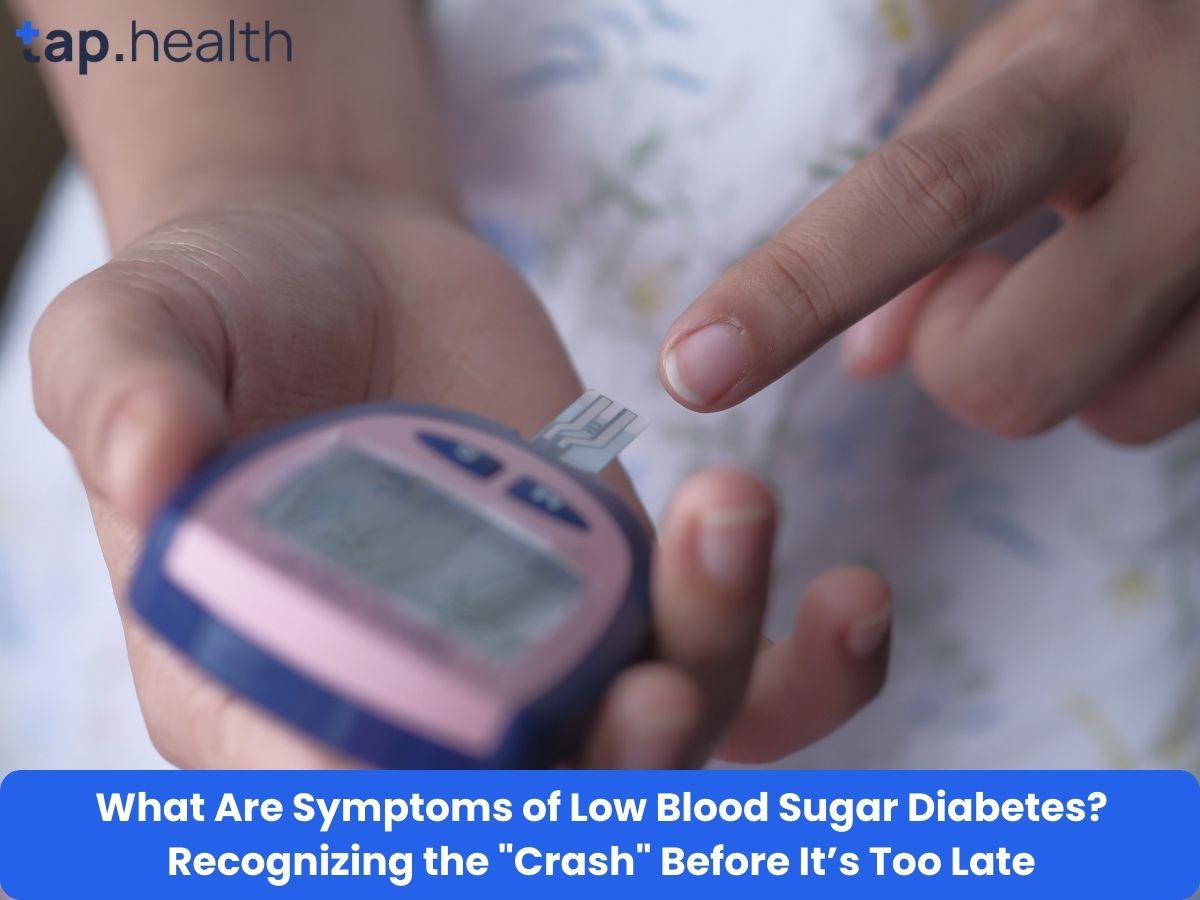
The question is: “What are symptoms of low blood sugar diabetes?”
In medical terms, this is Hypoglycemia (usually defined as blood sugar below 70 mg/dL). It happens when there is too much insulin and not enough fuel in your blood. Your body reacts in two ways: first, it releases adrenaline (panic mode), and second, your brain starts to shut down (starvation mode).
In this comprehensive guide, we will break down the three stages of a “Sugar Crash.” We will explain why you get “Hangry,” why night sweats are a red flag, and the “Rule of 15” that every diabetic must memorize.
Stage 1: The “Adrenaline” Warning (Mild Hypoglycemia)
Range: 55 mg/dL to 70 mg/dL
When your sugar drops slightly below normal, your brain senses a fuel shortage. It orders your adrenal glands to release Adrenaline (the “fight or flight” hormone). This is your body screaming at you to eat.
The Symptoms:
- Shaking/Tremors: Your hands tremble visibly. You might drop your pen or cup.
- Sweating: Not normal sweat, but a cold, clammy moisture, usually on the forehead and neck.
- Palpitations: Your heart races (Tachycardia) as if you just ran a sprint.
- Extreme Hunger: A sudden, desperate need to eat sugar immediately.
- Anxiety: You feel nervous, scared, or “on edge” for no reason.
Stage 2: The “Brain Fog” Phase (Moderate Hypoglycemia)
Range: 40 mg/dL to 55 mg/dL
If you ignore the shaking and don’t eat, the brain itself starts to starve. The brain runs only on glucose. When the fuel tank runs dry, cognitive functions fail. This is often called Neuroglycopenia.
The Symptoms:
- Confusion: You might forget where you are or be unable to answer simple questions.
- Blurred Vision: The world looks out of focus or double.
- Dizziness/Giddiness: You feel like you might faint or the room is spinning.
- Mood Changes: Sudden anger, crying, or stubbornness. (We often call this being “Hangry”—Hungry + Angry).
- Slurred Speech: You sound drunk, even though you haven’t touched alcohol.
Stage 3: The “Shutdown” (Severe Hypoglycemia)
Range: Below 40 mg/dL
This is the danger zone. The brain no longer has enough energy to keep you conscious. You cannot treat yourself at this stage; you need someone else to help you.
The Symptoms:
- Seizures (Fits): Uncontrollable jerking movements.
- Unconsciousness (Coma): You pass out and cannot be woken up.
- Hypothermia: Body temperature drops dangerously low.
The “Silent” Low: Hypoglycemia Unawareness
For people who have had diabetes for many years, the warning system breaks.
- What it is: You stop feeling the “Stage 1” symptoms (shaking/sweating). You go straight from “Feeling Fine” to “Passing Out.”
- Why: Your body gets used to low sugar and stops releasing adrenaline.
- The Danger: This is incredibly risky for driving. If you have this, you must test your sugar before getting behind the wheel, every single time.
Nighttime Lows: The Vampire Symptom
Low blood sugar loves the dark. It often happens at 3:00 AM because you took your evening insulin but didn’t eat enough dinner.
Signs you crashed while sleeping:
- Night Sweats: You wake up with damp pajamas or soaked sheets.
- Nightmares: You have vivid, scary dreams (your brain panicking).
- Morning Headache: You wake up with a pounding “hangover” headache despite not drinking.
- Morning Fatigue: You feel exhausted because your body fought a war all night.
Real-Life Scenario
Let’s meet Mr. Singh, a 65-year-old retired army officer.
The Incident: Mr. Singh went for his evening walk. He wanted to lose weight, so he skipped his evening snack but took his insulin as usual. Halfway through the park, he felt “weird.” His legs felt like jelly. He sat on a bench. A passerby asked if he was okay, but Mr. Singh replied with gibberish words. The passerby thought he was intoxicated.
The Rescue: Luckily, Mr. Singh wore a medical bracelet. Another walker recognized the signs, checked his pocket, found a glucose candy, and forced him to suck on it. Within 15 minutes, Mr. Singh “woke up” from the confusion. The Lesson: Never skip a meal if you are on insulin. The insulin doesn’t know you skipped food; it will lower your sugar regardless.
Expert Contribution
We consulted emergency medicine doctors and endocrinologists.
Dr. K. Verma, ER Physician: “We see ‘Diabetic Comas’ often. Families panic and try to pour water or force food into the unconscious person’s mouth. NEVER do this. If they are unconscious, they can’t swallow. The food will go into their lungs and choke them. If they pass out, turn them on their side and rub Glucose Gel on their gums, or give a Glucagon injection if you have it. Call an ambulance immediately.”
Endocrinologist Perspective: “The ‘Rule of 15’ is the gold standard. I tell patients: Don’t eat the whole fridge. When you crash, you want to eat everything in sight. But if you eat too much, your sugar will skyrocket to 300 an hour later. Stick to the rule.”
Recommendations Grounded in Proven Research and Facts
If you feel the shake, follow the “Rule of 15”:
- Check: Test your blood sugar. If it is below 70 mg/dL…
- Treat: Eat 15 grams of fast-acting carbohydrates.
- 3 teaspoons of sugar or honey.
- Half a cup of juice or non-diet soda.
- 3-4 Glucose tablets.
- NOT Chocolate: Chocolate contains fat, which slows down sugar absorption. You need speed.
- Wait: Wait 15 minutes. Do not eat more yet.
- Re-check: Test again.
- If still below 70, repeat the steps.
- If above 70, eat a small snack (like a biscuit or half a sandwich) to stabilize it.
Key Takeaways
- It’s an Emergency: Low sugar kills faster than high sugar. Treat it immediately.
- The Warning Signs: Shaking, sweating, and rapid heartbeat are your body’s alarm bells.
- Neuroglycopenia: If you feel confused, dizzy, or slur your speech, your brain is starving.
- Night Sweats: Waking up soaked in sweat is a classic sign of nocturnal hypoglycemia.
- Rule of 15: 15g sugar, wait 15 mins. Don’t overeat.
Frequently Asked Questions (FAQ)
What causes low blood sugar in non-diabetics?
This is called Reactive Hypoglycemia. It happens if you eat a very heavy carb meal, and your body releases too much insulin by mistake, causing a crash 2-3 hours later. It can also be caused by severe starvation, alcohol consumption on an empty stomach, or rare tumors (Insulinomas).
Can I sleep off a low blood sugar?
ABSOLUTELY NOT. This is dangerous. If you feel low symptoms, you must eat sugar before sleeping. If you fall asleep with low sugar, you might not wake up (Dead in Bed Syndrome). Your natural adrenaline response is blunted during sleep.
Why do I feel low even when my sugar is 90?
This is False Hypoglycemia. If your body is used to running high (e.g., 250 mg/dL) for months, a drop to a normal level (90 mg/dL) feels like a crash to your brain. It is uncomfortable but not dangerous. Stick to your treatment; your body will adjust to normal levels in a week.
Does alcohol cause low blood sugar?
Yes. Your liver has two jobs: release stored sugar and detoxify alcohol. It cannot do both at once. If you drink alcohol, the liver stops releasing sugar to focus on the alcohol. If you are on insulin, this blocks your safety net, leading to severe delayed hypoglycemia hours later.
What is a Glucagon Kit?
A Glucagon Emergency Kit is an injection (like an EpiPen) used for severe hypoglycemia when the patient has passed out and cannot eat. A family member injects it into the thigh to force the liver to release sugar instantly. Every Type 1 diabetic should have one.
References:
- American Diabetes Association: Hypoglycemia (Low Blood Glucose). Link
- Mayo Clinic: Hypoglycemia Symptoms and Causes. Link
- Endocrine Society: The Rule of 15. Link
- NHS UK: Treating low blood sugar. Link
- Diabetes Care: Hypoglycemia Unawareness. Link
(Disclaimer: This content is for educational purposes only. If someone is unconscious or having a seizure, call emergency services immediately. Do not put food in their mouth.)