Imagine your body is a busy city. Your kidneys are the waste management system, working 24/7 to clean the streets (your blood) and remove the trash (toxins) through urine. Now, imagine a sticky, sugary syrup flooding the streets day after day. Slowly, the cleaning trucks get stuck, the filters get clogged, and the machinery breaks down.
This is exactly what happens when you have Diabetes.
For millions of people in India and across the world, diabetes is not just about managing blood sugar; it is about protecting the organs that keep you alive. The kidneys are often the first victims. The medical term is Diabetic Nephropathy, but most people know it simply as diabetic kidney disease.
The scary part? It is a “silent killer.” You can lose up to 50% of your kidney function before you even feel a single symptom.
If you have diabetes, you might be wondering: “How do I know if my kidneys are in trouble?” “What are the symptoms of kidney failure due to diabetes?” “Is that swelling in my feet normal?”
In this comprehensive guide, we will walk you through the warning signs. We will move from the invisible early stages to the obvious red flags, helping you catch the problem before it’s too late.
Understanding Diabetic Kidney Disease (Diabetic Nephropathy)
Before we talk about symptoms, let’s understand the condition. Diabetic Nephropathy is kidney damage caused by high blood sugar over a long period.
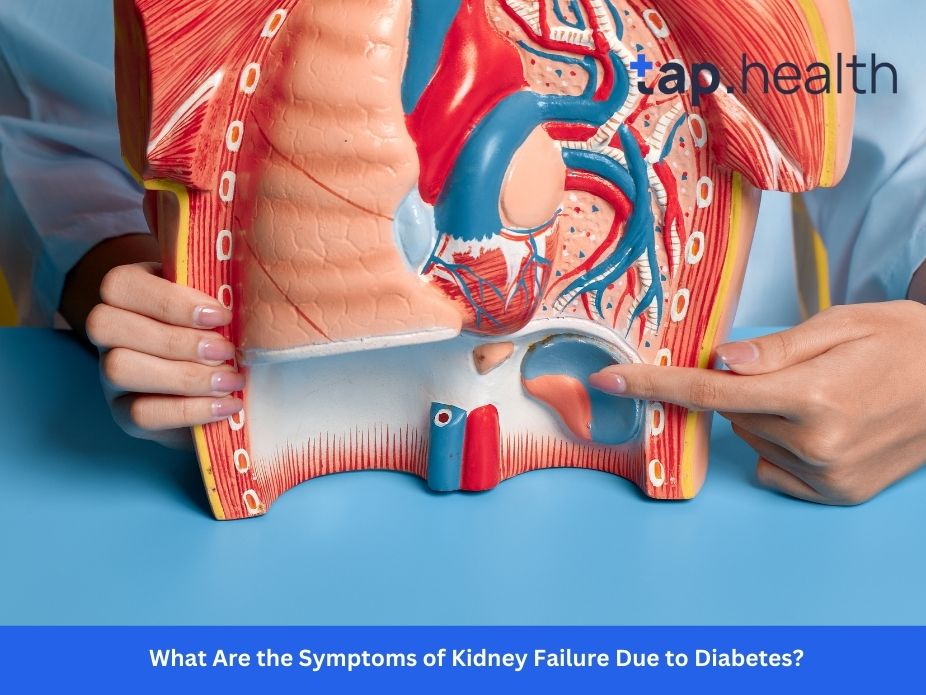
Your kidneys contain millions of tiny clusters of blood vessels called glomeruli. These act like sieves or coffee filters. They keep the useful stuff (like protein) in your blood and let the waste pass into your urine.
When you have diabetes, high blood sugar acts like a slow poison to these delicate filters. Over time, they become scarred and leaky. Instead of filtering waste, they start leaking protein into your urine and keeping toxins in your blood. This is the beginning of kidney failure.
Read this: Does Insulin Affect Kidneys?
How Diabetes Can Lead to Kidney Failure
It is a chain reaction.
- High Sugar: Glucose spikes damage the blood vessels in the kidneys.
- High Blood Pressure: Diabetes often comes with high BP (Hypertension). The force of the blood pounds against the delicate kidney filters, causing more damage.
- Filtration Failure: As the filters break, waste products like Creatinine and Urea build up in the blood.
- End-Stage Renal Disease (ESRD): Eventually, the kidneys stop working almost entirely. This is kidney failure, requiring dialysis or a transplant.
Early Signs of Kidney Damage in Diabetes
This is the most critical section. In the early stages (Stage 1 to 3), you will likely feel fine. There is no pain, no trouble peeing, and no obvious sickness. However, your body gives subtle chemical clues.
Protein in Urine (Microalbuminuria)
This is the very first sign.
- What happens: Your kidneys are supposed to keep a protein called Albumin in your blood. When the filters get damaged, Albumin leaks into your urine.
- The Symptom: You cannot see this with your naked eye initially. It is only detected through a urine test called the ACR (Albumin-to-Creatinine Ratio).
- Why it matters: If you catch it here, the damage is often reversible or manageable.
Mild Swelling in Feet or Ankles
You might notice that your shoes feel tight in the evening, or your socks leave a deep mark on your ankles.
- The Cause: Since your kidneys are losing protein, your blood loses its ability to hold onto fluid. Gravity pulls this fluid down into your feet.
Increased Blood Pressure
The kidneys help regulate blood pressure. When they are damaged, they release hormones that raise your BP. If your BP is suddenly harder to control despite medication, check your kidneys.
Common Symptoms of Kidney Failure Due to Diabetes
As the damage progresses (Stage 3 to 4), the toxins build up to a level where you start feeling physically sick. This is when most people finally go to the doctor.
Persistent Fatigue and Weakness
You feel tired all the time, even after sleeping.
- Why: Healthy kidneys produce a hormone called EPO (Erythropoietin) that tells your body to make red blood cells. Failing kidneys make less EPO, leading to Anaemia. Fewer red blood cells mean less oxygen for your muscles and brain.
Swelling in Legs, Feet, or Face (Edema)
The mild swelling becomes severe.
- The Look: You might wake up with “puffy eyes” (periorbital edema) or have swollen hands.
- The Test: If you press your thumb into your shin and the pit stays there for a few seconds, it is called Pitting Edema.
Frequent or Reduced Urination
- Early Stages: You might pee more often, especially at night (Nocturia), as the kidneys lose the ability to concentrate urine.
- Later Stages: You pee less and less as the kidneys shut down.
Foamy or Bloody Urine
This is a classic sign.
- Foamy: If your toilet bowl looks like it has soap suds or beer foam in it, it means you are leaking a massive amount of protein.
- Bloody/Dark: It indicates bleeding inside the urinary tract.
Nausea, Vomiting, and Loss of Appetite
- The Cause: Uremia. This is the buildup of urea and other toxins in the blood.
- The Feeling: You feel a metallic taste in your mouth. Food tastes like cardboard. The very thought of eating makes you nauseous, especially in the morning. This leads to unintended weight loss.
Shortness of Breath
You get winded just walking to the bathroom.
- Reason 1: Fluid buildup in the lungs (Pulmonary Edema).
- Reason 2: Anaemia (lack of oxygen-carrying blood cells).
Trouble Sleeping or Restless Legs
Toxins affect your nerves. You might feel a “crawling” sensation in your legs, especially at night, making it impossible to sleep.
Itching and Dry Skin
This isn’t a normal itch. It feels deep, “under the skin.”
- The Cause: When kidneys fail, they cannot balance minerals. Phosphorus builds up in the blood, causing severe itching (Pruritus).
Difficulty Concentrating or Confusion
Often called “Brain Fog.” The accumulated toxins poison the brain, making it hard to focus, remember things, or even stay awake.
Advanced Symptoms of End-Stage Kidney Failure
When the kidneys are functioning at less than 15% (Stage 5), the situation is critical. This is End-Stage Renal Disease (ESRD).
Severe Fluid Retention
The swelling spreads to the stomach (Ascites) and lungs. The patient may look bloated but is actually losing muscle mass.
Chest Pain or Pressure
High potassium levels can affect the heart rhythm, and fluid retention can inflame the lining of the heart (Pericarditis), causing chest pain.
Severe Electrolyte Imbalance
- High Potassium: Can cause sudden cardiac arrest.
- Low Calcium: Leads to bone pain and fractures.
Uremia Symptoms (Toxin Build-Up)
The patient may have “Uremic Frost”—a powdery white dust on the skin (which is actually dried urea coming out through sweat). Breath may smell like ammonia or urine.
When to Seek Immediate Medical Help
Do not wait for a scheduled appointment if you experience:
- Sudden inability to pass urine.
- Difficulty breathing (gasping for air).
- Severe chest pain.
- Confusion or seizures.
- Uncontrollable vomiting.
How Kidney Failure Is Diagnosed in Diabetics
Doctors don’t guess; they measure.
Urine Tests (ACR)
- Albumin-to-Creatinine Ratio (ACR): This detects microalbuminuria.
- Normal: Less than 30 mg/g.
- Kidney Damage: 30 to 300 mg/g.
- Severe Damage: Over 300 mg/g.
Blood Tests (Creatinine, eGFR)
- Serum Creatinine: A waste product from muscles. High levels mean poor kidney filtration.
- eGFR (Estimated Glomerular Filtration Rate): The most important number. It tells you the percentage of kidney function remaining.
- eGFR > 90: Normal.
- eGFR < 15: Kidney Failure.
Imaging and Specialist Evaluation
An ultrasound may be done to check the size and shape of the kidneys. A biopsy is rarely needed for diabetic kidney disease unless the doctor suspects another cause.
Real-Life Scenario
Meet Mr. Sharma (58, Accountant from Delhi):
Mr. Sharma had Type 2 diabetes for 12 years. He felt “fine,” so he skipped his annual checkups. He noticed his urine was bubbly, but he thought it was just the force of the stream. He also started feeling tired in the evenings, which he blamed on work stress.
The Wake-Up Call: One day, he noticed his ankles were so swollen he couldn’t wear his office shoes. He went to his doctor. The Diagnosis: His blood pressure was 170/100. His urine protein was sky-high. His eGFR was 35 (Stage 3b Kidney Disease). The Outcome: Mr. Sharma had ignored the foamy urine and fatigue for too long. He cannot reverse the damage, but with strict diet control and medication, he is fighting to stop it from reaching Stage 5 (Dialysis).
Lesson: Don’t ignore the bubbles. Don’t ignore the fatigue.
Expert Contribution
We consulted Dr. A. Patel, Senior Nephrologist:
“The biggest tragedy in diabetic kidney failure is that it is preventable, but patients arrive too late. By the time you feel nauseous or see swelling, 70% of the damage is done.
My advice? Look at your toilet bowl. If you see foam that doesn’t go away after flushing, get a urine test the next day. And never miss your annual Microalbumin test. It detects damage 5 years before you feel it.”
How to Prevent Kidney Failure in Diabetes
You can stop this train before it crashes.
- Control Blood Sugar: Keep HbA1c below 7%. This is the single most effective way to protect the filters.
- Manage Blood Pressure: Keep BP below 130/80 mmHg. High BP pounds the kidneys.
- ACE Inhibitors/ARBs: These are specific BP medicines (like Telmisartan or Ramipril) that protect the kidneys. Ask your doctor about them.
- SGLT2 Inhibitors: These newer diabetes drugs (like Dapagliflozin) are proven to slow down kidney failure.
- Stop Smoking: Smoking narrows blood vessels, suffocating the kidneys.
- Avoid NSAIDs: Painkillers like Ibuprofen or Diclofenac are toxic to kidneys. Use Paracetamol if needed.
Recommendations Grounded in Proven Research and Facts
According to the National Kidney Foundation and CDC:
- Early Detection: Testing for microalbuminuria can detect kidney disease up to 10 years before kidney failure occurs.
- Sugar Control: The landmark DCCT Study showed that tight blood sugar control reduces the risk of kidney disease by 50%.
- Diet: A low-protein diet is NOT recommended in early stages, but in later stages (Stage 4), limiting protein intake can reduce the workload on the kidneys.
Conclusion: Key Takeaways
So, what are the symptoms of kidney failure due to diabetes?
- Silent Start: It begins with no symptoms, only protein in the urine.
- The Warning Signs: Foamy urine, swollen feet, and high blood pressure.
- The Sick Phase: Fatigue, nausea, itching, and metallic taste in the mouth.
- The Emergency: Shortness of breath and confusion.
Your kidneys are resilient fighters, but they need your help. If you have diabetes, your best defense is a simple urine test once a year. Catch it early, and you can protect your kidneys for a lifetime.
Frequently Asked Questions (FAQs) on What Are the Symptoms of Kidney Failure Due to Diabetes?
How long does it take for diabetes to cause kidney damage?
It varies, but typically, kidney damage starts 10 to 15 years after the onset of diabetes if blood sugar is uncontrolled. However, in Type 2 diabetes, many patients already have some kidney damage at the time of diagnosis because they had high sugar silently for years.
How to reverse kidney damage from diabetes?
You generally cannot reverse scarring on the kidneys. Once a filter (nephron) is dead, it is gone. However, you can halt or slow down the progression significantly by controlling blood pressure, taking kidney-protective medication (like ACE inhibitors), and managing blood sugar tightly.
What is the life expectancy with diabetes and kidney failure?
Life expectancy depends on the stage of kidney disease and the patient’s overall health. If a patient reaches End-Stage Renal Disease (ESRD) and starts dialysis, the average life expectancy is 5 to 10 years, though many live much longer. A kidney transplant can significantly extend life expectancy.
Does diabetes cause kidney infection symptoms?
Diabetics are prone to kidney infections (Pyelonephritis) because high sugar weakens the immune system. Symptoms include fever, back pain (flank pain), chills, and burning urination. This is different from kidney failure, which is usually painless.
Can I feel pain in my kidneys due to diabetes?
Generally, No. Diabetic kidney disease (nephropathy) is usually painless. You won’t feel “kidney pain” until there is a separate issue like a kidney stone or infection. The damage happens silently.
Is foamy urine always a sign of kidney failure?
Not always, but it is a strong indicator. Occasional foam can happen due to a fast urine stream. However, persistent foam (that stays after flushing) usually indicates Proteinuria (protein in urine), which is the hallmark of diabetic kidney damage.
What foods should I avoid if I have diabetic kidney disease?
If you have advanced kidney disease, you may need to limit Sodium (salt), Potassium (found in bananas, potatoes, tomatoes), and Phosphorus (found in dairy, processed meats, colas). Always consult a renal dietician for a plan tailored to your blood report.
References
- Mayo Clinic: Diabetic Nephropathy Symptoms and Causes
Disclaimer: This article is for informational purposes only and does not constitute medical advice. If you notice swelling, foamy urine, or fatigue, please consult a nephrologist immediately.