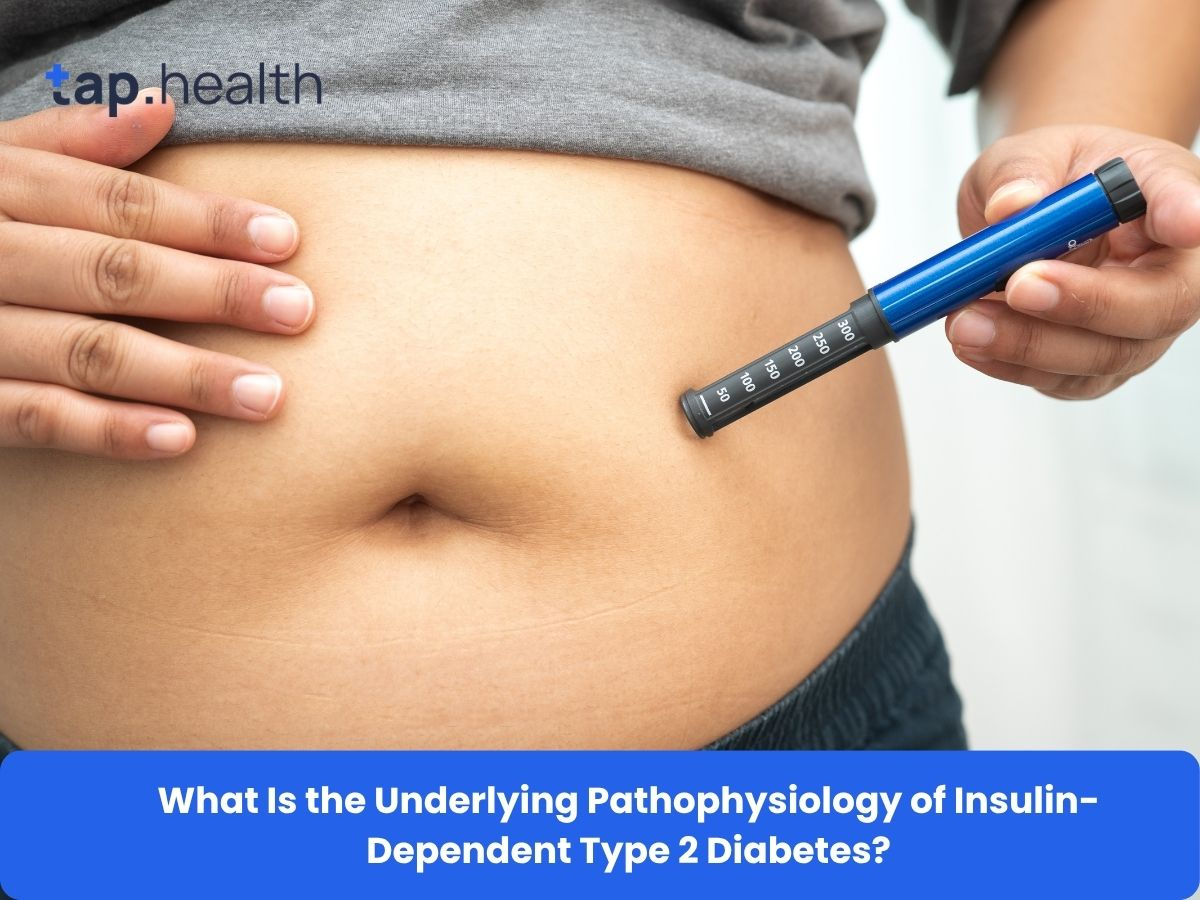
When someone is first diagnosed with type 2 diabetes, the conversation often centres on diet, exercise, and perhaps a simple pill like metformin. But for many, the journey does not stop there. Over time, the disease progresses, and the body’s own ability to manage blood sugar falters. Eventually, a point comes when the doctor says those daunting words: “You need to start insulin.”
This moment can feel like a personal failure or a sign that the disease has become “severe.” But the truth is more scientific and far less about blame. The transition from managing type 2 diabetes with lifestyle changes and oral medications to requiring insulin is the result of a specific, predictable biological process. This process is the underlying pathophysiology—the story of what is happening inside the cells and organs of your body.
Understanding this pathophysiology is not just an academic exercise. It removes the fear and stigma around insulin therapy by explaining exactly why it becomes necessary. In this comprehensive guide, we will walk you through the complex but fascinating journey of how type 2 diabetes develops and progresses to the point where the pancreas can no longer keep up, making external insulin a life-saving necessity.
The Core Defect: A Tale of Two Problems
To understand why type 2 diabetes eventually requires insulin, you first need to grasp the two fundamental problems that define the disease from the very beginning. These two issues are intertwined and drive the entire process.
The first problem is insulin resistance. This means that the cells of your body—particularly in your muscles, liver, and fat tissue—stop responding properly to the hormone insulin. Think of insulin as a key. In a healthy person, this key effortlessly unlocks the door to your cells, allowing sugar (glucose) from your food to enter and be used for energy. With insulin resistance, the locks become rusty. The key still works, but it takes much more effort, and sometimes it does not work at all.
The second problem is impaired insulin secretion, or beta-cell dysfunction. This involves the pancreas itself. The pancreas contains special clusters of cells called the islets of Langerhans, and within them are the beta cells. The sole job of beta cells is to manufacture and release insulin. In type 2 diabetes, these beta cells do not function as well as they should. They may be slow to respond to rising blood sugar, or they may not produce enough insulin to meet the body’s demands.
The Early Years: Compensating with Hyperinsulinemia
In the early stages of type 2 diabetes, the body puts up a remarkable fight. To overcome the problem of insulin resistance—to force those rusty locks open—the beta cells in the pancreas work overtime. They pump out larger and larger amounts of insulin. This condition is called hyperinsulinemia (high levels of insulin in the blood).
This is why, in the beginning, a person’s fasting blood sugar may still be normal or only slightly elevated. The body is managing to keep the glucose levels in check, but it is doing so at a tremendous cost. The beta cells are under constant, immense stress. Imagine a factory that is forced to run at 200% capacity, 24 hours a day, just to meet basic demand. For a while, it might succeed. But the machinery is being worn down at an accelerated rate.
During this phase, a person might be diagnosed with prediabetes or early type 2 diabetes. Lifestyle changes and medications like metformin can be highly effective at this stage because they work by making the body’s cells more sensitive to insulin—essentially oiling those rusty locks so the available insulin keys can work better.
The Relentless Progression: The Failing Beta Cell
The central event that transforms early, manageable type 2 diabetes into insulin-dependent type 2 diabetes is the progressive failure of the pancreatic beta cells. This is not a sudden event but a gradual decline that can occur over many years.
While insulin resistance once established tends to remain fairly constant, the function of the beta cells shows a relentless progression toward failure, even when a person is taking standard diabetes medications. Several interconnected mechanisms are responsible for wearing down and eventually destroying the beta cells.
Glucotoxicity is one of the most direct culprits. Chronically high levels of glucose in the blood are toxic to beta cells. The very cells that are struggling to control blood sugar are being poisoned by the high sugar environment they are forced to work in. This creates a vicious cycle: impaired insulin secretion leads to high blood sugar, and that high blood sugar further impairs the beta cells’ ability to secrete insulin.
Lipotoxicity is another major driver. In type 2 diabetes, fat cells become dysfunctional and release an excess of free fatty acids into the bloodstream. These fatty acids travel to the pancreas and other organs, where they accumulate and cause damage. Just like glucotoxicity, the buildup of harmful fats within the beta cells impairs their function and can trigger a form of cellular suicide called apoptosis.
Oxidative Stress and Inflammation also play a critical role. The metabolic stress of overwork and exposure to high glucose and fat levels causes damage at the molecular level. This includes damage from unstable molecules called free radicals (oxidative stress) and a chronic, low-grade state of inflammation throughout the body, including within the pancreas itself.
The combined assault of glucotoxicity, lipotoxicity, oxidative stress, and inflammation causes a progressive loss of both the function and the mass of beta cells. Studies of pancreatic tissue from people with type 2 diabetes show an approximate 50% reduction in the total number of functional beta cells compared to people without diabetes.
This decline in beta-cell mass and function is the core pathophysiological mechanism that explains why type 2 diabetes is a progressive disease and why, eventually, the body’s own insulin production becomes insufficient.
The Transition: When Insulin Production Can No Longer Keep Up
For years, the beta cells may be able to compensate for insulin resistance by working harder. But there comes a tipping point. The loss of beta-cell function and mass reaches a critical threshold where the pancreas can simply no longer produce enough insulin to overcome the body’s resistance.
At this stage, blood sugar levels begin to rise more dramatically and become much harder to control. The oral medications that once worked well may no longer be enough. This is the point where a person’s type 2 diabetes can be described as “insulin-dependent” or “insulin-requiring.”
The transition to insulin therapy is not a sign that the patient has done something wrong. It is the natural, expected outcome of the underlying pathophysiology. The majority of people who live with type 2 diabetes for more than ten years will find that their pancreas stops being able to produce enough insulin for tablets alone to be effective.
In fact, some research and clinical practice have explored the use of temporary intensive insulin therapy early in the course of type 2 diabetes. The idea is to give the overworked beta cells a “rest.” By using external insulin to bring blood sugar down to normal levels, the toxic effects of glucotoxicity are removed. This can sometimes allow the beta cells to recover some of their function, enabling the patient to maintain good blood sugar control for a period of time without needing ongoing insulin.
Real-Life Scenario: The Silent Decline of the Pancreas
To make this abstract biology more concrete, consider the story of Mrs. Anjali Sharma, a 58-year-old woman from Pune.
Mrs. Sharma was diagnosed with type 2 diabetes twelve years ago. For the first several years, she managed her condition beautifully. She followed her dietitian’s advice, walked for 45 minutes every evening, and took her prescribed metformin. Her blood sugar reports were always within a good range.
Around year eight, she noticed her fasting blood sugar had started to creep up. Her doctor added a second medication, a sulfonylurea called glimepiride, to stimulate her pancreas to produce more insulin. This worked for a couple of years. Then, despite her best efforts and now taking three different diabetes pills, her HbA1c rose to 8.5%. She felt tired, and her vision was a bit blurry.
Her endocrinologist explained the situation using the framework we have discussed. “Mrs. Sharma,” the doctor said, “your body’s resistance to insulin has been a challenge for a long time. Your pancreas has been a hero, working triple shifts to try and keep up. But after more than a decade, the beta cells are simply exhausted and many have been lost. The pills that helped it work harder are like whipping a tired horse. We are not going to do that anymore. We are going to give your body the insulin it needs directly.”
Applying the Knowledge:
- Recognising the Pathophysiology: Mrs. Sharma’s journey perfectly illustrates the progression from compensated insulin resistance (early years) to beta-cell failure (later years). The addition of multiple oral medications is a common attempt to combat the worsening pathophysiology.
- Understanding the Transition: The need for insulin was not her failure. It was the inevitable outcome of the underlying disease process driven by years of glucotoxicity and beta-cell loss.
- A New Treatment Plan: By starting a once-daily injection of long-acting insulin, Mrs. Sharma’s blood sugar levels came back under control. The fatigue lifted, and her vision cleared. The insulin therapy was not a step down; it was the logical, necessary, and correct step up to match her body’s changed biology.
Mrs. Sharma’s story is a powerful reminder that insulin is a therapy, not a judgement. It is the appropriate response to a well-understood biological process.
Expert Contribution
The consensus among endocrinology experts is clear: the progression of type 2 diabetes to an insulin-dependent state is a function of beta-cell failure. Dr. Ralph A. DeFronzo, a leading figure in diabetes research, has emphasized that while insulin resistance is a key early player, it is the progressive loss of beta-cell function that is the primary driver of the disease’s worsening over time.
This perspective is reflected in the guidelines and educational materials from leading institutions. The MSD Manual states unequivocally that type 2 diabetes mellitus is characterized by insulin resistance and inadequate insulin secretion relative to needs, and that later in the course of the disease, insulin production may fall, further exacerbating hyperglycemia.
This expert consensus reinforces that starting insulin is a recognition of the body’s changing physiology and a commitment to providing the missing hormone that is essential for health and survival.
Recommendations Grounded in Proven Research and Facts
Based on the scientific understanding of the pathophysiology of type 2 diabetes, here are clear, actionable recommendations:
- View Insulin as a Powerful Tool, Not a Punishment. Understanding that beta-cell failure is a natural, expected part of the disease process can remove the stigma and fear associated with insulin therapy. It is the correct treatment for a specific biological deficiency.
- Prioritise Early and Sustained Glycemic Control. Every day that blood sugar is kept in a healthy range is a day that the beta cells are protected from the damaging effects of glucotoxicity. Aggressive management early in the disease can help preserve beta-cell function for a longer period.
- Do Not Delay the Transition to Insulin. When oral medications are no longer sufficient, delaying the start of insulin only exposes the body to more months of damaging high blood sugar. This can worsen beta-cell function further and increase the risk of long-term complications.
- Have an Open Dialogue with Your Healthcare Provider. Discuss your understanding of the disease’s progression. Ask questions like, “What is my body telling us about my beta-cell function right now?” This shifts the conversation from blame to biology and empowers you to be an active partner in your care.
- Embrace a Holistic Approach. While insulin therapy addresses the deficiency, lifestyle management—a healthy diet, regular physical activity, and stress reduction—remains the cornerstone for improving insulin sensitivity and supporting overall metabolic health.
Key Takeaways
- The underlying pathophysiology of type 2 diabetes that leads to insulin dependence is driven by two core defects: insulin resistance and progressive pancreatic beta-cell failure.
- In early stages, the beta cells compensate for insulin resistance by producing large amounts of insulin (hyperinsulinemia), often keeping blood sugar levels near normal for years.
- Over time, the beta cells are damaged and destroyed by glucotoxicity (high blood sugar), lipotoxicity (high free fatty acids), oxidative stress, and chronic inflammation.
- This results in a progressive loss of both the function and mass of beta cells, reducing the body’s ability to produce its own insulin.
- The transition to requiring insulin therapy is the direct result of this beta-cell failure, marking the point where the body’s insulin production can no longer keep up with its needs.
- Starting insulin is not a personal failure but a necessary, evidence-based step to replace a hormone the body can no longer make in sufficient quantity, thereby protecting long-term health.
Frequently Asked Questions (FAQs)
Q1: What is the underlying pathophysiology of insulin-dependent diabetes mellitus?
A: The term “insulin-dependent diabetes mellitus” is historically used for type 1 diabetes, which is an autoimmune disease causing absolute insulin deficiency. However, type 2 diabetes can become insulin-dependent due to progressive beta-cell failure from insulin resistance, glucotoxicity, and lipotoxicity, leading to insufficient endogenous insulin production.
Q2: What is the underlying pathophysiology of type 2 diabetes?
A: The underlying pathophysiology of type 2 diabetes is a dual defect involving insulin resistance (cells do not respond well to insulin) and progressive beta-cell dysfunction (the pancreas does not secrete enough insulin to overcome the resistance). These are driven by factors like obesity, genetics, and metabolic stress.
Q3: Which pathophysiologic mechanism occurs in the patient with type 2 diabetes?
A: The primary mechanisms are insulin resistance in the liver, muscle, and fat cells, which impairs glucose uptake and increases glucose production. Concurrently, pancreatic beta cells fail to secrete adequate insulin, a process exacerbated by glucotoxicity (damage from high glucose) and lipotoxicity (damage from high free fatty acids).
Q4: What is the underlying pathogenic mechanism for type 2 diabetes?
A: The core pathogenic mechanism is a vicious cycle. Insulin resistance increases the demand for insulin, forcing beta cells to work harder. Over time, this metabolic stress, combined with the toxic effects of high blood sugar and fatty acids, leads to beta-cell dysfunction, loss of beta-cell mass, and eventually a state of relative insulin deficiency.
Q5: Why does type 2 diabetes become insulin-dependent?
A: Type 2 diabetes becomes insulin-dependent because the pancreatic beta cells, which have been overworking to compensate for insulin resistance, progressively fail and die off. When the remaining beta cells can no longer produce enough insulin to meet the body’s needs, external insulin must be administered to control blood sugar.
Q6: Can the progression of type 2 diabetes to insulin dependence be slowed?
A: Yes. The most effective way to slow the progression is to achieve and maintain excellent blood sugar control early in the disease course. This protects the beta cells from the damaging effects of glucotoxicity. Lifestyle changes that reduce insulin resistance—such as weight loss, a healthy diet, and regular exercise—also reduce the workload on the beta cells.
Q7: Is needing insulin a sign that my type 2 diabetes is “worse”?
A: It is a sign that the disease has progressed, which is a natural part of its course for many people. It is not a sign of personal failure. Many people find that starting insulin gives them better blood sugar control, more energy, and a greater sense of well-being than they had on failing oral medications.
Q8: What happens to beta cells in type 2 diabetes?
A: In type 2 diabetes, beta cells initially work harder, increasing insulin secretion to compensate for insulin resistance. However, sustained exposure to high glucose and fatty acid levels causes cellular stress, dysfunction, and eventually death (apoptosis). This leads to a significant reduction in the total number and function of beta cells over time.
References
- Abstract: Pathophysiology of type 2 diabetes (T2D) remains poorly understood. Insulin resistance (IR) and pancreatic β-cell dysfunction are central events. https://protein.bio.msu.ru
- Liv Hospital. What is the Pathophysiology of Type 2 Diabetes Mellitus? https://int.livhospital.com
- Natural history of β-cell adaptation and failure in type 2 diabetes. Mol Aspects Med. 2014. https://pmc.ncbi.nlm.nih.gov/articles/PMC4404183/
- Nature. Fig. 1: Progression of β-cell failure in T2D. https://www.nature.com/articles/s12276-023-01043-8/figures/1