Poori, a much-loved deep-fried Indian bread, is a staple at many festive occasions and is enjoyed by many with curries, vegetables, or yogurt. However, for people living with diabetes, poori isn’t always a good food choice. But why is this the case? Is it the high-carb content, the oil, or something else?
In this article, we’ll explore why poori is not good for diabetes, break down its impact on blood sugar levels, and offer better alternatives for those managing diabetes. We’ll dive into how pooris affect insulin levels, their glycemic index, and provide valuable insights to help people with diabetes make healthier food choices.
What is Poori?
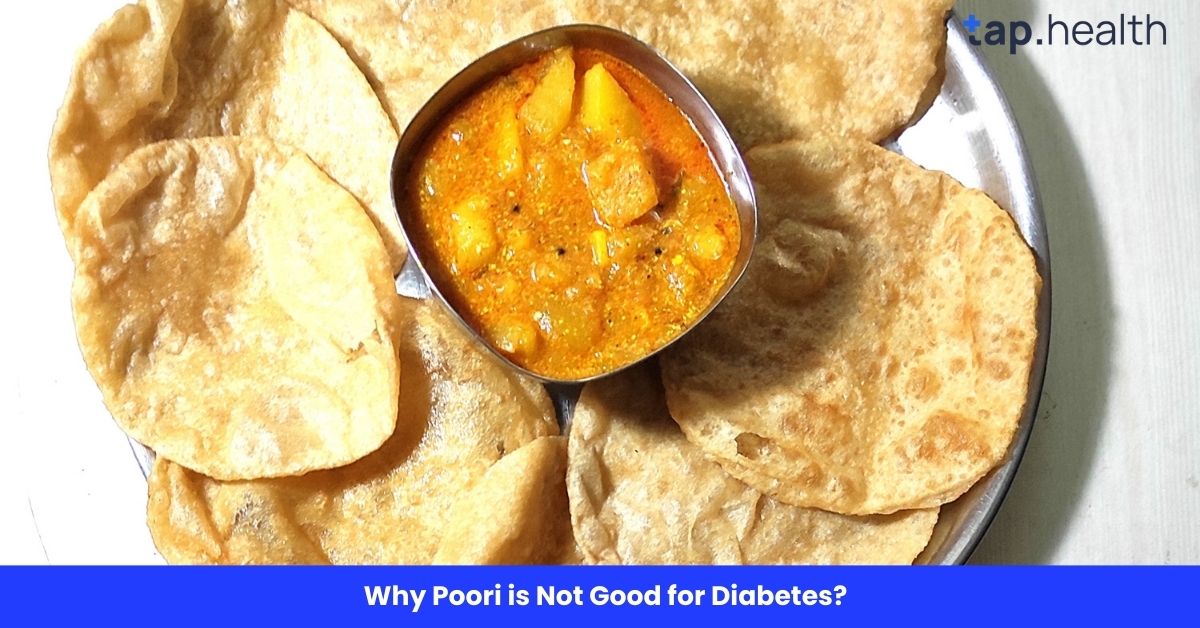
Before we discuss the impacts of poori on blood sugar, it’s important to understand what it is. Poori is an Indian bread made from unleavened wheat flour dough, which is rolled into small discs and deep-fried in oil or ghee. The result is a soft, puffy bread that is usually served with curries, potatoes, or chickpeas.
Key Ingredients in Poori:
- Wheat flour (usually refined flour or maida)
- Water
- Salt (optional)
- Oil or ghee (used for frying)
Though poori is delicious and an essential part of many Indian meals, its ingredients, especially refined flour and frying process, raise concerns for people managing blood sugar levels.
Why Poori is Not Good for Diabetes?
People with diabetes need to be careful about what they eat because their bodies don’t process blood sugar effectively. This means that foods that cause a rapid increase in blood sugar need to be avoided or minimized. Unfortunately, poori falls into this category.
Let’s explore the reasons why poori isn’t considered a good food choice for people with diabetes.
1. High Glycemic Index of Poori
The glycemic index (GI) measures how quickly a carbohydrate-containing food raises blood sugar levels. Foods with a high GI cause a rapid spike in blood sugar. Poori, especially when made with refined wheat flour (maida), has a high glycemic index.
When you eat foods with a high GI, like poori, your body quickly breaks down the carbohydrates into glucose, sending a surge of sugar into the bloodstream. For someone with diabetes, this can be harmful as their insulin cannot regulate the sugar as efficiently as it should.
Why Refined Flour is a Problem
Refined wheat flour (maida) is highly processed, stripping away essential fiber and nutrients. This results in carbohydrates that are quickly digested and absorbed into the bloodstream, raising blood sugar levels rapidly. In contrast, whole grains or foods high in fiber digest slower, leading to a gradual increase in blood sugar, which is better for managing diabetes.
2. The Effect of Deep-Frying on Blood Sugar
Pooris are deep-fried in oil or ghee, adding an extra layer of concern for people with diabetes. Fried foods contain higher amounts of unhealthy fats. These fats can impair the body’s ability to respond to insulin effectively, making it harder to manage blood sugar levels.
How Fried Foods Affect Insulin Resistance
Insulin resistance is a condition where the body’s cells do not respond well to insulin, causing blood sugar levels to remain high. Eating foods high in trans fats or saturated fats, such as fried poori, can worsen insulin resistance. This means that even though the body produces insulin, it struggles to use it effectively, leading to uncontrolled blood sugar levels.
3. Poori is High in Calories
Pooris are high in calories because of the fat content from frying. A single poori can contain anywhere from 100 to 150 calories, and since they are often eaten in multiples, the total calorie intake can add up quickly.
Weight Gain and Blood Sugar Control
For individuals with diabetes, maintaining a healthy weight is crucial for blood sugar control. Excessive calorie intake, especially from foods like poori, can lead to weight gain. Increased body weight can make insulin resistance worse and make it harder to control blood sugar levels. So, it’s important to limit high-calorie foods like poori to manage weight effectively.
4. Low Fiber Content in Poori
Fiber is an essential nutrient that helps slow down the absorption of sugar into the bloodstream, preventing blood sugar spikes. Unfortunately, poori is typically made with refined flour, which is low in fiber. This means that when you eat poori, the sugar from the carbohydrates is absorbed quickly, leading to a sharp increase in blood sugar.
Fiber vs. Refined Flour
Whole grains like oats, brown rice, and whole wheat contain more fiber than refined grains. When you eat high-fiber foods, they slow down the digestion process, which helps manage blood sugar levels. On the other hand, poori made with refined flour lacks this benefit, which is why it’s not suitable for people with diabetes.
How Does Poori Impact People with Diabetes?
When people with diabetes eat poori, they are at risk of experiencing the following effects:
1. Sudden Blood Sugar Spikes
Since poori has a high glycemic index, eating it can cause rapid blood sugar spikes. After consuming poori, the glucose from the carbohydrates quickly enters the bloodstream, leading to high blood sugar levels.
2. Difficulty Managing Insulin Levels
For individuals with type 2 diabetes, insulin resistance makes it difficult for the body to process the sugars from high-GI foods like poori. The body may not produce enough insulin or may not respond to it effectively, making it harder to bring blood sugar levels back to normal.
3. Increased Risk of Heart Disease
Fried foods like poori, high in unhealthy fats, can increase the risk of developing cardiovascular disease, which is already higher among people with diabetes. Consuming foods that raise cholesterol and blood sugar can strain the heart over time.
Healthier Alternatives to Poori for Diabetics
If you love poori but need to manage your blood sugar levels, there are healthier alternatives you can try. These options are better for controlling blood sugar while still satisfying your cravings.
1. Baked Poori
Instead of deep-frying, you can bake poori in the oven. This reduces the fat content, making it a healthier alternative for people with diabetes. Baked pooris retain the crispy texture and can be a lighter option that won’t spike blood sugar as much.
2. Whole Wheat Poori
Switching to whole wheat flour instead of refined flour is a better option. Whole wheat flour contains more fiber, which helps control blood sugar levels by slowing down digestion. Although it still has a moderate glycemic index, whole wheat poori is better than poori made from refined flour.
3. Chickpea Flour Poori
Chickpea flour (besan) is a great alternative to wheat flour. It is rich in protein and fiber, both of which help stabilize blood sugar levels. Chickpea flour also has a lower glycemic index compared to refined wheat flour, making it a suitable option for people with diabetes.
4. Millet-Based Poori
Millets like foxtail, bajra, and ragi are great alternatives to refined flour. These grains are high in fiber and have a low glycemic index, which helps regulate blood sugar levels. Making poori using millet flour can provide a healthier, diabetic-friendly option.
Real-Life Scenario
To illustrate the impact of poori on blood sugar levels, consider the following scenario:
Scenario: A person with type 2 diabetes consumes two pooris with aloo sabzi for breakfast. The pooris are made from refined wheat flour and deep-fried in oil.
Expected Outcome: Due to the high glycemic index of the refined flour and the deep-frying process, the carbohydrates in the pooris are rapidly digested and absorbed, leading to a quick spike in blood sugar levels. The aloo sabzi, being rich in starch, further contributes to the rise in blood glucose.
This scenario highlights the importance of being mindful of food choices and portion sizes, especially for individuals managing diabetes.
Expert Contribution
According to Dr. Kumar, Advisor in Endocrinology and Metabolism at Sir Ganga Ram Hospital, consuming poori in small quantities may not significantly impact blood sugar levels. However, he emphasizes the need for tight control over blood sugar levels and recommends moderation in the intake of high-glycemic foods like poori.
Dr. Priyanka Rohatgi, Consultant Clinical Dietician, advises that while occasional consumption of poori is acceptable, individuals with diabetes should be cautious and consider the overall carbohydrate content of their meals to maintain stable blood sugar levels.
Recommendations Grounded in Proven Research and Facts
Based on current research and expert opinions, here are some recommendations for individuals concerned about blood sugar levels:
1. Control Portion Size
Avoid eating large quantities of poori. Eating a single poori with a healthy side like vegetable curry can help reduce the impact on your blood sugar.
2. Pair with Protein and Fiber
To slow down the absorption of carbohydrates and prevent rapid spikes in blood sugar, pair your poori with foods rich in protein and fiber. For example, a poori with chickpea curry (chole) or vegetable curry can help balance the overall glycemic load of the meal.
3. Choose Whole Wheat Poori
If possible, opt for whole wheat poori instead of one made with refined flour. The additional fiber in whole wheat flour helps slow the digestion of carbohydrates, which can lead to a more gradual increase in blood sugar.
4. Limit Fried Foods
Fried foods, including pooris, are often high in unhealthy fats that can worsen insulin resistance. Try to limit the frequency with which you eat fried foods, or consider baking or air-frying pooris instead of deep-frying them to reduce fat content.
5. Monitor Blood Sugar Levels
If you have diabetes, it’s essential to monitor your blood sugar levels regularly, especially after consuming foods like poori. This will help you understand how your body responds to different foods and make necessary adjustments to your diet.
FAQ: Why Poori is Not Good for Diabetes?
1. Can diabetics eat poori occasionally?
Yes, diabetics can eat poori occasionally, but they should be mindful of portion size and the ingredients. It’s better to choose poori made with whole wheat flour or even better, opt for baked poori to reduce the glycemic impact.
2. What is the glycemic index of poori?
Poori made from refined flour has a high glycemic index, typically ranging from 70 to 85. This means it can cause rapid spikes in blood sugar levels, which is not ideal for people with diabetes.
3. What should diabetics eat instead of poori?
Diabetics should consider alternatives like baked poori, whole wheat poori, chickpea flour poori, or millet-based pooris. These options are healthier, lower in glycemic index, and provide more fiber.
4. How can I lower the glycemic index of poori?
To lower the glycemic index of poori, you can use whole wheat flour instead of refined flour, bake the poori instead of frying it, and pair it with a high-protein dish, like chickpeas or vegetable curry, to reduce the overall glycemic load.
5. Is poori suitable for people with type 2 diabetes?
Poori is generally not suitable for people with type 2 diabetes due to its high glycemic index, refined flour content, and deep-frying process, all of which contribute to rapid blood sugar spikes and insulin resistance.
Conclusion
In conclusion, while poori is delicious and enjoyed by many, it’s not the best choice for people with diabetes due to its high glycemic index, high calorie content, and the unhealthy fats from frying. The rapid increase in blood sugar and the potential for worsened insulin resistance make poori a risky food for those managing diabetes.
However, there are healthier alternatives, like baked poori, whole wheat poori, and chickpea flour poori, which can provide a satisfying meal without spiking blood sugar levels. By making informed choices, people with diabetes can continue to enjoy tasty foods while managing their health effectively.