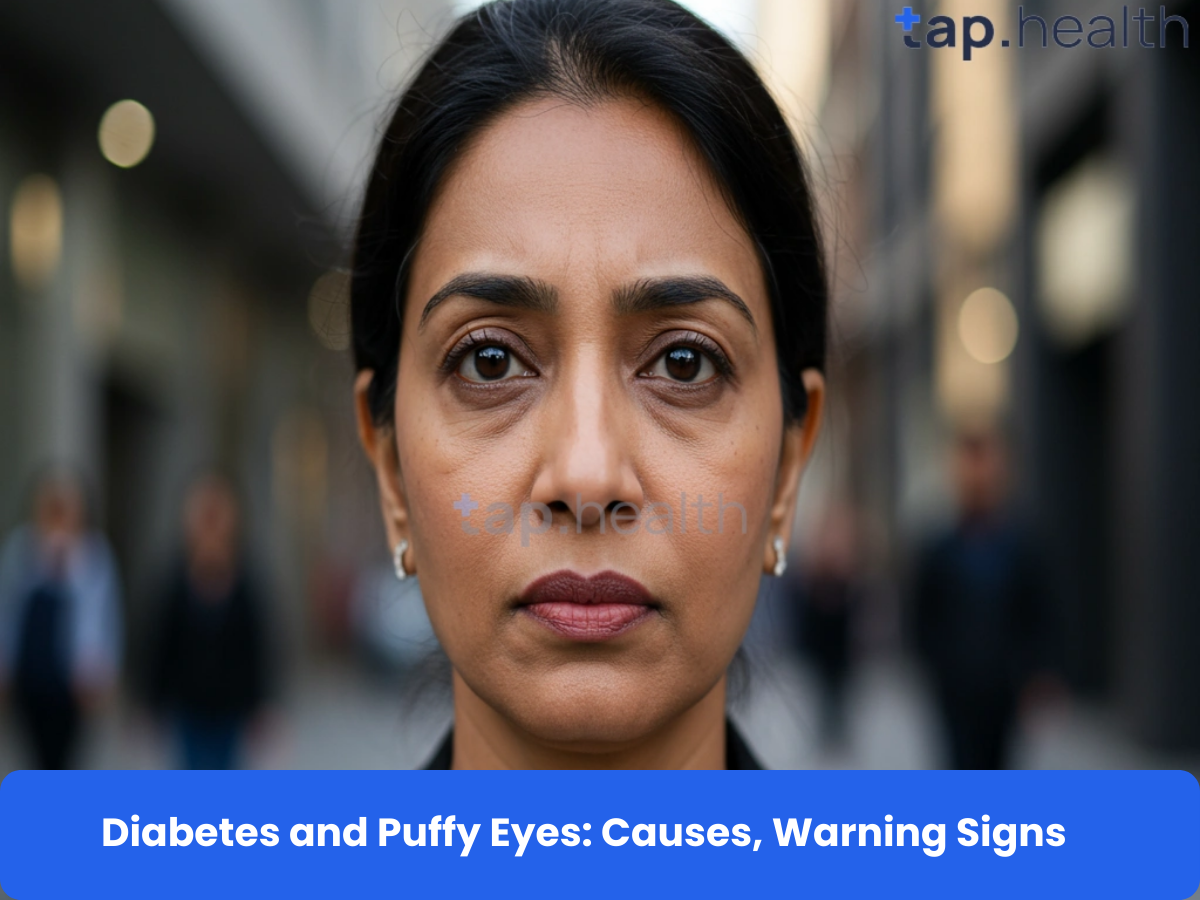
Waking up with swollen bags under your eyes can be annoying. We often blame it on lack of sleep or eating too much salty food. But for millions of people, there is a deeper link between diabetes and puffy eyes.
If you have been asking, “Can high blood sugar cause swollen eyes?” or “Does diabetes cause swollen eyelids?”, the answer is yes.
While diabetes is famous for affecting blood sugar, it is actually a disease of the blood vessels. It affects how fluids move through your body. Puffy eyes are often one of the first visible signs that your body is struggling to manage fluids or that your kidneys are under stress.
This guide will explain exactly how does diabetes affect the eyes symptoms, distinguish between harmless puffiness and serious damage, and provide expert-approved treatments.
Why Do Diabetics Have Puffy Eyes? (The Causes)
To understand puffy eyes due to diabetes, think of your body like a sponge. When sugar levels are high, the sponge holds onto more water. Here are the three main reasons this happens:
1. Kidney Strain (Diabetic Nephropathy)
This is the most serious cause. Your kidneys act as filters. When blood sugar is high for a long time, it damages these filters.
- The Leak: Damaged kidneys start leaking a protein called albumin into your urine.
- The Result: Protein helps hold water in your blood vessels. When you lose protein, water leaks out into the soft tissues—especially the thin skin around the eyes. This leads to persistent diabetes and eye problems related to swelling.
2. Fluid Retention from High Blood Sugar
Can high blood sugar cause puffy eyes? Yes. When your glucose is high, your blood becomes thick. Your body tries to fix this by holding onto water to dilute the sugar. Gravity settles this excess fluid in your face while you sleep, causing you to wake up with swollen eyelids.
3. Eye Strain and Inflammation
Diabetes causes systemic inflammation. This low-grade inflammation can cause the tissues around the eyes to swell, making them look puffy and tired even if you slept well.
Early Stage Diabetes Eyes Symptoms
Puffy eyes are just one signal. You must be aware of the full range of early stage diabetes eyes symptoms. Catching these early can prevent permanent blindness.
- Fluctuating Vision: Does your vision change from day to day? One day it is clear, the next it is blurry. This happens because high sugar makes the lens of your eye swell and shrink.
- Difficulty with Colour: You might notice colours look washed out or faded.
- Slow Focus: It takes longer for your eyes to focus when switching from looking at a phone to looking at a distance.
Understanding Diabetic Eye Complications
Diabetes and effect on eyes goes beyond just outer puffiness. High sugar can damage the delicate structures inside the eye.
1. Blurred Vision
Can diabetes blurred vision be corrected? In most cases, yes.
- The Cause: High blood sugar causes the lens inside your eye to swell with fluid. This changes the shape of the lens and makes things look blurry.
- The Fix: You do not need new glasses immediately. Once you bring your blood sugar back to a normal range (below 140 mg/dL post-meal) and keep it stable for 3 months, the lens will return to its normal shape and your vision will correct itself.
2. Diabetes Eye Pain and Headache
Severe diabetes eye pain and headache can be a sign of Glaucoma. Diabetics are twice as likely to get Glaucoma. This happens when fluid cannot drain from the eye, building up pressure. This pressure damages the optic nerve.
- Warning Sign: Sudden eye pain, halos around lights, and a headache that won’t go away. This is a medical emergency.
3. Floaters and Spots
If you see little black spots, cobwebs, or strings floating in your vision, these are “floaters.”
- Diabetes eye floaters treatment: Small floaters are normal, but a sudden shower of spots indicates bleeding in the eye (Diabetic Retinopathy).
- Treatment: Laser surgery is often used to stop the bleeding vessels. If the bleeding is severe, a surgery called Vitrectomy is performed to remove the gel and blood from the eye.
Macular Edema: When the Retina Swells
While “puffy eyes” is external swelling, Macular Edema is internal swelling. The macula is the center part of your retina responsible for sharp vision (like reading). In diabetes, tiny blood vessels leak fluid into the macula, causing it to swell.
Diabetes Macular Edema Treatment
If you are diagnosed with this, doctors use advanced treatments:
- Anti-VEGF Injections: These are shots given directly into the eye (painless with numbing drops) to block the chemical that causes leakage.
- Laser Therapy: A laser seals the leaking blood vessels.
> Note on Macular Degeneration: You might search for macular degeneration diabetes treatment. While similar, Age-Related Macular Degeneration (AMD) is different from Diabetic Macular Edema (DME). However, managing diabetes helps slow down both conditions.
Real-Life Scenario
Let’s look at a typical case to help you recognize the signs.
Meet Vikram. Vikram is a 48-year-old accountant from Mumbai. He noticed that his reading glasses weren’t working well—the numbers on his spreadsheets looked blurry. He also woke up every morning with swollen eyelids that made him look exhausted. He ignored it, thinking it was just screen time strain.
One day, he saw a dark “curtain” drifting across his vision (a large floater).
The Diagnosis: He visited an eye specialist.
- His puffy eyes were due to early kidney protein leakage (Nephropathy).
- His blurry vision was due to high blood sugar swelling his lens.
- The floater was a tiny bleed from Diabetic Retinopathy.
The Outcome: Because he finally sought help, doctors treated his eyes with laser therapy to stop the bleeding. He started kidney-protection medicine. Within 6 months, the puffiness reduced, and his vision was saved.
Expert Contribution
We consulted with medical experts to get their clinical perspective.
Dr. A. Iyer, Consultant Ophthalmologist, explains:
“Patients often ask me, ‘Does diabetes cause eye swelling?’ I tell them to look in the mirror. External swelling (puffy bags) tells me about their kidneys and systemic fluid retention. Internal swelling (macular edema) tells me about their sugar control. Both are red flags. We often see that once a patient gets their HbA1c below 7%, both the external puffiness and the internal leakage improve significantly.”
How to Prevent Eye Damage from Diabetes
You can stop problems before they start. Here is how to prevent eye damage from diabetes using the “SIGHT” rule.
- S – Sugar Control: Keep blood sugar in your target range. High sugar is the root cause of all these issues.
- I – Index (Blood Pressure): Keep BP under 130/80. High pressure pushes fluid out of vessels, causing both puffy eyes and retinal damage.
- G – Get Moving: Exercise improves circulation and drains fluid from the face and legs.
- H – Healthy Kidneys: Get a Microalbumin urine test once a year. Healthy kidneys mean less fluid retention.
- T – Test Yearly: You must have a dilated eye exam once a year. A regular optician test for glasses is NOT enough; the doctor needs to put drops in your eyes to see the retina.
Home Remedies: Managing Puffy Eyes
While medical treatment is necessary for the root cause, you can manage the cosmetic symptoms of diabetes and puffy eyes at home.
- Cut the Salt: Sodium holds water. Stop eating papads, pickles (achar), and processed snacks.
- Elevate Your Head: Sleep with an extra pillow. This uses gravity to drain fluid away from your eyelids while you sleep.
- Cold Tea Bags: Caffeine restricts blood vessels. Place cold, damp tea bags on your eyes for 10 minutes to reduce eye swelling.
- Hydrate: It sounds contradictory, but drinking more water helps flush out the salt that causes retention.
Frequently Asked Questions (FAQs) on Diabetes and Puffy Eyes
Why do diabetics have puffy eyes in the morning specifically?
While you sleep flat, fluid distributes evenly in your body. In diabetics with compromised kidneys or leaky vessels, this fluid settles in the loose skin around the eyes. Once you stand up and start moving, gravity helps the fluid drain, which is why it often looks better by the afternoon.
Can diabetes eye floaters be treated?
Diabetes eye floaters treatment depends on severity. Small floaters usually don’t need treatment; your brain learns to ignore them. However, if they are caused by active bleeding (hemorrhage), laser treatment or surgery (Vitrectomy) is required.
Is puffy eye a sign of high or low blood sugar?
It is almost always a sign of high blood sugar (Hyperglycaemia). Low blood sugar (Hypoglycaemia) usually causes sweating, shaking, and dizziness, but not typically swelling.
Does diabetes cause swollen eyelids or just under-eye bags?
Does diabetes cause swollen eyelids? Yes, it can cause both. The upper eyelids can become heavy and droopy due to fluid retention, just like the under-eye area.
Can eye damage from diabetes be reversed?
Some damage, like blurred vision caused by high sugar, is reversible. However, scar tissue from Retinopathy or damage from Glaucoma is permanent. This is why prevention is the only cure.
Recommendations Grounded in Proven Research and Facts
Based on guidelines from the National Eye Institute and Indian Council of Medical Research:
- The ABC Rule: To protect your eyes, manage your A1c, Blood Pressure, and Cholesterol. All three affect the tiny blood vessels in your eyes.
- Smoking Cessation: Smoking increases the risk of diabetic eye damage and kidney failure by limiting oxygen to the tissues.
- Dietary Adjustments: A diet rich in leafy greens (spinach, methi) and Omega-3 (flaxseeds, walnuts, fish) supports retinal health.
References & Medical Sources
Mayo Clinic: Diabetic Nephropathy: Symptoms and Causes.
National Kidney Foundation: Diabetes and Chronic Kidney Disease.
National Institutes of Health (NIH): Ocular complications of diabetes.
American Diabetes Association: Kidney Disease (Nephropathy) Screening.