Have you ever stood on one foot, ridden a bike, or walked on a narrow path without falling? How does your body know how to stay balanced, even when you’re moving fast or on uneven ground?
It’s not magic. It’s your brain—specifically, one special part that works quietly in the background to keep you steady and upright.
So, which part of the brain maintains posture and equilibrium?
The answer is the cerebellum.
In this article, we’ll break down everything you need to know about the cerebellum: what it does, how it helps you stay balanced, what happens if it gets damaged, and why it’s so important—even though most people have never heard of it.
We’ll use simple words, real-life examples, and clear explanations so that anyone—even an 8th grader—can understand. No confusing science jargon. Just real, useful knowledge.
Let’s get started.
What Is the Cerebellum?
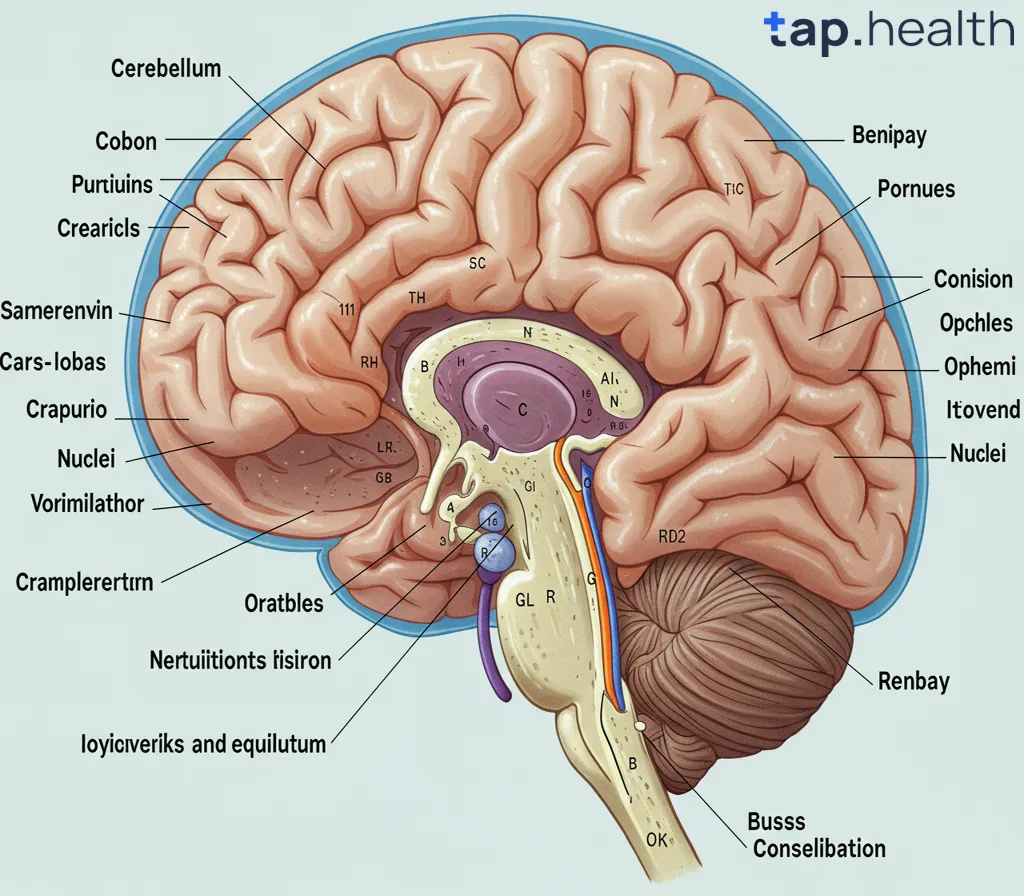
The cerebellum is a small but powerful part of your brain. It’s located at the back of your head, just below the main brain (called the cerebrum) and above the brainstem.
Where Is the Cerebellum Located?
- At the base of the skull, behind your ears.
- Sitting right above the spinal cord.
- Tucked under the larger, wrinkly part of the brain.
Think of it like a little brain sitting at the bottom of the big brain. In fact, its name comes from Latin: cerebellum means “little brain.”
Even though it only makes up about 10% of your brain’s total weight, it contains more than half of all the neurons (nerve cells) in your brain!
That’s a lot of brainpower packed into a small space.
What Does the Cerebellum Do?
The cerebellum has one main job: control balance, coordination, and smooth movement.
But it does much more than that. Let’s break it down.
1. Keeps You Balanced (Equilibrium)
Equilibrium means balance—your ability to stay upright and not fall over.
Whether you’re standing still, walking, or doing a cartwheel, your cerebellum is working hard to keep you steady.
It does this by:
- Taking in information from your inner ears (which sense motion and gravity).
- Getting feedback from your eyes (to see where you are in space).
- Receiving signals from muscles and joints (to know how your body is moving).
Then, it quickly processes all this data and sends commands to your muscles to make tiny adjustments—so you don’t wobble or fall.
Example: When you stand on one leg, your cerebellum is constantly making micro-corrections in your ankle, knee, and hip muscles to keep you from tipping over.
2. Controls Posture
Posture is how you hold your body when you sit, stand, or move.
Good posture means your spine is straight, shoulders are back, and head is level.
The cerebellum helps maintain posture by:
- Monitoring muscle tension.
- Adjusting how much each muscle contracts.
- Making sure your body stays aligned, even when you’re moving.
Without the cerebellum, you’d slouch, sway, or struggle to stand straight.
3. Coordinates Smooth Movements
Have you ever tried writing with your non-dominant hand? It feels clumsy, right?
That’s because your movements aren’t well-coordinated.
The cerebellum ensures that your movements are smooth, accurate, and precise—not jerky or shaky.
For example:
- When you catch a ball, your cerebellum coordinates your hand, arm, and eye movements.
- When you play piano, it helps your fingers hit the right keys at the right time.
It’s like a conductor in an orchestra—making sure every part works together in harmony.
4. Helps You Learn Motor Skills
The cerebellum plays a big role in learning new physical skills, like:
- Riding a bike
- Swimming
- Playing sports
- Dancing
At first, these activities feel awkward. But with practice, they become automatic. That’s because your cerebellum is recording and refining the movements until they become second nature.
This is called motor learning, and it’s one of the cerebellum’s superpowers.
How Does the Cerebellum Work with Other Body Parts?
The cerebellum doesn’t work alone. It’s part of a team that includes your ears, eyes, muscles, and nerves.
Let’s see how they all connect.
1. Inner Ears (Vestibular System)
Inside your ears are tiny structures filled with fluid and hair cells. They’re called the vestibular system.
When you move your head, the fluid moves and bends the hair cells. This sends signals to the cerebellum about:
- Which way you’re moving
- Whether you’re tilting
- If you’re speeding up or slowing down
This is why spinning in circles makes you dizzy—the fluid keeps moving even after you stop, so your cerebellum gets confused.
2. Eyes (Visual Input)
Your eyes help the cerebellum understand your position in space.
For example:
- If you’re walking on a sidewalk, your eyes tell the cerebellum how far you are from the edge.
- In the dark, it’s harder to balance because your cerebellum isn’t getting visual clues.
So, your eyes and cerebellum work together to keep you stable.
3. Muscles and Joints (Proprioception)
Your muscles and joints have special sensors called proprioceptors. They tell your brain:
- Where your limbs are
- How much your muscles are stretched
- Whether your foot is on flat ground or a slope
This sense is called proprioception—your body’s “sixth sense” for position.
All this info travels through nerves to the cerebellum, which uses it to adjust your posture and balance instantly.
What Happens If the Cerebellum Is Damaged?
If the cerebellum gets injured or diseased, your balance and coordination suffer.
This can lead to a condition called ataxia—a medical term for loss of control over body movements.
Common Symptoms of Cerebellar Damage:
- Unsteady walking (like being drunk, even if you’re not)
- Tremors (shaking hands or head)
- Slurred speech (words come out slow or unclear)
- Trouble with eye movements (eyes jump instead of moving smoothly)
- Poor coordination (can’t touch your nose with your finger while eyes are closed)
These problems happen because the cerebellum can’t process signals properly or send correct commands to the muscles.
Causes of Cerebellar Damage:
| Stroke | A blood clot or bleeding in the brain can damage the cerebellum. |
| Head Injury | A hard blow to the back of the head can injure it. |
| Alcohol Abuse | Long-term heavy drinking harms the cerebellum. |
| Genetic Disorders | Some people are born with cerebellar problems (like Friedreich’s ataxia). |
| Tumors | Growths in the brain can press on the cerebellum. |
| Multiple Sclerosis (MS) | A disease that damages nerve coverings, affecting cerebellar signals. |
In some cases, the damage is temporary. In others, it can be permanent. But physical therapy and training can help improve coordination over time.
Real-Life Example: Why Do People Stumble When They’re Drunk?
You’ve probably seen someone who’s had too much alcohol—they walk wobbly, can’t stand straight, or even fall over.
That’s because alcohol affects the cerebellum.
Even a small amount of alcohol slows down the cerebellum’s ability to process balance signals. That’s why:
- You feel dizzy
- Your movements become clumsy
- You can’t walk a straight line
This is also why police use field sobriety tests—like walking heel-to-toe or standing on one foot—to check if someone is impaired. These tasks rely heavily on the cerebellum.
Once the alcohol leaves the body, the cerebellum recovers, and balance returns to normal.
How Is Cerebellar Function Tested?
Doctors use simple tests to check if your cerebellum is working well.
Common Cerebellar Tests:
1. Finger-to-Nose Test
- You close your eyes and touch your nose with your fingertip, then reach out to touch the doctor’s finger.
- If you overshoot or wobble, it may mean cerebellar damage.
2. Heel-to-Shin Test
- You lie down and slide your heel down the opposite shin.
- Jerky or uncoordinated movement suggests a problem.
3. Rapid Alternating Movements
- You tap your hand quickly on your knee, flipping palm up and down.
- Slow or irregular tapping can point to cerebellar issues.
4. Balance and Gait Test
- You walk in a straight line, heel to toe.
- If you stagger or can’t stay on the line, the cerebellum might be affected.
These tests help doctors diagnose conditions like stroke, MS, or ataxia.
Can You Improve Your Cerebellum’s Function?
Yes! While you can’t grow a new cerebellum, you can train it to work better.
Just like muscles get stronger with exercise, your cerebellum improves with practice.
Ways to Boost Cerebellar Health:
1. Balance Exercises
- Stand on one foot
- Walk on a balance beam or line
- Use a wobble board or balance pad
These challenge your cerebellum and help it get sharper.
2. Coordination Activities
- Juggling
- Playing catch
- Dancing
- Martial arts
These force your brain and body to work together smoothly.
3. Physical Therapy
- For people recovering from injury or illness, therapists use targeted exercises to rebuild coordination.
4. Stay Active
- Regular exercise like walking, swimming, or cycling keeps the cerebellum active and healthy.
5. Avoid Alcohol and Toxins
- Protect your cerebellum by limiting alcohol and avoiding harmful substances.
Over time, these activities can improve balance, posture, and motor control—even as you age.
Is the Cerebellum the Only Part Involved in Balance?
While the cerebellum is the main controller, it doesn’t work alone.
Other brain areas also help with balance and posture.
Supporting Brain Regions:
1. Brainstem
- Connects the brain to the spinal cord.
- Contains centers that control basic functions like breathing and heart rate.
- Also helps with automatic balance adjustments (like righting your head if you tilt).
2. Vestibular Nuclei
- Clusters of nerve cells in the brainstem.
- Receive signals from the inner ear.
- Send info to the cerebellum and spinal cord.
3. Cerebrum (Motor Cortex)
- The big, wrinkly part of the brain.
- Plans voluntary movements (like deciding to stand up).
- Sends signals to muscles, but relies on the cerebellum to make them smooth.
So, while the cerebellum is the star of the show, it’s part of a team effort.
Fun Facts About the Cerebellum
Let’s make it fun with some cool facts:
- The cerebellum has more neurons than the rest of the brain combined.
- Birds have large cerebellums—helping them fly and land with precision.
- people who juggle regularly grow more gray matter in their cerebellum.
- Babies develop cerebellar control slowly—hence why they wobble when learning to walk.
- The cerebellum was once thought to only control movement, but now scientists know it may help with thinking and emotion too.
Common Misconceptions About the Cerebellum
Let’s clear up some myths.
Myth 1: “The cerebrum controls balance.”
Truth: The cerebrum plans movements, but the cerebellum fine-tunes them for balance and coordination.
Myth 2: “Only the inner ear controls balance.”
Truth: The inner ear sends balance signals, but the cerebellum processes them and tells the body what to do.
Myth 3: “If you lose balance, it’s just weak muscles.”
Truth: Weak muscles can contribute, but poor balance often means the cerebellum isn’t processing signals well.
Myth 4: “The cerebellum isn’t important.”
Truth: It’s essential for everyday movement. Without it, even simple tasks become nearly impossible.
How Does Age Affect the Cerebellum?
As we get older, the cerebellum can shrink slightly, and its function may slow down.
This is why older adults:
- Are more likely to lose balance
- Fall more often
- Have shakier hands
But the good news? Exercise and balance training can slow this down.
Studies show that seniors who do tai chi, yoga, or balance exercises have better coordination and fewer falls.
So, keeping your cerebellum active is a key part of healthy aging.
What Role Does the Cerebellum Play in Sports and Performance?
Athletes, dancers, and musicians rely heavily on their cerebellum.
In Sports:
- Gymnasts use it to land flips perfectly.
- Soccer players use it to dribble smoothly.
- Skiers use it to adjust on icy slopes.
In Music:
- Pianists depend on it for fast, accurate finger movements.
- Drummers use it to keep perfect rhythm.
All of these skills require precise timing and coordination—the cerebellum’s specialty.
And the more they practice, the better their cerebellum gets at these tasks.
That’s why elite performers seem to move with such grace and control—their cerebellum has been trained to perfection.
Can You Live Without a Cerebellum?
Technically, yes—but life would be extremely difficult.
There are rare cases of people born without a cerebellum (a condition called cerebellar agenesis), but they face major challenges:
- Severe developmental delays
- Inability to walk or speak clearly
- Lifelong need for care
In most cases, damage to the cerebellum doesn’t mean death, but it severely limits movement and independence.
So while you can survive without it, you can’t live a normal life.
How Do Scientists Study the Cerebellum?
Researchers use many tools to understand how the cerebellum works.
1. MRI Scans
- Show detailed images of the brain.
- Help doctors see tumors, strokes, or shrinkage in the cerebellum.
2. Animal Studies
- Scientists study mice, rats, and monkeys to learn how the cerebellum controls movement.
- They observe how damage affects balance and coordination.
3. Electrophysiology
- Measures electrical activity in cerebellar neurons.
- Shows how signals are processed.
4. fMRI (Functional MRI)
- Tracks brain activity in real time.
- Shows which parts of the cerebellum light up during balance tasks.
All of this research helps us understand balance disorders and develop better treatments.
Why Is This Important for Students and Kids?
Understanding the cerebellum helps you:
- Appreciate how your body works.
- Make better choices (like avoiding alcohol or wearing helmets).
- Excel in sports and physical activities.
- Prepare for science exams (it’s a common topic in biology).
It’s not just for future doctors—everyone benefits from knowing how their brain keeps them steady.
How to Protect Your Cerebellum
Your cerebellum is tough, but it needs care.
Tips to Keep It Healthy:
- Wear a helmet when biking, skating, or playing contact sports.
- Limit alcohol—it directly harms cerebellar cells.
- Stay active—exercise improves cerebellar function.
- Eat brain-healthy foods—like fish (rich in omega-3), nuts, and leafy greens.
- Get enough sleep—your brain repairs itself at night.
- Avoid head injuries—fall prevention is key, especially for older adults.
A healthy lifestyle = a healthy cerebellum.
Frequently Asked Questions (FAQ) on Which part of the brain maintains posture and equilibrium?
Q1: Which part of the brain maintains posture and equilibrium?
Answer: The cerebellum is the main part of the brain that controls posture and balance (equilibrium).
Q2: Where is the cerebellum located?
Answer: It’s at the back of the brain, below the cerebrum and above the brainstem, near the base of the skull.
Q3: What happens if the cerebellum is damaged?
Answer: You may experience poor balance, shaky movements, slurred speech, and difficulty walking—collectively known as ataxia.
Q4: Can the cerebellum heal itself?
Answer: It has limited ability to repair, but rehabilitation and therapy can help the brain adapt and improve function over time.
Q5: Does the inner ear affect balance?
Answer: Yes! The inner ear’s vestibular system senses motion and gravity and sends signals to the cerebellum to help maintain balance.
Q6: Why do I feel dizzy when I spin?
Answer: Spinning moves the fluid in your inner ear. When you stop, the fluid keeps moving, sending false signals to the cerebellum—making you feel dizzy.
Q7: Can balance be improved?
Answer: Yes! Balance exercises like standing on one foot, walking heel-to-toe, or using a balance board can strengthen cerebellar function.
Q8: Is the cerebellum involved in thinking?
Answer: Traditionally, it was seen as only a movement center. But newer research shows it may also play a role in attention, language, and emotion.
Q9: Do animals have a cerebellum?
Answer: Yes! All vertebrates (animals with backbones) have a cerebellum. In birds and mammals, it’s especially well-developed for complex movement.
Q10: How does alcohol affect the cerebellum?
Answer: Alcohol slows down cerebellar activity, leading to poor coordination, slurred speech, and unsteady walking—common signs of intoxication.
Q11: What is proprioception?
Answer: It’s your body’s sense of where your limbs are in space. Sensors in muscles and joints send this info to the cerebellum for balance control.
Q12: Can kids improve their cerebellum?
Answer: Absolutely! Playing, running, jumping, and learning new skills all help the cerebellum develop, especially in childhood.
Q13: Is balance controlled by the brain or the spine?
Answer: The brain (especially the cerebellum) controls balance, but the spinal cord carries signals between the brain and body.
Q14: Why is the cerebellum called the “little brain”?
Answer: Because it looks like a smaller version of the brain and has a similar folded structure, even though it’s much smaller in size.
Q15: Can you feel your cerebellum working?
Answer: Not directly. But you can feel its effects—like when you stay steady on a bike or catch a ball smoothly.
Final Thoughts
So, to answer the big question:
Which part of the brain maintains posture and equilibrium?
The cerebellum.
It’s the unsung hero of your nervous system—working silently to keep you upright, coordinated, and in control.
From walking to dancing to riding a skateboard, every smooth movement you make is thanks to this small but mighty part of your brain.
It doesn’t get much attention, but without it, life would be shaky, unsteady, and full of falls.
So next time you stand tall or walk without thinking, take a mental bow to your cerebellum.
It’s working hard to keep you balanced—every single second.