Have you ever wondered why some people seem to learn faster, solve problems quicker, or remember things better than others? Is it just practice? Luck? Or is there something special going on inside their brains?
The truth is, intelligence isn’t controlled by just one tiny spot in your head. It’s not like a light switch you flip on. Instead, intelligence comes from many parts of the brain working together—like a team of experts solving a puzzle.
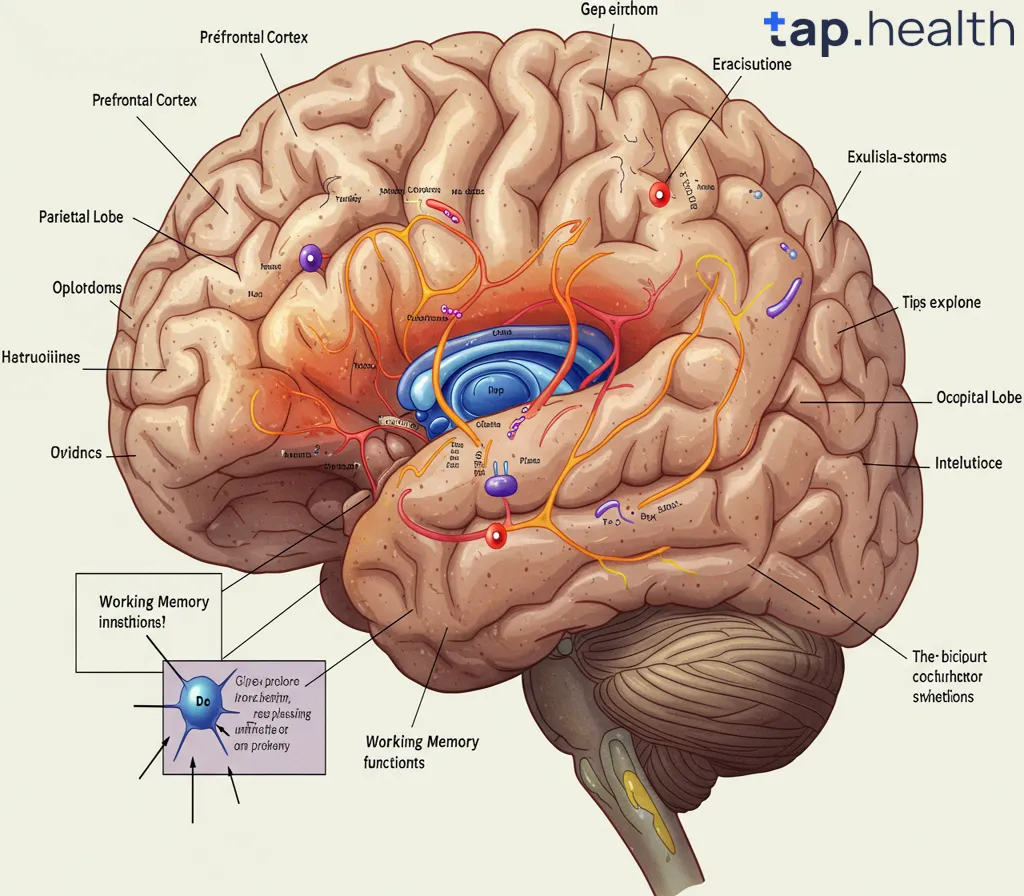
But if we had to pick the main areas involved, scientists point to the prefrontal cortex, parietal lobe, and networks that connect different brain regions. These areas help with thinking, planning, solving problems, and learning new things.
In this article, we’ll break down everything you need to know about the brain and intelligence. We’ll keep it simple—no confusing jargon. You’ll learn:
- What intelligence really means
- The key brain areas involved
- How brain size, structure, and connections affect smarts
- Whether IQ is fixed or can grow
- And much more
Let’s dive in.
What Exactly Is Intelligence?
Before we talk about where intelligence comes from, let’s make sure we understand what it is.
Intelligence Isn’t Just About Being “Smart”
When people say “intelligent,” they often think of someone who gets good grades, wins trivia games, or speaks five languages. But intelligence is much broader than that.
Psychologists define intelligence as the ability to learn, understand, reason, solve problems, adapt to new situations, and use knowledge effectively.
There are different types of intelligence:
- Logical-mathematical: Solving math problems, thinking logically
- Linguistic: Reading, writing, speaking well
- Spatial: Understanding maps, imagining shapes in 3D
- Emotional: Recognizing emotions in yourself and others
- Creative: Coming up with new ideas or art
- Practical: Knowing how to fix things or handle real-life situations
So, being “intelligent” doesn’t mean you’re great at everything. It means your brain can process information and use it in useful ways.
The Brain: Your Body’s Control Center
Your brain is like the CEO of your body. It runs everything—your thoughts, movements, senses, emotions, and even your breathing (without you having to think about it).
It weighs about 3 pounds and has around 86 billion nerve cells (called neurons). These neurons send signals to each other through tiny connections, forming complex networks.
But not all parts of the brain do the same job. Different regions handle different tasks.
Think of your brain like a city:
- The front is the office district (planning, decisions)
- The back is the visual and sensory center (seeing, feeling)
- The sides handle hearing and language
- The middle manages emotions and memory
Now, let’s find out which parts are most linked to intelligence.
The Prefrontal Cortex: The Brain’s Command Center for Thinking
If intelligence had a headquarters, it would be the prefrontal cortex.
What Is the Prefrontal Cortex?
The prefrontal cortex is the front part of your brain, right behind your forehead. It’s one of the last brain areas to fully develop—usually not until your mid-20s.
This area is responsible for:
- Planning ahead
- Making decisions
- Controlling impulses (like not yelling when angry)
- Focusing attention
- Solving complex problems
- Understanding consequences
These skills are often called “executive functions.” And guess what? They’re a big part of what makes someone “intelligent.”
Why the Prefrontal Cortex Matters for Intelligence
Studies using brain scans (like fMRI) show that people with higher IQ scores tend to have more active and efficient prefrontal cortices.
For example:
- When solving a tough puzzle, the prefrontal cortex lights up.
- People who score high on IQ tests use this area more efficiently—they don’t need to “work harder” to get the right answer.
- Damage to this area (from injury or illness) can lead to poor judgment, lack of focus, or trouble planning—even if the person was once very smart.
So, while the whole brain is involved, the prefrontal cortex is like the team captain of intelligence.
The Parietal Lobe: The Math and Logic Hub
Another major player in intelligence is the parietal lobe, located near the top and back of your brain.
What Does the Parietal Lobe Do?
The parietal lobe helps you:
- Understand numbers and math
- Process spatial relationships (like how far the door is)
- Combine information from different senses (touch, sight, sound)
- Pay attention to details
It works closely with the prefrontal cortex, especially when you’re doing something that requires logic or reasoning.
Link Between Parietal Lobe and IQ
Research shows that the size and activity of the parietal lobe are linked to intelligence.
For example:
- People with larger parietal lobes often perform better on tests involving logic, patterns, and abstract thinking.
- Brain imaging studies reveal that during IQ tests, both the prefrontal and parietal regions show strong activity.
- Some scientists believe the parietal lobe helps integrate information from different brain areas—making it easier to “see the big picture.”
So, if the prefrontal cortex is the planner, the parietal lobe is the data analyst.
Brain Networks: Intelligence Is a Team Effort
Here’s a key point: Intelligence doesn’t come from one single area. It’s the result of multiple brain regions working together in networks.
The Frontoparietal Network
One of the most important networks for intelligence is the frontoparietal network—a connection between the prefrontal cortex and the parietal lobe.
This network:
- Helps you stay focused on a task
- Lets you switch between different thoughts
- Supports problem-solving and decision-making
Think of it like a phone line between two offices. The better the connection, the faster and clearer the communication.
People with stronger connections in this network tend to have higher fluid intelligence—the ability to think logically and solve new problems without relying on past knowledge.
The Default Mode Network
Another surprising player is the default mode network (DMN). This network is active when your brain is “at rest”—like when you’re daydreaming or letting your mind wander.
You might think that’s the opposite of intelligence. But scientists have found that people with more organized DMN activity often have higher IQs.
Why? Because this network helps with:
- Self-reflection
- Creative thinking
- Making connections between ideas
- Long-term planning
So even when you’re not “working,” your brain might be quietly solving problems in the background.
Gray Matter vs. White Matter: What’s the Difference?
When scientists study intelligence, they often look at two types of brain tissue: gray matter and white matter.
Gray Matter: The Brain’s Processing Power
Gray matter contains the cell bodies of neurons—the “thinking” parts of brain cells.
Areas rich in gray matter (like the prefrontal and parietal lobes) are crucial for:
- Processing information
- Memory
- Decision-making
- Learning
Studies show that people with more gray matter in these regions tend to score higher on intelligence tests.
But here’s the catch: More gray matter isn’t always better. It’s about quality, not just quantity. Efficiency matters more than size.
White Matter: The Brain’s Wiring System
White matter is made up of long nerve fibers (axons) covered in a fatty layer called myelin. This coating helps electrical signals travel faster between brain regions.
Think of white matter as the brain’s internet cables. The better the wiring, the faster information moves.
Strong, healthy white matter means:
- Faster communication between brain areas
- Better coordination of thought processes
- Improved learning and problem-solving
Research shows that people with more developed white matter—especially in the frontoparietal network—tend to have higher IQs.
So, intelligence depends not just on how many brain cells you have, but how well they’re connected.
Does Brain Size Determine Intelligence?
You’ve probably heard the myth: “Bigger brain = smarter person.”
But is that true?
The Truth About Brain Size
Humans have larger brains relative to body size than most animals. But within humans, brain size doesn’t strongly predict intelligence.
For example:
- Albert Einstein’s brain was actually smaller than average—about 1,230 grams (average is 1,300–1,400 grams).
- Some people with very large brains score average on IQ tests.
- Whales and elephants have much bigger brains than humans, but they don’t solve algebra or write novels.
So, size isn’t everything.
What Matters More Than Size?
What really matters is:
- Brain structure: How the parts are organized
- Neural efficiency: How quickly and effectively neurons communicate
- Connectivity: How well different regions work together
- Plasticity: The brain’s ability to adapt and learn
In fact, some studies suggest that smarter brains are often more efficient—they use less energy to solve problems.
So, it’s not about having the biggest brain. It’s about having the best-connected, most adaptable brain.
Can You Increase Your Intelligence?
Many people believe intelligence is fixed—like eye color. But science says otherwise.
Intelligence Can Grow: The Power of Neuroplasticity
Your brain is not set in stone. It can change and adapt throughout life. This ability is called neuroplasticity.
That means:
- You can improve your thinking skills
- You can learn new things at any age
- Practice and effort can literally reshape your brain
For example:
- Learning to play an instrument strengthens brain connections.
- Doing puzzles or math problems builds gray matter in key areas.
- Regular exercise increases blood flow to the brain and supports new neuron growth.
So, while genes play a role, your lifestyle and habits have a huge impact on how smart you become.
How to Boost Brain Power
Here are proven ways to improve your intelligence:
- Exercise regularly
Physical activity boosts blood flow to the brain and helps grow new neurons. - Get enough sleep
Sleep helps your brain organize memories and clear out waste. - Eat brain-healthy foods
Omega-3 fats (found in fish), antioxidants (berries), and whole grains support brain function. - Learn new skills
Taking up a language, instrument, or craft challenges your brain and builds new connections. - Read and solve puzzles
Books, crosswords, Sudoku, and logic games keep your mind sharp. - Stay socially active
Talking with others improves emotional intelligence and keeps your brain engaged. - Manage stress
Chronic stress can damage the prefrontal cortex. Meditation and deep breathing help protect it.
The bottom line? Intelligence isn’t just something you’re born with. It’s something you can grow.
Are Some People Born Smarter?
Yes and no.
The Role of Genetics
Genes do influence intelligence. Studies of twins and families show that about 50% to 80% of IQ differences come from genetics.
But that doesn’t mean your IQ is fixed at birth.
Think of genes like the seeds you plant. They set the potential. But how well the plant grows depends on the soil, water, and sunlight—your environment.
So, even if you have “smart genes,” you still need the right conditions to reach your full potential.
The Role of Environment
Your upbringing, education, nutrition, and experiences all shape your intelligence.
For example:
- Children who grow up in stimulating environments (with books, games, and supportive adults) tend to develop higher IQs.
- Poor nutrition in early childhood can harm brain development.
- Access to quality education opens doors to learning and critical thinking.
This is why two people with the same genetic potential can end up with very different levels of intelligence.
What About IQ Tests? Do They Measure Real Intelligence?
IQ (Intelligence Quotient) tests are the most common way to measure intelligence. But they don’t tell the whole story.
What IQ Tests Measure
Most IQ tests check:
- Verbal reasoning (understanding words and ideas)
- Mathematical ability
- Pattern recognition
- Memory
- Processing speed
These are important skills, but they don’t cover everything.
What IQ Tests Miss
IQ tests don’t measure:
- Creativity
- Emotional intelligence
- Social skills
- Practical knowledge (like fixing a car or cooking a meal)
- Motivation or perseverance
So, a high IQ doesn’t guarantee success. And a lower IQ doesn’t mean someone isn’t intelligent in other ways.
Also, IQ can change over time—especially during childhood and adolescence.
Are IQ Tests Fair?
Some critics argue that IQ tests favor certain cultures or backgrounds. For example:
- Questions may use language or examples familiar only to some groups.
- Test anxiety can affect performance.
- Access to test prep varies by income.
So, while IQ tests can give useful insights, they’re just one tool—not the final word on intelligence.
Can Brain Injuries Affect Intelligence?
Yes. Damage to certain brain areas can impact thinking, memory, and problem-solving.
Common Causes of Brain Injury
- Traumatic head injuries (like from accidents)
- Strokes
- Tumors
- Infections (like meningitis)
- Lack of oxygen (during birth or cardiac arrest)
Which Injuries Affect Intelligence Most?
Damage to the prefrontal cortex or parietal lobe often has the biggest impact on intelligence.
For example:
- A person might struggle with planning, focus, or logical thinking after a frontal lobe injury.
- Someone with parietal lobe damage might have trouble with math or understanding spatial relationships.
But the brain can sometimes recover. Through therapy, practice, and neuroplasticity, people can regain lost skills or learn new ways to compensate.
Do Men and Women Have Different Intelligence?
No—on average, men and women have the same overall intelligence.
But there are some small differences in how brains work:
- Men tend to score slightly higher on spatial reasoning (like rotating 3D shapes).
- Women often do better on verbal fluency and memory tasks.
However, these differences are small and vary widely between individuals. Social factors (like education and encouragement) play a big role.
Plus, emotional and social intelligence don’t favor one gender.
So, when it comes to real-world problem-solving, creativity, and learning, both men and women are equally capable.
Does Age Affect Intelligence?
Yes, but not in the way you might think.
Fluid vs. Crystallized Intelligence
There are two main types of intelligence that change with age:
- Fluid intelligence: The ability to think quickly, solve new problems, and spot patterns.
This tends to peak in your 20s and slowly decline with age. - Crystallized intelligence: Knowledge you’ve built over time—facts, vocabulary, experience.
This usually grows throughout life and can stay strong even into old age.
So, while a 60-year-old might take longer to solve a puzzle than a 20-year-old, they likely know more, have better judgment, and can apply wisdom from experience.
How to Keep Your Brain Sharp as You Age
- Stay mentally active (read, learn, play games)
- Exercise regularly
- Eat a healthy diet
- Stay socially connected
- Manage blood pressure and cholesterol
Many older adults remain highly intelligent and creative well into their 70s, 80s, and beyond.
Can Technology or Drugs Boost Intelligence?
People often ask: Can pills, brain games, or devices make you smarter?
Brain Training Apps
Apps like Lumosity or Elevate claim to boost memory and IQ. But research is mixed.
Some studies show small improvements in the specific tasks you practice—but not in overall intelligence.
It’s like doing bicep curls: your arm gets stronger, but it doesn’t make you a better basketball player.
Nootropics (Smart Drugs)
Some people take supplements or prescription drugs (like Adderall) to improve focus.
But:
- Most “smart drugs” have little evidence of boosting intelligence in healthy people.
- Some can have side effects (anxiety, insomnia, addiction).
- Long-term effects are unknown.
The safest and most effective way to boost brain power? Healthy habits—sleep, exercise, learning.
What’s the Future of Intelligence Research?
Scientists are still learning how the brain creates intelligence.
Brain Scans and AI
New tools like fMRI and AI are helping researchers:
- Map brain activity during thinking tasks
- Predict IQ based on brain scans
- Understand how neural networks support learning
Some day, we might be able to personalize education based on a student’s brain patterns.
Can We Grow Intelligence on Demand?
While we can’t “upload” knowledge like in movies, we’re learning how to optimize brain health and learning.
Future possibilities include:
- Targeted brain training programs
- Wearable devices that monitor focus
- Gene therapies for brain disorders (not for boosting normal IQ)
But for now, the best way to get smarter is the old-fashioned way: practice, curiosity, and effort.
Final Thoughts: Intelligence Is Complex—but Within Your Control
So, which part of the brain is responsible for intelligence?
The short answer: the prefrontal cortex and parietal lobe, supported by strong connections (white matter) and efficient networks.
But the full picture is more complex. Intelligence isn’t just one thing. It’s a mix of:
- Brain structure
- Neural connections
- Life experiences
- Effort and habits
And the good news? You’re not stuck with the brain you were born with.
Every time you learn something new, solve a problem, or push through a challenge, you’re building a smarter, stronger brain.
So keep asking questions. Keep learning. And remember: intelligence isn’t just what you’re born with—it’s what you build.
Frequently Asked Questions (FAQ) on Which Part of the Brain Is Responsible for Intelligence? A Simple Guide
Q: Is the frontal lobe responsible for intelligence?
Yes, especially the prefrontal cortex, which is the front part of the frontal lobe. It handles planning, decision-making, focus, and problem-solving—all key parts of intelligence.
Q: Does the cerebellum control intelligence?
No. The cerebellum mainly controls balance, coordination, and fine motor skills. While some studies suggest it may play a small role in thinking speed, it’s not a major center for intelligence.
Q: Can you increase gray matter in the brain?
Yes. Activities like learning a new language, playing music, exercising, and meditation have been shown to increase gray matter in areas linked to memory and thinking.
Q: Is intelligence located in the left or right brain?
Not exactly. Both sides work together. The left brain is often linked to logic and language, while the right handles creativity and spatial skills. Intelligence uses both hemispheres.
Q: Do brain games make you smarter?
They can improve the specific skills you practice (like memory or speed), but they don’t necessarily boost overall intelligence or real-world problem-solving.
Q: Can trauma lower your IQ?
Yes, especially if the injury affects the prefrontal or parietal lobes. However, with therapy and brain training, many people recover lost abilities.
Q: Are intelligent people’s brains different?
Yes. Studies show they often have more efficient brain networks, better connectivity, and stronger activity in the prefrontal and parietal regions. But these differences can develop over time with learning.
Q: Does memory equal intelligence?
Not exactly. Memory is one part of intelligence, but being smart also involves reasoning, creativity, and understanding complex ideas.
Q: Can diet affect intelligence?
Yes. A diet rich in omega-3s, antioxidants, and whole grains supports brain health. Poor nutrition, especially in childhood, can harm brain development.
Q: At what age is intelligence fully developed?
Most brain regions finish developing by the mid-20s. But you can keep improving your skills and knowledge throughout life.
Q: Is emotional intelligence part of brain intelligence?
Yes. Emotional intelligence involves brain areas like the prefrontal cortex and amygdala. It’s a real form of intelligence that helps with relationships and self-awareness.
Q: Can meditation increase intelligence?
Meditation doesn’t raise IQ overnight, but it improves focus, reduces stress, and can increase gray matter in brain regions tied to attention and self-control—supporting smarter thinking.
Q: Do geniuses have different brains?
Some do. Einstein’s brain had unusual features, like a larger corpus callosum (the bridge between brain halves). But many geniuses simply used their brains efficiently through intense focus and curiosity.
Q: Is intelligence inherited?
About half of intelligence comes from genes. The other half comes from environment, education, and personal effort.
Q: Can lack of sleep reduce intelligence?
Yes. Sleep deprivation harms focus, memory, and decision-making. Chronic poor sleep can even shrink the prefrontal cortex over time.