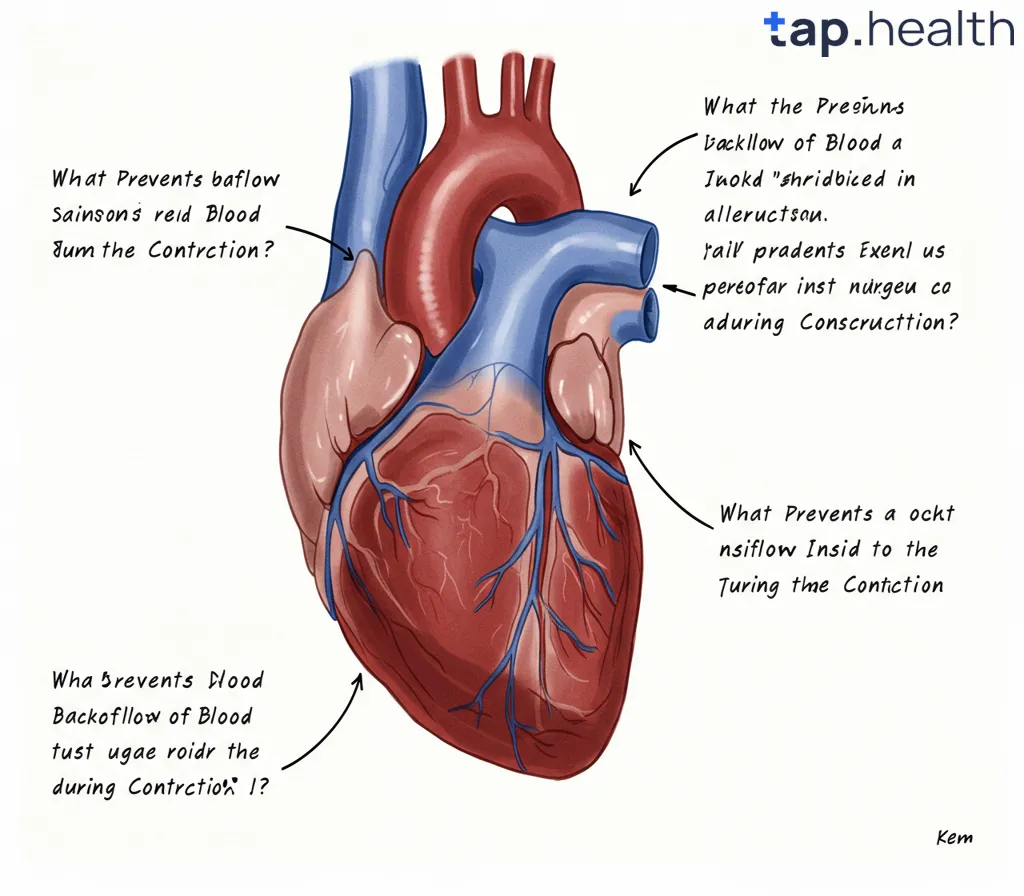
Have you ever wondered how your heart keeps blood moving in the right direction? Your heart is like a powerful pump that beats about 100,000 times a day. With each beat, it sends blood to your lungs and the rest of your body. But here’s the big question: What prevents backflow of blood inside the heart during contraction?
If blood flowed backward every time the heart squeezed, it wouldn’t be able to deliver oxygen and nutrients properly. That would be dangerous—maybe even deadly. So nature has a smart system in place. And the answer lies in something small but mighty: heart valves.
In this article, we’ll explore exactly how the heart stops blood from flowing backward during each heartbeat. You’ll also learn about the types of valves, how they work, what happens when they fail, and why they’re so important.
Let’s dive in.
How Does the Heart Pump Blood?
Before we answer what prevents backflow, we need to understand how the heart works in the first place.
Your heart is a muscular organ about the size of your fist. It sits in the center of your chest and works nonstop to keep you alive. It has four chambers: two on the top (called atria) and two on the bottom (called ventricles).
Here’s how blood moves through the heart:
- Blood enters the right atrium from the body (this blood is low in oxygen).
- It flows into the right ventricle.
- The right ventricle pumps it to the lungs to pick up oxygen.
- Oxygen-rich blood returns to the left atrium.
- It moves into the left ventricle.
- The left ventricle pumps it out to the entire body.
This cycle repeats with every heartbeat.
But here’s the catch: for this system to work, blood must move only forward. It can’t go backward. So, how does the heart make sure of that?
The Role of Heart Valves in Preventing Backflow
The answer to “what prevents backflow of blood inside the heart during contraction?” is: the heart valves.
Think of heart valves like one-way doors. They open to let blood pass through and then snap shut to stop it from flowing back. Without them, blood would slosh backward every time the heart muscle contracts (squeezes), making the whole system inefficient.
There are four main heart valves, and each plays a key role in keeping blood moving in the right direction.
Let’s look at each one.
The Four Valves of the Heart
1. Tricuspid Valve
- Location: Between the right atrium and right ventricle.
- Function: Lets blood flow from the right atrium into the right ventricle.
- When it closes: When the right ventricle contracts (squeezes), the tricuspid valve shuts tightly to prevent blood from going back into the right atrium.
2. Pulmonary Valve
- Location: Between the right ventricle and the pulmonary artery (which leads to the lungs).
- Function: Opens to let blood leave the right ventricle and go to the lungs.
- When it closes: After the right ventricle finishes pumping, the pulmonary valve closes to stop blood from flowing back into the heart.
3. Mitral Valve (Also Called Bicuspid Valve)
- Location: Between the left atrium and left ventricle.
- Function: Allows oxygen-rich blood from the lungs to move from the left atrium into the powerful left ventricle.
- When it closes: When the left ventricle contracts (which it does with great force), the mitral valve snaps shut to prevent backflow into the left atrium.
4. Aortic Valve
- Location: Between the left ventricle and the aorta (the main artery that carries blood to the body).
- Function: Opens so the left ventricle can pump blood into the aorta.
- When it closes: Right after the pump, it shuts tightly to stop blood from leaking back into the heart.
Each of these valves opens and closes in perfect timing with the heartbeat. This coordination is what keeps blood moving forward.
How Do Heart Valves Actually Work?
Now that we know the names and locations of the valves, let’s see how they stop backflow.
One-Way Design of Heart Valves
Heart valves are made of thin but strong flaps of tissue called leaflets or cusps. These leaflets act like swinging doors:
- When blood pushes from behind, the valve opens.
- When pressure builds from the front (like when the ventricle contracts), the valve closes.
This is a passive process—no nerves or muscles control the opening and closing. It’s all about pressure changes inside the heart.
Pressure Changes Control Valve Movement
Here’s a step-by-step look at how this works during a heartbeat:
- Relaxation Phase (Diastole):
- The heart muscle relaxes.
- Pressure drops in the ventricles.
- Blood from the atria flows down into the ventricles.
- The tricuspid and mitral valves are open.
- The pulmonary and aortic valves are closed.
- Contraction Phase (Systole):
- The ventricles squeeze hard.
- Pressure inside the ventricles rises sharply.
- This high pressure slams shut the tricuspid and mitral valves.
- At the same time, the rising pressure pushes open the pulmonary and aortic valves.
- Blood shoots out to the lungs and body.
- End of Contraction:
- The ventricles stop squeezing.
- Pressure drops quickly.
- The pulmonary and aortic valves snap shut to prevent backflow.
- The cycle starts again.
So, the key point is: pressure changes during contraction cause the valves to close automatically, preventing backflow.
Why Is Preventing Backflow So Important?
You might be thinking, “So what if a little blood leaks back? Can’t the heart just pump harder?”
In small amounts, yes. But if backflow becomes regular or severe, it causes real problems.
Backflow Can Lead to Heart Strain
When a valve doesn’t close properly, blood flows backward. This is called regurgitation or valve insufficiency.
For example:
- If the mitral valve leaks, blood flows back into the left atrium.
- The heart has to pump the same blood twice—once to push it forward, and again because some came back.
Over time, this extra work weakens the heart muscle. It’s like making a car engine run with a leaky fuel line—it has to work harder and will wear out faster.
Reduced Oxygen Delivery to the Body
If blood isn’t moving efficiently, less oxygen reaches your organs and muscles. This can cause:
- Fatigue
- Shortness of breath
- Dizziness
- Swelling in legs and feet
These are signs that the heart isn’t doing its job well—often due to faulty valves.
What Happens If Heart Valves Don’t Work Properly?
Now that we’ve answered “what prevents backflow of blood inside the heart during contraction,” let’s look at what happens when the system fails.
Valve problems are more common than you might think. Millions of people live with heart valve disease.
There are two main types of valve problems:
Valve Stenosis – When Valves Can’t Open Fully
- The valve becomes stiff or narrowed.
- It can’t open wide enough.
- Blood has a hard time getting through.
- The heart must pump harder to push blood past the blockage.
Common causes:
- Calcium buildup (especially in older adults)
- Congenital defects (born with it)
- Rheumatic fever (from untreated strep throat)
Valve Regurgitation – When Valves Don’t Close Tightly
- The valve doesn’t seal properly.
- Blood leaks backward.
- Also called valve insufficiency or leaky valve.
Causes:
- Valve damage from infection (endocarditis)
- Heart attack damaging valve structures
- Age-related wear and tear
- Enlarged heart stretching the valve ring
Both conditions force the heart to work harder and can lead to heart failure if not treated.
How Do Doctors Know If a Valve Is Leaking?
You can’t feel your heart valves working, so how do doctors detect problems?
Listening to Heart Sounds
Your doctor uses a stethoscope to listen to your heart. A normal heartbeat makes a “lub-dub” sound.
- “Lub”: The first sound, when the mitral and tricuspid valves close.
- “Dub”: The second sound, when the aortic and pulmonary valves close.
If a valve is leaking or narrowed, you might hear a whooshing sound called a heart murmur.
But not all murmurs are dangerous. Some are harmless (“innocent murmurs”), especially in children.
Diagnostic Tests for Valve Problems
If a murmur is concerning, doctors use tests like:
- Echocardiogram (Echo): Uses sound waves to create a video of your heart. It shows how well valves open and close.
- EKG (Electrocardiogram): Checks the heart’s electrical activity. Can show strain from valve problems.
- Chest X-ray: Shows heart size and shape. A large heart may mean valves are failing.
- Cardiac MRI or CT: Detailed images to assess valve structure.
- Cardiac Catheterization: A tube is inserted into a blood vessel and guided to the heart to measure pressure and take pictures.
These tools help doctors decide if treatment is needed.
Can Backflow Be Treated?
Yes! If a valve isn’t working right, there are several ways to fix it.
Medications to Help the Heart
While meds can’t fix a leaky valve, they can:
- Reduce fluid buildup (diuretics)
- Lower blood pressure (to reduce strain)
- Control heart rhythm (if irregular)
These help manage symptoms but don’t cure the valve problem.
H3: Surgical and Minimally Invasive Treatments
When valves are severely damaged, surgery may be needed.
Valve Repair
- Surgeons reshape or patch the valve.
- Often used for mitral valve regurgitation.
- Better long-term results than replacement when possible.
Valve Replacement
- The damaged valve is removed and replaced with:
- A mechanical valve (made of metal and lasts a long time, but requires blood thinners).
- A biological valve (made from animal tissue, doesn’t need blood thinners, but wears out in 10–15 years).
Transcatheter Aortic Valve Replacement (TAVR)
- A newer, less invasive option.
- A new valve is threaded through a blood vessel (usually in the leg) and placed inside the old one.
- Great for older patients who can’t have open-heart surgery.
These treatments can stop backflow and restore normal heart function.
How Can You Keep Your Heart Valves Healthy?
You can’t control everything (like aging or genetics), but you can take steps to protect your heart valves.
Prevent Infections That Harm Valves
One major cause of valve damage is infective endocarditis—an infection of the heart lining or valves.
How to prevent it:
- Practice good dental hygiene (bacteria from the mouth can enter the blood).
- Get antibiotics before certain dental or surgical procedures if your doctor recommends it (not everyone needs this anymore).
- Treat strep throat promptly to avoid rheumatic fever.
Manage Blood Pressure and Cholesterol
High blood pressure and cholesterol can lead to:
- Stiff, narrowed valves (especially aortic stenosis).
- Hardening of arteries, which increases strain on the heart.
Do:
- Eat a heart-healthy diet (fruits, veggies, whole grains, lean proteins).
- Exercise regularly.
- Avoid smoking.
- Limit salt and processed foods.
Get Regular Checkups
Many valve problems don’t cause symptoms at first. Regular visits to your doctor can catch issues early.
Tell your doctor if you have:
- Unexplained fatigue
- Shortness of breath
- Swelling in legs or ankles
- Chest pain or palpitations
Early detection saves lives.
What Happens During a Normal Heartbeat?
To fully understand what prevents backflow, let’s walk through a single heartbeat.
Step-by-Step Heart Cycle
Phase 1: Filling (Diastole)
- Heart muscles relax.
- Pressure in ventricles drops.
- Tricuspid and mitral valves open.
- Blood flows from atria into ventricles.
- Pulmonary and aortic valves stay closed.
Phase 2: Contraction Begins (Systole)
- Ventricles start to contract.
- Pressure rises rapidly.
- Tricuspid and mitral valves snap shut → prevents backflow into atria.
- Sound: “Lub.”
Phase 3: Blood Ejection
- Pressure in ventricles exceeds that in arteries.
- Pulmonary valve opens → blood goes to lungs.
- Aortic valve opens → blood goes to body.
- Both semilunar valves (pulmonary and aortic) are now open.
Phase 4: Contraction Ends
- Ventricles stop squeezing.
- Pressure drops fast.
- Blood starts to flow back toward the heart.
- This backflow fills the valve pockets and slams shut the pulmonary and aortic valves.
- Sound: “Dub.”
And the cycle repeats—about 60 to 100 times per minute.
So, to repeat: the closing of the heart valves during ventricular contraction is what prevents backflow of blood inside the heart.
Are Heart Valves the Only Thing That Prevent Backflow?
Most of the time, yes. But there are a few other factors that help:
Structure of the Heart Chambers
The shape and muscle strength of the ventricles help push blood forward efficiently. A strong, well-shaped left ventricle ensures a powerful ejection of blood, reducing the chance of backflow.
Timing of Electrical Signals
Your heart has a natural pacemaker (the sinoatrial node) that sends electrical signals in perfect timing. This ensures:
- Atria contract first (pushing extra blood into ventricles).
- Then ventricles contract (after they’re full).
- Valves open and close at the right time.
If this timing is off (like in arrhythmias), it can affect valve function indirectly.
But the main defense against backflow? Still the valves.
Can Babies Be Born with Faulty Valves?
Yes. Some people are born with heart valve problems. This is called congenital heart valve disease.
Common Birth Defects Involving Valves
- Bicuspid Aortic Valve: Instead of three leaflets, the aortic valve has only two. It may work fine for years but often leads to stenosis later in life.
- Pulmonary Valve Stenosis: The pulmonary valve is too narrow, making it hard for blood to reach the lungs.
- Ebstein’s Anomaly: The tricuspid valve is malformed and sits too low in the right ventricle.
These conditions may need monitoring or surgery, but many children live full, healthy lives with treatment.
Do Animals Have the Same Valve System?
Yes! Mammals (like dogs, cats, and whales) have four-chambered hearts with the same four valves. The system works the same way: valves open and close to prevent backflow.
Even birds have similar setups. It’s a proven design that evolution has kept because it works so well.
Can You Live With a Leaky Heart Valve?
Many people do—especially if the leak is mild.
Mild vs. Severe Regurgitation
- Mild leak: Often no symptoms. No treatment needed. Just regular checkups.
- Moderate leak: May cause mild fatigue or shortness of breath during exercise.
- Severe leak: Can lead to heart enlargement, heart failure, or arrhythmias. Usually requires surgery.
So yes, you can live with a leaky valve—but it must be monitored.
What Are the Warning Signs of Valve Problems?
Since valve issues can be silent at first, it’s important to know the signs.
Common Symptoms of Valve Disease
- Shortness of breath, especially when lying down or during activity.
- Fatigue (feeling tired all the time).
- Swelling in ankles, feet, or belly (from fluid buildup).
- Chest pain or tightness, especially during exertion.
- Palpitations (feeling your heart race, flutter, or skip).
- Dizziness or fainting.
If you have any of these, see a doctor. Early treatment can prevent serious complications.
How Is Backflow Measured?
Doctors don’t just guess if blood is flowing backward—they measure it.
Echocardiogram Shows Backflow
An echo uses ultrasound to see blood flow in real time. It can show:
- How much blood leaks through a valve.
- The speed and direction of blood.
- Whether the heart is enlarging from the extra work.
Doctors rate leaks as:
- Mild
- Moderate
- Severe
This helps decide if and when to treat.
Can Exercise Affect Valve Function?
Yes—but in a good way, usually.
Benefits of Exercise
- Strengthens heart muscle.
- Improves circulation.
- Helps control blood pressure and weight.
- Reduces risk of heart disease.
But if you have a known valve problem, talk to your doctor before starting intense exercise.
Some people with severe valve disease are advised to avoid heavy lifting or extreme sports.
What’s the Outlook for People With Valve Problems?
The good news: most valve issues can be managed.
With Treatment, Life Can Be Normal
- Many people with repaired or replaced valves live active, full lives.
- Mechanical valves last a lifetime but require blood thinners.
- Biological valves may need replacement after 10–15 years.
- New procedures like TAVR are making surgery safer and easier.
The key is early detection and proper care.
Frequently Asked Questions (FAQ) on What Prevents Backflow of Blood Inside the Heart During Contraction?
Q1: What prevents backflow of blood inside the heart during contraction?
The heart valves prevent backflow. Specifically, the tricuspid, pulmonary, mitral, and aortic valves open and close to ensure blood flows in one direction. During ventricular contraction, the mitral and tricuspid valves close to stop blood from going back into the atria, while the pulmonary and aortic valves open to let blood exit. After contraction, the pulmonary and aortic valves close to prevent backflow into the ventricles.
Q2: Which valves prevent backflow during ventricular contraction?
During ventricular contraction (systole), the mitral and tricuspid valves close to prevent backflow into the atria. These are the atrioventricular (AV) valves. Later, when the ventricles relax, the pulmonary and aortic valves close to stop blood from flowing back into the heart from the arteries.
Q3: What happens if blood flows backward in the heart?
Backward flow (regurgitation) means the heart has to pump the same blood more than once. This causes the heart to work harder, leading to enlargement, fatigue, shortness of breath, and eventually heart failure if not treated.
Q4: Can heart valves repair themselves?
In most cases, no. Heart valves don’t heal on their own. However, mild leaks may not need treatment. Severe cases require surgery or replacement.
Q5: How do heart valves know when to open and close?
They don’t “know”—they respond to pressure changes. When pressure is higher behind the valve, it opens. When pressure builds in front (like during contraction), it closes automatically.
Q6: What is the “lub-dub” sound of the heart?
- “Lub”: First heart sound (S1), caused by the closure of the mitral and tricuspid valves at the start of ventricular contraction.
- “Dub”: Second heart sound (S2), caused by the closure of the aortic and pulmonary valves at the end of contraction.
Q7: Can a person live with only three heart valves?
Yes. Some people are born with three instead of four (like those with a bicuspid aortic valve). Others have valves replaced or removed. As long as blood flows properly, the heart can function well.
Q8: Does aging affect heart valves?
Yes. Over time, valves can:
- Stiffen (leading to stenosis).
- Leak (due to wear).
- Accumulate calcium. Regular checkups are important for older adults.
Q9: Can backflow be seen on an EKG?
Not directly. An EKG shows the heart’s electrical activity. It may show signs of strain from valve disease (like enlarged chambers), but an echocardiogram is needed to see backflow.
Q10: Are heart valve problems genetic?
Some are. Conditions like bicuspid aortic valve can run in families. If a close relative has valve disease, mention it to your doctor.
Final Thoughts
So, to answer the big question: What prevents backflow of blood inside the heart during contraction?
It’s the heart valves—four small but powerful structures that open and close with every beat to keep blood moving forward. The tricuspid and mitral valves stop backflow into the atria, while the pulmonary and aortic valves prevent blood from returning to the ventricles after it’s been pumped out.
Without these valves, the heart couldn’t work efficiently. Even a small leak can cause big problems over time. But the good news is that valve issues can be detected early and treated effectively.
Your heart works hard for you—every second of every day. Understanding how it works is the first step to taking care of it.
So listen to your heart. Get regular checkups. Live a heart-healthy lifestyle. And remember: those tiny valves are the unsung heroes keeping your blood flowing the right way.