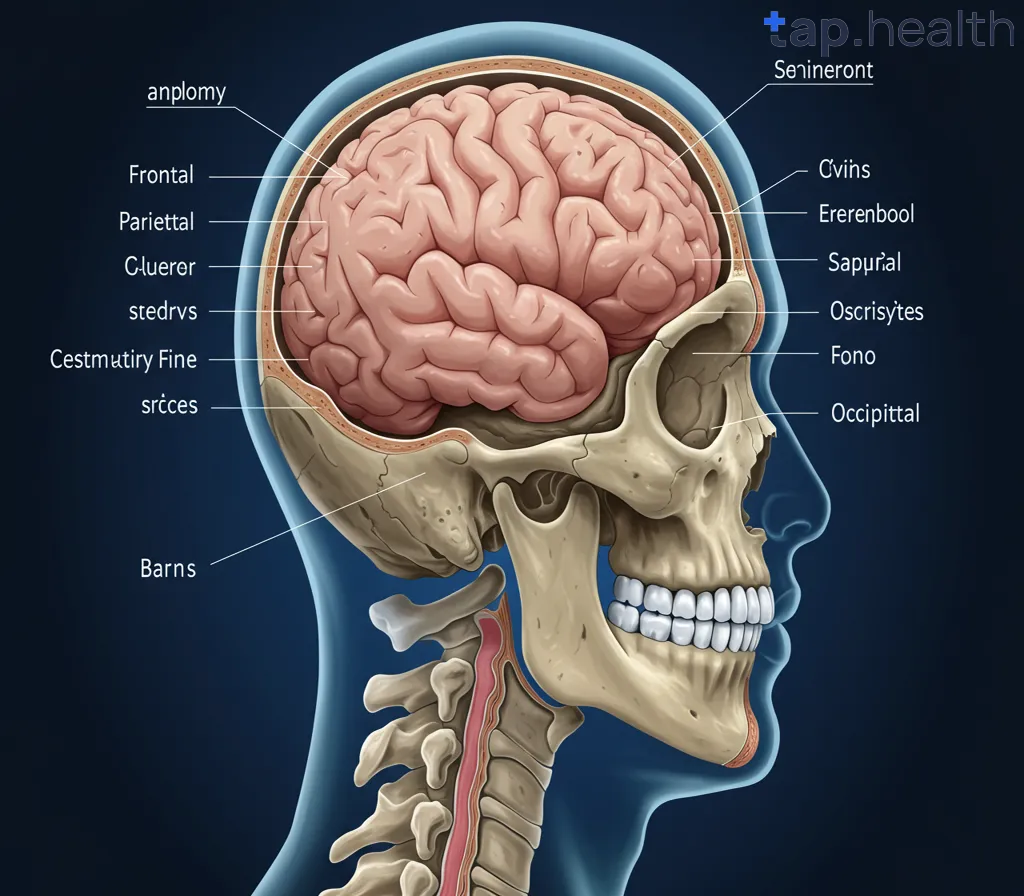
Have you ever wondered where your brain lives inside your head? Or what keeps it safe from bumps, falls, and injuries? The answer lies in a special space in your skull called the cranial cavity.
This might sound like a complicated science word, but it’s actually a simple idea: the cranial cavity is the hollow space inside your skull that holds and protects your brain—just like a helmet protects a rider’s head.
In this article, we’ll answer the question: What cavity is the brain located in? We’ll go deep into the structure of the skull, how the brain is held in place, what protects it, and why this matters for your health. We’ll keep everything simple, clear, and accurate—using plain English that an 8th grader can understand.
We’ve researched this topic using trusted medical sources like the National Institutes of Health (NIH), Mayo Clinic, Cleveland Clinic, and TeachMeAnatomy to make sure you get reliable information.
Let’s dive in.
The Brain’s Home: The Cranial Cavity
So, what cavity is the brain located in? The answer is the cranial cavity.
The cranial cavity is part of the skull
Your skull isn’t just one solid bone. It’s made up of many bones joined tightly together. These bones form a strong, hard shell around your brain.
Inside that shell is an open space—the cranial cavity. This is where your brain sits, snug and protected.
Think of it like this:
- Your skull = a hard helmet
- The cranial cavity = the space inside the helmet
- Your brain = the thing being protected
Without this cavity, your brain would have nowhere to go—and it wouldn’t be safe from injury.
What Is the Cranial Cavity Made Of?
To understand how the cranial cavity works, let’s look at what it’s made of.
1. Bones of the skull
The cranial cavity is formed by eight major bones in the skull. These bones are:
- Frontal bone (forehead)
- Two parietal bones (top and sides of the head)
- Two temporal bones (near your ears)
- Occipital bone (back of the head)
- Sphenoid bone (deep in the skull, behind the eyes)
- Ethmoid bone (between the eyes, near the nose)
These bones fit together like a puzzle. The joints between them are called sutures, and they’re mostly immovable in adults. That makes the skull strong and stable.
2. Dura mater – the tough brain wrapper
Inside the cranial cavity, the brain isn’t just floating around. It’s wrapped in three protective layers called the meninges. The outermost layer is the dura mater.
The dura mater is thick and tough—like a plastic wrap around the brain. It sticks to the inside of the skull and helps keep the brain from moving too much.
How Does the Cranial Cavity Protect the Brain?
The main job of the cranial cavity is protection. But how exactly does it do that?
1. Hard bone shield
The skull bones are thick and strong. They act like a natural helmet, absorbing impacts from falls, hits, or accidents.
For example:
- If you bump your head on a door, the skull takes the hit—not the brain.
- In sports, helmets add extra protection, but your skull is the first line of defense.
2. Cushioning with cerebrospinal fluid (CSF)
The brain doesn’t sit directly against the bone. It floats in a clear liquid called cerebrospinal fluid (CSF).
This fluid:
- Cushions the brain like a water balloon
- Absorbs shocks
- Helps remove waste
- Keeps the brain from touching the skull
There’s about 125–150 mL of CSF in the average adult—constantly being made and recycled.
3. Meninges – the brain’s protective layers
As mentioned, the brain is wrapped in three layers:
- Dura mater – tough outer layer
- Arachnoid mater – middle layer, web-like
- Pia mater – thin inner layer, stuck to the brain
Together, these layers form a strong barrier against infection and injury.
What Else Is Inside the Cranial Cavity?
The brain isn’t the only thing in the cranial cavity. Several other important things share this space.
1. Blood vessels
Your brain needs a lot of oxygen and energy. So, it has a rich network of blood vessels, including:
- Carotid arteries – bring oxygen-rich blood from the heart
- Jugular veins – carry blood back out
- Cerebral arteries – branch out to feed different brain areas
These vessels run through the cranial cavity and are protected by the same structures that guard the brain.
2. Cerebrospinal fluid (CSF) spaces
CSF flows through hollow spaces in the brain called ventricles and around the brain and spinal cord in the subarachnoid space.
These fluid-filled areas are part of the cranial cavity and help maintain pressure and balance.
3. Cranial nerves
There are 12 pairs of cranial nerves that come directly from the brain. They pass through small holes in the skull to reach the face, eyes, ears, and organs.
Examples:
- Optic nerve – for vision
- Facial nerve – for facial movement
- Vagus nerve – controls heart, digestion, and more
These nerves are protected as they exit the cranial cavity through tiny openings.
How Big Is the Cranial Cavity?
The size of the cranial cavity varies from person to person, but on average:
- Volume: About 1,300 to 1,500 cubic centimeters (cm³) in adults
- Shape: Oval or egg-like, wider at the base
This space is just big enough to fit the brain comfortably—with room for fluid and blood flow.
Does brain size matter?
No. A bigger cranial cavity doesn’t mean a smarter person. Intelligence depends on brain structure, connections, and function—not size.
For example:
- Albert Einstein’s brain was slightly smaller than average
- Whales have much larger brains but aren’t more intelligent than humans
What matters is how the brain works, not how big it is.
How Does the Cranial Cavity Develop?
Your cranial cavity isn’t born fully formed. It grows as you grow.
In babies: Soft spots (fontanelles)
When a baby is born, the skull bones aren’t fully fused. There are soft spots called fontanelles.
These allow the skull to:
- Flex during birth
- Expand as the baby’s brain grows
The largest fontanelle is on top of the head and usually closes by 18 months.
In children and teens: Bones slowly fuse
As kids grow, the sutures between skull bones slowly harden. By age 20, most sutures are closed, and the cranial cavity stops growing.
This is why head injuries in children can be more dangerous—the skull is still developing.
What Happens If the Cranial Cavity Is Damaged?
Injuries to the skull can affect the cranial cavity and, in turn, the brain.
1. Skull fractures
A hard blow to the head can crack the skull. Types include:
- Linear fracture: A simple break, like a crack in glass
- Depressed fracture: Part of the bone pushes inward
- Basilar fracture: Break at the base of the skull
Even if the brain isn’t hurt, a fracture can lead to bleeding or infection.
2. Increased intracranial pressure
Sometimes, fluid, blood, or swelling builds up inside the cranial cavity. This raises intracranial pressure (ICP).
Causes include:
- Brain injury
- Tumors
- Infections like meningitis
- Bleeding (hemorrhage)
High pressure can squeeze the brain and damage it. Symptoms include:
- Severe headache
- Vomiting
- Vision changes
- Confusion
- Loss of consciousness
This is a medical emergency.
Can the Cranial Cavity Be Too Small?
Yes. Some rare conditions cause the cranial cavity to be smaller than normal.
Craniosynostosis
This is when the skull sutures close too early in babies. The brain keeps growing, but the skull can’t expand.
This leads to:
- Abnormal head shape
- Increased pressure on the brain
- Developmental delays
Treatment often involves surgery to reshape the skull and give the brain room.
Microcephaly
This condition means a baby is born with a smaller head and brain. The cranial cavity is smaller, which can affect brain development.
Causes include:
- Genetic factors
- Infections during pregnancy (like Zika virus)
- Lack of oxygen to the fetal brain
Children with microcephaly may have intellectual disabilities or developmental delays.
How Do Doctors Study the Cranial Cavity?
Doctors use imaging tools to see inside the cranial cavity without surgery.
1. CT scan (Computed Tomography)
A CT scan uses X-rays to create detailed cross-sectional images of the skull and brain.
It’s fast and great for detecting:
- Skull fractures
- Bleeding
- Tumors
2. MRI (Magnetic Resonance Imaging)
An MRI uses magnets and radio waves to show soft tissues in detail.
It’s better for seeing:
- Brain structure
- Fluid buildup
- Nerve damage
3. X-rays
Less detailed than CT or MRI, but X-rays can still show major skull fractures or bone problems.
What Is the Difference Between Cranial and Other Body Cavities?
Your body has several cavities. The cranial cavity is just one of them.
Let’s compare:
| Cranial cavity | Inside the skull | Brain |
| Spinal cavity | Inside the spine | Spinal cord |
| Thoracic cavity | Chest | Heart, lungs |
| Abdominal cavity | Belly | Stomach, liver, intestines |
| Pelvic cavity | Lower belly | Bladder, reproductive organs |
The cranial and spinal cavities together form the dorsal cavity (back side), while the others are in the ventral cavity (front side).
Each cavity protects vital organs with bones, muscles, and membranes.
Why Is the Cranial Cavity Important for Survival?
Without the cranial cavity, the brain would be exposed and vulnerable.
Here’s why it’s so important:
1. Physical protection
The hard skull bones shield the brain from trauma. Even a small injury to the brain can cause serious problems like memory loss, paralysis, or death.
2. Stable environment
The cranial cavity helps maintain:
- Constant temperature
- Balanced fluid pressure
- Protection from germs
This stability is essential for the brain to work properly.
3. Space for growth and function
The cavity gives the brain room to grow in childhood and function throughout life. It also allows blood vessels and nerves to connect safely.
Common Questions About the Cranial Cavity
Let’s answer some of the most common questions people have about the cranial cavity and the brain.
What protects the brain inside the cranial cavity?
Three main things protect the brain:
- Skull bones – hard outer shell
- Meninges – protective tissue layers
- Cerebrospinal fluid – shock-absorbing liquid
Together, they form a safety system that keeps the brain safe.
Can the brain move inside the cranial cavity?
Yes, but only a little. The brain floats in CSF, so it can shift slightly during movement. But the dura mater and CSF keep it from hitting the skull.
In a sudden stop (like a car crash), the brain can slam into the skull—this is called concussion.
Is the cranial cavity the same as the skull?
Not exactly. The skull is the bony structure. The cranial cavity is the space inside the skull that holds the brain.
Think of it like a box: the box is the skull, and the empty space inside is the cavity.
Does the cranial cavity change with age?
Yes. In babies, it’s smaller and still growing. In adults, it stops growing but can change due to injury, disease, or bone loss.
In older adults, some bone thinning can occur, making the skull slightly weaker.
What happens if there’s too much fluid in the cranial cavity?
Too much cerebrospinal fluid causes a condition called hydrocephalus—often called “water on the brain.”
This increases pressure and can damage the brain. Symptoms include:
- Headaches
- Nausea
- Vision problems
- Developmental delays in children
Treatment usually involves surgery to drain the extra fluid.
Fun Facts About the Cranial Cavity and Brain
Let’s end with some cool facts:
- Your skull has over 20 bones, but only 8 form the cranial cavity.
- The adult brain weighs about 3 pounds (1.4 kg).
- The cranial cavity is slightly larger in men than women, but brain size doesn’t affect intelligence.
- Your brain uses about 20% of your body’s oxygen and energy.
- The meninges were named after Latin words: dura (hard), arachnoid (spider-like), pia (tender).
Frequently Asked Questions (FAQ)
What cavity is the brain located in?
The brain is located in the cranial cavity, which is the space inside the skull formed by eight major bones.
Is the cranial cavity part of the skull?
Yes. The cranial cavity is the hollow space within the skull that houses and protects the brain.
What are the protective layers around the brain?
The brain is protected by three layers called the meninges:
- Dura mater (outer)
- Arachnoid mater (middle)
- Pia mater (inner)
How does cerebrospinal fluid protect the brain?
CSF cushions the brain, absorbs shocks, and helps remove waste. It acts like a liquid pillow inside the cranial cavity.
Can a skull fracture damage the brain?
Yes. A severe skull fracture can press on the brain, cause bleeding, or let in infection. Even minor fractures need medical attention.
What is intracranial pressure?
It’s the pressure inside the cranial cavity. Normal pressure keeps the brain safe. High pressure can be dangerous and requires emergency care.
How do doctors see inside the cranial cavity?
Using imaging tests like CT scans and MRIs, doctors can view the brain, bones, and fluid without surgery.
What happens if the cranial cavity is too small?
Conditions like craniosynostosis or microcephaly can cause a small cranial cavity, leading to brain development issues and pressure.
Does the brain touch the skull?
No. The brain floats in cerebrospinal fluid and is separated from the skull by the meninges. This prevents direct contact and reduces injury risk.
Can you live without a cranial cavity?
No. The cranial cavity is essential for protecting the brain. Without it, the brain would be exposed and easily damaged.
What’s the difference between cranial and spinal cavity?
The cranial cavity holds the brain. The spinal cavity (inside the spine) holds the spinal cord. Together, they protect the central nervous system.
How big is the average cranial cavity?
About 1,300 to 1,500 cm³ in adults. It’s large enough to fit the brain, fluid, blood vessels, and nerves.
Can the cranial cavity heal after injury?
The bones of the skull can heal after fractures, and the brain can recover from some injuries. But severe damage may cause lasting problems.
Final Thoughts: Your Brain’s Safe Space
So, what cavity is the brain located in? The cranial cavity—a specially designed, well-protected space inside your skull.
This cavity does more than just hold the brain. It shields it, cushions it, and provides a stable environment so your brain can do its job: controlling your body, thoughts, emotions, and senses.
From the hard bones of the skull to the cushioning fluid and protective membranes, every part of the cranial cavity plays a role in keeping your brain safe.
Understanding this helps you appreciate how amazing your body is—and why it’s so important to protect your head. Wear helmets, avoid risky behavior, and see a doctor if you ever hit your head hard.
Your brain is your most valuable organ. And thanks to the cranial cavity, it’s living in one of the safest places in your body.