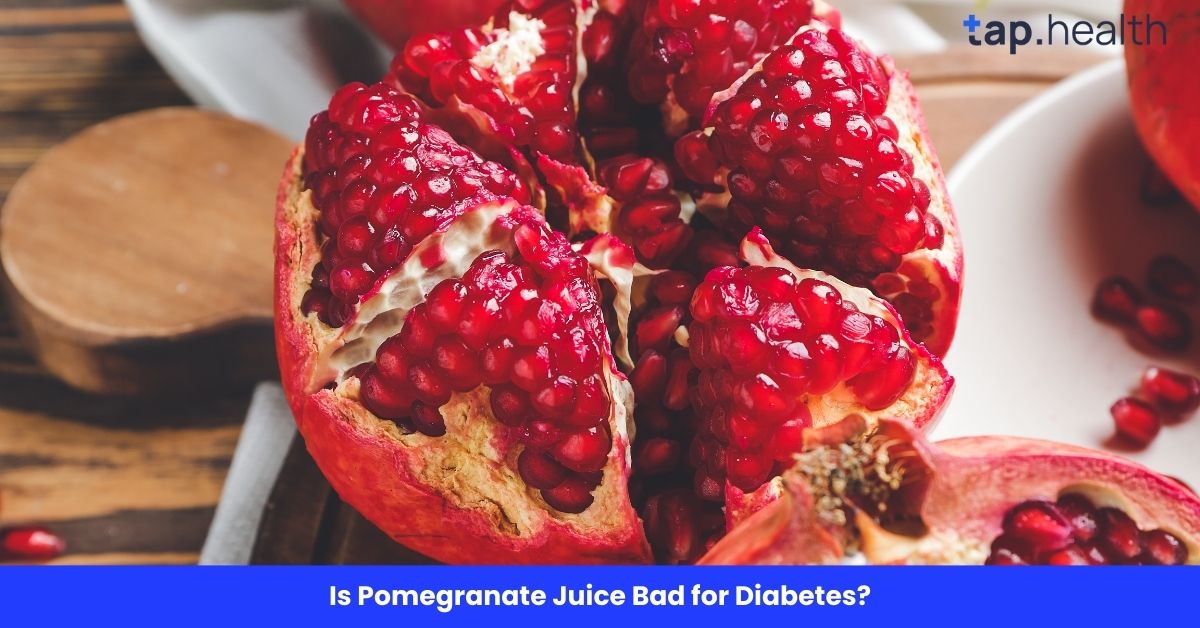
That bottle of deep red, glossy pomegranate juice looks healthy. It screams “antioxidants!” and “heart health!” from the supermarket shelf. But if you’re one of the millions managing diabetes, you pick it up with a knot of doubt in your stomach. That voice in your head whispers, “It’s so sweet. Is this going to send my blood sugar through the roof? Is pomegranate juice bad for me?”
It’s a brilliant question. And the answer isn’t a simple yes or no. It’s a “yes, but…” and a “no, if…”.
Understanding this drink is like understanding a complex character. It has a good side and a bad side. Your job is to know which side you’re dealing with before you bring it home.
This guide is here to be your translator. We’re going to unpack everything about pomegranate juice and diabetes. We’ll explore its superhero qualities, its villainous potential for causing blood sugar spikes, and the golden rules for drinking it safely if you choose to. We’ll compare it to the whole fruit and answer every question you might have.
By the end, you’ll feel confident and know exactly how to approach this ruby-red beverage. Let’s settle this once and for all.
What Does “Bad for Diabetes” Really Mean?
Before we talk about the juice, let’s get crystal clear on what we’re actually looking for. When we say a food or drink is “bad for diabetes,” we usually mean it does one or more of these things:
- Causes a rapid, high spike in blood sugar (glucose): This is the big one. Foods that dump a lot of sugar into your bloodstream quickly force your body to work overtime to manage it.
- Worsens insulin resistance: Insulin is the key that lets sugar into your cells for energy. In Type 2 diabetes, the cells stop responding to the key (that’s insulin resistance). Some foods can make this problem worse.
- Contributes to weight gain: Managing weight is a huge part of managing Type 2 diabetes. Liquid calories, like juice, are easy to consume and don’t make you feel full, leading to extra calories.
- Interferes with medications: Some foods can interact with diabetes or other medications, making them less effective or even dangerous.
So, to answer our main question, we need to see if pomegranate juice commits any of these dietary crimes.
The Good Side: The Potential Benefits of Pomegranate
Let’s start with the good news. Pomegranate juice isn’t just flavored sugar water. It’s packed with some powerful nutrients.
A Powerhouse of Antioxidants
Pomegranate juice is famous for one thing above all else: its massive antioxidant content. Antioxidants are like the body’s special forces that fight off damaging molecules called free radicals.
The superstar antioxidant in pomegranate juice is called punicalagin. It’s what gives the juice most of its health punch and is even more powerful than antioxidants found in red wine or green tea.
What does this mean for you?
- Fights Inflammation: Chronic inflammation is a key driver of insulin resistance and heart disease. The antioxidants in pomegranate juice can help calm this inflammation.
- Protects Your Heart: People with diabetes have a higher risk of heart disease. Studies suggest pomegranate juice may help lower blood pressure, reduce “bad” LDL cholesterol, and improve blood flow.
- Guards Your Cells: By fighting free radicals, these compounds help protect your cells from damage, which is good for your overall health.
Could It Actually Help with Blood Sugar?
This is the most surprising part. Some early research in labs and animals has shown that pomegranate extract might improve insulin sensitivity. This means it might help make those “rusty locks” on your cells work better with the insulin “key.”
However—and this is a huge however—these studies often use concentrated extracts, not the juice you buy at the store, and more robust human trials are needed. So, while the potential is fascinating, we can’t yet say “drink this to help your diabetes.” The evidence isn’t strong enough.
The Bad Side: The Sugar Problem and Blood Sugar Spikes
Now, let’s look at the other side of the coin. This is where the trouble starts.
Pomegranate Juice vs. Whole Pomegranate: The Missing Fiber
This is the most critical concept to understand. The difference between the whole fruit and the juice is everything.
When you eat a half-cup of pomegranate arils (the juicy seeds), you get:
- Natural Sugar: About 12 grams
- Fiber: About 3.5 grams
Fiber is a diabetes superhero. It’s a type of carbohydrate that your body can’t digest. It creates a mesh in your gut that traps sugar and releases it slowly into your bloodstream. This prevents a sugar rush.
Now, let’s look at juice. To make one 8-ounce (1 cup) glass of juice, you need the juice of several whole pomegranates. But the process strips away almost all the fiber.
So, in one cup of 100% pomegranate juice, you get:
- Natural Sugar: About 31 grams (that’s almost 8 teaspoons of sugar!)
- Fiber: 0 grams
You’re getting nearly triple the sugar and none of the fiber that helps control it. This sugar hits your system like a tsunami, almost as quickly as a sugary soda.
The Glycemic Index (GI) and Glycemic Load (GL)
The Glycemic Index (GI) measures how quickly a food raises blood sugar.
- Whole pomegranate has a low GI of around 53.
- Pomegranate juice has a medium GI, usually between 55 and 65, because the sugar is absorbed faster.
An even better measure is Glycemic Load (GL), which also considers portion size. While the GL for a small serving of juice might be moderate, most people don’t drink a tiny serving. They drink a full glass, which carries a high glycemic load and is very likely to spike blood sugar.
So, Is Pomegranate Juice Bad for Diabetes?
Let’s finally answer the question.
Is it “bad”? It can be, if you drink it the wrong way. Drinking a large glass of pomegranate juice on an empty stomach is a surefire way to cause a rapid and high blood sugar spike. Its lack of fiber and high sugar concentration make it a risky drink.
Is it always bad? Not necessarily. It can be included very cautiously in a diabetic diet if you follow strict rules. The key is to neutralize its negative effects.
The absolute safest choice is to choose the whole fruit over the juice. You get all the antioxidants and vitamins with the built-in blood sugar protection of fiber.
How to Drink Pomegranate Juice Safely If You Have Diabetes
If you really love pomegranate juice and want to enjoy it occasionally, you need a strategy. Here’s your game plan.
1. Portion Control is NON-NEGOTIABLE
This is the most important rule. Do not drink a full glass.
- Stick to a tiny serving of 2-4 ounces (1/4 to 1/2 cup). This is about a quarter of a standard drinking glass.
- Use a measuring cup. Don’t just guess.
2. Never Drink It Alone
Never, ever drink pomegranate juice on an empty stomach. Always have it with or immediately after a balanced meal that contains:
- Protein: (e.g., chicken, fish, eggs, tofu, Greek yogurt)
- Healthy Fats: (e.g., avocado, nuts, olive oil)
- Fiber: (e.g., vegetables, whole grains)
The protein, fat, and fiber from the meal will dramatically slow down the absorption of the sugar from the juice, preventing a sharp spike.
3. Dilute It
Make your small serving go further.
- Mix your 2-4 ounces of juice with sparkling water or plain water to make a spritzer.
- This helps with hydration and further reduces the sugar impact per sip.
4. Read the Label Carefully
You must avoid any product that isn’t pure juice.
- Only buy bottles that say “100% Pomegranate Juice” with no added sugars.
- Avoid terms like “juice cocktail,” “juice drink,” or “pomegranate blend,” as these are packed with added sugars like high-fructose corn syrup.
5. Test Your Blood Sugar
This is the best way to know how your body reacts. Everyone is different.
- Test your blood sugar before you drink the juice.
- Test again 1-2 hours after drinking it.
- This will show you the direct impact. If you see a big spike, you’ll know it’s not for you.
The Golden Choice: Why Whole Pomegranate is Better
If you want the benefits of pomegranate without the stress, the whole fruit is your best friend.
A ½ cup serving of whole pomegranate arils is a fantastic diabetes-friendly snack. You get:
- A sweet, satisfying crunch.
- All the antioxidants and vitamins.
- A full 3.5 grams of blood-sugar-stabilizing fiber.
- A managed portion of natural sugar.
Try sprinkling arils on plain Greek yogurt, adding them to a salad, or just eating them by the handful. It’s a much safer and more effective way to enjoy this superfruit.
Important Warning: Medication Interactions
This is a serious and often overlooked risk. Pomegranate juice can interfere with how your liver breaks down certain medications.
It can inhibit an enzyme that processes some common drugs, causing them to build up to higher levels in your bloodstream. This can be dangerous.
This interaction is especially noted with:
- Certain cholesterol drugs (statins) like atorvastatin (Lipitor) and simvastatin (Zocor).
- Some blood pressure medications.
- Other drugs metabolized by the same liver pathway.
If you are on any medication, you MUST talk to your doctor before adding pomegranate juice to your diet.
Real-Life Scenario: A Tale of Two Choices
Let’s make this practical. Imagine two friends, Alex and Sam, both managing Type 2 diabetes.
- Alex’s Story: Alex hears pomegranate is a superfood. He starts buying 100% pomegranate juice and drinks an 8-ounce glass every morning for breakfast, often on an empty stomach. He figures it’s a healthy way to start the day. Within a week, he notices his energy crashes mid-morning and his continuous glucose monitor (CGM) shows sharp spikes right after drinking it. Despite his good intentions, his average blood sugar levels are creeping up.
- Sam’s Story: Sam also wants the antioxidant benefits. After researching, she decides to skip the juice altogether. Instead, she buys whole pomegranates. She measures out a ½ cup serving of arils and mixes them into her breakfast of plain Greek yogurt and a handful of almonds. Her CGM shows a gentle, slow rise in blood sugar that stays stable for hours. She feels full, satisfied, and energetic.
The difference? Alex consumed pure, fiber-less sugar. Sam consumed sugar packaged with fiber, protein, and fat. Their outcomes were dramatically different. This real-life scenario shows that the form of the food is just as important as the food itself when managing diabetes.
Expert Contribution: Insights from a Registered Dietitian
To cut through the noise and get professional advice, we spoke with Sarah Johnson, a Registered Dietitian and Certified Diabetes Care and Education Specialist.
“In my practice, I always encourage my patients with diabetes to ‘eat their fruit, not drink it.’ The juicing process removes the beneficial fiber, which is crucial for slowing down sugar absorption and promoting satiety. While pomegranate juice contains beneficial antioxidants, the metabolic cost—a rapid blood sugar spike—is simply too high for most individuals.
*If a patient is adamant about including it, we set very strict parameters: a maximum of 2-4 ounces, always paired with a source of protein and healthy fat like a handful of nuts or a part of a balanced meal, and never daily. This mitigates the glycemic response. However, my strong recommendation remains to opt for the whole fruit arils for a blood sugar-friendly way to get those nutrients.”*
This expert opinion underscores a critical point: the potential benefits of the juice do not override its significant impact on blood glucose for those with diabetes.
Recommendations Grounded in Proven Research and Facts
Our guidance isn’t based on trends; it’s rooted in evidence from leading health authorities and scientific consensus.
- American Diabetes Association (ADA) Guidelines: The ADA explicitly states that “liquid carbohydrates,” like sugar-sweetened beverages and even 100% fruit juice, are digested quickly and can raise blood glucose rapidly. They consistently recommend whole fruits over fruit juice for better blood sugar control.
- Glycemic Response Studies: Numerous studies comparing the consumption of whole fruit versus fruit juice demonstrate a significantly lower and slower blood glucose increase after eating whole fruit. This is directly attributable to the presence of fiber, which is absent in juice.
- Nutritional Density: Whole pomegranate arils provide a more complete nutritional package—fiber, vitamins, minerals, and antioxidants—for a similar carbohydrate count as a small serving of juice. This makes them a superior, more efficient choice for nutrient intake.
- Weight Management Evidence: Research shows that liquid calories are less satiating than solid food calories, leading to higher total calorie intake. For individuals with Type 2 diabetes, where weight management is a key component of care, choosing filling, high-fiber foods is a proven strategy.
Therefore, the most scientifically sound recommendation is to prioritize whole pomegranate arils and consider pomegranate juice a rare, carefully controlled exception, not a dietary staple.
FAQ: Your Pomegranate Juice and Diabetes Questions Answered
Q1: Can a diabetic drink pomegranate juice every day?
A: It is not recommended. Even a small daily serving adds a significant amount of sugar without fiber to your diet. This can make blood sugar control more difficult and contribute to weight gain over time. View it as an occasional treat, not a daily habit.
Q2: Does pomegranate juice lower blood sugar?
A: While some lab studies suggest compounds in pomegranate might improve insulin sensitivity, the juice itself is far more likely to raise blood sugar quickly due to its high sugar and low fiber content. You should not drink it with the expectation that it will lower your blood sugar.
Q3: What is the best juice for diabetics?
A: The best choice is usually no juice at all. Whole fruit is always superior. If you really want juice, vegetable-based juices (like tomato or green juice with low-sugar veggies like celery and cucumber) are better. If you want fruit flavor, a squeeze of lemon or lime in water is a safe option.
Q4: Is POM Wonderful juice okay for diabetics?
A: POM Wonderful is 100% pomegranate juice with no added sugar, which makes it the best type to choose if you decide to drink it. However, it still contains all the natural sugar (about 31g per cup) and no fiber, so the same risks apply. The strict portion control rules (2-4 oz with a meal) must be followed.
Q5: I drank pomegranate juice and my sugar spiked. What should I do?
A: Don’t panic. Drink plenty of water to help your kidneys flush out the excess glucose. Go for a gentle walk if you feel up to it, as light activity can help your muscles use some of the sugar. Monitor your levels closely. If they remain very high or you feel unwell (nauseated, extremely tired), contact your doctor.
Q6: Are there any people with diabetes who should completely avoid pomegranate juice?
A: Yes. People who:
- Have trouble controlling their blood sugar levels.
- Have diabetic kidney disease (nephropathy), as the juice is high in potassium which can be dangerous.
- Are on medications that are known to interact with it (like certain statins).
- Are following a very low-carb diet to manage their diabetes.
The Final Verdict
So, is pomegranate juice bad for diabetes?
It’s not inherently “bad,” but it’s risky. Its high sugar content and lack of fiber make it a potent trigger for blood sugar spikes, which is the main thing you want to avoid.
The potential benefits from its antioxidants do not outweigh the immediate negative effect it can have on your glucose levels.
The safest and most highly recommended path is to enjoy pomegranate by eating the whole fruit arils. This gives you all the goodness without the downside.
If you absolutely choose to drink the juice, you must treat it with respect: tiny portions, only with a protein-rich meal, and after getting the all-clear from your doctor, especially if you’re on medication.
Managing diabetes is about making smart, informed choices. You now have all the information you need to decide what role, if any, pomegranate juice will play in your diet.
Disclaimer: This article is for informational purposes only and is not intended to be a substitute for professional medical advice, diagnosis, or treatment. Always seek the advice of your physician or other qualified health provider with any questions you may have regarding a medical condition or before making any changes to your diet or diabetes management plan.