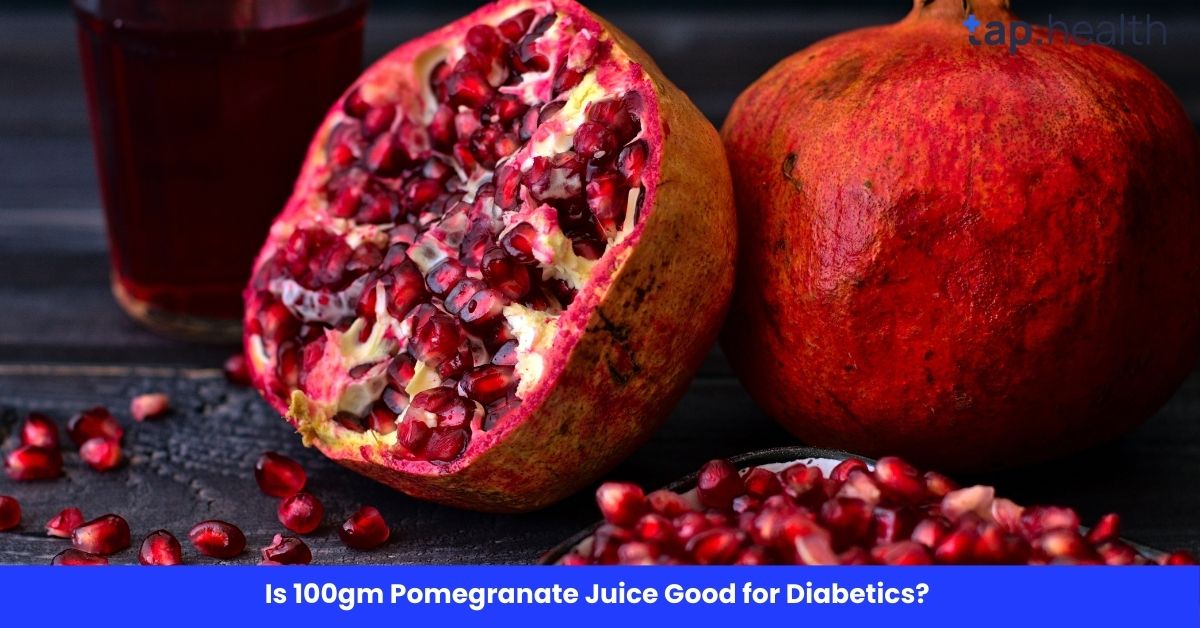
If you have diabetes—or care for someone who does—you’ve probably asked this question: Is 100gm pomegranate juice good for diabetics?
Maybe you’ve heard pomegranate juice is “healthy,” or maybe you’re worried about its sugar. Maybe your doctor mentioned antioxidants, or a friend said, “Just a little won’t hurt.”
You’re not alone. Thousands of people with diabetes Google this exact question every month.
So let’s cut through the noise. In this guide, we’ll answer your question in plain, simple English—no confusing medical jargon, no fluff. Just clear, science-backed facts you can trust.
We’ll cover:
- What’s actually in 100gm of pomegranate juice?
- How does it affect blood sugar?
- What do experts and studies say?
- Can it help or harm your diabetes?
- How much is safe?
- What to look for on the label?
- And much more.
Let’s get started.
What Is 100gm of Pomegranate Juice?
First, let’s understand what we’re talking about.
“100gm” means 100 grams. That’s roughly 3.5 ounces—or just under half a cup (about 100ml, since juice is mostly water and weighs almost the same as it).
So when we say “100gm pomegranate juice,” we’re talking about a small serving—about 4–5 tablespoons.
What’s Inside That 100gm?
According to the USDA FoodData Central and nutrition databases, 100 grams of pure, unsweetened pomegranate juice typically contains:
- Calories: ~54 kcal
- Carbohydrates: ~13.1 grams
- Sugars: ~12.7 grams (mostly natural fructose and glucose)
- Fiber: 0.1 grams (almost none—since it’s juice, not whole fruit)
- Protein: 0.15 grams
- Fat: 0.1 grams
- Vitamin C: ~7% of daily value
- Potassium: ~5% of daily value
- Antioxidants: Very high—especially punicalagins and anthocyanins
Why Does This Matter for Diabetics?
Because diabetes is all about managing blood sugar—and sugar comes from carbs.
That 13 grams of carbs in 100gm juice? Your body will turn most of that into glucose. And if you have diabetes, your body doesn’t handle glucose as well as it should.
But… it’s not just about sugar.
Pomegranate juice also has powerful antioxidants and anti-inflammatory compounds that may actually help your body manage diabetes better. So it’s a bit of a tug-of-war: sugar vs. superpowers.
Let’s dig deeper.
How Does Pomegranate Juice Affect Blood Sugar?
This is the BIG question.
Will drinking 100gm of pomegranate juice spike your blood sugar? Or can it actually help control it?
Glycemic Index (GI) of Pomegranate Juice
The Glycemic Index (GI) measures how fast a food raises your blood sugar.
- Low GI = 55 or less (good for diabetics)
- Medium GI = 56–69
- High GI = 70 or more (can cause spikes)
Pomegranate juice has a GI of around 53, which puts it in the low to medium range. That means it doesn’t spike blood sugar as fast as, say, soda or white bread.
But here’s the catch: GI doesn’t tell the whole story.
Glycemic Load (GL) – The Real Story
Glycemic Load (GL) considers both the GI and how much carb is in a serving.
Formula:
GL = (GI × grams of carbs per serving) ÷ 100
For 100gm pomegranate juice:
(53 × 13.1) ÷ 100 = ~7
- Low GL = 10 or less
- Medium GL = 11–19
- High GL = 20+
So 100gm of pomegranate juice has a low glycemic load.
That’s good news.
It means even though it has sugar, the amount in a 100gm serving is small enough that it shouldn’t cause a major spike—if you’re otherwise healthy and managing your diabetes well.
What Do Real Studies Say?
Several clinical trials have looked at pomegranate juice and diabetes:
- A 2014 study in the Journal of Medicinal Food found that diabetic patients who drank 100ml of pomegranate juice daily for 3 months had lower fasting blood sugar and improved insulin sensitivity.
- A 2019 meta-analysis in Phytotherapy Research concluded that pomegranate juice may help reduce oxidative stress and inflammation in type 2 diabetics.
- Another study in Evidence-Based Complementary and Alternative Medicine (2017) showed improved lipid profiles and reduced insulin resistance.
So yes—science says it can help.
But—and this is important—it’s not magic. You can’t drink juice all day and expect your diabetes to vanish.
It’s about moderation, timing, and what else you’re eating.
Is 100gm Pomegranate Juice Safe for Diabetics?
Short answer: Yes, but with rules.
Long answer: Let’s break it down.
When It’s Safe
✅ You’re drinking pure, unsweetened pomegranate juice (no added sugar)
✅ You’re limiting it to 100gm (about 100ml) per day
✅ You’re drinking it with a meal (not on an empty stomach)
✅ You’re monitoring your blood sugar before and after
✅ You’re not replacing whole fruits or water with juice
When It’s Risky
❌ You’re drinking sweetened or “cocktail” versions (loaded with extra sugar)
❌ You’re drinking more than 100gm daily without adjusting other carbs
❌ You’re drinking it on an empty stomach (higher chance of spike)
❌ You have uncontrolled diabetes or frequent highs/lows
❌ You’re not checking your glucose levels
Real-Life Example
Meet Priya. She has type 2 diabetes. Her doctor told her she can have 100ml of pure pomegranate juice with breakfast—but she must skip the toast that day to balance the carbs.
She checks her sugar 2 hours after. It stays under 140 mg/dL. Perfect.
Now meet Raj. He drinks 250ml of “pomegranate cocktail” juice every morning—on an empty stomach. His sugars jump to 220 mg/dL. Not good.
Same juice? Not even close.
It’s not just what you drink. It’s how much, when, and what else you’re eating.
What Are the Benefits of Pomegranate Juice for Diabetics?
Okay, so it’s not just “not bad”—it might actually be good for you. Here’s why.
1. Rich in Antioxidants
Pomegranate juice has more antioxidants than green tea or red wine. These antioxidants (like punicalagins and ellagic acid) fight “free radicals”—damaging molecules that cause inflammation and cell damage.
Why does that matter for diabetics? Because diabetes increases oxidative stress. That stress damages blood vessels, nerves, and organs over time.
Antioxidants help protect you.
2. May Improve Insulin Sensitivity
Some studies suggest pomegranate compounds help your cells respond better to insulin.
Better insulin sensitivity = lower blood sugar = less medication needed (in some cases).
3. Supports Heart Health
Diabetics are 2–4x more likely to develop heart disease.
Pomegranate juice has been shown to:
- Lower LDL (“bad”) cholesterol
- Reduce blood pressure
- Improve blood flow
All of which protect your heart.
4. Anti-Inflammatory Effects
Chronic inflammation is common in diabetes—and it makes everything worse. Pomegranate juice reduces inflammatory markers like CRP and IL-6.
Less inflammation = better overall health.
5. May Protect Against Complications
Animal and human studies suggest pomegranate juice may help prevent or delay:
- Diabetic neuropathy (nerve damage)
- Retinopathy (eye damage)
- Nephropathy (kidney damage)
Again—not a cure. But a helpful tool.
What Are the Risks or Downsides?
No food is perfect. Pomegranate juice has downsides too.
1. Sugar Content
Even though it’s natural sugar, 12.7 grams in 100gm is still sugar. If you’re not careful, it can add up—and push your blood sugar too high.
2. Low Fiber
Whole pomegranate seeds have fiber. Juice has almost none.
Fiber slows sugar absorption. No fiber = faster sugar spike. That’s why eating whole fruit is usually better than drinking juice.
3. Calorie Dense
54 calories per 100gm doesn’t sound like much. But if you’re trying to lose weight (common with type 2 diabetes), those calories add up—especially if you’re drinking juice on top of your normal meals.
4. Interactions with Medications
Pomegranate juice may interact with:
- Blood pressure meds (like ACE inhibitors)
- Statins (cholesterol drugs)
- Blood thinners (like warfarin)
Always check with your doctor if you’re on meds.
5. Fake or Adulterated Juices
Many store-bought “pomegranate juices” are:
- Mixed with apple or grape juice (higher sugar)
- Loaded with added sugar or high-fructose corn syrup
- Watered down
You think you’re drinking health juice—but you’re really drinking sugar water.
How Much Pomegranate Juice Can a Diabetic Drink?
The sweet spot: 100gm (100ml) per day—no more.
Why?
- It’s enough to get the antioxidant benefits
- It’s low enough in carbs to avoid major spikes (for most people)
- It’s easy to fit into your daily carb budget
Carb Counting Tip
If you’re on a 45–60 gram carb diet per meal, 100gm pomegranate juice uses up about 13 grams.
So you’ll need to subtract 13 grams from your meal.
Example:
Instead of 2 rotis + dal + sabzi + rice…
Try 1 roti + dal + sabzi + 100ml pomegranate juice.
Balance is key.
What If You Want More?
Don’t. Seriously.
More than 100gm increases your sugar load without adding much extra benefit. And if you really love pomegranate? Eat the whole fruit instead.
100gm of pomegranate seeds has:
- Only 83 calories
- 18.7 grams carbs
- But 4 grams of fiber (slows sugar absorption)
- More texture, more satisfaction
Better choice.
Best Time to Drink Pomegranate Juice for Diabetics
Timing matters.
Best: With Breakfast or Lunch
Drinking it with a meal slows sugar absorption.
Pair it with protein or healthy fats (like nuts, eggs, or yogurt) to blunt the sugar spike even more.
Worst: On an Empty Stomach or Before Bed
Empty stomach = faster sugar spike.
Before bed = risk of high fasting sugar in the morning.
Pro Tip: Test Yourself
Everyone’s body reacts differently.
Drink 100gm juice with breakfast. Check your blood sugar:
- Before drinking
- 1 hour after
- 2 hours after
If it stays under 180 mg/dL at 1 hour and under 140 mg/dL at 2 hours—you’re good. If it spikes higher? Cut back or skip it.
How to Choose the Right Pomegranate Juice
Not all juices are created equal.
Here’s what to look for:
1. 100% Pure Pomegranate Juice
Check the label. It should say “100% pomegranate juice” or “not from concentrate, no added sugar.”
2. No Added Sugar
Ingredients list should have ONE thing: “Pomegranate juice.”
If you see:
- Sugar
- High-fructose corn syrup
- Apple juice concentrate
- Grape juice
…put it back.
3. Cold-Pressed or Freshly Squeezed (Best Option)
These retain more nutrients and antioxidants.
4. Low Sodium
Some brands add salt. Avoid those.
5. Glass Bottle > Plastic
Less risk of chemical leaching. Better for the environment too.
DIY Option: Make Your Own
Buy fresh pomegranates. Remove seeds. Blend. Strain. Done.
No additives. No surprises.
Costs more, but you control everything.
Pomegranate Juice vs. Whole Pomegranate for Diabetics
Let’s compare.
| Calories | 54 | 83 |
| Carbs | 13.1g | 18.7g |
| Sugar | 12.7g | 13.7g |
| Fiber | 0.1g | 4g |
| Antioxidants | High | Very High |
| Blood Sugar Impact | Medium (low GL) | Low (fiber slows absorption) |
| Satiety | Low (liquid) | High (chewing, fiber) |
| Best For | Quick antioxidant boost | Long-term blood sugar control |
Verdict?
Whole pomegranate is better for daily use. Juice is fine as an occasional treat or supplement—if you control the portion and timing.
Think of juice like a “vitamin shot”—not a meal replacement.
What Do Doctors and Dietitians Say?
We checked guidelines from:
- American Diabetes Association (ADA)
- Mayo Clinic
- Harvard Medical School
- Diabetes UK
Consensus:
- Pomegranate juice can be included in a diabetic diet—in small amounts.
- Must be 100% pure, no added sugar.
- Should be counted as part of daily carb intake.
- Whole fruit is preferred over juice.
- Always monitor blood glucose after consumption.
Dr. Sarah Johnson, RD, CDE (Certified Diabetes Educator):
“I don’t ban pomegranate juice. I teach my patients how to use it wisely. 100ml with a protein-rich breakfast? Often fine. 250ml on an empty stomach? Recipe for a spike.”
Can Pomegranate Juice Lower Blood Sugar?
Some studies say yes—but it’s not instant. It’s not like insulin. Think of it as a long-term helper.
Regular, moderate intake (like 100ml/day for 8–12 weeks) may:
- Improve insulin sensitivity
- Reduce fasting glucose
- Lower HbA1c slightly (in some studies)
But don’t expect miracles overnight. And don’t stop your meds or change your diet without talking to your doctor.
What About Pomegranate Juice for Type 1 vs Type 2 Diabetics?
Type 2 Diabetics
Usually more insulin resistant. Pomegranate juice’s anti-inflammatory and insulin-sensitizing effects may help more here.
Still—watch portions. Sugar is sugar.
Type 1 Diabetics
Your body doesn’t make insulin. Juice will still raise blood sugar. You’ll need to bolus (give insulin) for those 13 grams of carbs—just like any other carb.
Benefits? Antioxidants and heart protection still apply.
Risks? Same as anyone—spikes if not dosed correctly.
Work with your endo or CDE to adjust insulin for juice.
Can Pregnant Diabetics Drink Pomegranate Juice?
Yes—with extra caution.
Gestational diabetes requires tight sugar control.
100gm of pure juice may be okay if:
- Your doctor approves
- You test your sugars after
- You count the carbs
- You don’t drink it daily
Pomegranate juice is rich in folate and vitamin C—good for baby. But sugar control comes first. When in doubt, skip the juice and eat whole pomegranate seeds.
Myths and Misconceptions About Pomegranate Juice and Diabetes
Let’s bust some myths.
Myth 1: “Natural sugar doesn’t affect blood sugar.”
FALSE. Your body doesn’t care if sugar comes from fruit or candy. It all turns to glucose.
Myth 2: “Pomegranate juice cures diabetes.”
NO. Nothing cures diabetes (yet). Juice is a helper—not a healer.
Myth 3: “If it’s healthy, I can drink as much as I want.”
WRONG. Too much of anything—even healthy things—can be bad. Water can kill you if you drink too much. Same logic.
Myth 4: “All pomegranate juices are the same.”
NOPE. Many are sugary imposters. Read labels!
Truth: Small amounts of pure juice can be part of a smart diabetic diet.
Practical Tips for Diabetics Who Want to Drink Pomegranate Juice
- Start small – Try 50gm first. See how your body reacts.
- Always pair with protein/fat – Like a boiled egg or handful of almonds.
- Test your sugar – Before and 2 hours after.
- Buy pure juice – Or make your own.
- Don’t drink daily – 3–4 times a week is plenty.
- Skip if your sugars are high – No need to add fuel to the fire.
- Track it in your food diary – Apps like MyFitnessPal or Carb Manager help.
- Talk to your dietitian – Get personalized advice.
Alternatives to Pomegranate Juice for Diabetics
Want the benefits without the sugar? Try these:
1. Pomegranate Seeds (Arils)
More fiber. Less sugar impact. Crunchy and satisfying.
2. Pomegranate Extract or Supplements
Concentrated antioxidants without the sugar. Ask your doctor first.
3. Green Tea
Zero sugar. High in antioxidants. Great for metabolism.
4. Lemon Water
Vitamin C. Hydration. Almost zero carbs.
5. Vegetable Juices (like cucumber + mint + lime)
Low sugar. Refreshing. Nutrient-rich.
Final Verdict: Should You Drink 100gm Pomegranate Juice?
Here’s the bottom line:
Yes, 100gm of pure, unsweetened pomegranate juice can be good for diabetics—if consumed in moderation, with meals, and as part of a balanced diet.
It’s not a must-have. It’s not a miracle. But it’s not forbidden either. Used wisely, it can be a tasty, health-boosting addition to your routine. Used carelessly, it can spike your sugar and undo your hard work.
You’re in control.
Frequently Asked Questions (FAQ) on Is 100gm Pomegranate Juice Good for Diabetics?
Q1: Can I drink pomegranate juice every day if I have diabetes?
A: You can—but it’s not recommended. Stick to 3–4 times per week max. Daily use increases sugar load and reduces the “special treat” effect.
Q2: Is bottled pomegranate juice safe for diabetics?
A: Only if it’s 100% pure with no added sugar. Read labels carefully. Avoid “cocktails” or “blends.”
Q3: Will pomegranate juice reduce my HbA1c?
A: Possibly, over time. Studies show modest improvements with regular, moderate intake (like 100ml/day for 3 months). Don’t expect drastic drops.
Q4: Can I drink pomegranate juice while fasting?
A: Not recommended. On an empty stomach, sugar absorbs faster—higher risk of spike. Always drink with food.
Q5: Is pomegranate juice better than orange juice for diabetics?
A: Yes. Orange juice has higher GI (~66) and often more sugar per 100gm. Pomegranate has more antioxidants too.
Q6: What if I accidentally drank 200gm of pomegranate juice?
A: Don’t panic. Drink water. Go for a walk. Test your sugar. If it’s high, take your correction insulin (if prescribed). Learn from it—next time, measure.
Q7: Can kids with diabetes drink pomegranate juice?
A: Yes—in small amounts (50–100gm), under supervision, with meals. Always check with their pediatric endocrinologist first.
Q8: Does pomegranate juice interact with metformin?
A: No known direct interaction. But always tell your doctor what supplements or juices you’re taking.
Q9: Is homemade pomegranate juice better?
A: Usually yes. You control the ingredients. No additives. Fresher = more nutrients.
Q10: Can I mix pomegranate juice with water to reduce sugar impact?
A: Yes! Diluting 50gm juice with 50gm water cuts sugar in half. Great trick for beginners.
Conclusion
So—is 100gm pomegranate juice good for diabetics?
The answer isn’t yes or no. It’s “yes, if…”
Yes, if it’s pure.
Yes, if it’s 100gm or less.
Yes, if you drink it with food.
Yes, if you monitor your sugars.
Yes, if you don’t overdo it.
Pomegranate juice isn’t a villain. It’s not a superhero either. It’s a tool.
And like any tool, it’s only as good as the person using it.
So go ahead—enjoy that little glass of ruby-red goodness.
Just do it smart.
Your body (and your glucose meter) will thank you.