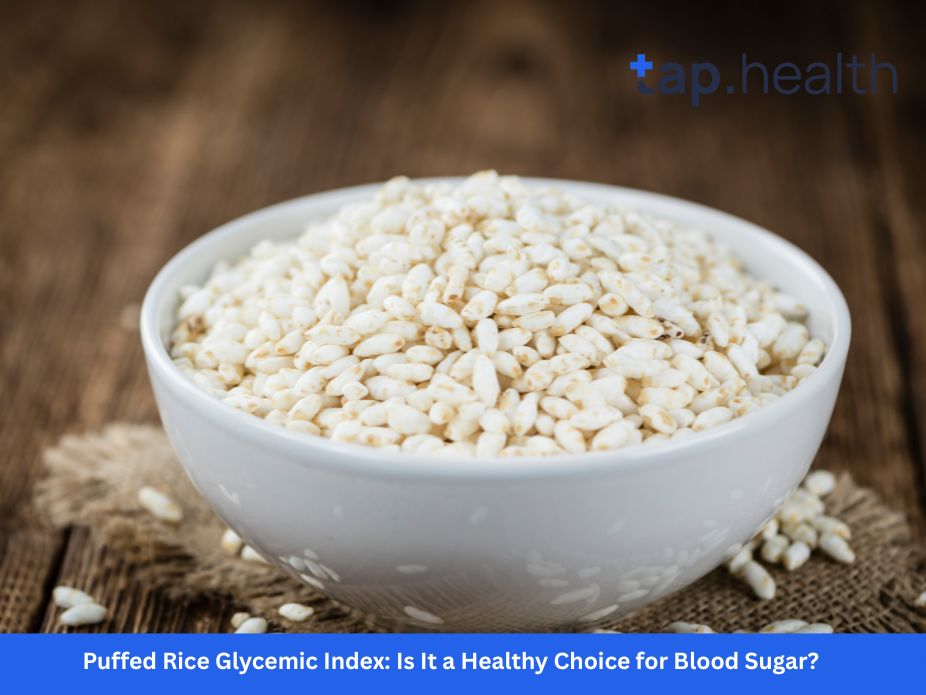
Let’s be honest. Who doesn’t love puffed rice?
It’s light, it’s crunchy, and it’s the star of so many treats. From the classic murmura chaat on a rainy day to the healthy-looking bhel puri or even the simple comfort of a puffed rice laddu, it’s everywhere.
It feels light. It looks innocent. It even has a “health halo” because it’s not fried like chips. But if you’ve ever eaten a bowl of puffed rice and felt hungry again just an hour later, you’ve experienced its secret power firsthand.
That secret power is all about its Glycemic Index (GI).
If you are managing your weight, keeping an eye on your blood sugar, or just trying to make smarter food choices, understanding the glycemic index of puffed rice is crucial.
In this article, we’re going to break down everything you need to know. We’ll explain what GI means in simple terms, reveal the surprising number for puffed rice, and show you how to enjoy it without sabotaging your health goals. Let’s get to the bottom of that crunchy, airy puff.
What is Glycemic Index (GI)? The “Speedometer” for Your Food
Think of your body like a car engine. It needs fuel to run, and that fuel comes from the carbohydrates in the food you eat.
The Glycemic Index (GI) is like a speedometer for that fuel. It measures how fast and how high a carbohydrate-rich food can make your blood sugar (glucose) levels rise.
The GI is a scale from 0 to 100. Here’s how it breaks down:
- Low GI (55 or less): These are the slow-and-steady fuels. They digest slowly, releasing sugar into your blood at a gentle, steady pace. This keeps you feeling full and energized for longer. Think of foods like apples, lentils, and whole oats.
- Medium GI (56 to 69): These foods provide a medium-speed energy release.
- High GI (70 and above): These are the fast-and-furious fuels. They break down extremely quickly, causing a rapid spike in your blood sugar. This is often followed by a sharp crash, leaving you feeling tired, sluggish, and hungry again. Think of foods like white bread, sugary soda, and… as we’ll see, puffed rice.
So, why does this matter? Eating too many high-GI foods can be like riding a rollercoaster all day. Your energy and hunger levels go up and down, which can make it hard to manage your weight and, most importantly, your blood sugar.
Read this: Is Basmati Rice Good for Diabetics?
So, What is the Glycemic Index of Puffed Rice?
Now, for the big reveal. Let’s talk numbers.
Puffed rice has a very high Glycemic Index. Most studies and health authorities place it between 70 and 82, and sometimes even higher.
This means it sits firmly in the high GI category. To put it simply, when you eat puffed rice, your body converts it into blood sugar almost as quickly as it would pure table sugar.
That innocent-looking, airy snack is a sugar rocket in disguise.
Puffed Rice vs. Other Common Foods: A GI Showdown
To truly understand what this number means, let’s compare it to other foods you know.
- Puffed Rice (GI ~70-82) vs. White Rice (GI ~73): They are surprisingly similar! Even though a bowl of cooked white rice feels heavier, it raises your blood sugar at almost the same speed as a bowl of puffed rice.
- Puffed Rice (GI ~70-82) vs. Brown Rice (GI ~68): Brown rice has a medium GI. The extra fiber in it slows down digestion, making it a better choice than puffed rice.
- Puffed Rice (GI ~70-82) vs. Whole Wheat Bread (GI ~74): Again, they are in the same high-GI league.
- Puffed Rice (GI ~70-82) vs. An Apple (GI ~36): This is a stark contrast. The apple’s fiber makes all the difference, keeping it in the safe, low-GI zone.
As you can see, puffed rice is not the “light” or “diet” food we often think it is when it comes to blood sugar impact.
Why is Puffed Rice So High on the GI Scale?
You might be wondering, “It’s just rice! How can it be so different?” The answer lies in what happens to the rice during the “puffing” process.
The Puffing Process: A Story of Explosion
Puffed rice isn’t just cooked; it’s transformed. Here’s a simple explanation of how it’s made:
Rice grains are placed in a special chamber where they are exposed to very high heat and pressure. Suddenly, the pressure is released. The moisture inside the rice grain instantly turns into steam, causing the grain to explode and puff up, just like popcorn.
This process creates its signature airy, crunchy texture. But this texture comes at a cost.
The Problem with Being Puffy: It’s All About Surface Area
Imagine a solid, dense brick of sugar. It would take a while for water to dissolve it. Now, imagine crushing that same brick into a fine powder. It would dissolve almost instantly.
This is exactly what happens to puffed rice.
The explosion during the puffing process breaks apart the complex starch structures inside the rice. It also creates millions of tiny, air-filled pockets, dramatically increasing its surface area.
When you eat it, your digestive enzymes have incredibly easy access to all that broken-down starch. There’s very little work left to do. So, the carbohydrates are converted into glucose and absorbed into your bloodstream in minutes, not hours.
The Missing Fiber
Regular rice doesn’t have much fiber to begin with. The puffing process doesn’t add any. In fact, some of the little fiber that was there is destroyed. Without fiber to slow down digestion, there’s nothing to stop the sugar rush.
Is Puffed Rice Good for Diabetes?
This is the most important question for many people reading this.
Given its very high glycemic index, puffed rice is generally not a good choice for people with diabetes or prediabetes.
Eating a large portion of puffed rice by itself—like a big bowl of bhel puri or just plain puffed rice—can cause a rapid and significant spike in blood glucose levels. For someone managing diabetes, consistently eating high-GI foods can make blood sugar control very difficult.
But does this mean you can never eat it again? Not necessarily. It’s all about context, portion size, and what you mix it with.
Can You Eat Puffed Rice for Weight Loss?
This is another common question. Because it’s low in calories and fat by volume, people often turn to puffed rice for weight loss.
A large bowl seems like a lot of food for very few calories. However, this strategy often backfires.
Remember the blood sugar rollercoaster? The rapid spike from a high-GI food is followed by a crash. This crash triggers hunger hormones, making you feel ravenous soon after you’ve eaten.
You might find yourself reaching for another snack, often something unhealthy, shortly after your “light” puffed rice meal. This can lead to eating more calories overall than if you had eaten a smaller portion of a more satisfying, low-GI food like a bowl of dal or a handful of nuts.
So, while it’s not high in calories, its lack of satiety (the feeling of fullness) makes it a poor choice as a main component of a weight loss diet.
The Smart Snacker’s Guide: How to Make Puffed Rice Healthier
Don’t throw out your murmura just yet! You don’t have to give up puffed rice completely. The key is to be smart about how you eat it. You can turn a high-GI food into a more balanced, medium-GI meal by pairing it correctly.
The goal is to add protein, fiber, and healthy fats. These nutrients slow down digestion and blunt the blood sugar spike.
Here are some healthy and delicious ideas:
1. Create a Balanced Bhel Puri
Instead of just puffed rice with chutney, load it up with:
- Vegetables (Fiber): Add plenty of chopped onions, tomatoes, cucumbers, and boiled corn.
- Chana or Moong (Protein & Fiber): Toss in a handful of boiled chickpeas or sprouted moong beans.
- Healthy Fats: A sprinkle of chopped peanuts or a few slices of avocado can work wonders.
2. Power-Up Your Breakfast
Mix a small cup of puffed rice into a bowl of:
- Dahi (Yogurt – Protein/Fat): Use plain, unsweetened curd. The protein and fat in the yogurt will slow down digestion.
- With Nuts and Seeds: Add some chopped almonds, walnuts, and flax seeds for extra fiber and healthy fats.
3. Mind Your Portions
This is the golden rule. Instead of making puffed rice the main event, use it as a crunchy topping. Sprinkle a small handful over a salad or a vegetable soup. You get the satisfying crunch without the massive sugar spike.
4. Read the Labels (For Packaged Snacks)
Many packaged puffed rice snacks, like cakes or cereals, can have added sugar, salt, or artificial flavors. Always check the ingredient list to avoid these hidden culprits.
The Final Verdict on Puffed Rice
Puffed rice is not a “bad” food. It’s a food that needs to be understood.
- Its High GI is a Fact: Its processing makes it a fast-digesting carbohydrate that can spike blood sugar.
- It’s Not Ideal for Diabetics: Eaten alone, it’s a poor choice for blood sugar management.
- It’s a Weak Tool for Weight Loss: Its lack of staying power can lead to increased hunger and overeating.
However, when enjoyed in small portions and paired smartly with protein, fiber, and fats, it can be part of a balanced diet.
The bottom line? Enjoy your murmura chaat, but make it a loaded one. Don’t let its light crunch fool you. Be mindful, pair it right, and you can have your crunch without the crash.
Frequently Asked Questions (FAQs) on Puffed Rice Glycemic Index
Q1: Is puffed rice better than white rice?
A: When it comes to Glycemic Index, they are surprisingly similar (both are high GI). However, a bowl of cooked white rice might be more physically filling than a large volume of puffed rice, potentially preventing you from overeating. Neither is a great choice for blood sugar control, but brown rice or quinoa are far better options than both.
Q2: Can a diabetic patient ever eat puffed rice?
A: A diabetic patient should be very careful. It’s best to avoid eating puffed rice alone. If they do wish to have it, it should be a very small portion and must be combined with plenty of protein (e.g., yogurt, legumes) and fiber (e.g., vegetables). It’s crucial to monitor blood sugar levels to see how the body responds.
Q3: What is a healthy serving size for puffed rice?
A: There’s no one-size-fits-all answer, but a good rule of thumb is to keep it to about 1 cup (around 15-20 grams) and ensure it’s always mixed with other food groups. Never make a meal out of puffed rice alone.
Q4: Is puffed rice high in carbs?
A: Yes, by weight, puffed rice is mostly carbohydrates. Because it is so light and airy, a large volume of it may not seem like many carbs, but your body processes those carbs very quickly due to its high GI.
Q5: Are there any low-GI alternatives to puffed rice?
A: Yes! For a similar crunchy texture, try:
- Roasted Chana (Chickpeas): Low GI, high in protein and fiber.
- Flaxseed or Wholegrain Crackers: Look for high-fiber options.
- Nuts and Seeds: A handful of almonds or pumpkin seeds provide a satisfying crunch with stable energy.
- Popcorn (air-popped): While still a carbohydrate, air-popped popcorn has a lower GI (around 55) than puffed rice and contains more fiber.