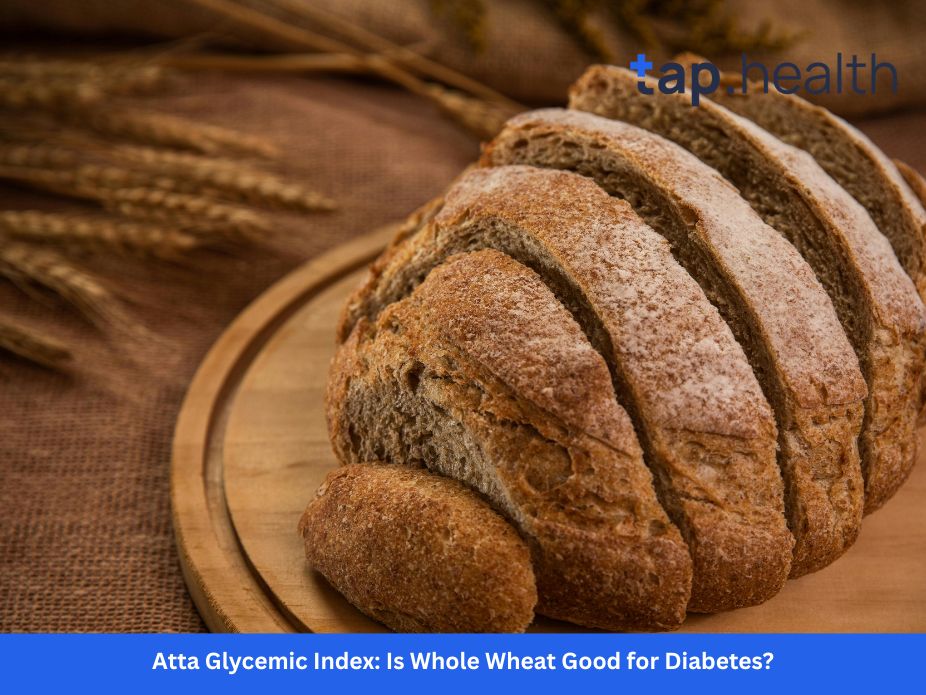
If you live in an Indian household or love South Asian food, “Atta” (whole wheat flour) is probably a part of your daily life. We eat it as Roti, Chapati, or Paratha almost every single day. But if you or a family member has been diagnosed with diabetes or pre-diabetes, that warm, soft roti suddenly becomes a subject of worry.
You might find yourself asking: “Is atta actually good for me?” or “Does eating roti spike my blood sugar?”
To answer this, we need to talk about the Atta Glycemic Index.
This guide will break down everything you need to know. We aren’t going to use confusing medical words. instead, we will stick to the facts, keep it simple, and help you make the best choice for your health.
What is Glycemic Index (GI)?
Before we look at atta, let’s quickly understand what Glycemic Index (GI) actually is.
Think of your body like a car and food like fuel.
- High GI foods are like rocket fuel. They burn up instantly and make your blood sugar zoom up very fast. This is bad for diabetics.
- Low GI foods are like slow-burning coal. They give you energy slowly and steadily. This keeps your blood sugar stable.
The GI scale goes from 0 to 100.
- Low GI: 0 to 55 (Good)
- Medium GI: 56 to 69 (Okay in moderation)
- High GI: 70 and above (Avoid or limit)
Our goal is to find out where standard wheat atta fits on this scale.
The Big Question: What is the Glycemic Index of Atta?
Here is the truth that surprises many people: Regular whole wheat atta is NOT a low GI food.
Most standard whole wheat flour has a Glycemic Index between 62 and 85.
This places it in the Medium to High GI category.
Why is the number so high?
You might be thinking, “But it is whole wheat! It has fiber! Why is the score high?”
The problem is the grinding. Modern chakki (mill) grinding smashes the wheat grain into a very, very fine powder. Because the particles are so small, your stomach doesn’t have to work hard to break them down. It turns that powder into sugar (glucose) very quickly, which enters your bloodstream fast.
However, not all atta is the same. The GI changes based on a few things:
- Thickness: Coarse-ground wheat (mota atta) has a lower GI than fine powder.
- Variety: Some ancient wheat varieties, like Khapli (Emmer wheat), have a lower GI than modern wheat.
- Processing: “Chakki Fresh” atta often has the bran removed to make rotis softer. Removing bran removes fiber, which raises the GI.
Glycemic Load: The Other Half of the Story
While the GI score tells you how fast sugar enters your blood, the Glycemic Load (GL) tells you how much sugar enters based on the portion size.
If you eat five rotis, your sugar will spike much higher than if you eat one, even if the GI is the same.
- One medium Roti (approx 6-inch): Has a Glycemic Load of about 10 to 15.
- Two Rotis: The load doubles.
For a diabetic, keeping the Glycemic Load low is just as important as picking low GI foods. This is why doctors say portion control is key.
How to Lower the Glycemic Index of Your Roti
You don’t have to give up roti completely. You just need to “hack” your atta to lower its Glycemic Index. This is often called making “Multigrain Atta,” but you need to do it the right way.
Here are simple ways to fix your flour:
1. The 50/50 Rule (Adding Fiber)
Since wheat digests fast, you need to add things that digest slowly.
- Mix in Psyllium Husk (Isabgol): Add two spoons of Isabgol to your dough. It is pure fiber and slows down sugar absorption.
- Add Bran (Choker): Never sieve your flour! If you buy refined flour, buy a separate packet of wheat bran and mix it back in.
2. Mix with Low GI Flours
Don’t use 100% wheat. Mix it with these flours:
- Chana Dal Flour (Besan): This is a superstar. It has a very low GI. Mixing 30% Besan with your wheat flour drastically lowers the sugar spike.
- Barley (Jau): Barley is excellent for controlling blood sugar.
- Soya Flour: High in protein and very low in carbs.
3. Add Healthy Fats
Eating dry roti causes a faster sugar spike than eating roti with a little good fat.
- Adding a little Ghee or eating the roti with olive oil can actually slow down digestion. Fat acts like a speed bump for sugar.
Top Low-GI Alternatives to Regular Atta
If your sugar levels are very high and regular wheat acts like poison for your system, you might want to switch flours entirely. Here is a look at the best alternatives.
1. Almond Flour
- GI Score: Less than 5 (Very Low)
- Why it works: It is almost all fat and protein with very few carbs.
- Taste: Nutty and dense.
- Verdict: Great for Keto diets, but expensive and hard to roll into a roti.
2. Chickpea Flour (Besan)
- GI Score: Around 35 (Low)
- Why it works: Packed with protein.
- Taste: Savory.
- Verdict: One of the best and cheapest options for diabetics. “Missi Roti” is a famous Indian dish made from this.
3. Jowar (Sorghum)
- GI Score: Around 62 (Medium)
- Why it works: It is gluten-free and has high fiber. While the GI is similar to wheat, the high fiber content helps manage blood sugar better than refined wheat.
- Verdict: Good, but takes practice to roll because it breaks easily.
4. Bajra (Pearl Millet)
- GI Score: Around 54 (Low-Medium)
- Why it works: It digests slowly and keeps you full for a long time.
- Verdict: excellent for winter months.
5. Ragi (Finger Millet)
- GI Score: High (Wait, what?)
- Correction: Ragi actually has a high GI if plain, but it has very high fiber and calcium. It is often recommended for diabetics in moderation because the fiber prevents the crash. However, for strict sugar control, Besan or Barley is better.
The “Khapli Wheat” Phenomenon
Recently, you may have heard about Khapli Atta (Emmer Wheat). This is an ancient variety of wheat that hasn’t been genetically modified like modern wheat.
- Regular Wheat GI: ~65-70+
- Khapli Wheat GI: ~40-50
Khapli wheat has a hard structure that is difficult for the body to break down quickly. This makes it a much safer option for diabetics who crave the taste of authentic wheat roti without the massive sugar spike. If you can find it (often sold as “Emmer Wheat”), it is a worthy investment.
Common Mistakes People Make with Atta
Even when trying to be healthy, many people mess up their diet with small mistakes.
1. Trusting “Multigrain” Labels blindly
When you buy a packet from the store that says “Multigrain” or “Diabetic Atta,” flip the packet over. Read the ingredients. Often, the first ingredient is still 80% Refined Wheat, with just a tiny pinch of oats or corn. Corn flour actually has a higher GI than wheat! Always check the label. It is better to make your own mix at home.
2. Eating Roti with Potatoes
If you eat a wheat roti (Carbs) with Aloo Gobi (Carbs), you are creating a “Carb Bomb.” This creates a massive glycemic load. Always pair your atta with proteins (Chicken, Paneer, Dal, Eggs) or fibrous vegetables (Spinach, Bhindi, Gourd).
3. Overcooking the Roti
Believe it or not, how you cook matters. If you char the roti too much or cook it until it is super brittle, it digests slightly faster.
A Sample Diet Plan for Roti Lovers
If you are confused about how to eat roti safely, here is a simple breakdown.
The Ratio: Instead of eating 3 Rotis and a small bowl of Dal, flip it. Eat 1 Multigrain Roti and 2 big bowls of Dal/Sabzi.
The “Dough” Recipe for Diabetics: To make 1kg of healthy flour, mix:
- 500g Whole Wheat Atta (Coarse ground/with bran)
- 200g Besan (Chickpea flour)
- 100g Barley Flour (Jau)
- 100g Oats powder
- 50g Flax seed powder
- 50g Psyllium Husk (Isabgol)
This mix will lower the atta glycemic index significantly while keeping the roti soft enough to eat.
Is Brown Bread Better than Atta Roti?
This is a very common question. Many people switch from Roti to Brown Bread thinking it is lighter.
The Answer: usually, NO.
Most commercial brown bread is just white bread with caramel color added. Even genuine whole wheat bread contains yeast and sugar to make it rise. The processing of bread makes it digest faster than a dense, homemade roti.
A homemade chapati (especially if made with the multigrain mix above) is almost always healthier than store-bought bread.
Final Thoughts: Can Diabetics Eat Atta?
The short answer is: Yes, but be careful.
Regular, white, fine-powder wheat atta has a medium-to-high glycemic index. It can spike your blood sugar if you eat too much of it.
To stay healthy, follow these three simple rules (KISS):
- Modify it: Mix your wheat with Besan, Barley, or Bran.
- Limit it: Stick to one or two rotis per meal, not three or four.
- Pair it: Never eat roti alone. Eat it with lots of protein and green veggies.
You don’t have to sacrifice your culture or your favorite foods to manage your health. You just need to be smarter about the ingredients you use.
Frequently Asked Questions (FAQ) on Atta Glycemic Index
Here are answers to the most common questions about atta and blood sugar.
1. Which atta is best for diabetics?
The best atta is a mix. A combination of Khapli wheat (Emmer wheat), Barley (Jau), and Chickpea (Besan) is the gold standard. If you must buy a single grain, Barley or Bajra are better than plain wheat.
2. Does toasting the roti lower its Glycemic Index?
Slightly. When bread or roti is cooled down and then reheated (or toasted), it creates “resistant starch.” This type of starch is harder to digest, which means a lower sugar spike. So, eating a leftover roti from the morning might actually be better than a fresh hot one!
3. Is Maida (All Purpose Flour) higher in GI than Atta?
Yes, absolutely. Maida has no fiber and no bran. It hits your bloodstream almost instantly. Maida has a GI of roughly 75-85+, whereas whole wheat atta is closer to 62-70. Always choose Atta over Maida.
4. Can I eat rice instead of roti?
White rice generally has a higher Glycemic Index than whole wheat roti. However, brown rice or parboiled (red) rice has a GI similar to wheat. Roti is usually preferred because it is easier to portion control (you can count 2 rotis, but it’s hard to stop eating loose rice).
5. How much fiber should be in my atta?
Look for roughly 12g to 15g of fiber per 100g of flour. Standard refined atta might only have 2g to 3g. The higher the fiber, the lower the glycemic index.