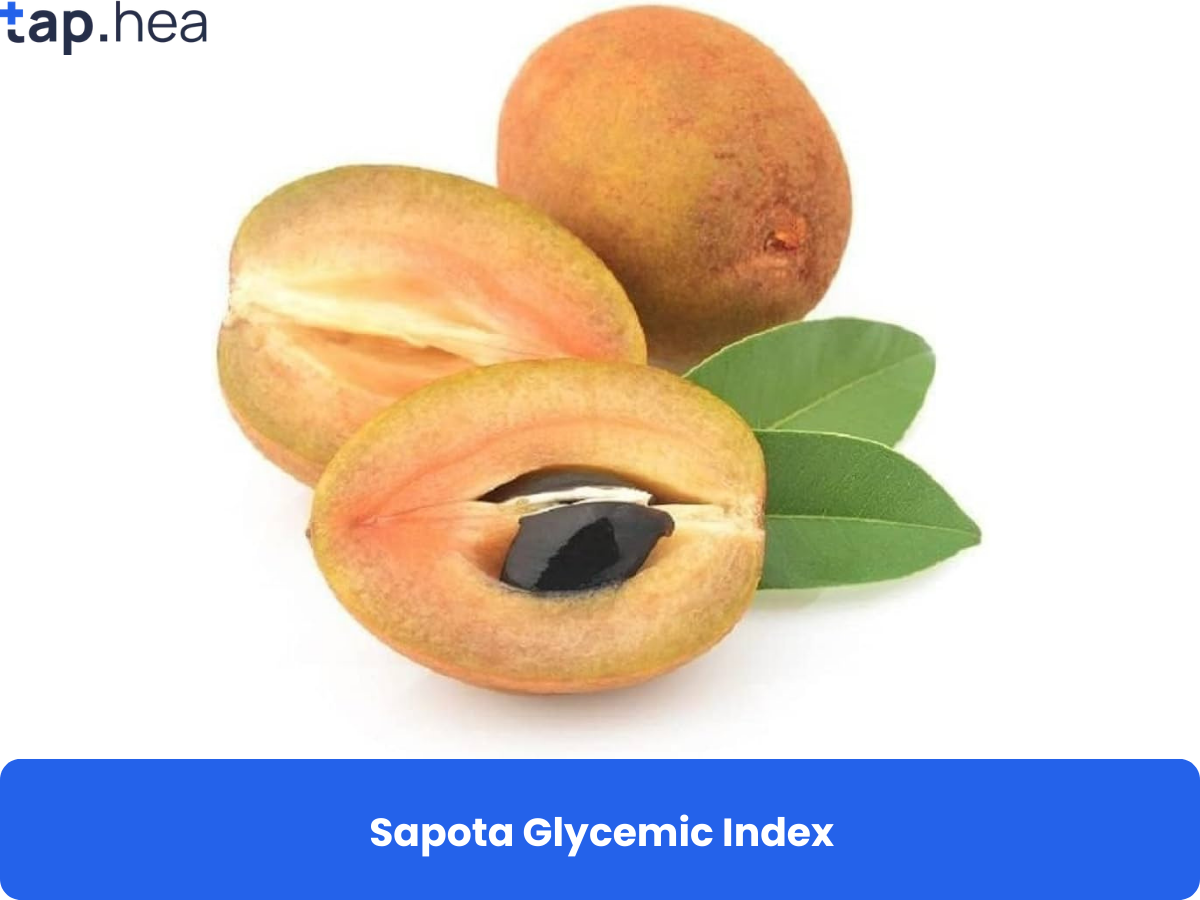
If you walk past a fruit stall in India, you can spot Sapota (commonly known as Chiku) instantly. It looks like a brown, fuzzy potato on the outside, but inside, it is sweet, grainy, and delicious.
It is a favorite fruit for many of us. It gives you instant energy, tastes like caramel, and is easy to chew. But if you have diabetes, looking at a Chiku might make you nervous. Because it is so sweet, most people assume it is a “sugar bomb” that will ruin their health.
You might be wondering: “Is Chiku banned for diabetics?” or “What is the actual Sapota Glycemic Index?”
Today, we are going to dig deep into the truth. We will ignore the rumors and look at the science. We will keep it simple (using the KISS method), so you don’t need a medical degree to understand what you are eating.
What is Glycemic Index (GI)?
Before we talk about Chiku, let’s quickly review the tool we use to measure food safety: the Glycemic Index (GI).
Imagine your blood sugar is a car.
- High GI foods slam on the gas pedal. Your car (sugar) speeds up dangerously fast. This is bad.
- Low GI foods drive slowly and steadily. Your sugar stays safe. This is good.
The scale works like this:
- Low GI: 0 to 55 (Safe Zone)
- Medium GI: 56 to 69 (Caution Zone)
- High GI: 70 to 100 (Danger Zone)
Our goal is to find out which zone Sapota falls into.
The Big Answer: What is the Glycemic Index of Sapota?
Here is the fact that surprises most people.
The Glycemic Index of Sapota (Chiku) is approximately 57.
This places Sapota in the Low-to-Medium GI category.
Wait, what? It tastes so sweet! How can the GI be moderate?
Many people think Chiku is in the “High” category like watermelon or white bread, but it isn’t. While it is on the border (55 is the cutoff for low), it is not as dangerous as refined sugar.
Why is the number 57?
The sweetness of Chiku comes from natural sugars like fructose and sucrose. However, Chiku is not just sugar. It has a secret weapon that lowers its GI score: Dietary Fiber.
That grainy texture you feel when you eat a pear or a Chiku? That is fiber. Fiber slows down digestion. It stops the sugar from rushing into your blood all at once. This is why the GI isn’t as high as the sweet taste suggests.
Glycemic Load: The Trap You Must Avoid
While the GI score (57) isn’t terrible, we have to look at the Glycemic Load (GL). This measures how much sugar you are actually eating in a single serving.
This is where Chiku can be tricky.
- Calories: Chiku is calorie-dense. 100 grams of Chiku has nearly 83 calories and 20 grams of carbs.
- The Danger: Because Chiku is small and soft, it is very easy to overeat. You might eat three or four without thinking.
If you eat one small Chiku, the Glycemic Load is low (safe). If you eat three Chikus, the Glycemic Load becomes high (unsafe).
The Verdict: The fruit itself is not “banned,” but the quantity is dangerous if you aren’t careful.
The Good Stuff: Nutritional Benefits of Sapota
If you have diabetes, should you eat Chiku just for the taste? Actually, it offers some serious health benefits that your body needs.
1. High Fiber Content
We mentioned this earlier, but it is worth repeating. Sapota is excellent for your gut. The fiber helps prevent constipation (a common issue for many people on medication). Fiber also helps manage cholesterol levels.
2. An Instant Energy Booster
If you feel your sugar dropping (Hypoglycemia) or you feel very weak and tired in the middle of the day, Chiku is a great natural energy shot. It provides instant energy without the chemicals found in energy drinks.
3. Rich in Vitamins A and C
- Vitamin A: Great for your eyes. Since diabetes can affect eye health over time, Vitamin A is crucial.
- Vitamin C: Builds immunity. It helps your body fight infections and heal small wounds faster.
4. Anti-Inflammatory Properties
Inside the Chiku fruit, there are compounds called tannins. These act as natural painkillers and anti-inflammatories. They help reduce swelling and pain in the digestive tract.
The Chiku Shake Mistake
This is the most important warning in this entire blog post.
Do not drink Chiku Milkshakes.
In India, Chiku Shake is a very popular drink. It is delicious, creamy, and sweet. But for a diabetic, it is a disaster. Here is why:
- Volume: To make a good shake, you usually use 2 or 3 fruits. That is too much sugar at once.
- Added Sugar: Most shops (and home recipes) add extra sugar or honey because the milk dilutes the sweetness.
- Liquid Digestion: Liquids pass through your stomach faster than solid food. This means the sugar hits your blood instantly.
If you want to enjoy Sapota, chew the fruit. Do not drink it.
How to Eat Sapota Safely with Diabetes
You don’t have to cut Chiku out of your life forever. You just need to eat it strategically. Follow these simple rules to keep your blood sugar stable.
1. The “Half-Fruit” Rule
Do not sit down with a bowl of Chikus. Limit yourself to one small Chiku or half of a medium Chiku per day. Treat it like a dessert, not a main course.
2. Pair it with Nuts
Never eat Chiku alone (“naked carbs”). Always pair it with fat or protein.
- Eat a slice of Chiku with a handful of walnuts or almonds.
- The healthy fats in the nuts act as a speed bump. They slow down the absorption of the Chiku’s sugar even more.
3. Timing Matters
Do not eat Chiku right after lunch or dinner. Your sugar is already high from the meal.
- Best Time: Mid-morning snack (11 AM) or pre-workout.
- Worst Time: Late at night or immediately after a meal.
4. Eat the Skin (If possible)
The skin of the sapota is very thin. If you wash it thoroughly to remove the fuzz, try to eat the skin. That is where a lot of the extra fiber lives.
Sapota vs. Other Fruits: A Quick Comparison
Is Chiku the worst fruit? Is it the best? Let’s see how it compares to other common fruits on the Glycemic Index scale.
| Fruit | Glycemic Index (GI) | Verdict for Diabetics |
| Apple | ~36 (Low) | Excellent / Safe |
| Guava (Amrood) | ~12-24 (Very Low) | The Best Choice |
| Orange | ~40-50 (Low) | Good |
| Sapota (Chiku) | ~57 (Medium) | Limit Portion |
| Mango | ~51-56 (Medium) | Moderate / Limit Portion |
| Watermelon | ~72+ (High) | Avoid / Very Risky |
Analysis: Sapota is higher in GI than apples and guavas. It is very similar to Mango. So, if you restrict Mango in your diet, you should apply the same strict rules to Chiku.
Common Myths About Sapota
Let’s clear up some confusion.
Myth 1: “Chiku is just pure sugar.”
Fact: False. While it contains fructose and sucrose, it also contains vitamins, minerals, and fiber. It is a nutrient-dense food, not “empty calories” like a candy bar.
Myth 2: “If I take medicine, I can eat as many as I want.”
Fact: Dangerous. Medicine helps your body handle sugar, but it cannot handle an overload. Overeating high-carb fruits can overpower your medication and lead to spikes.
Myth 3: “Raw (unripe) Chiku is better for diabetes.”
Fact: No. Unripe Chiku contains high amounts of latex and tannins which serve as an astringent. It tastes terrible and can cause severe mouth irritation and stomach ulcers. Only eat ripe fruit.
Who Should Strictly Avoid Sapota?
While many diabetics can enjoy a slice or two, some people should say no completely.
- Uncontrolled Diabetes: If your HbA1c is very high (above 8 or 9) and your daily readings are fluctuating wildly, avoid Chiku until your levels are stable. Stick to Guava or Papaya instead.
- Weight Watchers: If you are trying to lose weight to manage your diabetes, Chiku might slow you down. It is high in calories compared to other fruits like melon or berries.
A Sample Menu Including Sapota
Here is how you can fit this fruit into a healthy day without guilt.
- Breakfast (8:00 AM): Oats porridge with chia seeds (No sugar).
- Mid-Morning Snack (11:00 AM): 1 Small Chiku (sliced) + 5 Walnuts + Green Tea.
- Lunch (1:30 PM): 2 Multigrain Rotis + Dal + Salad.
- Evening (5:00 PM): Roasted Makhana (Fox nuts).
- Dinner (8:00 PM): Grilled Fish/Paneer + Sautéed veggies.
See? It fits perfectly as a small snack, balanced by the nuts.
Frequently Asked Questions (FAQ) on Sapota Glycemic Index
Here are answers to the most common questions people ask about the Sapota glycemic index.
1. Can Sapota raise blood sugar immediately?
Because it contains simple sugars like sucrose and fructose, it can raise blood sugar faster than an apple or pear. However, the fiber prevents it from being an “instant” spike like fruit juice. It causes a moderate rise.
2. Is Chiku good for weight loss?
Generally, no. Chiku is high in calories and carbohydrates. If you are on a strict calorie-deficit diet, you are better off eating watermelon, papaya, or berries, which give you more volume for fewer calories.
3. Can kidney patients eat Sapota?
Sapota is high in Potassium. If you have diabetic kidney disease (CKD) and your doctor has told you to limit potassium, you must avoid Sapota. High potassium can be dangerous for damaged kidneys. Always check with your nephrologist.
4. How many calories are in one Chiku?
One medium-sized Chiku (about 75-80 grams) has roughly 60 to 70 calories. This is roughly the same as one slice of bread.
5. Is Sapota better than Banana for diabetes?
They are very similar. Both are energy-dense, sweet, and have a medium GI. A small banana and a small chiku have a similar impact on blood sugar. The rule for both is the same: portion control is key.
Final Thoughts: The Sweet Truth
So, does the Sapota Glycemic Index mean you have to ban this fruit from your kitchen?
No.
You can enjoy the caramel-like sweetness of Chiku, but you must respect its power. It is potent.
- Don’t eat it by the bowlful.
- Don’t drink it in a shake.
- Do eat it in small amounts, paired with nuts.
Diabetes is not about depriving yourself of everything you love; it is about learning how to eat those things smartly. So go ahead, buy a fresh Chiku, slice it thin, share half with a friend, and enjoy the taste of nature without the worry.