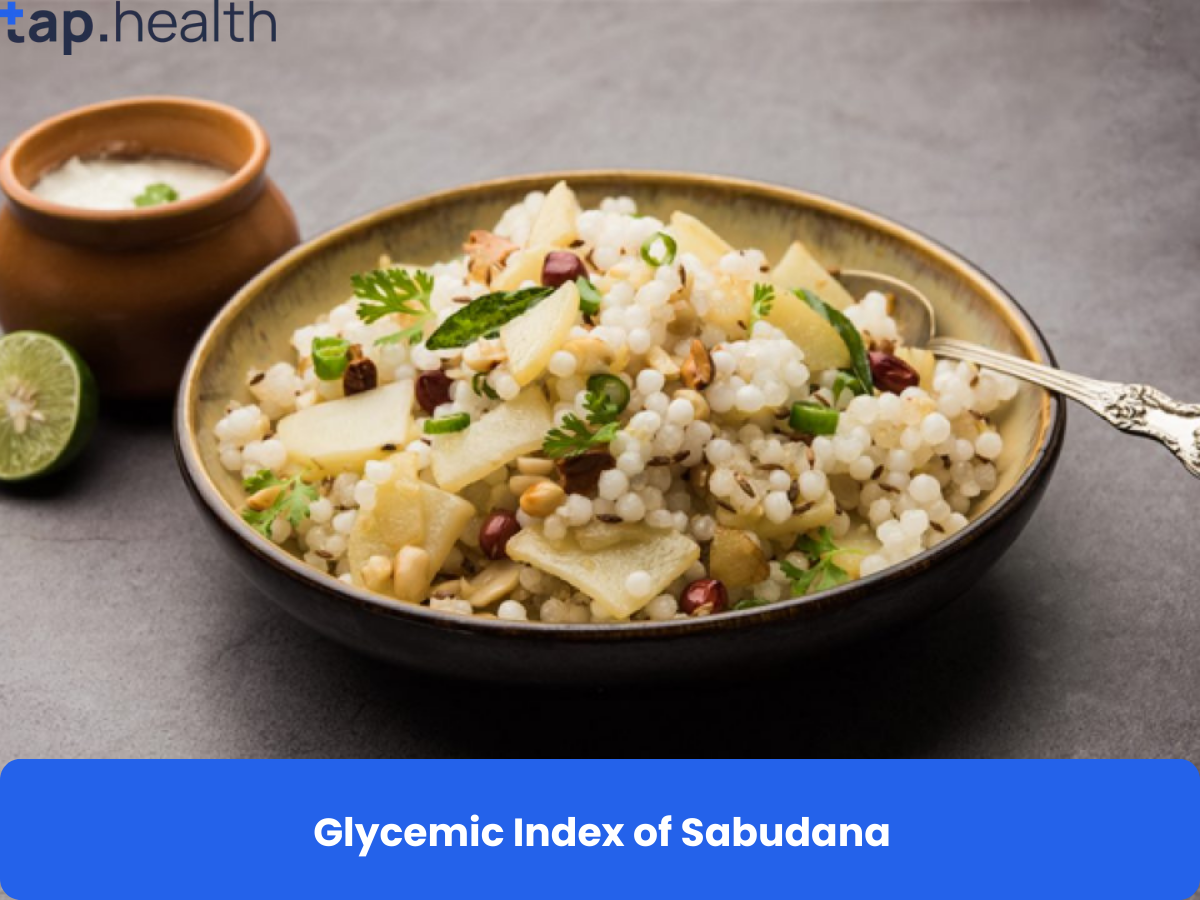
In India, when we think of fasting (vrat), we immediately think of Sabudana. Whether it’s the crispy Sabudana Vada or the comforting Sabudana Khichdi, these white pearls are a staple during Navratri and other religious festivals. We eat it because it gives us “instant energy” when we are not eating regular grains.
But if you have diabetes, that phrase “instant energy” should make you pause. Instant energy usually means one thing: Sugar Spike.
Many people assume that because Sabudana is eaten during holy fasts, it must be healthy. But when it comes to blood sugar, Sabudana is actually quite controversial. In this guide, we are going to peel back the layers and look at the real numbers behind the glycemic index of sabudana.
We will answer the burning question: Is this beloved fasting food a friend or an enemy to your blood sugar? We will keep it simple, honest, and easy to understand.
What is the Glycemic Index (GI)?
Before we inspect the white pearls, let’s quickly review our measuring tool: the Glycemic Index (GI).
Think of the GI as a race. It measures how fast a food turns into glucose (sugar) and races into your bloodstream. The scale goes from 0 to 100.
- Low GI (0 to 55): The tortoise. Slow and steady. Keeps you safe.
- Medium GI (56 to 69): The jogger. Faster, but okay in moderation.
- High GI (70 and above): The hare. Very fast. Causes sudden sugar spikes.
For diabetics, the goal is to avoid the “hares” (High GI foods) to prevent dangerous blood sugar fluctuations.
What is the Glycemic Index of Sabudana?
Here is the hard truth that might shock you. Sabudana is not a grain; it is pure starch.
The glycemic index of Sabudana is approximately 67 to 75.
This places Sabudana in the Medium to High GI category.
In fact, depending on how it is cooked (like deep-frying), the GI can go even higher. Sabudana is essentially pure carbohydrate extracted from the roots of the cassava plant (tapioca). It has almost zero fiber, zero protein, and zero fat on its own. It is just energy waiting to be released.
Why is the GI So High?
To understand why, look at what Sabudana is made of. It is processed starch. When you eat it, your body doesn’t have to work hard to digest it. There is no fiber shell to break down (like in brown rice) and no protein to slow things down (like in dal). Your stomach breaks it down instantly, and boom—the sugar hits your blood. This is exactly why it is eaten during fasts; it wakes you up quickly. But for a diabetic, this “wake up” can be dangerous.
Glycemic Index vs. Glycemic Load
Is there any saving grace? Let’s look at the Glycemic Load (GL).
- GI = Speed of sugar.
- GL = Amount of sugar.
The Glycemic Load of a standard serving of Sabudana (about 1 cup) is High (around 22+).
- Low GL: 0 to 10
- Medium GL: 11 to 19
- High GL: 20+
This is a double whammy. Sabudana is both fast (High GI) and heavy in carbs (High GL). A single cup of cooked Sabudana has a massive amount of carbohydrates compared to the same amount of vegetables or lentils.
Can Diabetics Eat Sabudana?
The honest medical answer is: It is best to avoid it.
Unlike fruits or oats, which have fiber to balance the sugar, Sabudana offers almost no nutritional “cushion.” It is “empty calories.” For a diabetic trying to control sugar levels, eating a bowl of Sabudana Khichdi is very similar to eating a bowl of white sugar or refined flour (maida).
However, we know that traditions are important. If you absolutely must eat Sabudana during a festival or family gathering, you cannot eat it the traditional way. You have to “hack” the recipe to make it safer. If you eat it plain or just with potatoes (which is the usual recipe), your sugar will likely spike.
The “Potato Problem” in Sabudana Recipes
The biggest problem isn’t just the Sabudana itself; it is the company it keeps.
Think about how we cook it. We almost always mix Sabudana with Potatoes.
- Sabudana: High Carb, High GI.
- Potato: High Carb, High GI.
When you mix these two together in Sabudana Khichdi or Vada, you are creating a “Carb Bomb.” You are mixing starch with starch. This combination is a nightmare for blood sugar management.
4 Rules to Eat Sabudana Safely (If You Must)
If you decide to eat Sabudana, use the KISS method (Keep It Simple, Stupid) to mitigate the damage. You must change the recipe to lower the overall glycemic impact.
1. Ditch the Potato
This is Rule #1. Do not add potatoes to your Sabudana. Instead, use low-GI vegetables.
- Use chopped green beans.
- Use carrots.
- Use peas.
- Use cauliflower.
- Use bell peppers (capsicum).
By replacing the potato with fiber-rich veggies, you slow down the digestion of the starch.
2. The Peanut Power
Thankfully, traditional recipes usually include peanuts. This is good! Peanuts are high in protein and healthy fats. Increase the peanut quantity. Don’t just use them as a garnish. Grind a full cup of roasted peanuts into a coarse powder and mix it generously with the Sabudana. The fat and protein from the peanuts act as a “speed bump,” slowing down the sugar absorption.
3. Pair it with Curd (Dahi)
Never eat Sabudana dry or alone. Eat it with a bowl of unsweetened curd or yogurt. The protein in the dairy will help stabilize your blood sugar response.
4. Watch the Portion
Treat Sabudana like a dessert, not a main course. Take a very small bowl (1/4th of your plate) to satisfy your craving or religious requirement, and fill the rest of your plate with salad, cucumber, or curd.
Healthy Alternatives to Sabudana for Fasting
If you are diabetic and want to fast safely without the Sabudana sugar spike, there are much better options available in Indian cuisine. These foods are “Vrat-friendly” (allowed during fasting) but have a much lower Glycemic Index.
1. Samak Rice (Barnyard Millet)
This is the champion of fasting foods. It is a millet, not a grain. It is rich in fiber and has a much lower GI than Sabudana. You can make a delicious khichdi or kheer with Samak rice that tastes great and keeps you full longer.
2. Kuttu Ka Atta (Buckwheat Flour)
Buckwheat is a superfood. It has a low-to-medium GI and is packed with protein. Making rotis or baked puris out of Kuttu flour is far healthier than eating Sabudana Vada.
3. Rajgira (Amaranth)
Rajgira is an ancient grain that is rich in protein and calcium. You can make Rajgira porridge or rotis. It is excellent for bone health and provides steady energy without the crash.
4. Makhana (Fox Nuts)
Roasted Makhana is the perfect snack. It is low in calories, low in GI, and high in fiber. You can munch on these guilt-free while everyone else is eating deep-fried Sabudana Vadas.
The Myth of “Energy”
People often say, “But I need energy during a fast, so Sabudana is good!”
Here is the reality: Sabudana gives you a “spike” of energy, followed quickly by a “crash.” You will feel energetic for 30 minutes, and then you will feel tired, hungry, and shaky as your blood sugar drops again.
Foods like Makhana, Walnuts, and Buckwheat provide “sustained” energy. They release fuel slowly, keeping you energetic for hours without the crash. That is the kind of energy a diabetic needs.
Conclusion
So, is the glycemic index of Sabudana safe? No, not really.
With a GI of 67+ and a High Glycemic Load, Sabudana is essentially processed starch. It offers very little nutrition other than pure calories. For a diabetic, it is one of the riskiest foods to eat, especially when combined with potatoes and deep-fried.
If you value your health:
- Swap it: Choose Samak Rice or Makhana instead.
- Hack it: If you must eat it, remove the potatoes, double the peanuts, and load it with green veggies.
- Limit it: Eat a tiny portion and stop.
Don’t let the “fasting” label fool you. Just because a food is religious doesn’t mean it’s right for your body type. Listen to your body, check your sugar levels, and choose wisely.
Frequently Asked Questions (FAQ) on Glycemic Index of Sabudana
1. Can I eat Sabudana Vada if I have diabetes?
Avoid it. Sabudana Vada is the worst way to eat Sabudana. It combines Sabudana (starch) + Potato (starch) + Deep Frying (unhealthy fats). This combination is terrible for heart health and blood sugar. If you must have it, try baking it or using an air-fryer, and use sweet potato instead of white potato.
2. Is Sabudana good for weight loss?
No. Sabudana is very calorie-dense. Because it has low protein and low fiber, it doesn’t keep you full for long, making you want to eat more. If you are trying to lose weight, high-fiber foods like oats or millets are much better choices.
3. Does soaking Sabudana reduce its starch?
Soaking Sabudana helps it cook properly and removes a tiny bit of surface starch (which is why you wash it), but it does not change the internal carbohydrate structure. The grain itself is still pure starch, so soaking does not lower the Glycemic Index significantly.
4. What is the best time to eat Sabudana?
If you are going to eat it, eat it in the morning or early afternoon. Never eat Sabudana for dinner. Your metabolism slows down at night, and your body will struggle to process all that starch before you sleep, leading to high fasting sugar the next morning.
5. Why do I feel sleepy after eating Sabudana?
That “food coma” feeling is actually a symptom of a blood sugar spike. When you eat a high-carb meal like Sabudana, your sugar shoots up. Your body rushes to produce insulin to bring it down. This rapid rise and fall can make you feel extremely tired and lethargic.
6. Is Nylon Sabudana (the tiny pearls) better than regular Sabudana?
No. Nylon Sabudana is highly processed and very dense. It is often used for deep-fried snacks. It has the same, if not higher, glycemic impact as the regular medium-sized pearls.
7. Can pre-diabetics eat Sabudana?
If you are pre-diabetic, you are in the “danger zone” but can still reverse your condition. Eating Sabudana regularly can push you toward full-blown diabetes because of the insulin spikes it causes. It is better to switch to healthier fasting alternatives like Buckwheat (Kuttu) or Water Chestnut flour (Singhara).
References
Healthline: Tapioca: Nutrition, Benefits, and Uses (Confirms Tapioca is almost pure starch and lacks protein/fiber, leading to sugar spikes.)
WebMD: Health Benefits of Tapioca ( highlights the high carbohydrate content and its source from cassava root.)
Medical News Today: Is Tapioca Healthy? Nutrition and Benefits (Discusses the high calorie and carbohydrate density compared to nutrient value.)