
In India, telling someone to stop eating rice is like asking them to stop breathing. Whether it is the fluffy Sona Masoori of Karnataka, the aromatic Basmati of the North, or the staple Ponni of Tamil Nadu, rice is the soul of our meals. But for the millions of Indians battling diabetes, that bowl of rice is looked at with fear.
We are constantly told: “Rice turns into sugar. Stop eating it.”
But what if there was a middle ground? What if you didn’t have to switch to dry rotis or expensive quinoa? Enter Parboiled Rice (often known as Ukda Chawal, Sela Rice, or Puzhungal Arisi).
Grandmothers have cooked it for generations, claiming it is “stronger” and “healthier.” But does science back this up? What exactly is the parboiled rice glycemic index, and can it really help you manage your blood sugar?
In this comprehensive guide, we will decode the science behind parboiling. We will compare it to raw white rice and Basmati, explore different varieties like Ponni, and give you a final verdict on whether this traditional grain belongs on a diabetic’s plate.
What is Parboiled Rice? (Sela/Ukda Chawal)
Before we look at the numbers, let’s understand what we are eating. Many people confuse parboiled rice with brown rice, but they are not the same.
Parboiled stands for “Partially Boiled.”
It is a process where the paddy (rice with the husk still on) is soaked, steamed, and dried before the husk is removed.
Why does this matter?
During this steaming process, something magical happens. The water-soluble vitamins and minerals from the husk are forced into the rice grain. The starch structure also changes (a process called gelatinization), making the grain harder and glassier.
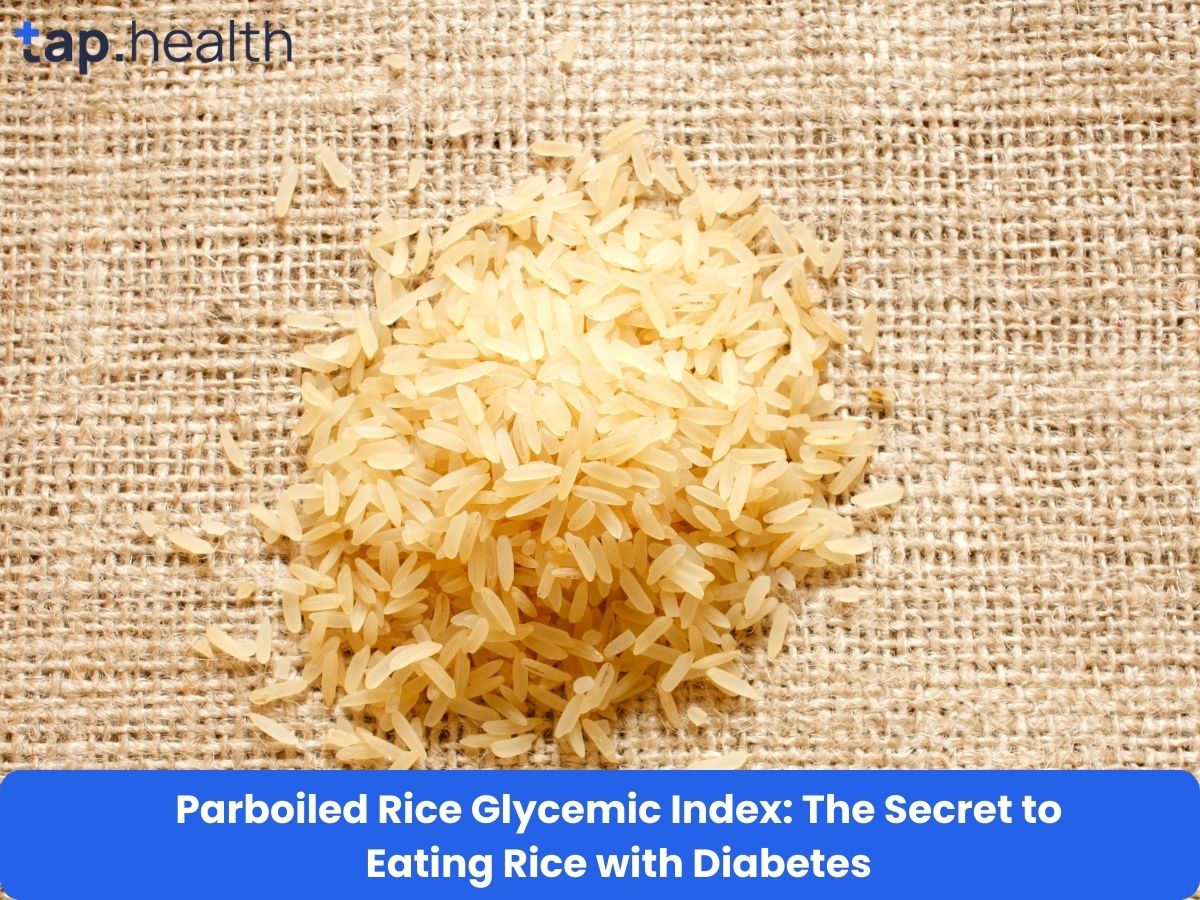
So, when you buy parboiled rice brands like India Gate Sela or local Ponni varieties, you are buying a grain that is nutritionally closer to brown rice but tastes closer to white rice. It doesn’t turn mushy easily and holds its shape—perfect for Biryani and daily meals.
Understanding Glycemic Index (GI)
To know if parboiled rice is safe, we need to look at the Glycemic Index (GI).
Think of GI as a speedometer for your blood sugar. It measures how fast a food spikes your glucose levels on a scale of 0 to 100.
- Low GI (0-55): Digests slowly. Releases energy like a slow-burning candle. Best for diabetics.
- Medium GI (56-69): Moderate rise in sugar.
- High GI (70+): Digests instantly. Spikes sugar like rocket fuel. (e.g., Sticky white rice, Maida).
For a diabetic, the goal is to eat foods that stay in the Low to Medium range.
The Magic Number: Parboiled Rice Glycemic Index
So, does the steaming process actually lower the GI?
The glycemic index of parboiled rice typically ranges from 38 to 55.
This places it firmly in the Low GI category.
Compare this to regular polished white rice, which can have a GI of 70 to 89 (High GI). The difference is massive. By simply switching from raw white rice to parboiled rice, you are cutting the speed at which sugar enters your blood by almost half.
Why is it lower?
The steaming process changes the starch in the rice into Resistant Starch. As the name suggests, this starch “resists” digestion in the small intestine. It acts more like fibre, passing through to the colon without spiking your blood glucose.
Ponni Parboiled Rice Glycemic Index
In South India, Ponni is the staple.
- Raw Ponni Rice: High GI (~70+).
- Parboiled Ponni Rice: Low GI (~50-55).Verdict: If you are a diabetic in Tamil Nadu or Kerala, switching to Ponni parboiled rice is one of the smartest health moves you can make. It keeps the taste you love but removes the danger.
Parboiled Basmati Rice Glycemic Index
Basmati is already known for having a lower GI than short-grain rice. When you parboil it (often sold as Golden Sela Basmati), it gets even better.
- GI: Approximately 45 to 50.
- Verdict: This is excellent for Biryanis and Pulaos. The grains remain separate, and the blood sugar impact is minimal.
Parboiled Rice vs White Rice Glycemic Index
Let’s put them head-to-head to see why your doctor might be recommending the switch.
| Feature | Raw White Rice (Sona Masoori/Kolam) | Parboiled Rice (Sela/Ukda) |
| Glycemic Index | 70 – 89 (High) | 38 – 55 (Low) |
| Texture | Soft, sticky, mushy | Firm, separate grains |
| Digestion Speed | Very Fast (Spikes sugar) | Slow (Steady energy) |
| Nutrients | Mostly Starch | B-Vitamins, Magnesium absorbed from husk |
| Cooking Time | Fast | Takes slightly longer |
The Comparison:
When looking at parboiled rice vs white rice glycemic index, the winner is clear. Parboiled rice provides the satisfaction of eating rice without the metabolic penalty of white rice.
Is Parboiled Rice Good for Diabetes?
The query “is parboiled rice good for diabetes” is one of the most common searches in India.
The answer is a resounding Yes.
Here is the science behind why it works:
- Resistant Starch: As mentioned, the retrogradation of starch means your body absorbs fewer calories and less glucose from the same portion size.
- Satiety: Parboiled rice is firmer and chewier. You naturally chew it more, and it sits in your stomach longer. This prevents the “2 PM hunger pangs” that often lead to snacking.
- Insulin Sensitivity: The magnesium content (preserved during parboiling) helps improve the body’s response to insulin.
- No “Food Coma”: Since it doesn’t cause a massive sugar crash, you won’t feel that overwhelming sleepiness after lunch.
Parboiled Rice Benefits Beyond Diabetes
It is not just about sugar. There are other parboiled rice benefits that make it superior.
- Gut Health: The resistant starch acts as a prebiotic, feeding the good bacteria in your gut.
- Less Breakage: For cooking enthusiasts, parboiled rice doesn’t break or turn to mush easily. It is forgiving if you accidentally overcook it.
- More Calcium & Iron: Compared to raw white rice, parboiled rice retains significantly more minerals.
Which is Better, Basmati or Parboiled Rice?
This is a tricky comparison because you can have Parboiled Basmati! However, if we compare Raw Basmati vs. Parboiled Short Grain:
- Raw Basmati: Medium GI (50-58). Good, but still raw.
- Parboiled Rice (General): Low GI (38-55).
- Parboiled Basmati: The Best of Both Worlds.
Recommendation:
- For daily eating, a local parboiled short/medium grain (like Ponni or Matta) is cost-effective and healthy.
- For special occasions, use Parboiled Basmati (Sela).
- Both are better than standard Raw Sona Masoori.
Uncle Ben’s Parboiled Rice Glycemic Index
In Western countries and some imported sections in India, you might see “Uncle Ben’s.”
Uncle Ben’s parboiled rice glycemic index (specifically the “Converted” brand) is widely cited in studies to be around 38 to 41. This is exceptionally low. It serves as a benchmark proving that the industrial parboiling process is highly effective at lowering GI.
Real-Life Scenario
Let’s meet Anjali, a 45-year-old school teacher from Chennai.
Anjali was diagnosed with Pre-diabetes. Her staple diet was Sambar and Raw Ponni Rice. Her doctor advised her to switch to millets or chapati. Anjali tried, but she felt unsatisfied and “hangry” (hungry + angry) without her rice. She would often cheat and eat a huge plate of white rice, spiking her sugar.
The Solution:
She switched to Parboiled Ponni Rice (Puzhungal Arisi).
- The Adjustment: It took a few days to get used to the slightly firmer texture and yellowish colour.
- The Result: She could eat her beloved curd rice and sambar rice. Because the parboiled rice was more filling, she naturally reduced her portion from 2 bowls to 1 bowl.
- Outcome: Her sugar cravings vanished, and her fasting glucose dropped from 110 to 95 in two months. She didn’t have to quit rice; she just had to change the type of rice.
Expert Contribution
We consulted nutrition experts to validate these claims.
Dr. R. Swaminathan, Diabetologist:
“I have patients who think they must stop rice completely. This is not sustainable for a South Indian. I recommend Parboiled rice because the gelatinized starch is handled much better by the pancreas. It prevents the post-prandial (after meal) spike. However, portion control is still key. Parboiled rice is low GI, but it is not calorie-free.”
Nutritionist Perspective:
“The beauty of parboiled rice is the ‘Second Meal Effect’. The resistant starch fermentation in the gut can actually improve glucose tolerance for the next meal you eat. It’s a functional food for diabetics.”
Recommendations Grounded in Proven Research and Facts
Based on the parboiled rice price and health benefits, here are practical tips for your kitchen:
- The Cooling Hack: To lower the GI even further, cook your parboiled rice and put it in the fridge for 12 hours. Reheat it before eating. This process increases the resistant starch by nearly 20%.
- Pressure Cooker vs. Open Pot: Cooking in an open pot and draining the excess starch water (kanji) is better than pressure cooking, where the water is absorbed back in. Even with parboiled rice, draining helps.
- Read the Label: Look for words like “Sela,” “Parboiled,” “Converted,” or “Double Boiled.” Avoid “Raw,” “Polished,” or “Steam” (Steam rice is not the same as Parboiled; it is processed differently).
- Pair It Right: Never eat rice alone. Add a spoon of Ghee (lowers GI), plenty of fibrous Sabzi, and Dal. The protein and fiber mix will ensure the GI of your entire meal stays low.
- Brands to Look For: In India, brands like India Gate Golden Sela, Daawat Chef’s Secret, and local grocery store Ukda Chawal are reliable. The parboiled rice price is usually slightly higher than raw rice but cheaper than Basmati, making it affordable.
Conclusion
So, is parboiled rice good for diabetics?
Absolutely. It is the bridge between the comfort of white rice and the health benefits of brown rice. With a glycemic index of 38-55, it allows you to enjoy your traditional Indian meals without guilt or dangerous blood sugar spikes.
Whether you choose Ponni, Matta, or Basmati Sela, making the switch to parboiled rice is one of the easiest, most effective changes you can make for your metabolic health. You don’t have to kill your cravings; you just have to be smart about them.
Frequently Asked Questions (FAQ) on Parboiled Rice Glycemic Index
Which type of rice has the lowest glycemic index?
Generally, Parboiled Rice (specifically brands like Uncle Ben’s Converted or specific varieties like Kerala Matta) has the lowest glycemic index, often ranging between 38 and 42. Brown rice is also low (~50), but parboiled rice can sometimes be even lower due to the starch retrogradation process.
Is parboiled rice good for diabetics?
Yes, parboiled rice is an excellent option for diabetics. Its low glycemic index means it digests slowly, providing a steady release of energy rather than a sudden sugar spike. However, portion control is still necessary.
Which is better, basmati or parboiled rice?
Parboiled Basmati is the best option. Regular Raw Basmati has a medium GI (50-58), while Parboiled Rice (generic) has a low GI (38-55). If you buy “Golden Sela Basmati” (which is parboiled basmati), you get the best flavor and the lowest GI.
Does parboiled rice taste different?
Yes, it has a slightly firmer, chewier texture and the grains remain separate and fluffy. It lacks the sticky, starchy feel of raw white rice. Some varieties may have a faint yellowish tint which turns white upon cooking.
Parboiled rice vs white rice glycemic index – how big is the difference?
The difference is significant. White rice typically has a GI of 70-89 (High), whereas Parboiled rice has a GI of 38-55 (Low). This massive gap is why doctors recommend parboiled rice for blood sugar management.
What are the parboiled rice brands available in India?
Common brands include India Gate Golden Sela, Daawat Sela, Fortune Biryani Special, and regional brands selling Ponni Parboiled or Kerala Matta Rice. You can also find loose Ukda Chawal or Sela Chawal in local kirana stores.
Is parboiled rice more expensive?
Generally, the parboiled rice price is slightly higher than standard raw rice due to the extra processing steps (soaking and steaming). However, it is usually cheaper than premium aged Basmati or imported Brown rice, making it a budget-friendly health option.
Can I eat parboiled rice daily?
Yes, you can eat it daily as part of a balanced diet. Ensure you pair it with plenty of vegetables, lentils (dal), and healthy fats to ensure a complete nutritional profile and sustained satiety.
References:
- Harvard Health Publishing: Glycemic index for 60+ foods. Link
- American Diabetes Association: Types of Rice and Diabetes. Link
- National Institutes of Health (NIH): Effect of parboiling on glycemic index. Link
- WebMD: Parboiled Rice Nutrition and Benefits. Link
- University of Sydney: GI Search Database. Link
(Disclaimer: This content is for educational purposes only. Always consult your doctor or a certified dietitian before making significant changes to your diet, especially if you have diabetes.)


